By Global Affairs Desk
Published: October 13, 2026
Dateline: NEW YORK
Introduction and Main Facts
During past epochs of institutionalized brutality and societal upheaval in Russia—such as Joseph Stalin’s devastating Great Terror of the late 1930s—a distinct ideological framework governed the terror. No matter how perverse, murderous, or unjustifiable the methods, the state operated under a teleological premise: society was supposedly being violently forged toward a utopian destination. Whether it was rapid industrialization, the eradication of class enemies, or the defense of a global ideological fortress, the suffering was framed by the regime as a necessary sacrifice on the altar of historical progress.
Today, however, the architecture of repression gripping the Russian Federation has discarded even the pretense of a grand historical trajectory. According to political analysts and human rights observers, the state-sponsored coercion and systematic silencing of dissent currently endured by Russian citizens serve only one solitary, insular aim: the perpetual self-preservation of the apparatus executing it.
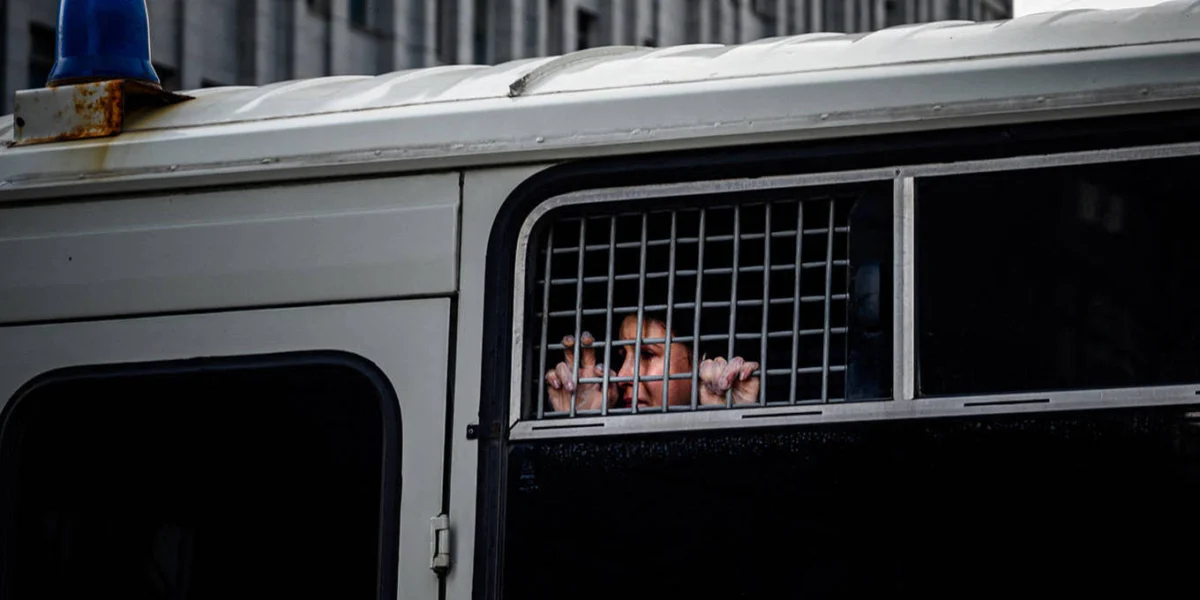
This shift from ideological authoritarianism to a self-perpetuating vacuum of power was thrown into sharp relief on September 25, 2026. On that day, a Moscow court ordered the high-profile political analyst and scholar Alexander Kynev into pretrial detention. The charges levied against Kynev are starkly incongruous with his decades-long career as an academic and election monitor: "large-scale illegal drug production, sale, and trafficking." If convicted under these sweeping statutes, Kynev faces a prison sentence ranging from 10 to 20 years.
Yet, legal defense teams and independent monitors point out a glaring omission in the state’s case: to date, authorities have failed to make public any credible evidence linking Kynev to the illicit narcotics trade. Observers widely view the drug charges as a legal pretext—a cynical fabrication designed to neutralize an independent voice capable of dissecting the structural vulnerabilities of the contemporary Russian political landscape.
Chronology of Escalating Crackdowns
To understand the arrest of Alexander Kynev, one must examine the systematic escalation of state pressure against independent civil society, academic freedom, and political analysis inside Russia over recent years.
Phase One: The Pre-War Chilling Effect (2020–2021)
- Summer 2020: The targeted poisoning and subsequent imprisonment of opposition leader Alexei Navalny signal a transition from managed pluralism to outright elimination of systemic political rivals.
- Late 2020 to 2021: The Russian Ministry of Justice aggressively expands its "foreign agent" registry, sweeping up independent journalists, human rights organizations, and political scientists—including figures associated with independent electoral monitoring—under punitive administrative burdens.
- Fall 2021: Parliamentary elections are heavily managed, marginalizing independent political candidates and pushing critical voices further out of mainstream institutional politics.
Phase Two: Wartime Mobilization of the Legal System (2022–2024)
- February 2022: Following the full-scale invasion of Ukraine, the Russian parliament rushes through draconian censorship laws criminalizing "discreditation" of the armed forces and the spread of "fake news" regarding state military actions.
- 2022–2023: Hundreds of activists, journalists, and cultural figures flee the country. Those who remain face immediate administrative fines, asset freezes, or sudden criminal probes.
- 2024: The death of Alexei Navalny in an Arctic penal colony removes the most visible symbol of organized domestic political resistance, signaling to the remaining intelligentsia that no individual enjoys immunity from state retribution.
Phase Three: The Targeting of Independent Scholarship (2025–September 2026)
- 2025: State security services broaden their campaign against academic institutions, targeting sociologists, economists, and political analysts who continue to publish empirical data contradicting official Kremlin narratives on economic resilience and public sentiment.
- September 25, 2026: Moscow police arrest Alexander Kynev. He is swiftly charged with major drug trafficking offenses, bypassing traditional political or extremist charges in favor of a non-political, highly stigmatizing criminal indictment—a favored tactic designed to delegitimize public figures without drawing direct focus to their political critiques.
Supporting Data and Context
The systematic erosion of civic freedoms in Russia is well-documented by international watchdogs and domestic human rights monitors. The choice of fabricated narcotics charges against Alexander Kynev mirrors historical Soviet-era playbooks, where political dissidents were frequently charged with common criminal offenses—such as hooliganism, parasitism, or currency speculation—to strip their persecution of political meaning.
Key Indicators of Russia’s Civic Space (2024–2026 Data)
- Political Prisoners: According to estimates by human rights organizations like Memorial, the number of recognized political prisoners in the Russian Federation has surpassed historical post-Soviet highs, with hundreds detained specifically for anti-war statements, independent research, or civil rights activism.
- Academic Exile: Independent estimates suggest that more than 30% of prominent Russian social scientists, historians, and political analysts have relocated abroad since 2022, operating from academic hubs in the European Union, the Caucasus, and Central Asia.
- The "Foreign Agent" Expansion: By mid-2026, the list of individuals and entities designated as foreign agents or undesirable organizations encompasses virtually all remaining independent media outlets, sociological polling agencies, and legal defense funds.
Alexander Kynev’s plight underscores a grim reality: even independent analysts who deliberately maintained a degree of legal compliance, avoiding direct calls for regime change while offering nuanced critiques of regional elections and party politics, are no longer safe. The regime has reached a stage where any independent analytical output—because it relies on objective reality rather than state mythology—is viewed as an existential threat.
Official Responses and State Narratives
The official apparatus of the Russian state has maintained a rigid narrative regarding the crackdown on independent voices, framing such actions as routine enforcement of criminal law and national security safeguards against foreign subversion.
- The Judiciary and Law Enforcement: In official statements regarding the detention of Alexander Kynev, Moscow law enforcement agencies have insisted that the investigation is strictly criminal in nature. Spokespersons have repeatedly rejected assertions that Kynev’s arrest is politically motivated, emphasizing that drug trafficking is a serious felony subject to rigorous prosecution regardless of the suspect’s profession or public status.
- The Kremlin: Throughout the broader wave of arrests targeting intellectuals and analysts, Kremlin press secretaries have maintained that Russia is engaged in an existential information and security struggle with Western powers. Consequently, domestic critics who question state policies or institutional integrity are frequently characterized as acting—intentionally or otherwise—in the service of foreign interests aimed at destabilizing the constitutional order.
- Independent Academic and Legal Communities: In stark contrast to official justifications, legal defense groups, academic syndicates, and international human rights organizations have condemned Kynev’s arrest as a transparent fabrication. In joint statements released following the September 25 court hearing, colleagues highlighted Kynev’s reputation for rigorous empirical research and dismissed the narcotics charges as absurd, pointing to a clear pattern of weaponizing the criminal code to silence independent thought.
Implications for the Future of Russian Society
The implications of Alexander Kynev’s detention extend far beyond an individual miscarriage of justice; they illuminate the profound ideological exhaustion of the contemporary Russian state.
1. The Death of Technocratic Rationality
Historically, even authoritarian regimes rely to some degree on accurate data, internal critique, and realistic policy analysis to manage state affairs, economic planning, and administrative efficiency. By criminalizing independent political science and sociological research, the regime is effectively blinding itself. When analysts like Kynev are jailed on fabricated charges, experts are incentivized to self-censor or provide sycophantic reporting that pleases leadership rather than reflecting ground-level truths. This detachment from reality increases the risk of severe policy miscalculations at the highest levels of government.
2. The Perpetuation State
As observed by political observers, the current system has abandoned any pretense of building a better future. There is no ideological horizon, no promise of communist equality, and no vision of modernization that justifies present hardships. Instead, the political and security elite operate within a closed-loop survival mechanism. Repression is deployed not to achieve a strategic goal, but simply because the maintenance of repression is the primary mechanism ensuring the regime’s continued existence.
3. Complete Atomization of Civil Society
The targeting of mainstream, moderate analysts sends a chilling message to the broader population: neutrality, academic detachment, and professional moderation offer no protection. When a respected election analyst can be suddenly upended by fabricated felony charges, ordinary citizens recognize that the rule of law has been entirely subordinated to political expediency. This fosters deep societal atomization, discouraging civic engagement, public discourse, and collective solidarity.
Conclusion
The arrest of Alexander Kynev in Moscow is emblematic of a regime trapped in a perpetual cycle of internal defense. As Russia navigates an increasingly isolated future, the reliance on fabricated charges and arbitrary detention reveals a government that views truth itself as its greatest adversary. Without a vision for tomorrow, the state can offer its citizens only one thing: an endless, unbroken present secured by bars, silence, and fear.