By Supply Chain Dive Newsroom
Published October 13, 2026
Executive Summary: The Core Crisis and Operational Pivot
In response to one of the most severe foodborne illness outbreaks of the decade, major fresh-food producer Taylor Farms has announced an indefinite operational suspension. The company will no longer harvest or process iceberg lettuce from central Mexico between May 1 and August 31 of each year.
The decision, communicated directly to consumers in an October 8 open letter from Founder and CEO Bruce Taylor, marks a major shift in the company’s international supply chain logistics. The four-month hiatus directly aligns with the period designated by the Centers for Disease Control and Prevention (CDC) as the peak Cyclospora season—a window that also mirrors central Mexico’s annual rainy season.
The strategic pivot comes on the heels of a massive multi-state outbreak that sickened nearly 13,000 individuals across the United States and Canada this past summer. The crisis heavily impacted major restaurant chains, including Taco Bell, and resulted in widespread recalls of shredded iceberg lettuce. While federal investigations ultimately concluded without definitively identifying the exact vector of contamination, epidemiological data and environmental traces have forced Taylor Farms to overhaul its agricultural protocols, seasonal sourcing maps, and food safety testing regimens.
Chronology of the Outbreak: From Initial Illness to Regulatory Closure
The unfolding of the 2026 Cyclospora crisis highlights the complex vulnerabilities inherent in cross-border fresh produce supply chains. The timeline below traces the trajectory of the outbreak, regulatory investigations, and corporate responses.
Late Spring 2026: The Rise in Infections
- May 1: The CDC formally marks the beginning of the Cyclospora season, a recurring warm-weather window historically associated with an uptick in parasitic diarrheal infections across North America.
- June 2026: Public health officials across multiple U.S. states begin noticing an abnormal clustering of cyclosporiasis cases. Epidemiological investigations quickly point toward commercial food service channels, specifically implicating shredded iceberg lettuce served in fast-food outlets such as Taco Bell, which sources heavily from major distributors.
July 2026: Escalation, Recalls, and Supply Chain Disruptions
- Mid-July 2026: Public health tracking reveals that the number of linked infections is accelerating rapidly, eventually surging toward a staggering total of nearly 13,000 cases.
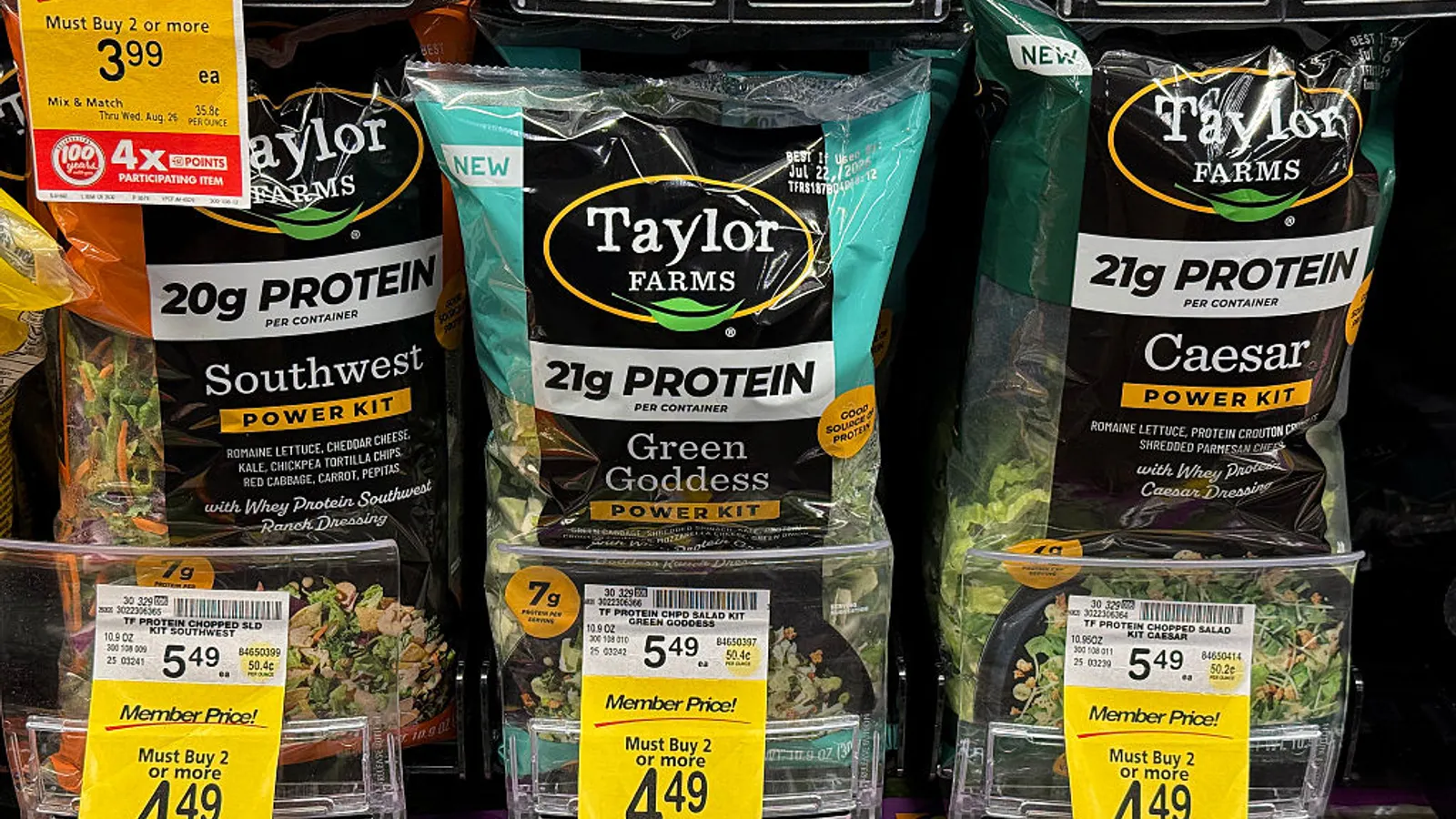
- Late July 2026: Taylor Farms de Mexico becomes the focal point of the federal investigation. Voluntary and mandated recalls are initiated for shredded iceberg lettuce packages distributed to grocery stores and food service providers across North America. Retail displays of Taylor Farms salad greens—such as those observed at a Safeway store in Kings Beach, California—are pulled from shelves.
August to September 2026: The Scientific and Regulatory Debate
- August 2026: The U.S. Food and Drug Administration (FDA) initially reports that a lettuce sample sourced from Taylor Farms de Mexico tested positive for contamination. However, subsequent rigorous retesting by the agency determines that the initial finding was inaccurate regarding the specific parasite responsible for the outbreak.
- September 2026: Despite the walking back of the initial positive sample finding, public health officials maintain intense scrutiny over the growing region. Investigators uncover evidence that the Cyclospora parasite was environmentally present in the specific micro-regions where the lettuce was cultivated and processed.
October 2026: Investigation Conclusion and Corporate Restructuring
- October 2, 2026: The FDA formally concludes its multi-state outbreak investigation. The agency acknowledges it lacks sufficient forensic evidence to pinpoint the exact contamination pathway. Nevertheless, the FDA emphasizes that "strong epidemiological data and traceback convergence" link the outbreak directly to recalled shredded iceberg lettuce originating from Taylor Farms de Mexico.
- October 8, 2026: Bruce Taylor publishes an open letter to consumers, announcing the permanent seasonal suspension of lettuce harvesting in central Mexico, alongside sweeping new investments in water safety, environmental monitoring, and industry-wide task forces.
Supporting Data and Epidemiological Insights
The scale of the 2026 Cyclospora outbreak places it among the most significant agricultural supply chain disruptions in recent years. Understanding the mechanics of the parasite and the footprint of the outbreak requires analyzing the available public health data.
The Scale of the Impact
- Total Cases: Nearly 13,000 confirmed or probable cases of cyclosporiasis were reported across multiple U.S. states during the summer surge.
- Affected Populations: Consumers who dined at participating fast-food restaurants—notably Taco Bell—as well as shoppers purchasing pre-packaged retail salads, bore the brunt of the illnesses.
- Geographic Spread: The outbreak crossed numerous state lines, illustrating the highly integrated and rapid distribution networks that move perishable goods from Central American fields to North American plates in a matter of days.
Understanding Cyclospora cayetanensis
Cyclospora is a microscopic, single-celled parasite that causes cyclosporiasis, an intestinal illness. Unlike bacterial pathogens like E. coli or Salmonella, which can multiply rapidly on food under improper temperature conditions, Cyclospora needs days to weeks outside the body to become infectious.
Transmission typically occurs when food or water is contaminated with feces. In agricultural settings, irrigation water or surface runoff during heavy rainy seasons—such as the summer months in central Mexico—can introduce the oocysts onto produce fields. Because iceberg lettuce has large surface areas and complex leaf structures, eliminating microscopic parasites through standard washing procedures remains notoriously difficult.
Official Responses and Regulatory Perspectives
The resolution of the FDA investigation and the subsequent policy shifts by Taylor Farms highlight an evolving paradigm in public-private cooperation regarding food safety.
The FDA’s Closing Assessment
In its final investigative summary released on October 2, the FDA highlighted the limits of retrospective traceback analyses in complex agricultural environments. While investigators could not isolate a definitive smoking gun within the processing facilities, the presence of Cyclospora within the local agricultural ecosystem validated the epidemiological links.

"While we were unable to pinpoint a single point of failure in the supply chain, the convergence of traceback data and environmental sampling provides a clear signal that the growing region faced unique vulnerabilities during this period," an agency spokesperson noted.
Taylor Farms’ Strategic Overhaul
Rather than waiting for regulatory mandates, CEO Bruce Taylor framed the company’s new policies as an absolute moral and operational imperative.
"This is personal to me and my family," Taylor wrote in his October 8 letter. "Helping families put fresh food on their tables was at the heart of why we started Taylor Farms years ago, and it will continue to guide everything we do every day."
The company’s multi-pronged remediation plan includes:
- Seasonal Sourcing Realignment: Complete cessation of harvesting and processing operations in central Mexico from May 1 through August 31 annually.
- Enhanced Monitoring: Implementation of year-round health monitoring protocols for farmworkers and surrounding communities.
- Water and Crop Testing: Dramatically increased frequency and sophistication of irrigation water and soil testing across all partner farms in the region.
- R&D Investments: Direct capital allocation toward developing advanced detection tools and preventive technologies for parasitic pathogens.
- Collaborative Task Force Participation: Active engagement in a newly formed public-private task force uniting the FDA, independent scientists, agricultural leaders, and public health officials to establish new safety baselines for the fresh produce sector.
Broader Implications for the Global Supply Chain
The Taylor Farms incident serves as a watershed moment for the global fresh produce supply chain, carrying profound implications for international trade, risk management, and consumer trust.

1. Re-evaluating Geographies and Climate Vulnerability
Climate change and shifting weather patterns are increasingly complicating agricultural planning. The overlap between central Mexico’s rainy season and the proliferation window of Cyclospora demonstrates that traditional growing regions may require seasonal dormancy as environmental risks escalate. Supply chain managers across the food industry are now forced to re-evaluate single-region reliance during high-risk months, necessitating diversified sourcing strategies that can pivot smoothly to alternative geographies (such as domestic U.S. fields or alternative micro-climates) during summer months.
2. The Cost of Parasitic Pathogen Detection
Unlike bacterial contamination, which can often be mitigated with chemical washes or strict cold-chain management, parasitic oocysts like Cyclospora present unique detection challenges. Standard rapid tests used in commercial packing facilities are frequently optimized for bacteria, leaving a technological gap for parasites. Taylor Farms’ commitment to investing in new detection tools signals an industry-wide realization: supply chain resilience now requires underwriting foundational scientific research, not just purchasing compliance audits.
3. Redefining Corporate Accountability and Transparency
In the wake of consumer anxiety and massive product recalls, brand survival depends on swift, transparent, and proactive leadership. By self-imposing a four-month production blackout in a key sourcing region, Taylor Farms has set a high bar for accountability. Industry analysts suggest this move could establish a new precedent where major distributors preemptively sacrifice short-term seasonal volume to protect long-term brand equity and consumer safety.
4. The Rise of Collaborative Ecosystems
The integration of private agricultural enterprises into formal public-private task forces alongside the FDA and academic researchers represents a maturing of food safety governance. As supply chains grow more globalized and complex, regulatory oversight alone is no longer sufficient. The future of safe fresh produce logistics will heavily rely on real-time data sharing, transparent environmental mapping, and shared technological investments between growers, distributors, and federal regulators.
Conclusion
The decision by Taylor Farms to suspend central Mexico lettuce sourcing during the peak Cyclospora season is more than a localized operational adjustment—it is a bellwether for the future of fresh produce supply chain management. As the industry grapples with the lessons of the 2026 outbreak, the balance between year-round consumer demand and absolute biological safety is being fundamentally redrawn. Through enhanced testing, technological investment, and courageous seasonal cutbacks, Taylor Farms and its regulatory partners aim to ensure that the salad greens reaching North American tables remain as safe as they are fresh.