CARY, Illinois — In a decisive move toward long-term fiscal responsibility and environmental stewardship, Cary Community Consolidated School District 26 has successfully finalized a comprehensive districtwide rooftop solar project. Executed in partnership with Allied Facility Partners—a prominent design-build and performance contracting firm serving public-sector, municipal, and K-12 organizations across Illinois and Wisconsin—the ambitious clean energy undertaking spans three core district facilities.
The completed project brings a combined system capacity of 843 kilowatts (kW) to the district. Designed to harness the abundant Midwestern sunlight, the newly installed solar arrays are projected to generate approximately 990,654 kilowatt-hours (kWh) of clean electricity annually. This substantial output is anticipated to offset roughly 55% of the total electricity consumption across the participating facilities, marking a transformative leap forward in how the district powers its educational environments.
Beyond the immediate environmental and financial victories, school officials emphasize that the project serves as a living laboratory for students. By blending cutting-edge renewable infrastructure with everyday campus life, District 26 is actively weaving sustainability education into the daily curriculum, empowering the next generation of community leaders to witness the tangible benefits of green technology firsthand.
Main Facts
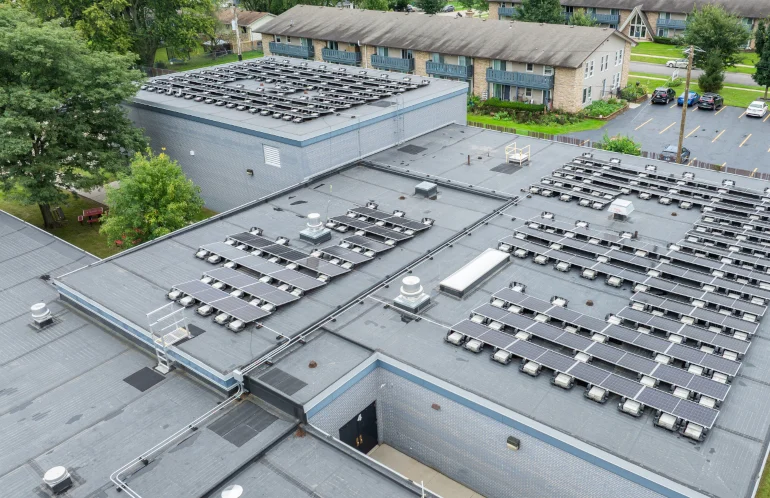
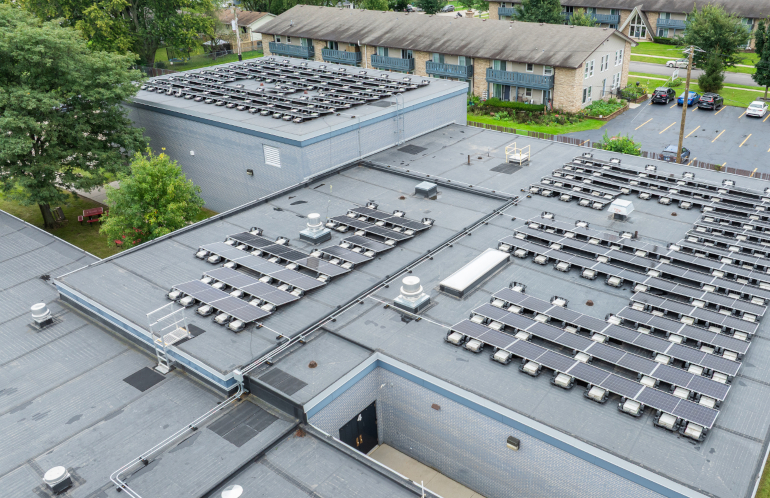
The recently completed solar initiative is a multi-faceted infrastructure upgrade engineered to maximize energy independence while minimizing taxpayer burden. At its core, the project encompasses rooftop solar installations distributed across three key district properties, most notably featuring arrays at the Oak Knoll Early Childhood Center.
The physical scope of the installation is substantial. To achieve the 843-kW capacity, project contractors integrated a total of 1,429 high-efficiency solar modules paired with seven advanced inverters. Together, these components capture solar irradiance and convert it into usable alternating current (AC) power to support daily school operations.
Financially and operationally, the project was structured to be self-sustaining through a Guaranteed Energy Savings Contract (GESC). This procurement and delivery model enables public entities to undertake vital capital improvements without straining short-term budgets. Instead, the initiative leverages projected energy cost reductions and operational savings to support the investment organically over time. Furthermore, the installation includes a public-facing, cloud-based energy dashboard. This transparent tool offers real-time visibility into system performance and solar production, allowing students, teachers, and community members to track green energy generation live.
Chronology of the Project
Bringing a clean energy project of this magnitude from initial concept to full operational status required meticulous planning, rigorous engineering, and seamless multi-agency coordination. While the final commissioning marks the culmination of the endeavor, the timeline represents months of dedicated collaboration between district leadership and Allied Facility Partners.
Phase 1: Strategic Planning and Feasibility
The journey began well before panels were hoisted onto roofs. District 26 leadership, recognizing the aging nature of several facility roofs and the rising volatility of utility costs, began evaluating long-term infrastructure improvements. Collaborating with Allied Facility Partners, the district explored how solar energy could be integrated alongside broader capital improvement plans. During this exploratory phase, engineers conducted structural assessments of district buildings to ensure roof integrity could safely support heavy photovoltaic arrays.
Phase 2: Engineering, Permitting, and Financial Structuring
Once feasibility was confirmed, the project moved into the technical design and regulatory phase. This period involved:
- Finalizing system engineering layouts utilizing 1,429 solar modules and seven inverters.
- Securing necessary local building permits and executing utility interconnection agreements with regional power providers.
- Navigating complex funding mechanisms. Allied actively coordinated renewable energy credit (REC) applications, state and federal utility incentive programs, and other public funding streams to drastically improve the district’s return on investment (ROI).
Phase 3: Procurement and Construction
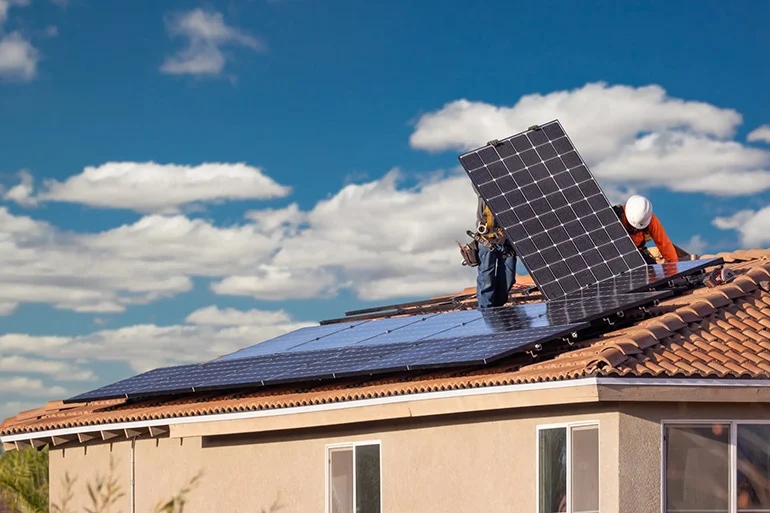
With all bureaucratic hurdles cleared and components procured, physical construction commenced. Contractors coordinated installation timelines around academic schedules to minimize disruption to students and staff. The construction phase incorporated precision mounting, electrical wiring, and inverter integration, all executed under strict safety protocols.
Phase 4: Commissioning and Training
Following physical installation, the systems underwent rigorous testing and commissioning to ensure optimal performance, safety, and grid compliance. Concurrently, Allied Facility Partners provided comprehensive training sessions for district facilities staff, equipping them with the knowledge and tools required to oversee ongoing system health, utilize cloud-based monitoring software, and maintain peak operational efficiency for decades to come.
Supporting Data and Technical Specifications
To fully understand the scope and impact of Cary District 26’s solar transition, it is helpful to examine the hard data governing the installation. The project was engineered to achieve specific performance thresholds, balancing upfront capital deployment with predictable, long-term operational savings.
Technical Breakdown of the Installation
- Total System Capacity: 843 kW
- Number of Solar Modules: 1,429 units
- Number of Inverters: 7 units
- Participating Locations: 3 district facilities (including Oak Knoll Early Childhood Center)
- Projected Annual Generation: ~990,654 kWh
- Estimated Electricity Offset: ~55% of total consumption across the targeted facilities
Financial and Contractual Architecture
The financial engineering behind public-sector solar projects is often just as critical as the electrical engineering. By utilizing a Guaranteed Energy Savings Contract (GESC), District 26 bypassed traditional roadblocks associated with capital-intensive construction projects.
A GESC legally binds the energy services contractor—in this case, Allied Facility Partners—to guarantee that the energy and operational savings generated by the new infrastructure will meet or exceed the cost of the project over a specified contractual term. If the system underperforms relative to the engineering projections, the contractor covers the shortfall. This mechanism protects the district financially while modernizing its facilities.
In addition to the GESC framework, the economic viability of the project was heavily reinforced by external funding optimization. Allied spearheaded the arduous task of securing Renewable Energy Credits (RECs) under applicable state clean energy standards, alongside utility-sponsored incentive programs. These financial instruments effectively reduce the net cost of the system, accelerating the district’s payback period and ensuring that public resources are maximized for educational priorities rather than utility overhead.
Official Responses and Stakeholder Perspectives
The successful realization of a districtwide sustainability initiative relies heavily on shared vision and strong institutional leadership. Key stakeholders from both the school district and the contracting firm have spoken publicly about the profound impact of the collaboration.
David Martin, Operations Coordinator for Cary School District 26, highlighted the dual nature of the investment as both an economic strategy and an educational asset.
"This project represents a significant long-term investment in the future of Cary School District 26," Martin stated. "By combining the solar installations with our ongoing roof and facility improvements, we are improving the efficiency and sustainability of our buildings while being responsible stewards of district resources."
Martin also underscored the unique value the project brings to the classroom.
"We are also excited about the educational opportunity this project provides, giving our students and staff the chance to see renewable energy in action and better understand its impact on our community," he added.
Representatives from Allied Facility Partners echoed these sentiments, praising the forward-thinking posture of District 26 leadership. Design-build and performance contracting firms specializing in the public sector frequently emphasize that K-12 installations serve as powerful community catalysts. When school districts modernize their infrastructure, they send a clear message to taxpayers, students, and neighboring municipalities that fiscal prudence and environmental responsibility can—and should—go hand in hand.
Implications for the District and the Broader Community
The completion of the rooftop solar project at Cary Community Consolidated School District 26 carries ripple effects that extend far beyond the balance sheets of the district’s utility bills. As school districts across Illinois and the broader Midwest grapple with inflationary pressures, fluctuating energy markets, and aging physical infrastructure, District 26’s blueprint offers a viable path forward.
Financial Relief for Educational Budgets
Energy costs traditionally represent one of the largest operational expenditures for school districts, second only to personnel. By neutralizing over half of the electricity demand across the targeted facilities, the district has effectively insulated itself against future utility rate hikes. The capital saved through reduced electricity purchases can be redirected toward core educational needs, classroom technologies, instructional support staff, and student programs.
Environmental Stewardship and Carbon Reduction
Generating roughly 990,654 kWh of clean, renewable energy annually translates into a significant reduction in the district’s carbon footprint. By displacing fossil-fuel-generated electricity from the regional grid, District 26 is actively contributing to Illinois’ broader clean energy mandates and climate goals. This reduction in greenhouse gas emissions aligns with a growing movement among public institutions to lead by example in the fight against climate change.
Educational Integration and STEM Enrichment
Perhaps one of the most enduring legacies of the project will be its integration into the district’s educational framework. Modern schools are increasingly shifting toward experiential, hands-on learning models, particularly in science, technology, engineering, and mathematics (STEM).
Through the implementation of the public-facing, cloud-based energy dashboard, teachers have immediate access to real-time data analytics. Classrooms can analyze how weather patterns, seasonal changes, and cloud cover directly impact solar generation. Physics and environmental science classes can study photovoltaic efficiency, energy conversion, and circuit design using live data generated right from their own school roofs. This transforms passive infrastructure into an active teaching tool, inspiring students to consider careers in engineering, renewable energy, and sustainable development.
A Replicable Model for Public Sector Efficiency
Finally, the successful delivery of this project via a Guaranteed Energy Savings Contract serves as a case study for other municipalities and school districts throughout Illinois and Wisconsin. Many public entities hesitate to pursue green energy upgrades due to perceived financial risks or complex administrative requirements. By demonstrating that third-party expertise can successfully streamline engineering, permitting, incentive acquisition, and construction—all while guaranteeing financial outcomes—Cary District 26 has charted a course that other communities can confidently follow.
As the solar arrays begin their decades-long work of capturing the Illinois sun, Cary Community Consolidated School District 26 stands as a shining example of how modern public education can harmoniously balance fiscal responsibility, environmental leadership, and innovative classroom learning.