By Lee Goldberg | Contributing Editor
As the global transition toward renewable energy accelerates, Battery Energy Storage Systems (BESS) have emerged as a critical foundational pillar of modern electrical grids. Designed to store excess power generated by solar, wind, and other intermittent renewable sources, these industrial-scale installations help balance power loads and ensure grid stability.
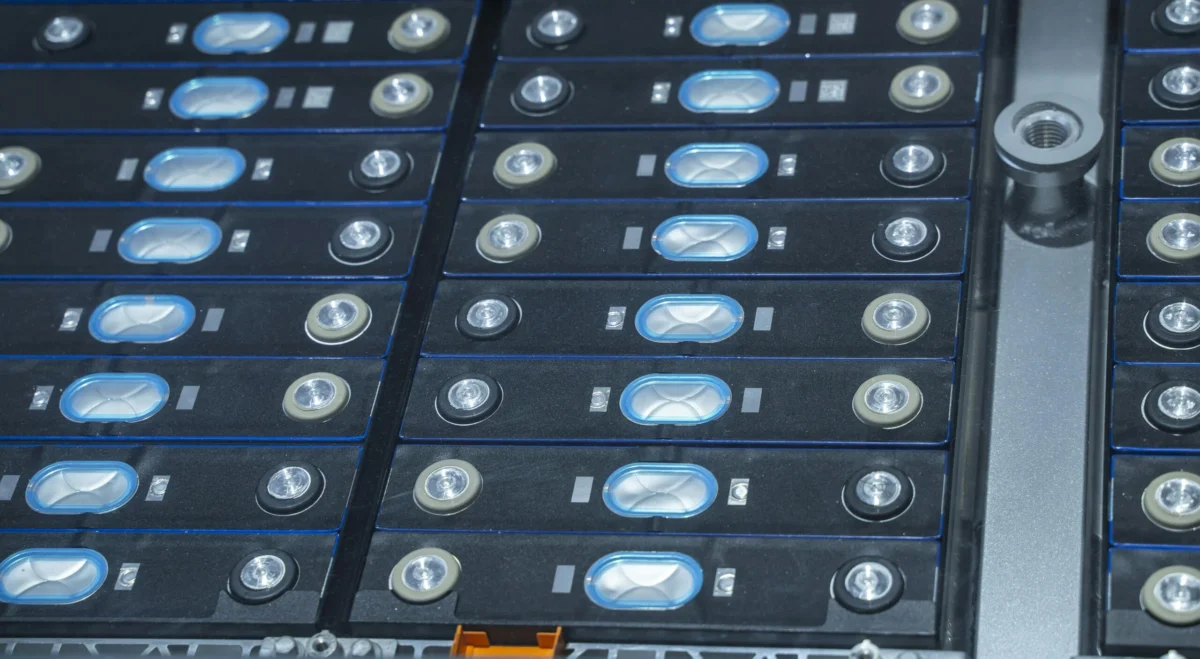
However, scaling up energy storage introduces immense engineering challenges. Large-scale battery deployments—particularly those utilizing lithium-iron phosphate (LFP) cells packed tightly into massive modules, racks, and containerized units—face severe hazards related to thermal management, electrical isolation, and manufacturing efficiency.
Addressing these hurdles head-on, materials science pioneer Avery Dennison has introduced a comprehensive new portfolio of specialized pressure-sensitive adhesive (PSA) tapes. Engineered specifically for the rigorous demands of industrial- and grid-scale BESS, the new product families—dubbed Flame Tough and Volt Tough—are designed to deliver advanced insulation, physical protection, and structural bonding, tackling three of the most persistent bottlenecks in battery pack design: thermal-runaway mitigation, high-voltage insulation, and rapid automated assembly.
Main Facts: Engineered Solutions for Industrial-Scale Batteries
The newly unveiled portfolio is purpose-built to address the structural and safety vulnerabilities inherent in high-capacity energy storage systems. Unlike consumer electronics or even electric vehicle (EV) batteries, grid-scale BESS installations operate under continuous, high-stress conditions where a single point of failure can cascade into catastrophic events.
Avery Dennison’s new adhesive solutions are segmented to target specific engineering weak points within lithium-ion battery architectures:
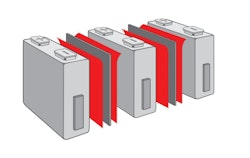
- Thermal Runaway Mitigation (Flame Tough Family): Uncontrolled heat generation in a single battery cell can trigger a chain reaction, spreading rapidly across adjacent cells and modules. The Flame Tough line features specialized flame-retardant adhesives that enable engineers to construct rugged, multilayer thermal barrier solutions capable of preventing or delaying thermal propagation.
- High-Voltage Insulation (Volt Tough Family): Electrical arcing between cells, busbars, cooling plates, and module housings represents a severe safety hazard in high-voltage energy storage architectures. The Volt Tough dielectric tape solutions offer exceptional dielectric strength at minimal calipers (thickness), protecting system integrity against high electrical loads.
- Automated Manufacturing Compatibility: Designed to meet the demanding production timelines and cost constraints of BESS manufacturers, these PSA tapes provide instant bonding capabilities. They eliminate the need for liquid mixing equipment or thermal curing phases while supporting high-speed automated and robotic assembly lines.
Chronology: The Evolution of BESS Manufacturing and Material Demands
The journey toward specialized industrial adhesives for energy storage did not happen overnight. It represents a steady convergence of the renewable energy boom and advancements in polymer science over the past two decades.
- Early 2000s – The Infancy of Grid Storage: Early grid-scale storage projects relied heavily on legacy lead-acid technologies or experimental chemistries. Adhesive requirements were rudimentary, largely focused on basic bundling rather than active thermal or electrical protection.
- 2010–2018 – The Lithium-Ion Revolution: As lithium-ion chemistry—and specifically LFP—became the standard for stationary storage due to its cost-effectiveness and cycle stability, energy density within containerized units increased exponentially. However, this densification introduced new hazards, notably thermal runaway and high-voltage arcing, prompting safety regulators to tighten standards.
- 2019–2023 – The Push for Standardized Safety Codes: International regulatory bodies began enforcing stricter safety certifications (such as UL 9540A for battery fire safety). Manufacturers were forced to redesign battery packs with inter-cell barriers, thicker insulation, and sturdier structural adhesives, though many early solutions relied on cumbersome mechanical fasteners or messy liquid epoxies.
- 2024–Present – The Demand for Integrated, High-Speed Solutions: With global gigawatt-hour (GWh) deployment targets scaling rapidly, manufacturing bottlenecks became a primary constraint. The industry required materials that could simultaneously provide thermal barriers, dielectric strength, and seamless compatibility with automated pick-and-place robotics. Avery Dennison’s latest rollout directly responds to this modern industrial inflection point.
Supporting Data: Technical Specifications and Performance Metrics
To meet stringent international compliance frameworks, Avery Dennison’s adhesive portfolio has undergone rigorous testing against standardized industrial benchmarks.
Dielectric Strength and Breakdown Voltage
Electrical insulation in confined battery modules must withstand intense voltage differentials without degrading. The Volt Tough family has been comprehensively evaluated using industry-standard testing protocols:
- GB/T 1408.1-2016: Standard test methods for electric strength of insulating materials.
- ASTM D3755: Standard test method for dielectric breakdown voltage and dielectric strength of solid electrical insulating materials under direct-voltage stress.
According to Avery Dennison, these materials maintain superior dielectric performance even at exceptionally thin calipers. This allows engineers to maximize energy density within battery modules by minimizing the physical space consumed by insulation layers without sacrificing safety margins.

Manufacturing Efficiency and Environmental Compliance
In high-throughput manufacturing environments, the choice of bonding technology directly impacts operational expenditure (OpEx) and yield rates. The new PSA portfolio introduces several processing advantages:
- Zero Volatile Organic Compounds (VOCs): The tapes emit no harmful VOCs during application or operation, aligning with green manufacturing initiatives.
- Elimination of Mixing Equipment: Unlike structural liquid adhesives or epoxies, which require precise volumetric mixing, curing times, and specialized dispensing equipment, PSAs arrive ready to use.
- Precision Die-Cut Capabilities: The tapes can be custom die-cut to tight dimensional tolerances. They feature colored variants optimized for automated optical detection, enabling robotic camera and vision systems to verify correct placement instantly on high-speed assembly lines.
Official Responses and Industry Perspectives
Industry analysts and company representatives emphasize that material innovation is no longer secondary to cell chemistry when it comes to battery safety and commercial viability.
"Thermal runaway and electrical arcing are the twin specters haunting large-scale battery deployment," notes Lee Goldberg, power electronics specialist and technology journalist. "As grid operators demand larger capacities packed into tighter footprints, the margin for error shrinks. Solutions that integrate passive safety features directly into the structural bonding materials represent a major leap forward for the industry."
Avery Dennison’s engineering teams highlight that the development of the Flame Tough and Volt Tough lines was driven by direct feedback from Tier-1 battery pack manufacturers and system integrators. By addressing the friction points between safety compliance and manufacturing speed, the company aims to help producers scale output while mitigating catastrophic field failures.
Implications: What This Means for the Future of Energy Storage
The introduction of advanced, multifunctional pressure-sensitive adhesives carries profound implications for the energy storage sector, influencing everything from system safety to the economics of renewable integration.
1. Enhanced Safety and Reduced Liability
For utility companies and independent power producers (IPPs), the risk of battery fires remains a primary financial and reputational hazard. Deploying robust, multilayer thermal barriers utilizing certified flame-retardant tapes significantly reduces the likelihood of catastrophic thermal propagation. This not only protects multi-million-dollar storage assets but also simplifies the process of securing insurance coverage for large-scale BESS projects.
2. Streamlining the Manufacturing Supply Chain
By replacing complex mechanical fasteners, liquid resins, and multi-step bonding processes with instant-bonding PSAs, manufacturers can streamline their production lines. Reduced assembly times translate directly into lower capital costs per kilowatt-hour (kWh), helping drive down the levelized cost of storage (LCOS) and accelerating the global transition toward carbon-free electricity grids.
3. Maximizing Volumetric and Gravimetric Efficiency
In energy storage, space is at a premium—especially in containerized units destined for urban substations or remote renewable farms. The ability of Volt Tough and Flame Tough materials to deliver high performance at ultra-thin profiles means engineers can pack more active cell material into the same physical footprint, boosting overall system energy density.
As the demand for reliable, grid-scale energy storage continues its exponential climb, innovations in specialized materials science like Avery Dennison’s new PSA portfolio will play an indispensable role in ensuring that the energy grid of the future is both resilient and safe.