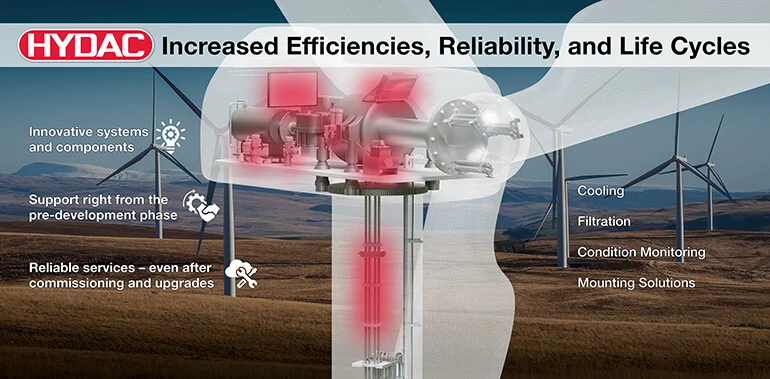
As the global wind energy sector matures, the industry’s focus has undergone a paradigm shift. Where early development was defined by rapid deployment and capacity expansion, the current era is defined by operational excellence, asset optimization, and the critical need to maximize the availability of aging fleets. Amidst this focus on extending the lifecycle of renewable assets, operators are increasingly scrutinizing the "hidden" components that dictate long-term profitability. While nacelle main bearings and pitch systems often capture the spotlight, the gearbox—and specifically the thermal management systems protecting it—has emerged as a decisive factor in operational success.
For wind farm operators, the gearbox represents one of the most expensive and complex components to replace. Consequently, any technology that preserves gearbox health by maintaining optimal lubrication viscosity is not merely a maintenance upgrade; it is a strategic investment in the asset’s internal rate of return.
The Critical Role of Thermal Management
The gearbox in a wind turbine is a marvel of mechanical engineering, subjected to extreme, fluctuating loads and variable wind conditions. Its longevity is tethered to the quality and state of its lubrication oil. To perform correctly, this oil must operate within a specific thermal window—typically between 45°C and 65°C.
Heat exchangers are the unsung sentinels of this process. Their task is deceptively simple: remove heat from the lubricant to ensure it maintains the viscosity necessary to protect the high-load gear meshes and bearings. However, in the real-world environment of a wind farm, this process is frequently sabotaged. Airborne debris, dust, agricultural pollen, and insect matter inevitably find their way into the nacelle, settling into the tightly packed fin structures of traditional "panel cut" heat exchangers.
When these exchangers clog, airflow is restricted, causing oil temperatures to spike. Even minor thermal deviations have outsized consequences. According to industry field data, a mere 12°C rise in oil temperature can degrade oil viscosity by as much as 28 percent. This thinning of the lubricant leads to increased metal-to-metal contact, accelerated wear, and, eventually, premature drivetrain fatigue.
A Chronology of Innovation: The "Square Wave" Evolution
The limitation of conventional heat exchanger designs—namely their susceptibility to fouling in harsh environments—has long been a known pain point for maintenance teams. For years, service technicians have spent thousands of man-hours performing up-tower cleaning, a labor-intensive and costly necessity that frequently results in downtime and potential safety risks.

Recognizing the need for a more resilient, "real-world" solution, engineers at HYDAC began developing a new geometry for heat exchanger cores. The result was the "Square Wave" design, a structural departure from traditional, dense-fin architectures.
The development timeline for this technology followed a rigorous path of engineering and field validation:
- Design Phase: Engineers focused on creating a "self-cleaning" flow path that would allow environmental debris to pass through the core rather than becoming trapped within it.
- Initial Pilot Trials (Year 1): The technology was first deployed on GE 1.x turbine platforms. The objective was to compare the performance of Square Wave cores against traditional units. The results were immediate: the new exchangers required significantly less cleaning and triggered fewer temperature-related SCADA faults.
- Expansion and Cross-Platform Validation: Encouraged by the success on the GE platforms, operators in the Pacific Northwest initiated larger-scale trials on legacy 1 MW-class turbines. This phase proved the "retrofit-ready" nature of the design, as installation was completed without the need for complex nacelle modifications.
- Long-Term Longitudinal Study (Year 2+): Following successful tests in the US, performance data was collected from Mitsubishi platforms over a two-year period. This provided the long-term empirical evidence needed to confirm that the performance gains were not merely temporary, but sustained.
Supporting Data: The Case for Efficiency
The operational benefits of the Square Wave technology are supported by extensive SCADA (Supervisory Control and Data Acquisition) analysis. In both the GE 1.x and Mitsubishi platform evaluations, the data was conclusive. Turbines retrofitted with Square Wave heat exchangers consistently operated 19 to 25 percent cooler than their counterparts utilizing legacy, standard-design exchangers.
Perhaps more importantly, this performance gap widened over time. As traditional units became increasingly clogged with debris, their efficiency plummeted. Conversely, the Square Wave design maintained consistent airflow and thermal dissipation capabilities, even in high-pollen or dusty environments.
This data provides a compelling case for "predictive maintenance" as opposed to "reactive maintenance." By maintaining the optimal thermal environment for the oil, operators are effectively shielding the gearbox from the accelerated degradation that occurs during high-temperature cycles.
Official Perspectives: The Industry View
Mike Erickson, Market Manager for the Wind Industry at HYDAC, emphasizes that the industry’s current challenges require a shift in how we perceive sub-components.

"Wind operators today are balancing increasing performance expectations with the realities of aging fleets and rising maintenance costs," says Erickson. "Technologies that improve cooling efficiency and reduce service exposure can have a meaningful impact on long-term turbine reliability and operational profitability. What operators are increasingly recognizing is that small improvements in thermal management can create meaningful gains in turbine reliability, maintenance efficiency, and long-term asset performance."
Erickson notes that the success of the Square Wave design is not just in the engineering, but in the practical application. "Our goal is to help wind owners and service providers solve practical operational challenges in ways that create long-term value across the entire asset lifecycle. The field data we’re seeing continues to validate the value of designing cooling systems specifically for real-world wind operating environments."
The Implications for Asset Management
The broader implications of this cooling technology upgrade for the wind energy industry are threefold:
1. Financial Optimization (OpEx Reduction)
Operational expenditure (OpEx) is a major concern for wind farm owners as federal tax credits expire and margins tighten. Reducing the frequency of up-tower cleaning and preventing unplanned outages caused by cooling faults directly contributes to a lower cost per megawatt-hour. By shifting from a reactive cleaning cycle to a more passive, resilient system, operators can redeploy maintenance budgets toward higher-value initiatives.
2. Asset Life Extension
The "life-extension" market is booming. Many turbines that were originally designed for a 20-year lifespan are now being evaluated for 25, 30, or even 35 years of operation. Protecting the gearbox from the damage associated with poor lubrication and high-heat operation is the single most important step in achieving these extended operational goals.
3. Reliability and Grid Availability
Modern grid operators place a high premium on "dispatchability" and reliability. A turbine that is constantly tripping due to a cooling fault is not only losing revenue but is also failing to meet its obligations to the grid. Enhanced thermal management helps ensure that turbines remain online during peak wind events, when revenue generation is at its highest, rather than being sidelined for cooling maintenance.

A Future-Proof Strategy
As the wind industry moves into its next decade, the focus on "lifecycle optimization" will only intensify. The transition from legacy, maintenance-heavy components to advanced, resilient subsystems—such as the Square Wave heat exchanger—represents a smarter way to manage complex assets.
For wind stakeholders, the message is clear: the path to improved profitability and reliability does not always require massive, disruptive overhauls. Often, the most effective path involves identifying the "hidden" bottlenecks in current systems and deploying targeted, data-backed upgrades. By addressing the fundamental issue of debris-induced cooling failure, operators can create a more predictable, reliable, and profitable future for their wind fleets.
As fleets age and the industry continues to scale, collaboration between technology partners and operators will be the defining factor in determining which assets continue to provide value and which become stranded liabilities. The success of advanced thermal management systems serves as a blueprint for the next generation of wind farm management—a future where reliability is engineered from the ground up, one component at a time.
For those interested in exploring how these technologies can be integrated into existing maintenance programs, the technical specifications and performance case studies are currently available through industry specialists, providing a clear roadmap for stakeholders looking to secure their assets against the realities of long-term environmental and mechanical wear.