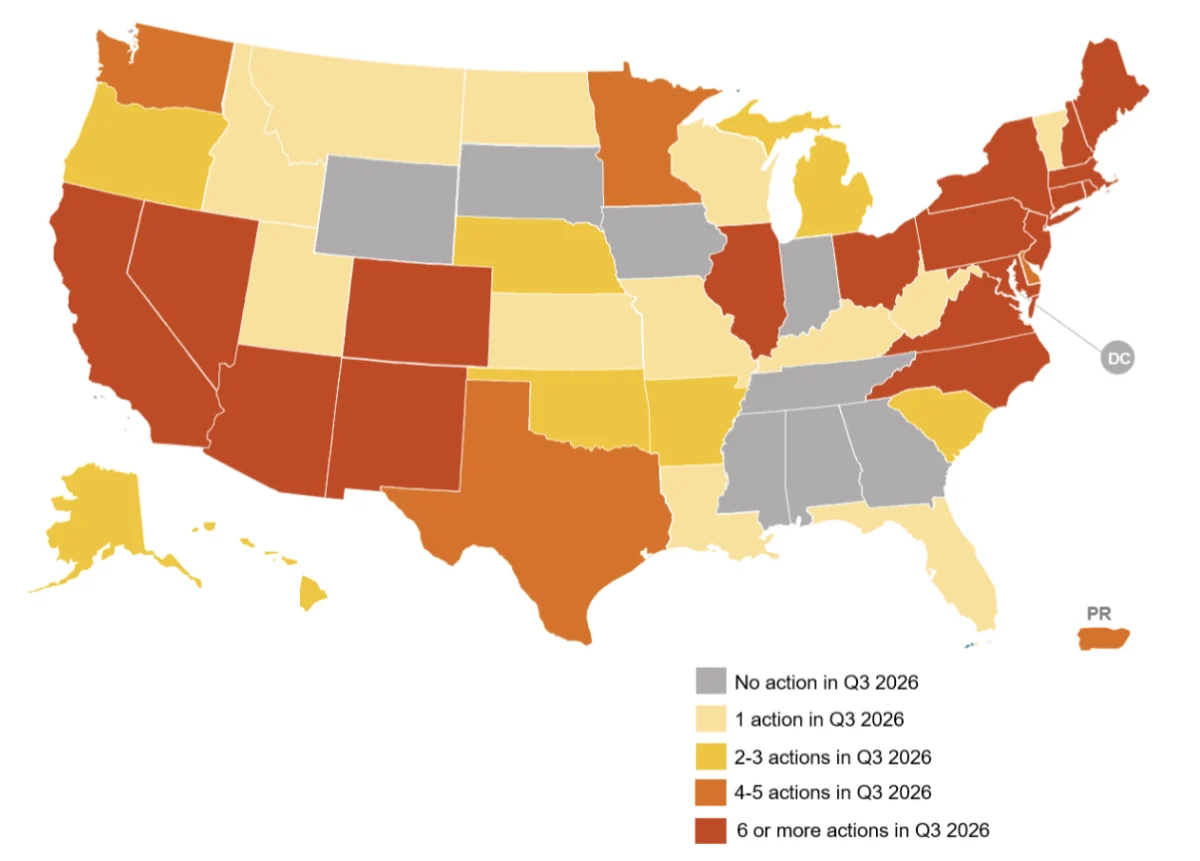
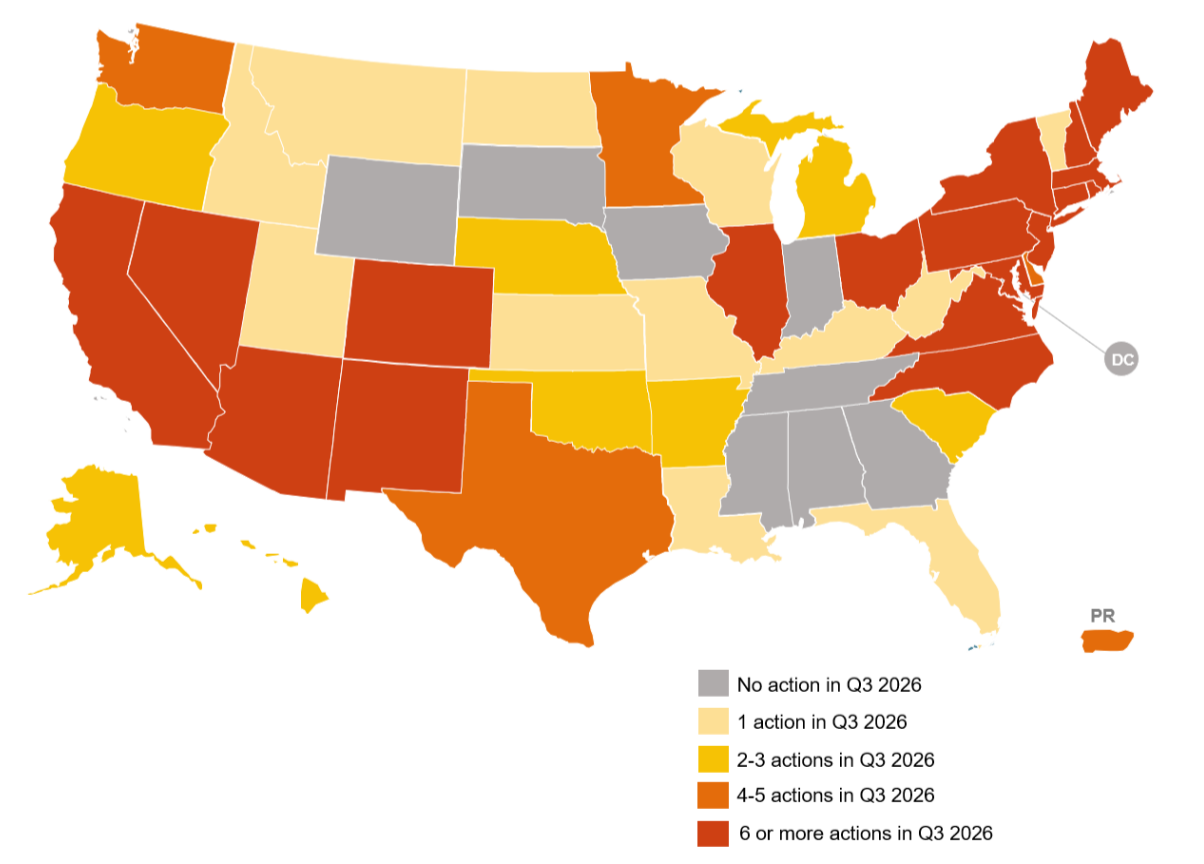
WASHINGTON — The regulatory framework governing America’s rooftop and distributed solar markets is undergoing its most significant transformation in years. According to the newly released Q3 2026 edition of "The 50 States of Solar" report published by the North Carolina Clean Energy Technology Center (NCCETC), state lawmakers and utility regulators across the United States initiated a staggering 221 distributed solar policy actions during the third quarter of 2026.
The comprehensive quarterly analysis tracks legislative bills, regulatory dockets, and policy debates across 42 states and Puerto Rico. As the clean energy transition accelerates, the report reveals that states are aggressively grappling with the economic, technical, and structural realities of high-penetration distributed generation. From contentious battles over net-metering compensation structures to cutting-edge technical reforms designed to lower installation costs, the third quarter of 2026 has set the stage for the future trajectory of America’s decentralized energy grid.
Main Facts: The Scope of Q3 2026 Solar Policy Activity
The sheer volume of regulatory and legislative dockets underscores how critical distributed energy resources (DERs) have become to state energy portfolios. During Q3 2026, 42 states plus Puerto Rico weighed in on distributed solar policy, translating to 221 distinct actions.
While the policy initiatives covered a broad spectrum of topics—including community solar, financial incentives, third-party ownership, and plug-in solar—three core areas dominated state agendas:
- Net-Metering Policies (47 actions): States continue to heavily scrutinize and revise how solar owners are compensated for excess energy sent back to the grid.
- Residential Fixed Charges and Minimum Bills (45 actions): Utilities and regulators are increasingly pushing for structural changes to utility bills to ensure grid maintenance costs are recovered from all residential customers.
- Interconnection Rules (43 actions): With a backlog of clean energy projects waiting to connect to aging grid infrastructure, streamlining the interconnection process remains a top priority.
Geographically, policy activity was heavily concentrated in a handful of states. According to the NCCETC report, the states that took the most distributed solar policy actions during Q3 2026 were Illinois, New Jersey, Maryland, California, and Massachusetts. These states continue to act as bellwethers for the national solar industry, frequently pioneering regulatory frameworks that other jurisdictions later adopt or modify.
Chronology and Evolution of the Q3 Regulatory Cycle
The regulatory lifecycle of distributed solar policy has evolved from a nascent, incentive-driven framework into a complex, mature arena characterized by grid modernization and market integration.
July 2026: Setting the Mid-Summer Dockets
As the third quarter opened in July, state public utility commissions (PUCs) across the country were deep into their summer administrative cycles. Early July saw a surge in petitions filed by investor-owned utilities (IOUs) seeking approval for residential fixed-charge increases and minimum monthly bills. At the same time, state legislatures—many wrapping up or operating within year-round sessions—pushed forward bills aimed at expanding community solar access.
August 2026: Mid-Quarter Technical and Compensation Debates
By August, the focus shifted toward technical grid constraints and valuation mechanisms. Regulators in several mid-Atlantic and western states began formal inquiries into how distributed energy resources could be better integrated to prevent grid congestion. Crucially, August marked a notable uptick in state discussions surrounding meter socket adapters—a technical fix that would eventually be highlighted as a major Q3 trend by NCCETC analysts.
September 2026: Fall Proceedings and Forward-Looking Policy
As Q3 drew to a close in September, attention pivoted toward the future of net metering successor tariffs. States such as California and Massachusetts saw intense administrative hearings regarding how virtual power plants (VPPs) and energy storage systems should interact with existing net-billing frameworks. The quarter culminated in the compilation of data for the NCCETC report, capturing the breadth of legislative and regulatory maneuvers executed over the preceding 90 days.
Supporting Data: Breakdown of State Actions and Emerging Trends
The NCCETC report categorizes policy actions not merely by volume, but by thematic shifts that indicate where the industry is heading. Three primary trends defined the regulatory landscape in Q3 2026:
1. The Rise of Meter Socket Adapters
One of the most promising technical trends identified in the Q3 report is the growing willingness of regulators to develop rules permitting the use of meter socket adapters.
Traditionally, installing a residential solar or solar-plus-storage system often required a costly and time-consuming electrical panel upgrade to handle backfeed safely. Meter socket adapters circumvent this hurdle by allowing customers to connect their DER systems directly to the electric meter. This innovation dramatically reduces both the upfront capital cost for homeowners and the friction associated with installation timelines.
2. Expanding Compensation Beyond Generation
States are increasingly moving away from simplistic kilowatt-hour (kWh) generation models toward sophisticated compensation mechanisms that recognize the multi-faceted value of distributed resources. Rather than looking at solar solely as a generator of electricity, modern policies are factoring in capacity, grid support, and resilience.
3. Consolidated Billing for Community Solar
Community solar programs have historically faced administrative bottlenecks, particularly regarding customer billing and subscription management. In Q3 2026, multiple states moved to incorporate consolidated billing—allowing utility customers to see community solar subscription credits directly on their standard utility bills—thereby streamlining the consumer experience and boosting program enrollment.
Official Responses and Expert Analysis
The release of "The 50 States of Solar" report has drawn significant commentary from energy policy experts and researchers who monitor the pulse of state-level clean energy markets.
Caitlin Flanagan, Policy Analyst at NCCETC, emphasized the immediate practical impacts of the technical rules debated during the quarter.
"This quarter, regulators in several states focused on enabling meter socket adapter use, which could streamline and reduce the cost of distributed energy resource installation," observed Flanagan. "Meter socket adapters allow customers to connect their distributed energy systems directly to their meter, while avoiding electrical panel upgrades."
The financial and structural evolution of solar incentives was further unpacked by Rebekah de la Mora, Project Manager at NCCETC. She highlighted the shifting paradigm away from traditional net metering toward comprehensive grid-integrated frameworks.
"States are looking for alternative mechanisms to compensate customers for on-site energy resources, outside of traditional net metering for distributed solar," noted de la Mora. "Oftentimes, this means expanding net metering programs (or their successors) to include energy storage systems or establishing virtual power plant programs."
Industry stakeholders have largely welcomed the regulatory focus on storage and VPPs, viewing them as essential tools to transform passive solar consumers into active grid assets. However, independent solar installers have expressed caution regarding the high volume of fixed-charge and minimum-bill increases (45 actions in Q3), warning that excessive fixed fees could erode the economic savings that drive residential solar adoption.
Broader Implications for the U.S. Energy Market
The 221 distributed solar policy actions taken in Q3 2026 carry profound implications for consumers, utilities, and the broader U.S. energy grid.
For Residential Consumers
Homeowners considering solar installations face a bifurcated landscape. On one hand, emerging regulatory approvals for meter socket adapters and streamlined community solar billing promise to make going solar faster and more affordable. On the other hand, ongoing battles over net-metering reductions and rising fixed charges mean that the financial payback period for rooftop solar is lengthening in many jurisdictions. Navigating these changes requires consumers to increasingly pair solar installations with battery storage to maximize self-consumption and financial returns.
For Electric Utilities
Utilities are finding themselves at the epicenter of the clean energy transition. With millions of distributed energy systems interconnecting to the distribution grid, traditional utility business models are being forced to adapt. The high frequency of interconnection rule revisions and grid-modernization dockets indicates that utilities are actively working to manage bi-directional power flows. At the same time, the push for increased fixed charges reflects utility efforts to ensure long-term revenue stability for grid maintenance as kWh sales shift to on-site generation.
For the National Grid and Climate Goals
As states like Illinois, New Jersey, Maryland, California, and Massachusetts continue to pioneer aggressive distributed energy policies, their successes and missteps serve as a laboratory for the rest of the nation. The integration of distributed solar with virtual power plants—highlighted in Q3—represents a vital step toward a more resilient, flexible national grid capable of absorbing high shares of renewable energy without sacrificing reliability.
Ultimately, the Q3 2026 edition of "The 50 States of Solar" demonstrates that distributed solar policy is no longer a niche environmental discussion. It has matured into a complex, high-stakes economic and technical battleground that will define the architecture of the 21st-century American power grid.