





SEATTLE, Wash. — In a significant milestone for the Pacific Northwest’s renewable energy landscape, Standard Solar has announced the acquisition of two prominent solar development projects in eastern Washington from OneEnergy Renewables. This strategic transaction marks the inaugural collaboration between the two companies within the state, signaling a robust expansion of distributed generation and community-scale solar infrastructure in the region.
The dual acquisition encompasses the Palouse Junction project, situated in Connell, and the Cunningham project, located in Othello. Together, these two ground-mounted solar installations will inject a combined 15.79 megawatts (MW) of new renewable energy capacity into the local grid. Beyond adding clean electrons to the power supply, the venture underscores the increasingly vital role that rural electric utilities are playing in accelerating the nationwide clean energy transition.
As energy demands shift and the imperative to decarbonize intensifies, projects of this scale highlight how localized, community-focused infrastructure can bolster grid resilience, support long-term regional energy planning, and deliver cost-effective power directly to rural ratepayers.
Main Facts: The Power of Partnership in Eastern Washington
The agreement between Standard Solar and OneEnergy Renewables unites two seasoned players in the American solar sector. Standard Solar brings extensive financial backing, asset management expertise, and a rapidly expanding national footprint in distributed generation. Meanwhile, OneEnergy Renewables acts as the primary developer and serves as the engineering, procurement, and construction (EPC) provider for both sites, leveraging its deep regional development expertise.
The combined 15.79 MW capacity will be realized through two distinct ground-mounted solar farms engineered to maximize efficiency in eastern Washington’s semi-arid, high-sunlight climate.
- The Palouse Junction Project: Located in Connell, Washington (Franklin County), this larger installation boasts a capacity of 12.1 MW. Once operational, it is projected to generate approximately 22,339 megawatt-hours (MWh) of clean electricity in its inaugural year alone. The power generated will be purchased by the Franklin Public Utility District (PUD) under a long-term offtake agreement.
- The Cunningham Project: Situated in Othello, Washington (Adams County), this 3.69 MW installation is designed to yield roughly 6,917 MWh of electricity during its first year of operation. The energy output will be fully utilized by the Big Bend Electric Cooperative, serving its member-owners across the rural agricultural heartland.
Both projects have reached a critical juncture in their lifecycles, transitioning from the development phase toward active construction, with commercial operation targeted for the first quarter of 2027.
Chronology of Development: From Concept to Construction
The realization of the Palouse Junction and Cunningham solar farms is the result of years of meticulous site selection, environmental evaluations, grid interconnection studies, and commercial negotiations. While the formal acquisition by Standard Solar marks a major public milestone, the historical timeline of these projects reflects the methodical nature of modern utility-scale and community-scale solar development in the Pacific Northwest.
Phase 1: Site Identification and Early Development (2021–2023)
OneEnergy Renewables initially identified eastern Washington as an ideal territory for targeted solar development. The region offers favorable solar irradiance profiles, ample flat terrain, and a network of rural electric cooperatives and public utility districts actively seeking to diversify their power portfolios. During this period, OneEnergy secured land rights, initiated baseline environmental assessments, and engaged with local agricultural stakeholders to ensure the projects would coexist harmoniously with the surrounding rural economy.
Phase 2: Interconnection and Offtake Agreements (2023–2024)
As development matured, OneEnergy advanced through the complex utility interconnection queues managed by Franklin PUD and Big Bend Electric Cooperative. Securing grid capacity is frequently one of the most challenging hurdles in renewable energy development; however, close collaboration between the developer and the local utilities streamlined the process. Concurrently, power purchase agreements (PPAs) were ironed out, establishing Franklin PUD and Big Bend Electric Cooperative as the official offtakers. These agreements provided the necessary revenue certainty to advance the projects toward financing and construction.
Phase 3: The Standard Solar Acquisition (Late 2024–2026)
With development risks mitigated and construction horizons drawing into focus, OneEnergy partnered with Standard Solar to transition ownership of the assets. Standard Solar’s entry into the transaction provided the robust capital structure required to push the projects through the final engineering phases and into physical construction.
Phase 4: Construction Horizon and Commercial Operation (Target: Q1 2027)
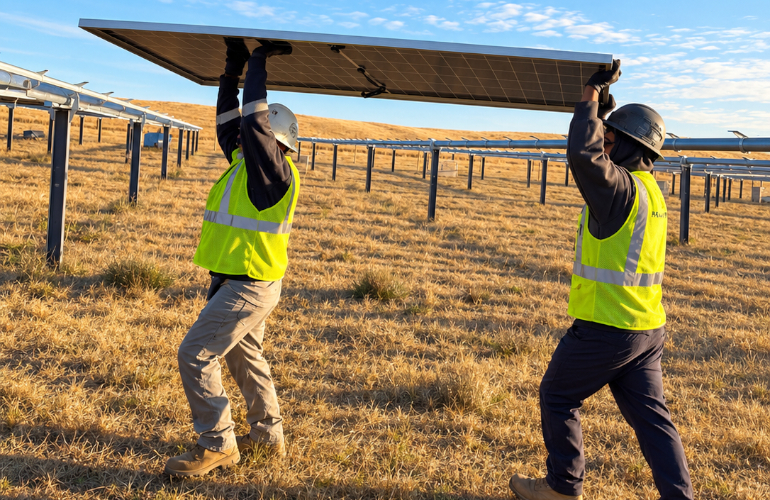
With OneEnergy executing its duties as the EPC provider, physical construction activities on both the Palouse Junction and Cunningham sites are slated to ramp up. Construction will involve the installation of modern photovoltaic modules, tracking systems to optimize solar capture, and grid-tie infrastructure. Both projects remain on track to achieve commercial operation by the first quarter of 2027, at which point they will begin delivering zero-emission power to local consumers.
Supporting Data and Technical Specifications
A closer examination of the numbers underlying the Palouse Junction and Cunningham acquisitions reveals the tangible scale of these renewable energy assets.
Table 1: Project Overview and Specifications
| Project Name | Location (Washington) | Capacity (MW) | Est. Year 1 Generation (MWh) | Utility Offtaker | Target Completion |
|---|---|---|---|---|---|
| Palouse Junction | Connell (Franklin County) | 12.1 MW | 22,339 MWh | Franklin PUD | Q1 2027 |
| Cunningham | Othello (Adams County) | 3.69 MW | 6,917 MWh | Big Bend Electric Cooperative | Q1 2027 |
| Total / Combined | — | 15.79 MW | 29,256 MWh | — | — |
To contextualize the generation capacity, the combined 29,256 MWh produced in the first year alone is equivalent to powering thousands of average Washington households, significantly displacing fossil-fuel-derived generation from the regional grid mix.
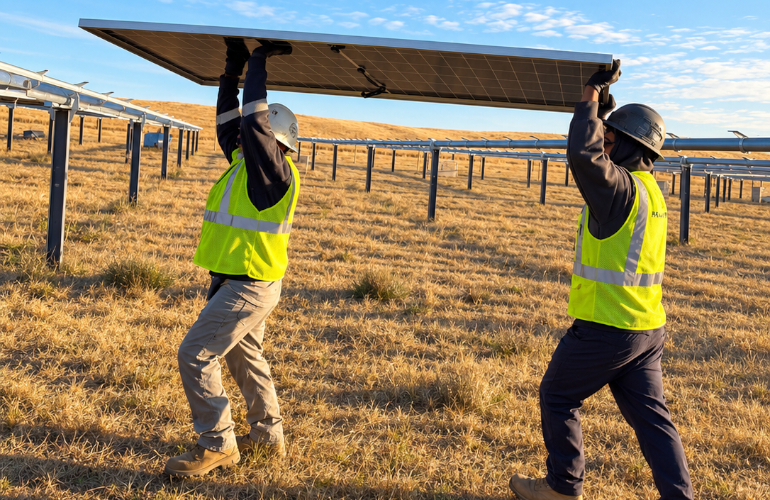
Furthermore, the choice of ground-mounted solar technology in eastern Washington represents a deliberate engineering strategy. The region experiences long daylight hours during the summer months, and modern photovoltaic panels—particularly those equipped with single-axis tracking systems—will capture optimal solar angles to maintain high capacity factors throughout the spring and summer production peaks.
Official Responses and Stakeholder Perspectives
Leadership from both Standard Solar and OneEnergy Renewables emphasized the collaborative nature of the transaction and the broader systemic importance of rural utility engagement in the clean energy transition.
Eric Partyka, Director of Business Development at Standard Solar, highlighted the pivotal role that smaller, rural utilities play in the evolution of America’s electrical grid:
"Rural utilities are essential partners in expanding access to clean energy," Partyka stated. "These projects are an important example of how local utilities can bring the benefits of renewable energy directly to the communities they serve. We are proud to expand our presence in Washington and to work with OneEnergy Renewables on projects that support practical, locally driven clean energy growth."
Echoing this sentiment, Erin Lynch, Senior Manager of Development at OneEnergy Renewables, underscored the alignment between thoughtful project engineering and state-level environmental goals:
"We are excited to partner with Standard Solar on these Washington projects and to help deliver reliable, locally generated renewable energy to rural utility customers," Lynch noted. "Palouse Junction and Cunningham reflect the value of thoughtful solar development that aligns with local utility needs and supports Washington’s broader clean energy future."
The enthusiasm from the developers is mirrored by the offtakers. By securing long-term, locally generated renewable power, utilities like Franklin PUD and Big Bend Electric Cooperative are insulating their ratepayers against the volatility of traditional wholesale energy markets while actively meeting state decarbonization mandates.
Implications: Reshaping Rural Energy and Washington’s Clean Grid
The acquisition of the Palouse Junction and Cunningham projects carries profound implications for the state of Washington, its energy regulatory landscape, and the broader economic development of its rural communities.
1. Decentralization and Grid Resilience
For decades, major power generation in the Pacific Northwest was dominated by massive hydroelectric dams and large-scale thermal plants. While hydro remains the backbone of the region’s clean energy identity, climate-induced droughts and fluctuating river flows have exposed vulnerabilities in relying exclusively on a centralized water-based system. Integrating distributed, ground-mounted solar assets like Palouse Junction and Cunningham diversifies the generation portfolio, providing an alternative source of power that peaks during high-demand summer air-conditioning loads and dry seasonal periods.
2. Empowering Rural Cooperatives and PUDs
Historically, large-scale renewable energy development has favored urban centers or massive merchant solar farms feeding into investor-owned utility grids. However, the involvement of Franklin PUD and Big Bend Electric Cooperative demonstrates that community-scale solar can be successfully integrated into rural utility frameworks. This model ensures that the economic benefits—such as local tax revenues, land-lease payments to farmers, and stable long-term power costs—remain anchored within the rural communities hosting the infrastructure.
3. Economic and Environmental Synergy in Eastern Washington
Eastern Washington’s vast agricultural landscape has increasingly found complementary economic synergy with solar energy development. Landowners and agricultural producers often utilize solar leases to diversify their income, ensuring financial resilience against commodity price fluctuations and water scarcity challenges. Projects built on marginal or non-irrigated agricultural land allow the soil to rest, fostering local biodiversity while simultaneously generating clean power.
4. Setting a Precedent for Future Collaborations
As Standard Solar firmly plants its flag in Washington state through this partnership with OneEnergy Renewables, the transaction serves as a blueprint for future clean energy deployment. With Washington’s strict clean energy standards—mandating a greenhouse-gas-neutral electricity supply by 2030 and 100% clean electricity by 2045—the demand for rapid, utility-aligned solar development has never been higher.
The successful closing of the Palouse Junction and Cunningham transactions proves that independent power producers, specialized developers, and local public utilities can successfully collaborate to scale up the infrastructure necessary for a decarbonized future. As construction commences toward the 2027 completion target, all eyes will be on eastern Washington as a shining example of how rural America is leading the charge in the renewable energy revolution.