Hydraulic systems have long been the muscle behind the global industrial machine. From the massive force required for metal stamping and plastics processing to the precision movements of heavy construction equipment and automated assembly lines, fluid power remains unparalleled in its power density, robustness, and reliability. However, as the global manufacturing sector pivots toward a greener future, the "brute force" reputation of hydraulics is undergoing a sophisticated transformation.
Today, engineers are tasked with a dual mandate: maintain the legendary durability and force of hydraulic systems while radically optimizing their energy footprint. This shift is not merely an environmental preference; it is a fundamental evolution in industrial engineering, driven by regulatory pressures, rising energy costs, and the integration of smart, digital control architectures.
The Core Challenge: Understanding Hydraulic Energy Transformation
At its most fundamental level, a hydraulic system serves as an energy converter. It takes mechanical input—typically from an electric motor—transforms it into fluid power, and ultimately converts that potential energy back into mechanical work at the actuator.
In every stage of this cycle, energy can be lost as heat due to internal leakage, friction, or pressure drops. Historically, these losses were accepted as the price of doing business, often offset by designing systems with generous "safety margins" to ensure constant reliability. While these design buffers guarantee performance, they often lead to energy being wasted through pressure relief valves or constant-speed motors running at full tilt, even when the task at hand requires only a fraction of that capacity.
The modern industrial challenge, therefore, is to transition from "over-engineered and always-on" designs to "intelligent, demand-driven" systems that align power consumption precisely with operational necessity.
Chronology of Evolution: From Fixed-Speed to Intelligent Actuation
The trajectory of hydraulic efficiency has moved through several distinct phases of technological maturity:
- The Era of Fixed-Speed Systems (Mid-20th Century): Systems were defined by constant-displacement pumps driven by fixed-speed AC motors. Efficiency was low because the system generated maximum flow regardless of the machine’s state, with excess fluid bypassed back to the tank via relief valves, generating significant heat.
- The Advent of Proportional Hydraulics (1980s–1990s): The introduction of proportional valves allowed for finer control of flow and pressure, reducing the waste associated with simple on-off switching.
- The Rise of Variable Speed Drives (Early 2000s): The integration of Variable Speed Drives (VSDs) marked a turning point, allowing motors to throttle down during idle periods.
- The Electrohydraulic Revolution (Current Era): We are now in the age of "Smart Hydraulics," where high-speed digital controllers, AI-driven predictive analytics, and integrated servopumps create a closed-loop system that reacts in real-time to load requirements.
Supporting Data: Where Efficiency Gains Are Realized
Recent industry audits suggest that switching from conventional fixed-speed hydraulic power units to modern electrohydraulic systems can yield energy savings ranging from 30% to 70%, depending on the duty cycle of the machine.
Key Performance Drivers:
- VSD Integration: By matching the pump speed to the specific flow requirements of the current machine cycle, VSDs eliminate the "throttling losses" common in older systems.
- Load-Sensing Architectures: These systems ensure that the pump only delivers the exact pressure required by the load, preventing the massive energy dump associated with pressure compensation at the valve level.
- Regenerative Circuits: By capturing energy during deceleration phases—often previously dissipated as heat—and storing it in high-pressure accumulators, modern systems can reuse that energy for subsequent strokes, effectively "recycling" power within the machine.
Technological Advancements: The New Frontier
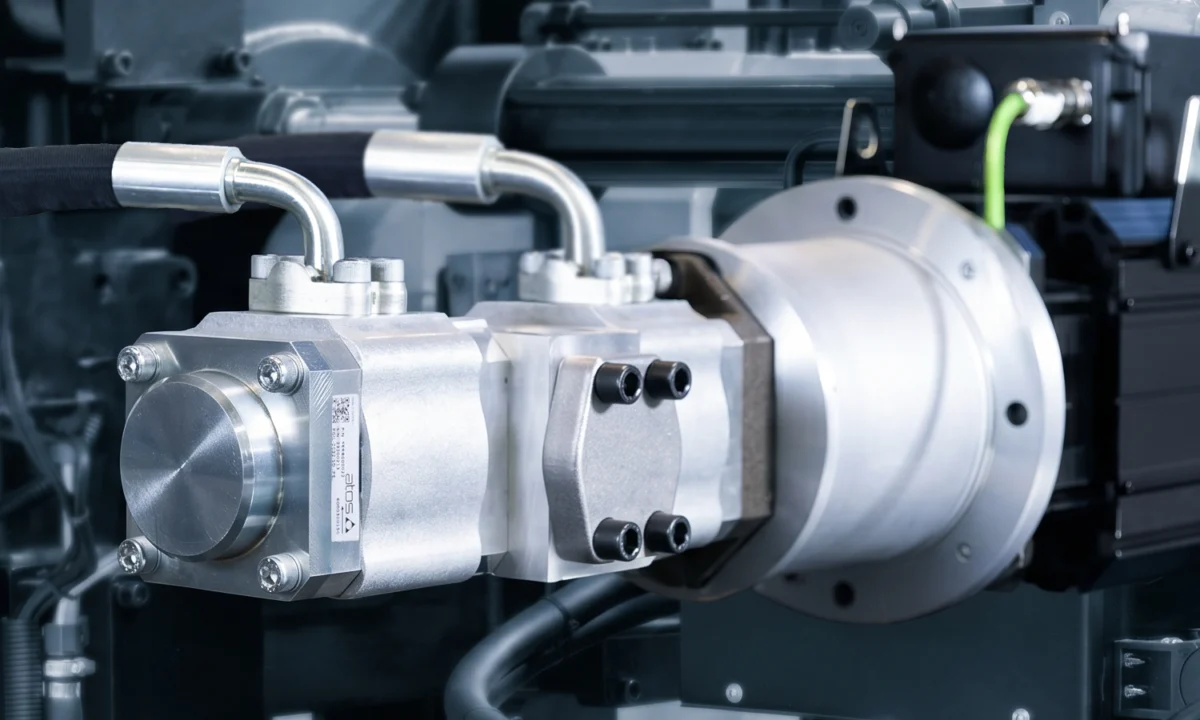
The integration of advanced electrohydraulic systems—such as the high-precision servopumps engineered by industry leaders like Atos—represents the current state-of-the-art. These systems move beyond simple mechanical efficiency; they represent a convergence of fluid power and digital intelligence.
The Role of Digitalization
Modern hydraulics are no longer "dumb" mechanical components. They are equipped with sensors that feed data into local controllers. This connectivity allows for:
- Condition Monitoring: Detecting the early onset of internal wear before it results in a drop in efficiency.
- Predictive Maintenance: Moving from scheduled maintenance to condition-based maintenance, which ensures the system is always operating at peak efficiency levels.
- AI and Machine Learning: As noted in recent industry research, the application of machine learning allows systems to "learn" the optimal pressure profiles for repetitive tasks, further minimizing the energy input required to complete a cycle.
Official Industry Perspectives: The Balancing Act
Leading industrial manufacturers emphasize that the push for efficiency must never come at the expense of safety or precision.
"The goal is not to remove the hydraulic component, but to make it a smarter partner in the factory ecosystem," says a representative from the fluid power sector. "When we discuss energy efficiency, we are talking about a trifecta: the right component selection, the right control architecture, and the right maintenance culture."
Industry experts argue that the most successful implementations occur when energy-efficiency metrics are integrated into the initial procurement phase. By evaluating the Total Cost of Ownership (TCO)—which includes energy consumption over a 10-year span—rather than just the initial capital expenditure, companies are finding that the ROI on high-efficiency hydraulic systems is significantly more attractive than previously thought.
Strategic Implications for Global Manufacturing
The implications of this shift are profound for the broader manufacturing landscape. As corporations commit to "Net Zero" targets and Scope 2 emission reductions, the machinery on the factory floor is coming under increased scrutiny.
1. Regulatory Compliance
Regional regulations, particularly in the EU and North America, are increasingly mandating stricter energy performance standards for industrial equipment. Hydraulic systems that fail to integrate variable control or energy recovery may soon face obsolescence in highly regulated markets.
2. Operational Resilience
Efficiency is not just about the power bill; it is about heat management. Less wasted energy means less heat generation. Lower operating temperatures extend the lifespan of hydraulic fluids and seals, directly reducing downtime and maintenance costs. This creates a more resilient production line, capable of higher uptime.
3. Sustainability and ESG Goals
For large-scale industrial firms, incorporating energy-efficient hydraulic systems is a tangible way to demonstrate progress on Environmental, Social, and Governance (ESG) metrics. By aligning hardware upgrades with sustainability reporting, companies are finding that "green" engineering is a powerful driver of corporate value.
Implementation Strategies: Moving Forward
Transitioning to high-efficiency hydraulics is not a "one-size-fits-all" process. Organizations should consider a tiered approach:
- The Audit Phase: Before replacing equipment, use modern diagnostic tools to map the energy usage of existing hydraulic circuits. Identify "hot spots" where energy is consistently being vented as heat.
- The Retrofit Opportunity: In many cases, it is not necessary to replace an entire machine. Retrofitting existing power units with VSDs or upgrading to advanced proportional valves can offer a high internal rate of return (IRR) with minimal disruption.
- The Design-In Phase: For new capital investments, insist on electrohydraulic architectures. The upfront cost may be higher, but the energy savings and enhanced diagnostic capabilities provide a competitive edge in long-term operational costs.
Outlook: The Future is Intelligent
As we look toward the next decade, the convergence of hydraulic power with artificial intelligence and digital twins will continue to accelerate. We are moving toward a future where a hydraulic system can "self-optimize" in real-time, adjusting its own parameters based on fluid viscosity changes, ambient temperature, and production load demands.
Hydraulics will not be replaced by electric actuators in every instance. Instead, they will be refined, digitized, and integrated into a broader, holistic industrial strategy. The "old-school" perception of hydraulics as a power-hungry necessity is being replaced by the reality of a high-tech, precision-engineered solution that is as vital to the future of industry as it was to the past.
By focusing on the synergy between fluid dynamics and digital control, manufacturers can ensure that their hydraulic assets remain not only the strongest part of their operations but also the most efficient. Through innovation, education, and a commitment to smarter design, the hydraulic industry is proving that high power and high efficiency are not mutually exclusive—they are the new standard for the modern, intelligent factory.