





BRUSSELS — For years, the European Union has calibrated its existential anxieties against external shocks. Policymakers in Brussels, Berlin, and Paris have routinely lost sleep over the specter of Russian revanchism, the relentless economic expansion and state-capitalist pressures of Chinese exports, and the unpredictable trade doctrines and transatlantic turbulence emanating from Washington under President Donald Trump.
Yet, a growing chorus of analysts and institutional strategists argues that gazing outward has blinded the bloc to a far more insidious danger. The most critical threat to the European project is no longer foreign; it is domestic, systemic, and gathering momentum from within the Union’s own democratic structures.
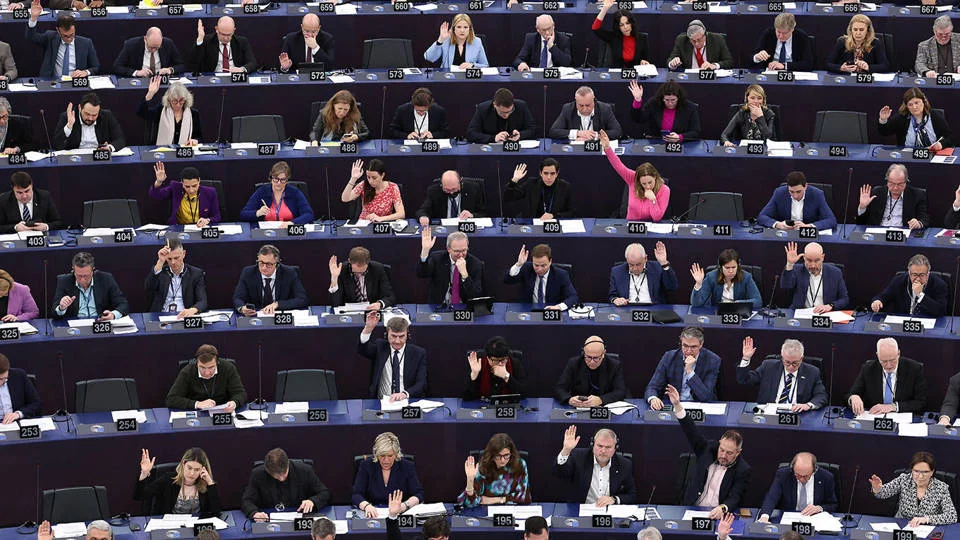
Those seeking to weaken or dismantle the EU’s supranational foundations are no longer operating exclusively on the political fringes. They are institutionalized, coordinated, and actively preparing radical schemes to hollow out the bloc from the inside. A prime example of this strategy was recently put on full display in the European Parliament, where Germany’s far-right Alternative für Deutschland (AfD) presented its blueprint for a so-called “New Deal for Europe.”
As nationalist and Eurosceptic forces systematically test the limits of European integration, the pro-EU political camp can no longer rely on institutional inertia or procedural defenses. It must urgently prepare comprehensive political strategies and structural institutional arrangements to safeguard the European project.
Main Facts
The contemporary debate over the future of European integration is defined by a paradox: while public support for the EU has occasionally fluctuated, the formal representation of Eurosceptic, nationalist, and radical right-wing parties inside European institutions has reached unprecedented levels.
- The Internal Challenge: Unlike historical opposition movements that sought total withdrawal from the bloc (such as the UK’s Brexit model), contemporary anti-integration forces have adopted an "inside-out" strategy. Rather than leaving the EU, they aim to capture its apparatus to systematically dismantle its supranational competencies, returning sovereignty to national capitals and neutralizing the European Commission and the European Court of Justice.
- The AfD’s "New Deal": The Alternative für Deutschland’s recent presentation in the European Parliament serves as a tactical manifestation of this shift. Framed as a reform package, the proposal seeks to drastically curtail the regulatory authority of Brussels, dismantle common fiscal and monetary harmonization efforts, and rewrite the foundational treaties of the Union to prioritize absolute national vetoes over majority voting.
- The Supranational Dilemma: The EU’s architecture was originally designed to manage consensus among liberal democracies. It struggles inherently when actors inside the system weaponize democratic mechanisms—such as parliamentary debate, legislative amendments, and public funding—to paralyze or subvert the integration process itself.
- The Strategic Vacuum: While pro-European political groups (primarily the European People’s Party, the Socialists & Democrats, and Renew Europe) maintain a working majority, they remain ideologically fragmented on how to deepen integration, leaving an opening for radical factions to define the narrative on institutional reform.
Chronology of the Internal Eurosceptic Turn
To understand how the EU arrived at this critical juncture, it is necessary to trace the evolution of Euroscepticism from ideological dissent to an institutionalized strategy for systemic transformation.
- 2010–2015 (The Eurozone and Migration Crises): The foundational cracks began to widen during the sovereign debt crisis and the 2015 migration influx. For the first time, Euroscepticism transitioned from marginal nationalist rhetoric into mainstream political leverage. Parties began arguing that Brussels was either too heavy-handed or completely incapable of protecting national borders and economies.
- 2016 (The Brexit Shock): The United Kingdom’s vote to leave the European Union initially shocked continental capitals into unity. Rather than triggering a domino effect of exits, Brexit paradoxically reminded remaining member states of the economic perils of isolation. Consequently, Eurosceptic parties shifted tactics: total withdrawal (Lex Exit) was sidelined in favor of internal subversion (Lex Transformation).
- 2019–2024 (Mainstreaming and Coalitions): Far-right and radical nationalist parties expanded their footprints in the European Parliament elections of 2019 and 2024. They formed powerful new political groupings, securing critical committee seats, financial resources, and institutional platforms from which to challenge EU climate policy (the Green Deal), migration pacts, and foreign policy alignment.
- Late 2026 (The "New Deal" Offensive): The presentation of radical legislative alternatives, such as the AfD’s proposal in the European Parliament, marks a new phase. Eurosceptics are no longer merely voting against European integration; they are proactively drafting counter-proposals designed to establish a rival vision of Europe based on ethno-nationalism, economic protectionism, and the erosion of the rule of law.
Supporting Data and Political Metrics
The rising internal threat is quantifiable. Recent parliamentary data and sociological surveys highlight the scale of the challenge facing pro-European forces:
- Parliamentary Representation: Radical right, hard-eurosceptic, and nationalist factions now command nearly a quarter of the seats in the European Parliament. Their ability to form blocking minorities on key legislative files has grown substantially.
- Institutional Fatigue: According to Eurobarometer data, while aggregate support for EU membership remains relatively high across member states, trust in the effectiveness of EU institutions to handle complex crises—such as inflation, housing, and migration—has declined steadily over the past three years.
- Cross-Border Coordination: Unlike past decades when nationalist parties were isolated and mutually suspicious, contemporary radical movements have established robust transnational networks. Parties from France, Italy, Germany, and the Netherlands frequently coordinate voting patterns and strategic messaging within the European Parliament, effectively building a "shadow international" dedicated to decentralized governance.
Official Responses and Institutional Reactions
The leadership in Brussels and major national capitals has responded to the rising internal challenge with a mixture of institutional defense and political recalibration.
The European Commission’s Stance
The European Commission, under its leadership, has consistently emphasized the enforcement of the rule of law as the primary bulwark against internal subversion. Mechanisms linking EU funds to compliance with democratic norms and judicial independence have been deployed—albeit controversially and with varied success—against member states perceived to be backsliding.
In response to legislative maneuvers like the AfD’s "New Deal," senior Commission officials have reiterated that the Union’s treaties are non-negotiable for those acting in bad faith against the foundational values enshrined in Article 2 of the Treaty on European Union (TEU).
Mainstream Parliamentary Pushback
Pro-European political groups in the European Parliament have increasingly organized cordons sanitaires—informal agreements to exclude radical right-wing parties from key leadership positions, committee chairmanships, and rapporteurships. However, this strategy faces growing internal friction. Center-right parties occasionally face domestic political pressures to cooperate with moderate elements of the nationalist right, threatening to crack the pro-European consensus.
Berlin’s Political Calculus
Given that the initiative came from a German domestic party operating on the European stage, reactions in Berlin have been sharp. Mainstream German parties across the political spectrum have condemned the "New Deal for Europe" as an unconstitutional attempt to undermine Germany’s federal commitments and destroy the European single market. Yet, the domestic rise of the AfD in regional polls complicates the federal government’s ability to project unassailable stability abroad.
Implications for the Future of European Integration
The implications of this internal front extend far beyond parliamentary theater. If the pro-EU camp fails to anticipate and counter these radical schemes, the European Union risks succumbing to a slow-motion institutional paralysis.
1. The Risk of Legislative Gridlock
As radical factions gain ground, passing ambitious legislative packages—whether relating to the digital transition, European defense integration, or capital markets union—will become exponentially harder. The EU risks becoming a reactive administrative body rather than a proactive global player, perpetually bogged down by internal obstructionism.
2. The Weaponization of the Rule of Law
Internal actors seeking to weaken supranational foundations often use the very democratic tools of the Union to dismantle them from within. This forces the EU into a philosophical dilemma: How can an open, democratic society defend itself against political actors who utilize democratic processes to subvert democracy itself, without violating its own liberal principles?
3. The Need for a Proactive Counter-Strategy
As analyst Janis A. Emmanouilidis has argued, defending the status quo is no longer sufficient. The pro-EU camp must transition from defensive containment to offensive institutional reform. This requires:
- Streamlining Decision-Making: Moving away from the paralyzing requirement of unanimity in foreign policy and taxation, thereby making the EU more agile and less susceptible to national blackmail.
- Enhancing Democratic Legitimacy: Bridging the gap between Brussels and European citizens by empowering the European Parliament with full legislative initiative powers, making the EU visibly responsive to local socioeconomic concerns.
- Narrative Reclamation: Pro-European forces must stop viewing integration merely as a technocratic project of regulations and directives. They must reframe it as an indispensable political shield for European sovereignty, security, and prosperity in an increasingly hostile and fragmented global order.
Conclusion
The European Union stands at a historic crossroads. While external adversaries from Moscow to Washington and Beijing present formidable challenges to European cohesion, the most profound test of the Union’s resilience is unfolding within its own borders.
The proliferation of radical, internally generated schemes to dismantle supranational integration—exemplified by the AfD’s maneuvering in the European Parliament—signals that the enemy is no longer at the gates; it is sitting at the legislative table. For the European project to survive, the pro-EU majority must awaken to this internal reality, muster the political courage to reform the Union’s institutional machinery, and construct a renewed vision of Europe that can decisively out-maneuver the forces of disintegration.