




Technical proficiency alone is rarely enough to give a worker the confidence to raise a safety concern. Across manufacturing plants, construction sites, and oil and gas facilities, thousands of employees maintain the technical competencies required to complete their daily tasks. Yet, when an unusual vibration rattles a piece of heavy machinery, or a faint, sulfurous odor drifts across a refinery yard, many of these same workers stay silent.
The hesitation is rarely a product of negligence or apathy. Instead, it is anchored in a psychological barrier: the quiet, nagging doubt over whether a problem truly merits a report, whether the worker has the institutional authority to speak up, and whether they possess the precise industry terminology to articulate the risk without sounding foolish.
In high-hazard industries, these uncertainties can prove fatal. However, as workforce safety research increasingly demonstrates, structured training and professional certification offer a powerful antidote. By equipping workers with formalized knowledge, standardized vocabulary, and professional standing, credentialing transforms hesitant operators into confident safety advocates, bridging the gap between identifying a hazard and sounding the alarm.
Main Facts: The Anatomy of Workplace Hesitation
To understand why accidents escalate in industrial environments, one must first examine the mechanics of workplace silence. When a machine operator notices an irregular mechanical rhythm midway through a grueling shift, a complex psychological calculus takes place in real time. The operator must weigh the potential consequences of reporting the issue against the social and professional fallout of being wrong.
Industry analysts have identified three primary behavioral barriers that consistently suppress hazard reporting:
- Fear of Overstepping: Workers frequently worry that questioning equipment integrity or operational methods falls far outside their formal job description or technical authority. They fear being labeled as insubordinate, disruptive, or slow.
- Vocabulary Gaps: Without access to a standardized technical lexicon, describing a complex mechanical or chemical anomaly precisely can feel daunting. Workers hesitate to report vague symptoms out of fear that management will dismiss their concerns as unfounded.
- Unclear Accountability: When organizational reporting lines are muddy—or when it remains unclear who holds ultimate responsibility for remediation—reporting can seem utterly pointless, fostering a culture of resignation.
These psychological hurdles are not isolated incidents; they represent a systemic vulnerability. According to workforce safety research published by Gallup in October 2024, the presence of recent occupational safety and health (OSH) training fundamentally alters worker behavior on a global scale.
The Gallup findings revealed a staggering disparity: individuals who have received OSH training within the past two years are 3.3 times more likely to report safety hazards or harm to a supervisor or manager compared to those who have never received such training. This empirical data underscores a vital truth: training does not merely impart mechanical rules; it instills the psychological safety and regulatory backing required to give voice to danger.
Chronology: The Evolution of Industrial Safety and the Cost of Silence
The push toward formal certification and standardized safety protocols has a long, hard-fought history rooted in industrial tragedies that exposed the catastrophic costs of unaddressed workplace hazards.
- Pre-1970s (The Era of Industrial Fatalism): For much of the industrial age, workplace injuries and fatalities were largely accepted as an unavoidable cost of doing business. Training was informal, passed down orally through workplace slang and unverified customs.
- The 1970s–1990s (Regulatory Awakening): The establishment of foundational safety bodies, such as the Occupational Safety and Health Administration (OSHA) in the United States, marked a shift toward legally mandated protections. Companies began implementing basic safety orientations, though these programs often focused on compliance checklists rather than empowering frontline workers.
- The 2000s–2010s (Rise of Role-Specific Credentials): As industrial machinery grew more complex, general safety orientations proved inadequate. Industries began adopting rigorous, third-party certifications—such as specialized crane operator exams and hazardous gas safety courses—recognizing that standardized testing was necessary to verify true competency.
- 2015–2024 (Data-Driven Accountability and Modern Metrics): Recent comprehensive reviews have begun quantifying the human toll of inadequate safety oversight. For instance, data compiled by the National Safety Council (NSC) and the NCCCO Foundation revealed that between 2015 and 2024, there were 405 crane-related fatalities in the United States. Crucially, only 29% of those fatalities involved crane or tower operators, proving that industrial hazards ripple outward, endangering every worker on a job site and reinforcing the need for universal safety empowerment.
- Present Day (Integration of Tech and Continuous Culture): Modern safety paradigms now leverage advanced digital tools—such as augmented reality (AR) simulations and open-book compliance certifications—to normalize hazard reporting and embed a speak-up culture into daily operations.
Supporting Data: The Statistics Behind High-Hazard Risks
The imperative for structured certification becomes starkly apparent when reviewing empirical injury and fatality statistics across critical sectors. The numbers illustrate that industrial hazards do not discriminate based on tenure, but they are heavily mitigated by formal education.
Crane Operations and Peripheral Risks
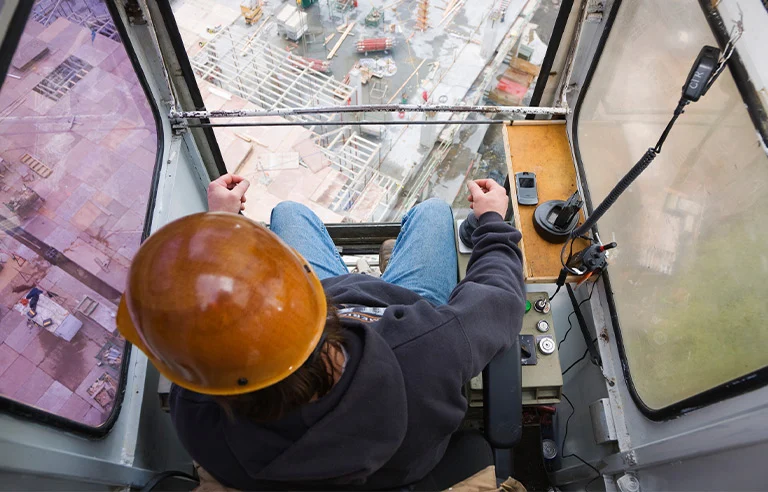
The NSC and NCCCO Foundation report highlighting 405 crane-related deaths over a decade demonstrates that construction zones are inherently high-risk ecosystems. Because nearly three-quarters of these fatalities involved workers other than the crane operators themselves—such as riggers, signalpersons, and ground crews—safety training cannot remain siloed within specialized roles. Every worker must understand operational parameters well enough to identify unsafe lifts, unstable ground conditions, or improper rigging.
The Lethality of Hydrogen Sulfide in Oil and Gas
In the energy sector, chemical hazards present invisible, fast-acting threats. Hydrogen sulfide ($H_2S$) is a colorless gas known for its characteristic rotten egg odor at low concentrations. However, prolonged exposure rapidly deadens the human olfactory nerve, rendering sensory detection dangerously unreliable.
The catastrophic potential of this hazard was underscored by a U.S. Chemical Safety Board (CSB) investigation into a fatal release at the Pemex Deer Park refinery in Texas. Routine maintenance work triggered a release of approximately 27,000 pounds of toxic hydrogen sulfide gas.
- Human Toll: The disaster resulted in multiple fatalities and serious injuries.
- Community Impact: Shelter-in-place orders were enforced for several hours in the neighboring cities of Deer Park and Pasadena, and a critical segment of Texas State Highway 225 was temporarily shut down.
When a single operational failure can paralyze municipal infrastructure, frontline workers cannot rely on intuition; they require rigorous, certified training to recognize and respond to chemical breaches instantaneously.
Electrical Hazards in Manufacturing
Electrical safety remains a persistent challenge in manufacturing environments, particularly during maintenance, servicing, and lockout/tagout (LOTO) procedures. According to comprehensive occupational safety statistics from the Electrical Safety Foundation International (ESFI) covering the period from 2011 through 2024:
- Out of 70,276 total occupational fatalities recorded across all causes, 2,070 deaths were directly attributable to contact with electricity.
- Wage and salary workers accounted for 80% of all workplace electrical fatalities, while self-employed individuals accounted for the remaining 20%.
These figures emphasize that structured safety standards—such as those governed by NFPA 70E—are vital for protecting employees who encounter live circuits and arc flash risks during routine manufacturing operations.
Official Responses and Industry Frameworks: Certifications That Build Confidence
To combat the psychological barriers that keep workers silent, industry bodies have established targeted certifications. These credentials do more than test technical aptitude; they actively reshape workplace communication by establishing a shared, authoritative vocabulary.
1. Crane Operator Certification for Construction Workers
Passing a certified crane operator exam signals deep operational skill and safety competency. Crucially, it grants operators the institutional standing to halt work or raise objections that uncertified peers might feel unqualified to voice.
A major barrier in heavy construction is the reliance on informal workplace slang. While slang keeps jobs moving quickly, it frequently drifts far from the standardized, unambiguous terminology required by regulatory exams. According to insights from CICB, a specialist in crane and rigging training services:
"Most employees, even the most seasoned, do not realize that they are not using the proper wording. They are simply passing on the terms to the next generation as they learned them. It is not uncommon for those with minimal experience to fare better on the written exams than those with years of experience."
To overcome ingrained bad habits, operators must enroll in structured preparatory classes that correct their technical vocabulary, refine hands-on practices, and build computer-testing proficiency. Because OSHA mandates that crane operators renew their certificates every five years via written examination, continuous preparation ensures that safety standards remain sharp and up to date.
2. $H_2S$ Alive Certification for Oil and Gas Workers
General safety orientations are wholly inadequate when dealing with lethal gases. The H_2S Alive course, administered by Energy Safety Canada, bridges this gap through a rigorous combination of classroom instruction and hands-on practical exercises.
Rather than relying on fading sensory perceptions, workers are trained in comprehensive hazard assessment, advanced detection equipment operation, respiratory protective gear utilization, and initial emergency response strategies. Passing the intensive one-day course requires full participation, written exam completion, and physical skills demonstrations, including donning breathing apparatuses and executing emergency rescue drag techniques.
3. CESCP Certification for Manufacturing Workers
Electrical safety oversight in manufacturing requires navigating dense regulatory frameworks. The National Fire Protection Association (NFPA) facilitates the Certified Electrical Safety Compliance Professional (CESCP) credential for professionals tasked with overseeing plant electrical safety programs.
Based strictly on NFPA 70E standards, the certification covers complex program requirements, risk assessments, and compliance documentation. Notably, the NFPA exam utilizes an open-book format permitting direct reference to NFPA 70E standards. This structure teaches candidates how to navigate the standard’s index rapidly under pressure, ensuring they can instantly cite regulatory provisions when challenging an unsafe electrical procedure on the factory floor.
Implications: Fostering a Sustainable "Speak-Up" Culture
Acquiring a certification is a vital first step, but credentials alone cannot permanently alter a company’s cultural ecosystem. Training and certification empower workers to speak up only when safety directors, plant managers, and corporate officers treat education as an ongoing, continuous component of daily operations.
When leadership consistently reinforces safety protocols, hazard reporting shifts from feeling like a high-stakes confrontation to becoming an organic, routine part of the workday.
The Technological Horizon: Augmented Reality in Safety Training
As industries look for innovative ways to sustain safety competencies between formal certification renewals, emerging technologies are stepping in to fill the gap. Augmented reality (AR) offers a transformative medium for safety rehearsal, allowing workers to practice high-risk scenarios in simulated virtual spaces without real-world consequences.
As Peter Chambers of Renovated notes regarding modern industrial simulation:
"Using AR, workers can practice operating heavy machinery in a virtual space. It lets them understand its mechanics and safety protocols without the risks of operating actual equipment."
Virtual rehearsal functions as an ideal complement to foundational certification. While traditional credentialing supplies the core knowledge and regulatory standing, AR allows for continuous, low-risk muscle memory reinforcement, ensuring that safety protocols remain front-of-mind.
Conclusion: Investing in Training is Investing in Survival
Across construction sites, oil refineries, and manufacturing plants, structured training remains the definitive bridge between technical execution and absolute workplace safety. By providing workers with standardized terminology, verified technical credentials, and the psychological backing to challenge unsafe conditions, companies dismantle the silence that allows minor anomalies to metastasize into catastrophic disasters.
Directors, plant managers, and executive officers who oversee safety budgets hold the ultimate responsibility for determining where corporate investment flows. That strategic decision directly dictates whether a frontline workforce feels authorized and equipped to stop the line when danger arises.
Ultimately, prioritizing recurring, role-specific certification programs for every high-hazard function on the team is not merely a compliance exercise. It is a profound investment in human life, operational integrity, and the enduring resilience of the modern workforce.