




NEW DELHI — Modern history has been defined by an unremitting succession of macroeconomic and geopolitical shocks. Over the span of just two decades, the global order has reeled from disruptive conflicts—ranging from the protracted wars in Iraq and Afghanistan during the 2000s to ongoing hostilities in Ukraine and the Middle East. Policymakers have simultaneously had to navigate the systemic devastation of the 2008 global financial crisis, the public health and economic paralysis of the COVID-19 pandemic, and the erratic unilateralism of an American political landscape that has repeatedly tested the durability of post-war alliances.
Yet, even as global markets and capitals digest these compounding traumas, a far more consequential tremor is quietly taking shape. Few geopolitical analysts dare to speak of it publicly, but an economic and political "perfect storm" is bearing down on the People’s Republic of China.
According to prominent economists and geopolitical strategists Navneeraj Sharma and Arvind Subramanian, if current structural trends persist, the Chinese state will find itself uniquely exposed to a catastrophic confluence of events: an impending political succession crisis, a structurally weakening economy, and a severe depletion of the fiscal and political resources required to maintain absolute control domestically while projecting hegemony externally. Should this convergence materialize, the global repercussions will be felt across every continent, fundamentally redrawing the map of twenty-first-century geopolitics.
1. Main Facts: The Anatomy of China’s Vulnerability
To understand the magnitude of the potential crisis facing Beijing, one must dissect the pillars upon which China’s meteoric rise has been built over the last forty years: explosive export-led growth, massive state-directed investment, and a tightly controlled political apparatus that traded economic liberty for social stability. Today, these very pillars are showing advanced signs of fracture.
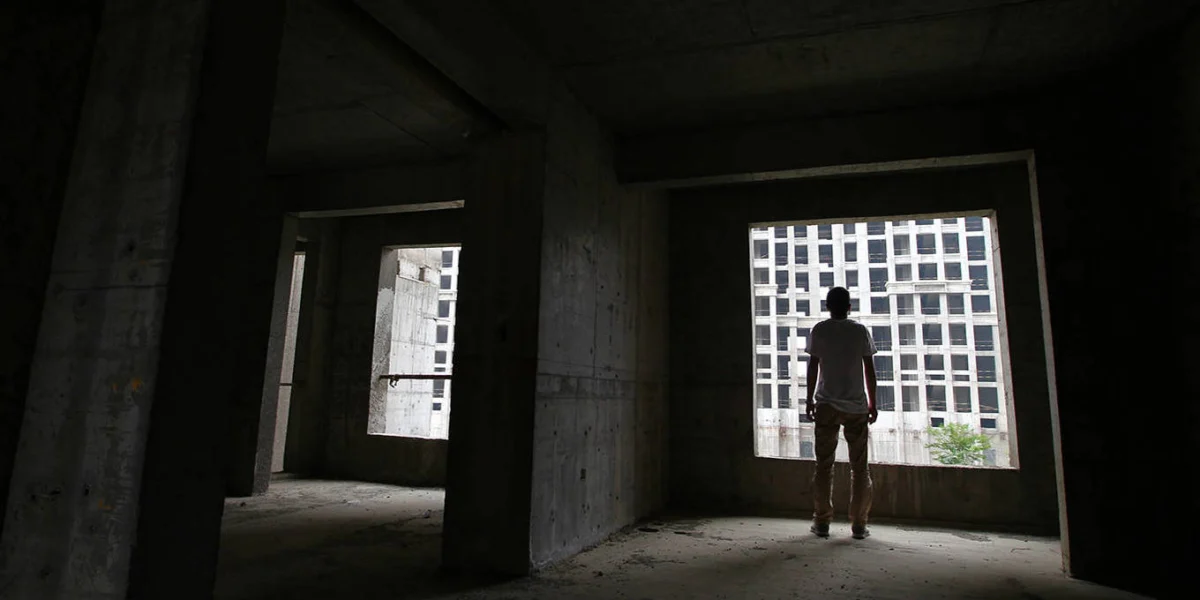
- The Exhaustion of the Investment Model: For decades, China’s growth was supercharged by capital investment in real estate, infrastructure, and industrial capacity. This model has reached a definitive point of diminishing returns. The domestic property market—which historically accounted for nearly 30% of China’s economic activity—remains mired in a multi-year debt crisis, leaving developers insolvent, local governments starved of land-sale revenues, and millions of middle-class citizens holding mortgages on uncompleted apartments.
- Demographic Deficits: China is growing old before it grows rich. The country’s working-age population is shrinking rapidly, and its fertility rates have plummeted to among the lowest in the world. Beijing faces the unprecedented challenge of financing eldercare and healthcare for a massive aging demographic without the robust per capita income levels enjoyed by Western economies when they faced similar transitions.
- The Centralization Paradox: Under the leadership of Xi Jinping, the Chinese Communist Party (CCP) has systematically dismantled the institutional guardrails established in the post-Mao era, centralizing decision-making into a singular apex of power. While this consolidation has eliminated internal political opposition in the short term, it has removed mechanisms for institutional self-correction, turning policy pivots into high-stakes gambles dictated by a narrower circle of loyalists.
- External Blowback: Beijing’s aggressive geopolitical posture—exemplified by its maritime expansion in the South China Sea, economic coercion of smaller trading partners, and "no limits" partnership with Russia—has provoked a coordinated counter-strategy from the West. "De-risking," technological decoupling, and supply-chain diversification have begun to siphon foreign direct investment (FDI) away from Chinese shores toward alternative hubs like India, Vietnam, and Mexico.
2. Chronology: How Beijing Reached the Brink
The trajectory leading to this contemporary vulnerability did not happen overnight. It is the result of a multi-decade buildup of structural imbalances, accelerated by policy decisions made over the last ten years.
- 2008–2010: The Great Stimulus Addiction: In response to the global financial crisis, Beijing unleashed a monumental 4 trillion yuan stimulus package. While it insulated China from the immediate global downturn, it permanently hooked the economy on debt-fueled infrastructure and real estate investment, setting the stage for systemic overcapacity and property bubbles.
- 2015–2016: The Capital Flight and Stock Market Shocks: A sudden devaluation of the yuan and a domestic equity market crash exposed the fragility of China’s financial regulators. Beijing responded with heavy-handed capital controls and state-directed market interventions, signaling a decisive shift away from market-oriented reforms.
- 2017–2020: The Consolidation of Power: At the 19th National Congress of the CCP, Xi Jinping Thought was enshrined in the party constitution, and the foundation was laid for the removal of presidential term limits. The state simultaneously began its regulatory crackdown on the burgeoning private tech and tutoring sectors, subduing the "animal spirits" of China’s most dynamic entrepreneurial class.
- 2020–2022: The Zero-COVID Trap: The pandemic exposed the limits of top-down command policies. While initial containment bought time, the dogmatic enforcement of "Zero-COVID" through 2022 paralyzed commercial hubs like Shanghai, fractured global supply chains, severely damaged consumer confidence, and strained local government budgets.
- 2023–2025: The Post-Pandemic Slump and Property Unraveling: Contrary to expectations of a robust post-pandemic rebound, the Chinese economy flatlined. Major developers like Evergrande and Country Garden defaulted, consumer spending remained depressed due to job insecurity, and youth unemployment reached politically sensitive highs, forcing the National Bureau of Statistics to temporarily halt the publication of jobless data.
- 2026 and Beyond: The Gathering Storm: As structural growth slows to rates unseen since the pre-reform era, the compounding pressures of debt, demographics, and geopolitical isolation converge. The state finds its fiscal buffers depleted just as external security demands and internal governance challenges multiply.
3. Supporting Data: The Numbers Behind the Narrative
Economic reality in China is increasingly difficult to mask with official GDP targets. A cross-section of financial and demographic indicators illustrates the depth of the structural headwinds:
- Total Debt-to-GDP Ratio: According to data from the Bank for International Settlements (BIS) and domestic think tanks, China’s total debt (corporate, household, and government combined) has climbed past 300% of GDP—a level unprecedented for a developing economy.
- Local Government Hidden Debt: Local government financing vehicles (LGFVs) carry trillions of dollars in off-balance-sheet debt. With land sales—traditionally accounting for up to 40% of local government revenues—collapsing by over 30% year-on-year, municipal insolvency is an escalating systemic risk.
- Demographic Decline: China’s population shrank for consecutive years starting in the early 2020s. Projections indicate that by 2050, nearly 400 million Chinese citizens—greater than the entire population of the United States—will be over the age of 60, severely straining the national pension system.
- Foreign Direct Investment Inflow: According to China’s State Administration of Foreign Exchange (SAFE), direct investment liabilities in China’s balance of payments turned negative or hit multi-decade lows in recent quarters, reflecting a net capital withdrawal by multinational corporations seeking safer jurisdictions.
- Youth Unemployment: Prior to the suspension and recalibration of reporting methodologies, urban youth unemployment breached the 21% mark, highlighting the economy’s failure to generate high-value knowledge-sector jobs for millions of university graduates.
4. Official Responses: Denial, Deflection, and Double-Downs
Beijing’s official reaction to these compounding crises has been a mix of rhetorical reassurance, targeted monetary easing, and an aggressive ideological tightening designed to suppress dissent.
The Narrative of "Resilience"
State media and senior economic officials—including Premier Li Qiang and central bank governors—consistently emphasize the concept of "high-quality development" and the resilience of China’s manufacturing base. Beijing points to its dominance in "The New Three" growth drivers—electric vehicles (EVs), lithium-ion batteries, and photovoltaic solar products—as proof that industrial upgrading is successfully replacing the dying real estate engine.
Monetary and Fiscal Patchwork
Rather than implementing a sweeping, consumption-driven stimulus akin to Western welfare models, the People’s Bank of China (PBOC) has relied on targeted reserve requirement ratio (RRR) cuts, localized property support measures, and liquidity injections for state-owned enterprises. These interventions have proven insufficient to spark a broad recovery, serving instead as financial lifeboats for distressed state entities while leaving underlying structural rot unaddressed.
Ideological Control and National Security
Concurrently, the state has fortified its legal and physical apparatus for social control. The expansion of anti-espionage laws, tightening restrictions on foreign auditing and data firms, and the relentless promotion of patriotic education signal that Beijing views economic distress primarily through a national security lens. Dissent, whistleblowing regarding financial irregularities, or public pessimism about the economic outlook are increasingly treated as subversion.
5. Implications: A Global Order on Shaky Ground
The prospect of China entering a prolonged period of political succession instability and economic stagnation carries profound implications that stretch far beyond its borders.
The Geopolitical Risk of "Peak China"
Many historians and political scientists warn that rising powers are often most dangerous not when they are ascending, but when they realize they have hit a ceiling—a phenomenon known as the "Peak China" trap. If Beijing concludes that its economic window for regional hegemony is closing due to domestic decay, it may be incentivized to manufacture external diversifications—most notably regarding the status of Taiwan. A desperate leadership may calculate that aggressive foreign policy is the only viable tool to rally domestic nationalism.
Global Economic Drag
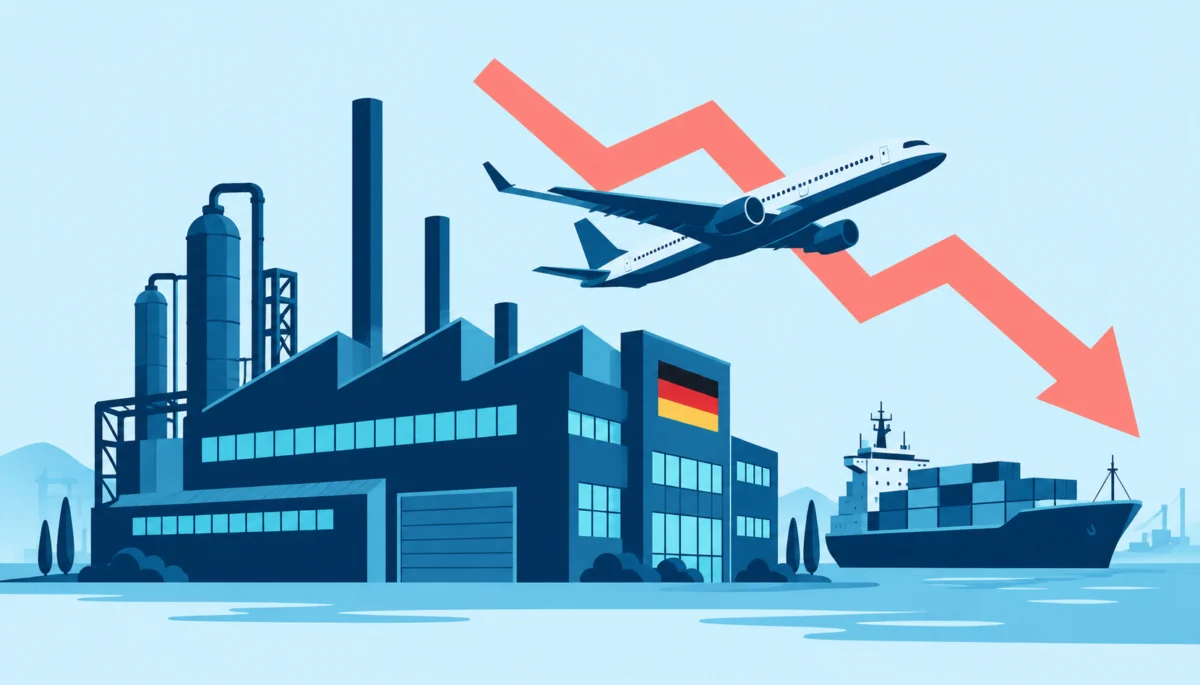
For decades, China served as the primary engine of global economic growth, absorbing commodities from Latin America, machinery from Germany, and electronics components from Southeast Asia. A structurally decelerating Chinese economy translates into weaker global demand, lower commodity prices for emerging markets, and diminished corporate earnings for multinational firms that staked their future profitability on the Chinese consumer market.
The Crisis of Global Governance
Finally, a weakening Chinese state complicates international cooperation on planetary challenges. From climate change negotiations and sovereign debt relief for the Global South to pandemic preparedness and nuclear non-proliferation, multilateralism requires the constructive engagement of major powers. If Beijing turns inward to manage domestic turmoil, or alternatively lashes out to preserve regime survival, the vacuum in global governance will widen, leaving a fractured international order ill-equipped to manage the next generation of shocks.
As policymakers in Washington, Brussels, New Delhi, and Tokyo assess the road ahead, the consensus among astute observers is clear: the era of linear assumptions about China’s inexorable rise has ended. The world must now prepare for the unpredictable shockwaves of a state grappling with the gravity of its own internal limits.