






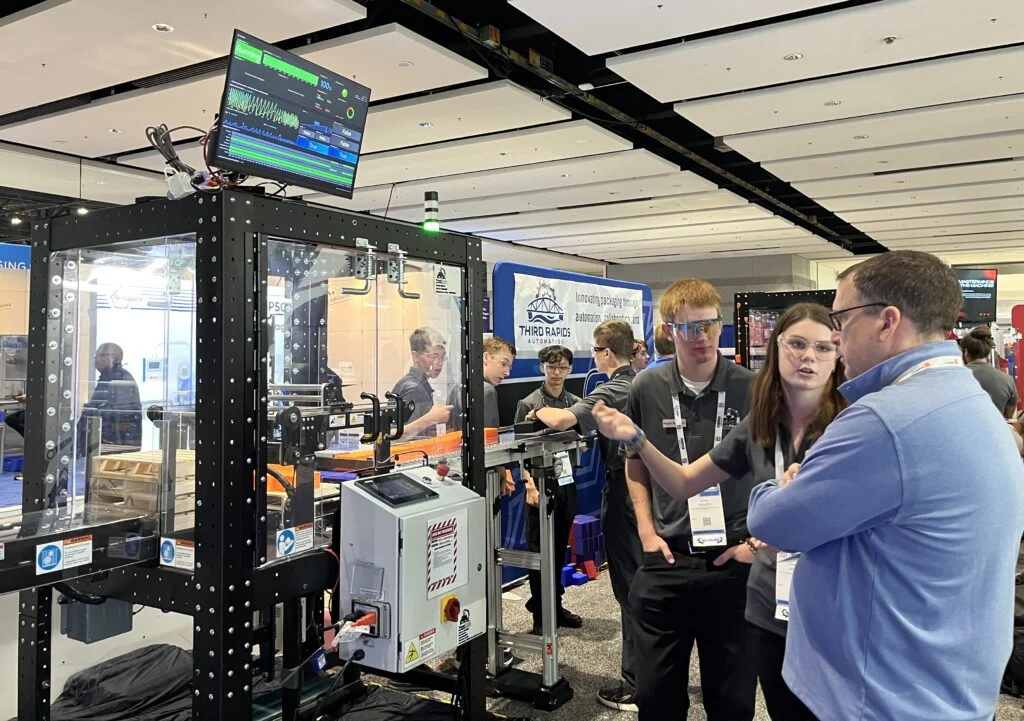
The echoes of machinery have faded from the vast halls of Chicago’s McCormick Place, but the intellectual vibrations of Pack Expo 2026 continue to resonate across the global manufacturing landscape. Held from October 18–21, 2026, the event served as a high-stakes crossroads for an industry grappling with the simultaneous pressures of technological disruption, a shifting demographic landscape, and a relentless push toward environmental stewardship.
While the show floor was a spectacle of high-speed automation and sophisticated robotics, the most profound developments did not occur in the technical specifications of the equipment, but in the candid, often urgent, conversations between industry leaders. The consensus was clear: the era of "business as usual" has concluded. Whether it is the integration of artificial intelligence, the mitigation of workforce attrition, or the pivot toward circular economy materials, the packaging and processing sector is in the midst of a fundamental transformation.
1. The Human Element: Addressing the Erosion of Tribal Knowledge
The most consistent refrain throughout the exhibition was not about machine downtime, but about the "brain drain" of the plant floor. As veteran operators and technicians reach retirement age, they take with them decades of specialized, intuitive knowledge—often referred to as "tribal knowledge."
The Skills Gap Crisis
The industry is caught in a paradoxical struggle: as technology becomes more advanced, the expertise required to maintain it grows, even as the available labor pool shrinks. Companies are increasingly forced to entice retirees back as consultants, not just for labor, but for the institutional memory they possess.
"Trying to find skilled labor is getting hard. Trying to retain skilled labor is harder," observed Colin Cartwright, director of packaging industry development at Murrelektronik. "People are retiring with a tremendous amount of knowledge in their heads, so when they leave, they take 30 years’ worth of experience with them."

PMMI’s Strategic Response
PMMI’s VP of Market Development, Jorge Izquierdo, validated this sentiment during the event’s opening media session. According to internal data, workforce knowledge loss is cited as the primary inhibitor to operational productivity.
To combat this, PMMI utilized the West Hall of McCormick Place to host the Workforce Pavilion. By featuring collegiate and high school competitions like the "Pack Challenge," the organization is attempting to shift the narrative around manufacturing. By gamifying machine design and marketing, they hope to attract a new generation that views packaging as a high-tech, creative discipline rather than a monotonous manual task.
2. Artificial Intelligence: Beyond the Hype to Practical Application
AI was the inescapable buzzword of 2026, yet the discourse at Pack Expo reflected a growing maturity in how companies approach the technology. The "do AI" directive from executive leadership is being met with a more cautious, use-case-driven methodology from engineering teams.
Defining the "Ideal Plant Profile"
Implementing AI is not a universal solution; it is highly dependent on the specific manufacturing environment. Ben Coulombe, SVP of sales at Maneva, emphasized that a "one-size-fits-all" approach to AI in manufacturing is destined to fail.
"You can’t solve the same problem for the plant that makes cucumbers as you do for the plant that’s doing deli meats," Coulombe explained. His philosophy is rooted in the "ideal plant profile," which prioritizes identifying the specific, unique bottleneck of a facility—whether that be quality control, downtime, or throughput—before selecting an AI tool to address it.

The Role of Human Oversight
The consensus among experts at the show, including representatives from Siemens, was that AI acts as an augmentative tool, not a human replacement. Dominic Trinko, principal solution architect at Siemens, noted that the rapid evolution of AI models requires a flexible, multi-tool approach.
The industry is moving toward a model where AI assists in defect detection, predictive maintenance, and digital twin simulation. However, the requirement for human oversight—the "human-in-the-loop" approach—remains absolute. AI is being tasked with making the human faster and smarter, rather than simply replacing the operator.
3. Redefining Productivity: The Shift from Speed to Effectiveness
For years, the gold standard in packaging was "how many units per minute." At Pack Expo 2026, that metric was challenged. Attendees and exhibitors alike argued that raw speed is an incomplete, and often misleading, measure of success.
The True Cost of Downtime
"It’s not about how fast your machine can run, but how much product you can push out of the line," noted Jorge Izquierdo. This distinction is critical. If a machine runs at record speeds but suffers from frequent unplanned stops, cleaning cycles, or inconsistent quality, the overall efficiency (OEE) remains low.
Mackensie Lambert, principal category marketing manager at Graco, emphasized that effectiveness and repeatability are the true drivers of value. "You have to make sure that even if you’re running fast, it’s as effective as possible and repeatable as possible. That’s what we’re seeing as being the most key."

Intelligence-Led Throughput
Toyota Automated Logistics, represented by Geoff Schreiber, highlighted how AI and data analytics are being used to improve decision-making. By utilizing real-time data, systems can now respond dynamically to operational anomalies, allowing human supervisors to troubleshoot bottlenecks before they result in catastrophic line stops.
4. Supply Chain Resilience and the Total Cost of Ownership
The volatility of supply chains remains a primary source of anxiety. While material availability has stabilized compared to the crises of the early 2020s, the focus has shifted toward the "total cost of ownership" (TCO) rather than just the initial procurement price.
The Connectivity Bottleneck
Jonathan Esposito of Lapp explained that the shift in manufacturing focus toward data centers has created a secondary supply chain crunch for traditional industrial connectivity components like cord sets and patch cords. Companies that have proactively localized their supply chains—such as Lapp’s acquisition of overseas capacity to serve the North American market—are finding a significant competitive advantage.
Value vs. Price
A recurring frustration among suppliers is the corporate tendency to prioritize the cheapest unit cost over long-term efficiency. As Colin Cartwright noted, buying a cheaper, inferior component often increases labor costs during installation and maintenance, ultimately costing the company more than a higher-priced, more reliable alternative. The industry is currently engaged in an educational struggle to shift procurement mindsets from transactional purchasing to life-cycle value optimization.
5. Sustainability: The Regulatory Landscape
Sustainability is no longer a corporate marketing initiative; it is a regulatory requirement. Adwoa Coleman of Dow emphasized that the packaging industry is facing a complex web of requirements, including Extended Producer Responsibility (EPR), post-consumer recycling (PCR) mandates, and evolving standards regarding PFAS and other chemical additives.

The "What’s Next" Dilemma
The most significant challenge for manufacturers is the rapid pace of regulatory change. As Jorge Izquierdo pointed out, companies are often forced to invest in production lines that are optimized for specific materials, only to have those materials fall out of favor or become non-compliant a year later.
To mitigate this uncertainty, PMMI has launched the "Materials Transitioning Dashboard." By aggregating over 60,000 data points, the tool provides a forward-looking view of material trends, helping manufacturers make capital investments that are resilient to shifting environmental policies.
Implications for the Future
The key takeaway from Pack Expo 2026 is that the manufacturing industry is undergoing a period of profound re-alignment. Success in the coming years will not be defined by the acquisition of the latest "shiny object" technology, but by the successful integration of human expertise with intelligent systems.
The industry is moving toward a future where:
- Knowledge is codified: Digital tools and simulation are replacing lost tribal knowledge.
- AI is targeted: AI is being applied to specific, high-impact problems rather than broad operational tasks.
- Productivity is holistic: The focus is shifting from "how fast" to "how reliable."
- Resilience is paramount: Supply chains are being localized and TCO is being prioritized over initial unit cost.
- Sustainability is proactive: Companies are using data-driven insights to navigate the shifting regulatory landscape.
As we look toward the next iteration of the industry, the "family holiday party" feeling of post-show exhaustion is being replaced by a sense of clarity. The challenges are significant, but the roadmap for the next decade of manufacturing excellence is becoming increasingly clear. Through collaboration, data-driven decision-making, and a renewed investment in the human worker, the sector is well-positioned to turn these concerns into competitive advantages.