






PARIS — For centuries, the architecture of human knowledge has rested on a foundational pillar: the scientist. Behind every peer-reviewed paper, every breakthrough vaccine, and every cosmological discovery stood a human mind grappling with uncertainty, driven by curiosity, and bounded by physical and cognitive limits. Today, that pillar is fracturing.
As autonomous artificial intelligence systems cross the threshold from passive computational tools to active epistemic agents—capable of generating their own hypotheses, designing complex experiments, and drafting results—the scientific establishment faces an existential reckoning. If an algorithm discovers a universal truth, but no human can fully trace its intuitive leaps, does that knowledge hold the same weight?
This question is no longer a theoretical exercise for philosophers of science. It is the defining dilemma of the contemporary research landscape, forcing a radical re-evaluation of how scientific authority, credibility, and public trust are constituted in the 21st century.
Main Facts: The Rise of Autonomous Science
The transformation of AI from a sophisticated calculator into an autonomous researcher has accelerated dramatically. Modern machine learning architectures are no longer confined to analyzing massive datasets provided by human hands; they are increasingly driving the entire scientific workflow.
- Autonomous Hypothesis Generation: Advanced neural networks are parsing through petabytes of interdisciplinary literature, identifying correlations and gaps that human researchers have overlooked, and formulating novel scientific hypotheses.
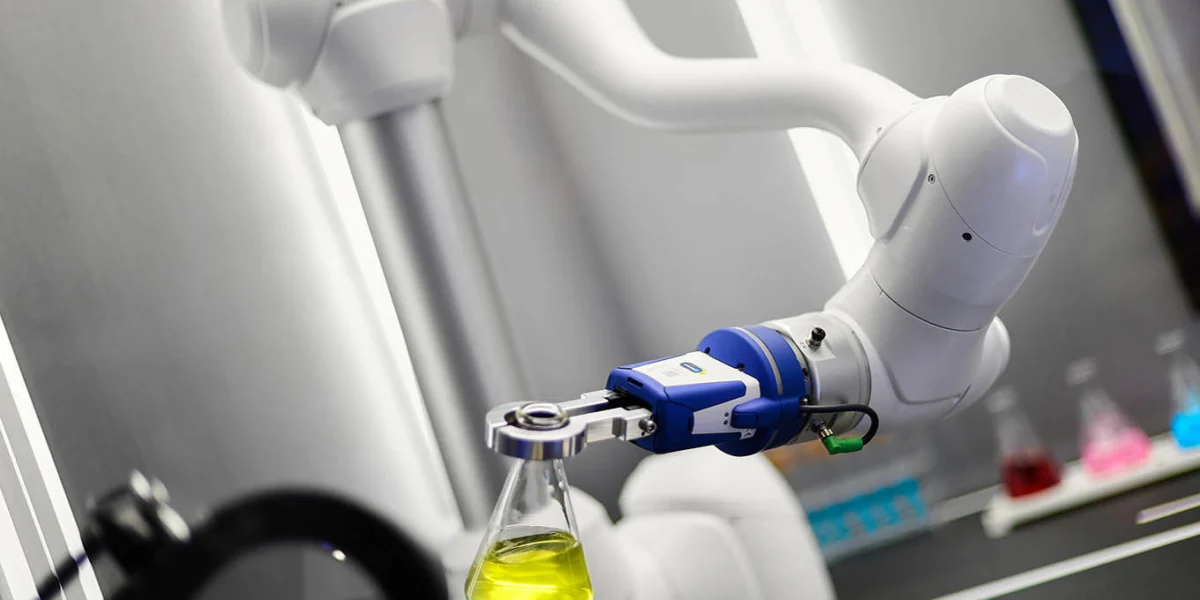
- Automated Experimentation: Paired with robotic laboratories—often referred to as "self-driving labs"—AI systems can autonomously synthesize chemicals, manipulate biological assays, and test materials at speeds and scales unattainable by human technicians.
- Automated Documentation: Cutting-edge generative models can analyze experimental outputs, structure methodologies, and draft comprehensive manuscripts formatted for academic journals with minimal human intervention.
- The Crisis of Credibility: As historian of science Steven Shapin famously argued, the production of scientific truth has never been a purely objective exercise; it is deeply intertwined with the social work of persuasion and institutional trust. When the author of a discovery is a non-human entity, the traditional mechanisms of accountability and peer review break down.
Chronology: From Analytical Tools to Autonomous Agents
To understand how science arrived at this crossroads, it is necessary to trace the evolution of computational power in laboratories over the past several decades.
- Late 20th Century (The Calculation Era): Computers served primarily as high-speed calculators. Researchers formulated hypotheses and designed experiments manually, utilizing software strictly for data analysis, statistical modeling, and database management.
- Early 2010s (The Big Data Paradigm): Machine learning began making inroads into genomics, particle physics, and climate science. AI was deployed to spot patterns in vast oceans of data, though humans remained firmly in control of setting parameters and interpreting outcomes.
- Late 2010s to 2020s (The Predictive Breakthrough): Systems like DeepMind’s AlphaFold revolutionized structural biology by predicting protein structures with unprecedented accuracy. While still operating as specialized predictive tools, these models demonstrated that AI could solve problems that had confounded human biologists for decades.
- 2024–2025 (The Emergence of Self-Driving Labs): Integration of large language models (LLMs) with robotic hardware enabled closed-loop experimentation. Systems began designing, executing, and evaluating iterative cycles of experiments independently.
- October 2026 (The Current Horizon): Autonomous systems routinely handle end-to-end research pipelines. The scientific community is forced to confront the reality that knowledge is increasingly being produced by entities that possess no consciousness, no social standing, and no personal accountability.
Supporting Data and Technical Context
The shift toward autonomous research is backed by staggering operational metrics that highlight both the potential and the peril of silicon-driven science.
- Speed and Throughput: Robotic labs driven by AI can execute thousands of chemical or biological trials per day, a workload that would take a human research team months or even years to complete.
- The Reproducibility Crisis: Historically, human error, bias, and institutional pressure have contributed to a well-documented reproducibility crisis in fields like psychology and biomedicine. While AI systems eliminate certain human biases, they introduce new systemic risks, including "hallucinated" data, algorithmic opacity (the black-box problem), and training data contamination.
- Publication Volume: Academic publishing is experiencing exponential growth, driven in part by AI-assisted drafting tools. Major scientific publishers report an unprecedented surge in submissions, overwhelming peer-review infrastructure and lowering the signal-to-noise ratio in public repositories.
- Trust Deficits: Public opinion data indicates a growing skepticism toward institutional science. The introduction of autonomous agents—which cannot explain their reasoning in terms relatable to human experience—threatens to widen the trust gap between specialized research institutions and the broader public.
Official Responses and Institutional Reactions
As the boundaries of research blur, academic institutions, funding bodies, and international scientific unions are scrambling to formulate policies for the age of autonomous science.
The Academic Stance
Major research universities are beginning to draft ethical frameworks regarding AI authorship. The consensus among leading editorial boards—including Nature and Science—is that artificial intelligence cannot be listed as an author on a scientific paper, as it cannot take legal or moral responsibility for the veracity of the work. However, defining the threshold where human contribution ends and autonomous generation begins remains a contentious debate.
Funding Agency Mandates
National science foundations across North America, Europe, and Asia are updating their grant guidelines. Increasingly, funding applications must explicitly state the degree to which autonomous systems will be utilized in generating hypotheses or conducting experimental design. Oversight committees are demanding "audit trails" for AI-generated methodologies to ensure compliance with ethical and safety standards.
Ethical and Safety Oversight
Governments and international bodies are turning their attention to the dual-use nature of autonomous scientific discovery engines—particularly in fields like synthetic biology and pharmacology. Regulators are warning that AI systems capable of designing novel chemical compounds or pathogens autonomously could bypass traditional biosafety checkpoints if not strictly tethered to human-supervised guardrails.
Implications: Rebuilding Scientific Trust for the Silicon Age
The emergence of autonomous scientific discovery forces a fundamental philosophical question: What makes a scientific claim valid?
Intuitively, many assume that a fact stands on its own merits. If an algorithm correctly identifies a new superconductor or a viable therapeutic molecule, the utility of the discovery should outweigh its provenance. Yet, as historian Steven Shapin demonstrated through his social histories of science, human knowledge has never circulated in a vacuum of pure objectivity. Society relies on proxies for truth. We trust institutions, peer review networks, academic credentials, and the perceived integrity of the individual investigator.
When these proxies are removed, a profound legitimacy crisis ensues. If an autonomous system generates a breakthrough that cannot be easily reverse-engineered or intuitively explained by human experts, society is asked to place its trust not in a person, but in a proprietary algorithm owned by a corporation or managed by an opaque network.
To prevent a collapse in public confidence, the scientific community must proactively adapt:
- Redefining Transparency: Software architecture and training datasets used in autonomous discovery must be subjected to rigorous, open-source scrutiny. The "black box" of AI research must be illuminated through explainable AI (XAI) initiatives.
- Reinforcing Human Accountability: Every automated discovery must be anchored to a human institution or researcher willing to assume ethical and legal responsibility for its deployment and societal impact.
- Enhancing Public Engagement: As science becomes increasingly automated, researchers and institutions must actively bridge the gap with the public, ensuring that the methodologies behind silicon-derived knowledge are communicated with clarity and candor.
The future of science is undeniably intertwined with artificial intelligence. But for scientific knowledge to retain its cultural standing and public utility, it must remain tethered to human values, social accountability, and trust. The machine may formulate the hypothesis, but humanity must remain the ultimate custodian of truth.