





By Energy & Infrastructure Desk
Published: October 24, 2026
Main Facts
With unprecedented wildfires striking the American Northeast and extreme storm systems intensifying beyond historical parameters, extreme weather is no longer confined to predictable seasonal windows or traditional geographic boundaries. This shifting climate reality has turned weather into a year-round, high-stakes threat, fundamentally challenging utility operations, supply chain logistics, and the physical integrity of the modern power grid.
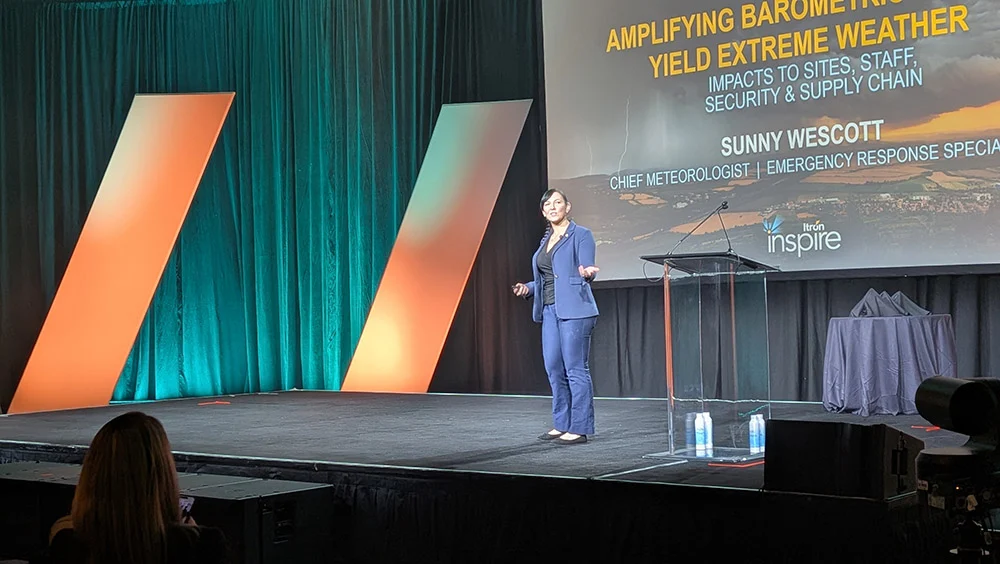
At the recent Itron Inspire 2026 conference, federal emergency response leader and Chief Meteorologist Sunny Wescott delivered a stark warning to the energy sector: historical meteorological models are fundamentally broken. During her keynote address—and in an exclusive follow-up interview—Wescott detailed how shifting climate phenomena are rewriting the rules of infrastructure management.
Key takeaways from her insights include:
- The Obsolescence of Historical Data: Traditional climate baselines can no longer anticipate modern weather extremes, necessitating the adoption of real-time environmental data and high-resolution topographic mapping.
- Unprecedented Regional Stressors: Areas historically immune to specific hazards—such as unusual frost patterns in the Appalachian Mountains or shifting tornado corridors—are facing novel grid vulnerabilities.
- Cascading Operational Hurdles: Extreme temperature swings are altering the physical properties of construction materials (such as concrete curing times), while data center expansion strains regional water and energy resources.
- A Shift to Proactive Hardening: Utilities must move past reactive emergency repairs, breaking down legacy silos to collaborate regionally, justify capital expenditures to regulators, and implement actionable, data-backed resilience strategies.
Chronology: The Evolution of Grid Vulnerability
To understand the urgency expressed at Itron Inspire 2026, industry experts look back at how weather-related grid failures have evolved over the past decade.
Phase 1: The Era of Seasonal Predictability (Pre-2020)
For decades, utility disaster planning relied heavily on cyclical, predictable weather patterns. Winter storms hit northern tiers, hurricane seasons threatened coastal regions, and summer heatwaves strained urban air conditioning loads. Grid operators maintained well-tested playbook responses based on decades of historical weather data, allowing for reliable asset management, predictable budgeting, and standard regulatory approvals.
Phase 2: The Acceleration of Compound Disasters (2020–2024)
As global temperatures continued to rise, severe weather events began breaking historical records with alarming frequency. Winter Storm Uri in 2021 paralyzed the Texas interconnect, proving that deep freezes could cripple energy systems in southern latitudes. Simultaneously, catastrophic western wildfires began generating smoke plumes that choked solar generation assets hundreds of miles away. During this period, utilities realized that "once-in-a-century" storms were occurring every few years, straining emergency response crews and depleting equipment reserves.
Phase 3: The Omnipresent Threat and Real-Time Pivot (2025–Present)
By 2025 and into 2026, the concept of a "storm season" largely dissolved. As highlighted by Wescott at Itron Inspire, weather has become an unpredictable, year-round operational crisis. Utilities in the Northeast are battling wildfires, while non-traditional regions experience severe atmospheric anomalies. Grid operators are no longer asking if a storm will hit, but rather how to maintain asset integrity when the underlying climate physics are changing in real time.
Supporting Data and Environmental Stressors
The challenges facing modern grid operators are underpinned by complex, interconnected environmental and infrastructural pressures.
1. Micro-Climate Anomalies and Regional Shifts
Wescott pointed to specific, atypical geographical anomalies as proof of changing climate baselines. For instance, the Appalachian Mountains are currently experiencing bizarre frost and ice conditions at temperatures previously unrecorded in the area. These localized anomalies catch grid operators off guard if they rely on regional averages rather than hyper-local intelligence.
Furthermore, shifting weather patterns are altering traditional disaster corridors:
- Tornado Alleys are Widening: Twisters are increasingly touching down outside of traditional Midwestern corridors, threatening infrastructure in forested and densely populated areas.
- Unseasonal Wildfire Drivers: Warmer autumns and premature spring thaws are lengthening wildfire seasons. Heavy smoke and airborne particulates not only threaten grid assets like transmission lines but also severely impact workforce availability and safety for field crews.
2. The Physics of Infrastructure Decay
Translating macro-level atmospheric shifts into day-to-day engineering is a monumental hurdle. Changing temperature and precipitation cycles directly impair the physical materials used to build and maintain the grid.

- Concrete and Curing: Extreme temperature swings alter concrete curing times, inadvertently reducing the structural strength of substation foundations and pole footings.
- Denser Hail and High Winds: Severe hailstorms are pelting solar farms and substations with unprecedented force, driving commercial insurance costs sky-high while testing the absolute structural limits of legacy equipment.
- Unconventional Hazards: Field crews are increasingly encountering bizarre ecological side-effects from flooding, such as venomous snakes trapped in rising floodwaters around electrical enclosures, posing severe occupational safety risks.
3. The Data Center and Resource Nexus
Compounding these physical threats is the explosive growth of energy-intensive data centers. The power demands of these facilities are directly tied to regional water and energy resource constraints. This creates fierce competition for supplies, forcing utilities to balance grid reliability against localized resource scarcity. Wescott emphasizes that these challenges cannot be managed in isolation; they require deep, cross-departmental collaboration.
Official Responses and Industry Perspectives
The insights delivered by Sunny Wescott at Itron Inspire 2026 have sparked urgent discussions among utility executives, regulators, and emergency management professionals.
"Utilities can’t afford to view these changes in isolation or through the lens of how things worked in the past. Operators must actively assess environmental stressors to best manage strains on supply chains and neighboring service territories."
— Sunny Wescott, Chief Meteorologist and Federal Emergency Response Leader
Industry leaders attending the conference echoed Wescott’s sentiments, noting that traditional return-on-investment (ROI) models are no longer sufficient when presenting infrastructure upgrade proposals to utility boards and state public utility commissions (PUCs).
Bridging the Regulatory Gap
One of the most persistent hurdles for utilities has been justifying capital expenditures for system hardening before a disaster strikes. Regulators historically demand clear ROI metrics based on historical outage data. However, because modern climate risks involve unprecedented events, historical data points are largely useless.
Wescott urged utility leaders to pivot their strategies:
- Leverage Existing Environmental Data: Instead of waiting to build or fund "perfect" proprietary forecasting models, utilities should immediately tap into the vast ecosystem of existing high-resolution environmental and topographic data available today.
- Quantify Avoided Costs: To satisfy regulators, utilities must articulate the broader economic value of avoided catastrophic outages—factoring in societal downtime, emergency response savings, and long-term asset longevity.
- Cross-Utility Collaboration: Operators must abandon the "not invented here" mindset. By studying international case studies and sharing lessons learned with peer utilities facing similar micro-climatic threats, the sector can fast-track proven mitigation frameworks.
Implications for the Future of the Power Grid
The transition from reactive disaster management to proactive, climate-resilient engineering marks a turning point for the global energy sector. The implications of Wescott’s findings at Itron Inspire 2026 point toward several fundamental shifts in how the grid will be planned, built, and operated in the coming decades.
1. From Historical Modeling to Real-Time Intelligence
Grid planning can no longer rely on looking backward. Utilities are rapidly adopting advanced geospatial analytics, integrating real-time topographic mapping and hyper-local meteorological feeds into their Geographic Information Systems (GIS). This allows control room operators to monitor micro-level environmental pressures—such as sudden ice formation in mountain passes or localized wind shears—and dynamically reroute power before failures cascade.
2. Redefining Asset Engineering Standards
Engineering standards developed over the last century must be rewritten. Civil and electrical engineers are collaborating with material scientists to develop stronger composites, more resilient substation housings, and dynamic vegetation management protocols that account for prolonged drought, premature thaws, and intense, localized storms.
3. Holistic Emergency Coordination
Emergency response is shifting from a localized departmental task to an enterprise-wide, multi-agency discipline. Because extreme weather respects no utility service territory boundaries, neighboring providers are forging mutual-aid agreements and shared data-monitoring networks. By aligning emergency operations with federal meteorologists and regional water authorities, utilities can better anticipate threats like the toxic intersection of heavy smoke, water scarcity, and physical grid damage.
Conclusion
As Sunny Wescott emphasized, the weather is no longer a backdrop to utility operations—it is the defining variable of the modern energy landscape. For utilities willing to shed legacy mentalities, embrace open collaboration, and leverage modern environmental data, the path forward offers a blueprint for true resilience. Those that cling to the past, however, risk being overwhelmed by a climate future that has already arrived.