





By Energy & Environmental Policy Desk
Published: Fall 2026
Main Facts: The Great California Solar Paradox
Despite sitting comfortably atop national rankings as the state with the most installed solar capacity, California remains locked in a strange and frustrating paradox: it still does not have a functional, operational community solar program.
While the state’s sun-drenched landscapes and massive utility-scale installations project an image of green-energy leadership, everyday residents face the nation’s second-highest electricity rates. For millions of Californians—particularly renters, apartment dwellers, low-to-moderate-income (LMI) households, and residents living in multi-family housing—the state’s clean energy boom remains an exclusive luxury. Without the physical roof space or capital required to install costly private photovoltaic (PV) and battery storage systems, these populations are left entirely on the sidelines of the clean energy transition, absorbing relentless rate hikes without a single avenue for self-generated relief.
Community solar is designed precisely to bridge this equity gap. By allowing multiple local subscribers to buy or lease a share of a mid-sized, off-site solar installation, the model grants households access to clean energy benefits through direct credits on their monthly electricity bills. Proponents note that beyond democratizing renewable energy access, community solar-plus-storage frameworks strengthen local grids by distributing power generation closer to where it is consumed, boosting overall grid resilience.
Yet, despite widespread consensus regarding its benefits—and repeated legislative mandates attempting to force the issue—California’s community solar market has devolved into a perpetual stalemate. Caught in a multi-year tug-of-war between the California Legislature, solar advocacy groups, the California Public Utilities Commission (CPUC), and investor-owned utilities (IOUs), the state continues to stall. The definitive blow came in September when outgoing Governor Gavin Newsom vetoed the latest legislative attempt to jumpstart the market, leaving developers, environmental justice advocates, and ratepayer champions searching for answers as the state falls further behind more than 20 other U.S. states with thriving community solar economies.
Chronology of a Stalemate: A Timeline of Legislative Battles and Regulatory Roadblocks
The road to California’s current community solar impasse is paved with legislative compromise, regulatory pushback, and dashed expectations.
2022: The Initial Legislative Mandate (AB 2316)
The modern push for a viable California community solar program began in earnest when Governor Gavin Newsom signed Assembly Bill 2316 into law in August 2022. AB 2316 directed the state’s large investor-owned utilities—those serving more than 100,000 customers—to develop and implement a comprehensive community renewable energy program. The statutory intent was clear: establish a framework that would enable everyday ratepayers to participate directly in off-site electrical generation facilities utilizing eligible renewable energy sources, while placing a strong emphasis on serving low-income communities.
2024: The CPUC Rejects Reform
Instead of a robust, competitive market taking shape, the regulatory implementation hit a brick wall. In March 2024, the CPUC formally rejected a proposal put forward by solar advocacy coalitions that would have established a viable, scalable community solar market. Critics argued that the CPUC’s alternative ruling effectively handed decision-making power directly to the incumbent utilities, structuring a program that advocates quickly dubbed "built-to-fail."

2025: The Rise and Stall of AB 1260
Recognizing that the initial framework under the CPUC’s direction was failing to produce functional projects, state lawmakers returned to the drawing board. In early 2025, legislators introduced Assembly Bill 1260, a measure designed to explicitly repair the flaws of the previous rules, expand the framework to mandate paired battery storage, and guarantee strict affordability targets for low-income participants. However, despite intense lobbying from environmental and consumer groups, AB 1260 failed to secure full adoption before the legislative clock ran out.
2026: The Passage and Veto of AB 1813
Undeterred, advocates rallied behind a new vehicle: Assembly Bill 1813, known as the Community Renewable Energy Program Act. Spearheaded by coalitions such as Californians for Local, Affordable Solar and Storage (CLASS), AB 1813 instructed state regulators to value community solar and storage projects using the CPUC’s own Avoided Cost Calculator—an existing analytical tool that the state had previously declined to apply to this sector. Furthermore, the bill mandated paired battery storage to ensure that projects delivered power during peak evening hours when the grid experiences the highest stress.
The California Legislature successfully passed AB 1813, sending it to the governor’s desk. However, in September 2026, Governor Newsom vetoed the legislation, once again freezing community solar development in its tracks and extending the regulatory void.
Supporting Data and Economic Realities
The debate over community solar in California ultimately hinges on clashing economic philosophies, valuation metrics, and cost-shift arguments.
Advocates point to mounting empirical evidence demonstrating that community solar-plus-storage installations yield system-wide economic and operational benefits. According to data highlighted by industry groups, more than 20 states across the country—ranging from traditional energy markets to progressive green states—have successfully integrated community solar programs that attract private capital, lower greenhouse gas emissions, and reduce strain on transmission lines.
Furthermore, proponents argue that localized solar-plus-storage installations reduce the need for expensive, large-scale transmission upgrades by generating and storing power closer to load centers. For low-to-moderate-income (LMI) households, these programs represent a lifeline against surging utility bills. With California households bearing some of the highest electricity rates in the continental United States, the inability to tap into decentralized solar generation exacerbates existing energy poverty and economic inequality.
On the opposing side, state executives and utility regulators operate under strict fiscal guardrails concerning cost-shifting. The primary economic fear driving the state’s hesitation is that compensating off-site solar generation above a certain threshold will force non-participating ratepayers—particularly those unable or choosing not to subscribe to a community solar project—to subsidize the incentives through higher overall delivery and transmission charges.
This tension between incentivizing clean energy deployment and protecting non-participating ratepayers from escalating bills forms the core of the financial dispute that has paralyzed California’s clean energy policy arena for half a decade.

Official Responses and Stakeholder Perspectives
The fallout from the September 2026 veto of AB 1813 has laid bare deep divisions between the governor’s administration, clean energy developers, labor unions, and environmental justice organizations.
The Governor’s Rationale
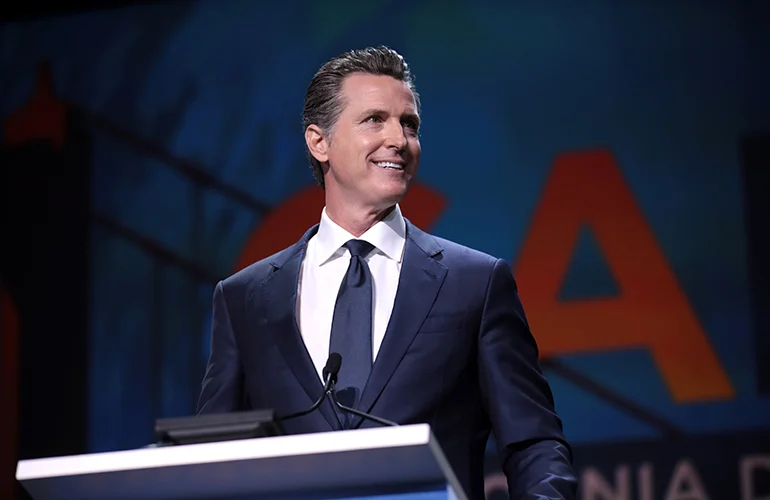
In his official veto message, outgoing Governor Gavin Newsom—whose gubernatorial term concludes in January 2027—defended his decision by warning against the fiscal impacts of the legislation. Newsom argued that AB 1813 would establish an artificially inflated administrative price for power generation.
"AB 1813 would effectively require an administratively set price for the generation of power that exceeds the value that generation provides to the grid," Newsom wrote in his veto document. "This would result in significant upward pressure on consumer energy bills without delivering reliable, high-performance capacity to the grid at the times we need it. Fundamentally, this bill would shift costs and work counter to the state’s energy affordability and reliability goals. For these reasons, I cannot sign this bill."
The Coalition Response
The governor’s rejection drew swift and sharp condemnation from a broad, unprecedented coalition of labor unions, environmental justice groups, building industry representatives, ratepayer advocates, and clean energy associations.
Derek Chernow, executive director of Californians for Local, Affordable Solar and Storage (CLASS), expressed profound disappointment on behalf of the coalition.
"With Gov. Newsom’s veto of AB 1813, California continues to fall further behind other states that are aggressively moving forward with successful community solar programs," Chernow stated. "Unfortunately, the voices of community leaders, environmental justice organizations, ratepayer advocates, labor, community choice aggregators, the building industry, and so many others were denied a solution they have long fought for. Study after study demonstrates the benefits of community solar-plus-storage to households, businesses, our environment, and the grid. We are committed to working with the next administration to make community solar and storage part of the solution to California’s growing affordability crisis."
The Industry Perspective
Clean energy developers operating within the state warn that the ongoing regulatory stalemate is forcing private capital and job creation to flee California for more welcoming regulatory environments elsewhere in the country.
Aaron Halimi, founder and CEO of Renewable Properties, a San Francisco-based community solar developer, argued that the governor’s veto was anchored in obsolete financial assumptions that ignore modern market realities.

"Twenty-two other states have workable community solar programs that are attracting investment, creating local economic benefits, and expanding consumer access to clean energy," Halimi noted. "As a result of this veto, Renewable Properties will invest more of our resources into those 22 community solar states instead of our home state of California."
Implications: What Lies Ahead for California’s Clean Energy Future?
As California navigates the final months of the current gubernatorial administration, the immediate future of community solar remains frozen. With the legislative session adjourned and no active bill capable of overriding the executive branch’s fiscal concerns, project developers, municipal planners, and community advocates face a holding pattern.
The next definitive window for policy action will not open until the new legislative session commences in December, leading up to the installation of a new gubernatorial administration that will hold authority through September 2027. Despite the setbacks, stakeholder coalitions remain resolute. Organizations like CLASS have signaled that they are preparing a two-pronged strategy for the upcoming year, aiming to secure a viable community solar and storage framework through either renewed legislative pressure or direct administrative and regulatory action.
The stakes for the state are exceptionally high. California has set aggressive, legally binding decarbonization targets, aiming for a fully carbon-free electricity grid by 2045. Achieving this transition requires not only massive utility-scale installations in remote desert regions but also deeply integrated, hyper-local distributed energy resources that can stabilize the grid during extreme weather events and peak demand hours.
By failing to unlock the potential of community solar, California risks leaving its most vulnerable populations exposed to structural energy inequality while squandering billions of dollars in private capital that could be modernizing its local distribution grids. Whether the incoming political leadership can bridge the gap between grid affordability and renewable access will determine if California can reclaim its mantle as a true pioneer in clean energy democratization, or if it will remain a cautionary tale of regulatory gridlock.