WASHINGTON — In a rare display of legislative bipartisanship on Capitol Hill, a cross-party coalition of senior senators announced a comprehensive framework aimed at overhauling America’s energy and infrastructure permitting process. The long-awaited legislative package seeks to dismantle the bureaucratic red tape and yearslong delays that have historically hindered major domestic construction projects, all while racing to meet an unprecedented surge in national electricity demand.
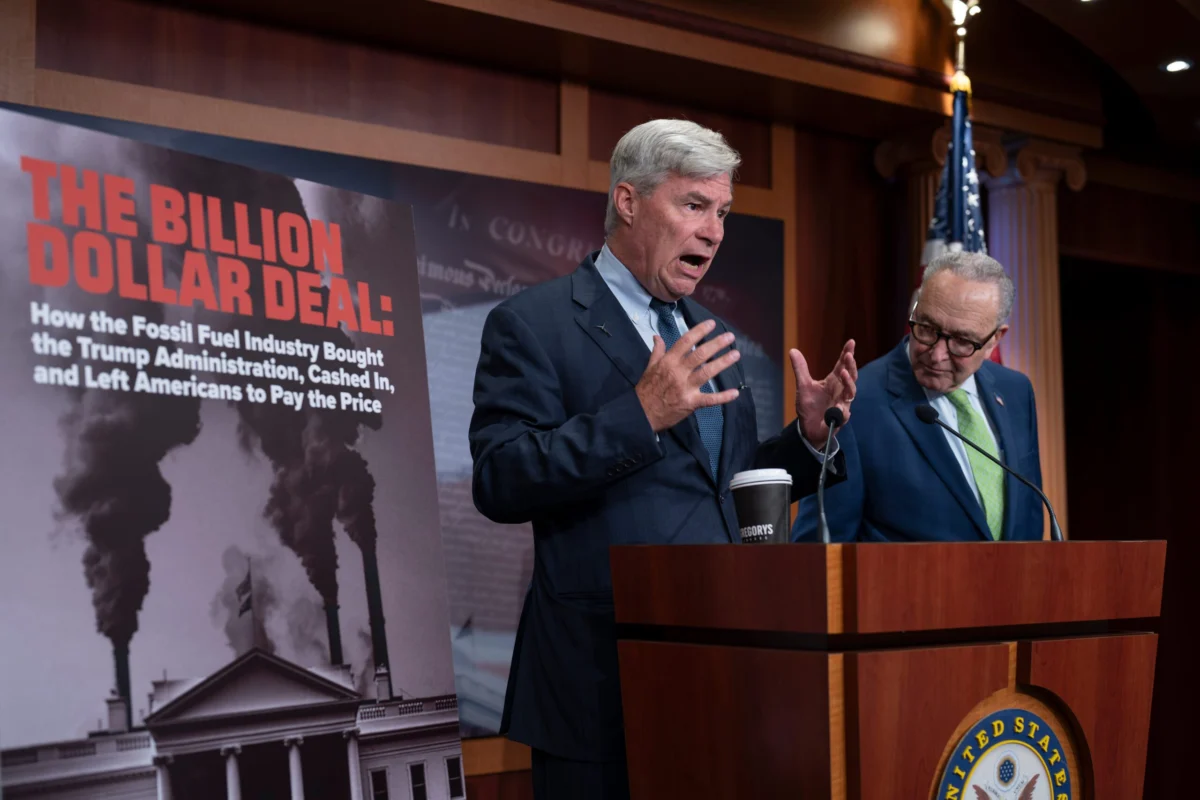
Unveiled during a joint Capitol news conference, the bipartisan deal attempts to balance competing national priorities: accelerating traditional and renewable energy generation, modernizing the interstate transmission grid, curbing the soaring energy burdens tied to the artificial intelligence boom, and addressing contentious environmental and regulatory protections.
However, despite reaching an internal Senate consensus, the sweeping legislative text faces a compressed and politically fraught timeline. Congressional leaders confirmed that a formal floor vote will be deferred until after the midterm elections, setting the stage for a high-stakes legislative showdown during the post-election lame-duck session.
Main Facts
The core of the bipartisan agreement centers on modernizing the National Environmental Policy Act (NEPA) and the National Historic Preservation Act to expedite project timelines. For decades, developers of power plants, transmission lines, and renewable energy sites have complained that litigation and multi-agency reviews under NEPA stretch timelines to decades, paralyzing capital investment and crippling grid reliability.
Key pillars of the proposed legislation include:
- Permitting and Judicial Streamlining: Capping legal challenge windows under NEPA and restricting certain procedural roadblocks under the National Historic Preservation Act, which protects cultural and Native American artifacts.
- AI Data Center Cost Allocation: Mandating that the massive artificial intelligence data centers driving the recent surge in electricity demand must fully finance the grid upgrades and transmission lines they necessitate, shielding residential and commercial ratepayers from absorbing those costs.
- Interstate Transmission Enhancement: Expanding the siting authority of the Federal Energy Regulatory Commission (FERC) and synchronizing federal reviews with state-level processes to fast-track regional transmission interconnections.
- Political Safeguards for Renewables: Tying the viability of the broader package to protections that prevent executive-branch overreach from arbitrarily stalling approved clean energy installations.
The legislative framework was crafted by the Republican and Democratic leaders of the Senate’s key energy and environmental panels: Environment and Public Works Committee Chair Shelley Moore Capito, R-W.Va.; ranking member Sheldon Whitehouse, D-R.I.; Energy and Natural Resources Committee Chair Mike Lee, R-Utah; and ranking member Martin Heinrich, D-N.M.
Chronology of Events
The road to the current bipartisan compromise has been marked by years of incremental legislative failures, executive branch friction, and shifting economic pressures:
- Early-Term Executive Friction (2025): Early in President Donald Trump’s second term, executive orders aimed at freezing offshore wind development triggered immediate legal battles. Federal courts ultimately struck down several administration directives designed to halt large-scale wind projects off the East Coast.
- December 2025: The Trump administration temporarily suspended five major offshore wind projects, citing unspecified national security risks, before federal judges intervened to allow construction to resume. These recurring clashes poisoned previous attempts to negotiate a comprehensive bipartisan permitting reform package.
- Spring and Summer 2026: Surging electricity demand—accelerated by the rapid buildout of energy-hungry AI data centers nationwide—forced lawmakers from both parties to recognize the vulnerability of the U.S. power grid. Grid operators warned of looming blackouts and capacity shortfalls.
- September 24, 2026: Following months of closed-door negotiations, Senators Capito, Lee, Heinrich, and Whitehouse announced that they had successfully forged a bipartisan framework to overhaul energy permitting.
- Post-Midterm Outlook (November 2026 and Beyond): Congressional leaders scheduled the formal legislative vote for the upcoming lame-duck session, pending resolution over how the bill will handle executive-branch opposition to wind and solar installations.
Supporting Data & Economic Pressures
The urgency behind the legislation is driven by a stark macroeconomic reality: American energy demand is skyrocketing for the first time in decades.
According to energy market analysts, the rapid proliferation of artificial intelligence data centers requires massive, continuous blocks of electricity, rivaling the energy footprints of entire mid-sized cities. Without significant grid expansion, this localized demand spike threatens to destabilize regional power markets and dramatically increase electricity bills for everyday consumers.
At the same time, the United States has suffered from systemic inefficiencies in project deployment:

- Decade-Long Delays: Major transmission projects frequently take 10 to 15 years simply to clear federal, state, and local environmental reviews.
- Interconnection Backlogs: Regional transmission organizations (RTOs) report gigawatts of renewable energy and storage projects trapped in long queues, waiting for grid connection approvals.
- Consumer Exposure: Historically, the costs of high-voltage transmission lines built to serve heavy industrial users or tech conglomerates have been socialized across all utility ratepayers. The new Senate bill fundamentally alters this dynamic by establishing "polluter-pays" or user-pays mechanisms specifically tailored for data centers.
Official Responses and Stakeholder Reactions
Reaction to the bipartisan text has been swift, divided, and complex, reflecting the fragile coalitions underpinning the energy sector.
Congressional Leadership
Republican Senator Shelley Moore Capito hailed the measure as a generational achievement. "The American people sent us here to do big things. This is a big thing. It’s monumental and it’s legacy-setting," Capito remarked at the Capitol press briefing. She emphasized that the bill provides a much-needed antidote to a permitting process that has become "too long, too expensive," while asserting that vital environmental protections remain intact.
Democratic Senator Martin Heinrich framed the deal around economic fairness and grid security. "This bill will mean more energy on the grid, more good-paying jobs, and lower electricity costs for families and businesses," Heinrich said. "And as data centers drive demand for more power, it will ensure they pay their fair share of the grid upgrades they require — not leave that bill to American families."
The Executive Branch
In an official statement, the White House expressed qualified support for the legislation, asserting that the package would "deliver transformative policies to lower Americans’ energy and housing costs, drive new construction and investment in American infrastructure, and create American jobs."
However, the administration’s historical hostility toward renewable energy remains a major variable. While President Trump recently signaled a willingness to ease blockages on certain renewable projects to help grease the wheels for a broader deal, Democrats remain wary. Senator Sheldon Whitehouse noted that while the administration’s recent compromise overtures are a step forward, Democrats are demanding cast-iron guarantees to prevent future executive retaliation against wind and solar developments.
Industry and Environmental Groups
The response from outside interest groups exposed sharp ideological fractures:
- Utilities and Infrastructure: Drew Maloney, president and CEO of the Edison Electric Institute representing for-profit utilities, praised the effort to streamline environmental timelines. He noted that the provisions would help utilities "create project certainty" and deliver reliable power to 250 million customers, though his organization is still evaluating transmission impacts.
- Environmental Advocates: Conversely, progressive conservation groups delivered scathing reviews. Brad Campbell, president of the Conservation Law Foundation, condemned the deal as a "fossil fuel industry wish-list." Campbell warned that curtailing judicial review and limiting EPA and state oversight could dangerously degrade clean water protections and weaken safeguards for endangered species.
- Clean Energy Defenders: Manish Bapna, president and CEO of the Natural Resources Defense Council, stated that his group is meticulously reviewing the fine print. Bapna stressed that ending the administration’s ongoing friction with clean energy—the nation’s fastest-deploying power source—remains a non-negotiable benchmark for any viable final agreement.
Implications for the Future of American Energy
If enacted during the upcoming lame-duck session, the legislation will permanently alter the landscape of American infrastructure development.
On one hand, the bill promises to unlock billions of dollars in stalled capital investments, offering energy developers a clearer, more predictable timeline for bringing generation facilities and transmission corridors online. By forcing high-tech entities like data center operators to internalize the grid-upgrade costs of their explosive growth, the policy protects regular utility customers from bearing the financial brunt of the digital age.
On the other hand, the curtailment of bedrock environmental reviews under NEPA and the restriction of judicial challenges represent a significant win for traditional energy developers and industrial proponents, while alarming conservationists who fear a weakening of public health and ecological safeguards.
Ultimately, the success of the package depends on whether bipartisan lawmakers can maintain their fragile alliance through the political crosscurrents of the post-election landscape—and whether they can definitively bridge the gap between fossil fuel priorities, renewable energy ambitions, and the insatiable power demands of the technological future.