In a strategic move to bolster the United States’ renewable energy infrastructure, the U.S. Department of Energy (DOE) has officially announced the second cohort of recipients for its Hydropower Testing Network (HyTN) voucher program. By providing industry innovators with critical access to specialized testing facilities and technical expertise, the DOE aims to accelerate the commercialization of technologies that will define the next century of hydroelectric power.
The selection of these 14 projects marks a pivotal moment in the modernization of the U.S. power grid, as the federal government seeks to leverage existing hydropower assets to meet rising electricity demands and ensure grid reliability.
The Core Mission: Bridging the Gap Between Innovation and Commercialization
The HyTN program, overseen by the DOE’s Hydropower and Hydrokinetic Office (H2O), is designed to solve a perennial problem in the energy sector: the "valley of death" between laboratory-scale invention and full-scale market deployment. Many promising hydropower technologies fail to reach the grid because developers lack the capital or the specialized infrastructure required to test their equipment under real-world or rigorous simulated conditions.
"By pairing industry innovators with leading U.S. test facilities and technical expertise, HyTN accelerates the development of next-generation technologies that keep hydropower reliable and abundant," said H2O Director Nichole Fitzgerald.
The network provides a bridge for these innovators, offering access to more than 65 specialized physical testing and modeling capabilities. These range from high-velocity hydraulic flow testing and biological impact assessments to complex techno-economic modeling that helps developers determine the financial viability of their designs.
Chronology: A Roadmap of the Hydropower Testing Network
The establishment and expansion of the HyTN represent a multi-year effort by the DOE to institutionalize support for hydropower.
Phase 1: Infrastructure Foundations (June 2024)
The initiative began in earnest in June 2024, when the DOE launched the first phase of the network. The focus was not on the technology developers themselves, but on building the "network" of the HyTN. The DOE sought out universities, national laboratories, and private research facilities that possessed the specialized hardware—flumes, cavitation tunnels, and computational clusters—necessary to evaluate new hydro equipment.
Phase 2: The Inaugural Cohort (Early 2025)
By early 2025, the Water Power Technologies Office (WPTO) announced the first 12 hydropower technology developers selected to receive support. This cohort served as a pilot group, testing the administrative and technical frameworks of the voucher system. The success of this inaugural group provided the necessary data for the DOE to refine the program and scale up for the second round.
Phase 3: Scaling and Refinement (Late 2026)
The current announcement represents the expansion phase. With the framework proven, the DOE has selected 14 new projects, focusing on a broader range of technological readiness levels. This phase emphasizes not just new inventions, but the modernization of legacy equipment, reflecting a dual-pronged strategy of "new build" innovation and "refurbishment" efficiency.
Supporting Data: Why Hydropower Remains a Linchpin of the Grid
Hydropower accounts for approximately 6% of the total utility-scale electricity generation in the United States. While this figure may seem modest compared to the rapid expansion of solar and wind, the value of hydropower lies in its "baseload" capability. Unlike intermittent renewables, hydropower provides a consistent, dispatchable supply of electricity that can be ramped up or down to stabilize the grid.
However, the fleet is aging. Many of the dams and turbines currently operating in the U.S. were constructed decades ago. Modernizing these existing facilities—installing more efficient turbines, advanced sensors, and environmentally friendly passage systems—offers a massive opportunity to increase energy output without the need for new dam construction, which is often environmentally contentious and economically prohibitive.

The DOE’s investment in the HyTN is effectively a bet on efficiency. By improving the reliability and longevity of critical equipment, the government expects to drive down energy prices and reduce the maintenance burdens on utility providers.
Official Responses and Industry Collaboration
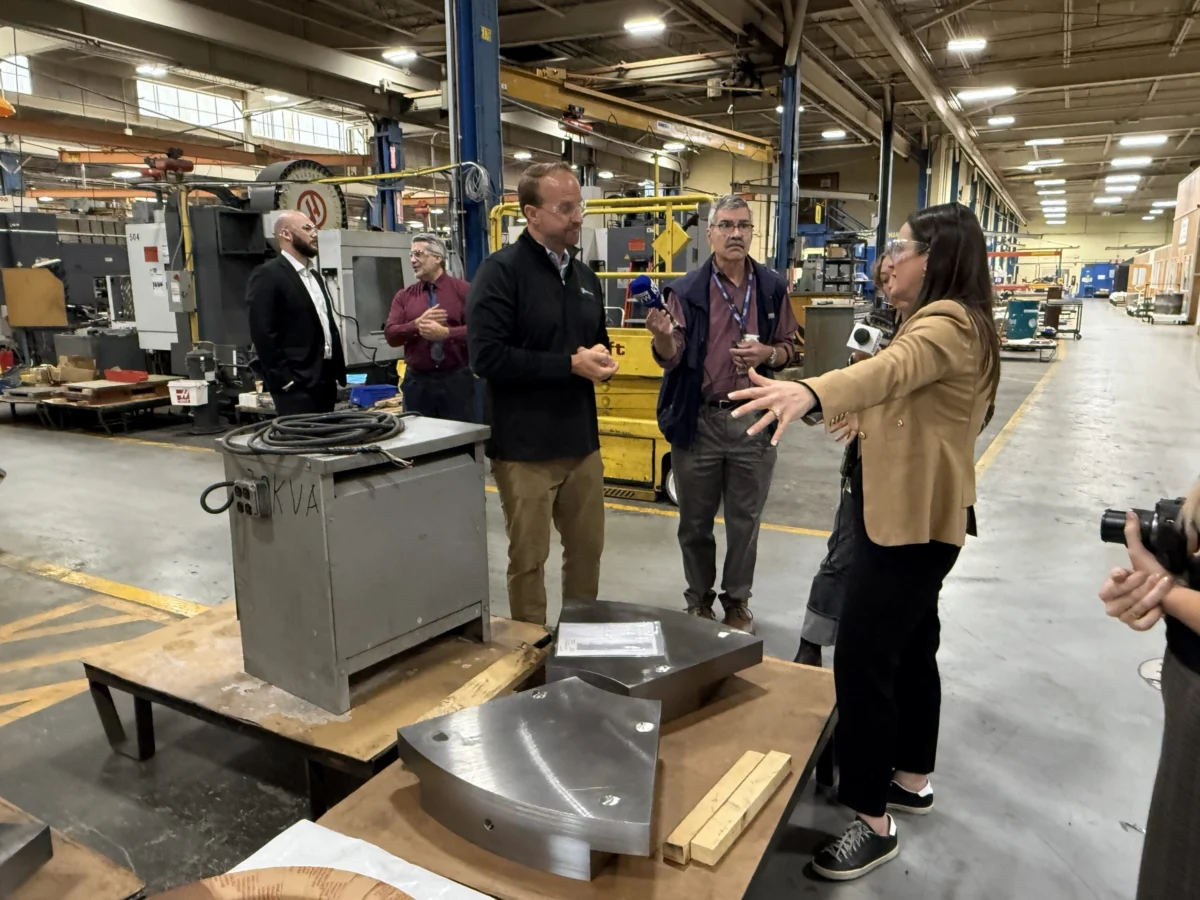
The importance of the HyTN was underscored by a recent visit by Assistant Secretary of Energy Audrey Robertson to the Kingsbury facility, a key player in the hydropower supply chain.
"We were honored to welcome Assistant Secretary Robertson and the Department of Energy team to Kingsbury," said Mike Brawley, President and CEO of Kingsbury. "For more than a century, Kingsbury technology has supported hydropower generation across North America. We are proud to continue collaborating with Oak Ridge National Laboratory and the Department of Energy on research that can help improve the reliability and longevity of critical hydropower equipment."
Kingsbury’s involvement highlights the collaborative spirit of the program. It is not merely a government-funded initiative; it is a public-private partnership. The HyTN is managed by ENERGYWERX in partnership with the DOE, utilizing a technology commercialization agreement that streamlines the flow of information and expertise between the federal government and the private sector.
Implications: A Greener, More Reliable Grid
The long-term implications of these 14 projects—and the ongoing work of the HyTN—are significant. As the United States moves toward a net-zero energy future, the ability to integrate intermittent sources like solar and wind with the steady, reliable output of hydro is essential.
1. Grid Resiliency
By investing in modern materials and digital monitoring, the DOE is helping to ensure that the hydropower fleet can withstand extreme weather events and varying water levels. This is critical for national security, as hydropower often serves as a "black start" resource capable of rebooting the grid after a major outage.
2. Environmental Stewardship
Many of the technologies currently moving through the HyTN are focused on ecological impact. Modern turbine designs are being engineered to allow fish to pass through safely, while others are focused on reducing water usage and improving flow management to support local ecosystems. This dual-focus on energy production and environmental protection is vital for obtaining the regulatory permits necessary for long-term project viability.
3. Economic Competitiveness
By reducing the barriers to testing, the DOE is fostering a domestic industry that can compete globally. Hydropower technology is a major export for the United States, and by nurturing a robust ecosystem of specialized testing facilities, the DOE is ensuring that American engineering firms remain at the forefront of the global energy transition.
Looking Ahead: The Future of HyTN
As the second round of voucher negotiations proceeds, the DOE is expected to continue its oversight and evaluation of the program’s success. The HyTN is structured around three core phases: facility selection, developer matching, and technical execution. With the network now fully operational, the focus will shift to monitoring the output of these collaborations.
The DOE has signaled that it views the HyTN as a permanent feature of its research and development landscape. As the energy landscape evolves, the network will likely adapt to include new categories of hydrokinetic energy, such as wave and tidal power, which are currently in the early stages of commercial testing.
In conclusion, the selection of these 14 projects is more than just a routine grant announcement. It is a strategic deployment of resources designed to modernize a foundational element of the U.S. power grid. By fostering a culture of rigorous testing and collaborative innovation, the Department of Energy is ensuring that hydropower remains a reliable, efficient, and environmentally responsible cornerstone of the American energy future. As the projects move from negotiation to implementation, the industry will be watching closely, as these technologies could set the standard for the next generation of clean, renewable energy.