By Adrian Băisan & The Editorial Desk
Edited by Paul Gerke
Introduction: The Urban Renewable Energy Dilemma
Urban residential buildings have long represented a frustrating bottleneck in the global transition to renewable energy. While suburban and rural homeowners can readily install sprawling rooftop photovoltaic (PV) arrays, apartment dwellers are fundamentally constrained by a lack of surface area. Traditional opaque solar panels cannot be mounted on building facades or windows without blocking natural light, destroying architectural aesthetics, and violating strict municipal zoning codes.
Furthermore, popular plug-in balcony photovoltaic systems—though helpful for offsetting base-load appliance electricity—frequently face severe limitations regarding self-consumption. Without expensive electrochemical battery storage, much of the midday solar generation from a plug-in system is either wasted or pushed back onto the public grid without adequate compensation.
However, a four-year real-world pilot study conducted on the eighth floor of a residential apartment building in Bucharest, Romania, demonstrates an innovative paradigm shift. By integrating semi-transparent photovoltaic glass directly into a south-facing balcony enclosure and pairing it with a standard resistive water heater in a direct-current (DC) configuration, developers have unlocked a multi-benefit energy system. This approach bypasses the need for inverters or costly batteries, provides thermal energy storage, slashes summer air-conditioning loads, and dramatically cuts water waste.

Main Facts: The Bucharest Pilot at a Glance
The core innovation of the PhotoVoltaic Windows SRL pilot project revolves around replacing conventional glazing with functional, semi-transparent photovoltaic glass elements that feed energy directly into domestic water heating.
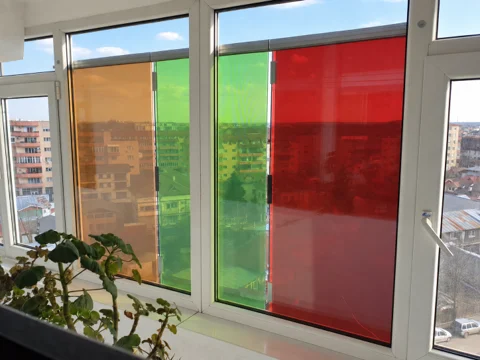
- System Setup: The installation features 11 semi-transparent photovoltaic glass elements, each measuring 47.2 × 23.6 × 0.28 inches (1200 × 600 × 7 mm). Nine of these panels possess a 30% transparency rating, while two feature a 10% transparency rating.
- Power Capacity: The combined nominal installed peak power of the array sits at approximately 845 Wp.
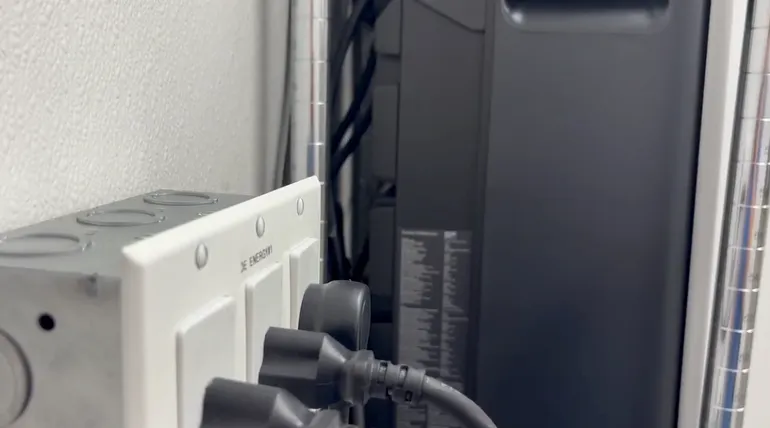
- Direct DC Integration: The photovoltaic glass is wired directly—without an inverter—to an ordinary 21-gallon (80-liter), 3 kW electric water heater.
- Hybrid Grid-Fallback: During peak daylight hours, solar electricity flows straight to the heating element as DC power. Around sunset, if the water has not reached the target temperature, an automated controller switches the system to the normal alternating current (AC) grid, using the water heater’s built-in thermostat to finish the heating cycle.
- Multilayered Benefits: Beyond generating roughly 38% to 47% of the household’s annual hot-water energy demand, the installation reduces summer solar heat gain by approximately 40%, significantly decreases cooling electricity consumption, and eliminates thousands of gallons of wasted municipal water.
Chronology: From a Leaking Heater to a Four-Year Living Laboratory
The journey toward this architectural energy solution began out of simple necessity and mechanical failure.
The "Eureka" Moment (Pre-2022)
The concept was born when an ordinary electric water heater in the Bucharest apartment suffered a tank leak. While the tank itself was ruined, the internal heating element remained in optimal working condition. In an impromptu experiment, the project team removed the heating element and connected it directly to a single photovoltaic glass element.
"It got warm immediately," recalls Adrian Băisan, founder of PhotoVoltaic Windows SRL and an instrumentation and control engineer with over 30 years of international experience in the energy sector. "That was a eureka moment."

Recognizing the potential, the team began experimenting with various configurations, initially testing an early version using three photovoltaic glass elements of different colors and transparencies to supply a smaller 4-gallon (15-liter), 1.2 kW water heater.
Pilot Launch and Systematic Tracking (December 2022 – Present)
Encouraged by early trials, the team scaled up the installation. By December 2022, the full-size pilot system was up and running on the south-facing glazed balcony of the eighth-floor apartment. Systematic, recorded measurements commenced in October 2023.
Since that time, the apartment—habitually occupied by four people consuming hot water daily—has been continuously monitored across three consecutive October-to-September operating cycles. To maintain absolute traceability, monthly performance results have been published publicly via social media channels since October 2023.
Supporting Data: Performance Metrics Across Four Seasons
Operating a residential solar pilot through changing weather patterns provides critical insight into the system’s reliability and resilience. The Bucharest apartment experiences diverse seasonal shifts, putting the photovoltaic glazing through rigorous real-world testing.

Annual Hot-Water Solar Coverage
Each monitoring cycle accounted for approximately eleven months of actual household use, as the family was away for roughly one month per year:
- 2023–2024 Period: The photovoltaic windows supplied 446 kWh directly to the water heater, while 508.4 kWh were drawn from the AC grid. Solar energy accounted for 46.7% of the total domestic hot-water demand.
- 2024–2025 Period: The system delivered 462 kWh of solar energy, supplemented by 594 kWh from the grid, achieving 43.7% solar coverage.
- 2025–2026 Period: The photovoltaic windows supplied approximately 360 kWh, with 586.2 kWh coming from the grid, resulting in a solar coverage rate of 38.0%.
Accounting for Weather Anomalies
The dip in solar contribution during the 2025–2026 monitoring period was not caused by equipment degradation, but rather by severe meteorological anomalies. According to data from Romania’s National Meteorological Administration (ANM), October 2025 and February 2026 ranked as the second-wettest months since historical record-keeping began in 1901. Furthermore, November 2025 ranked as the ninth-wettest November on record, severely limiting direct solar irradiation.
Electrical Voltage Optimization
One of the key technical takeaways from the data is the critical importance of electrical voltage matching in direct-DC systems. Standard opaque photovoltaic modules, when paired directly with a high-resistance 3 kW, 230 V water heater element without an inverter, suffer from a severe mismatch; two conventional 800 Wp modules can typically deliver only about 300 W to such a resistance.
In contrast, the specialized photovoltaic glazing used in the Bucharest pilot operates at a voltage profile meticulously tailored to the water-heater resistance. The system has successfully recorded a peak power delivery of 499 W directly to the heating element (measured at 94.6 V × 5.28 A), proving that custom architectural glass can optimize energy transfer without the conversion losses typical of traditional inverter setups.

Official Responses and Independent Auditing
Given the unconventional nature of pairing architectural glass directly with domestic water heating, the methodology and underlying savings calculations have undergone rigorous professional review.
The analytical models used to assess both the hot-water energy savings and the secondary air-conditioning reductions were formally reviewed and verified by the Romanian Association of Energy Auditors for Buildings (AAECR).
Furthermore, the core innovation—the automated switching concept that transitions the water heater smoothly between photovoltaic direct-current and the standard alternating-current municipal grid—has been formally submitted and published as part of a patent application through the Romanian State Office for Inventions and Trademarks.
Implications: A Triple-Benefit Environmental and Economic Model
While the generation of clean electricity is the primary goal of any solar installation, the Bucharest pilot highlights three distinct secondary benefits that redefine the value proposition of building-integrated photovoltaics (BIPV).

1. Thermal Energy Storage vs. Electrochemical Batteries
Standard plug-in balcony systems often struggle with energy mismatch: appliances consume power inconsistently, forcing surplus electricity onto the grid. Adding lithium-ion battery storage to small balcony systems is rarely economically viable due to high upfront costs, storage degradation, and conversion inefficiencies.
The Bucharest system solves this by using the water heater itself as a low-cost "thermal battery." Water has high thermal mass; energy produced during the midday hours is instantly converted into heat and stored within the tank for evening use. Because a resistive heating element does not require a strict threshold voltage to operate, even low-intensity sunlight (delivering 100 W or 200 W) is successfully converted and accumulated over time.
2. Mitigation of Summer Cooling Loads
Urban apartments with extensive south-, east-, or west-facing glazing frequently suffer from extreme solar heat gain during summer months, driving up air-conditioning bills.
The 85 square feet (7.92 square meters) of semi-transparent photovoltaic glass integrated into the apartment’s balcony facade reduces solar heat gain through the glazed envelope by approximately 40% compared to conventional clear glass. Thermal calculations estimate that this passive shading effect cuts the apartment’s summer cooling electricity consumption by roughly 433 to 481 kWh per season.

3. Elimination of Water and Energy Waste from Centralized Networks
Before the installation of the local electric water heater, the apartment relied on Bucharest’s centralized district heating network for hot water. This introduced a hidden inefficiency: occupants had to run the tap for 5 to 8 minutes waiting for hot water to travel through the building pipes.
Monthly spot measurements over a 12-month period revealed that this waiting period resulted in approximately 17,000 gallons (64 cubic meters) of water being discharged down the drain annually while still cold or lukewarm. Under local billing structures, this water is charged as hot water, creating a massive financial and thermal loss.
Energy calculations indicate that this wasted water represents roughly 5.7 MMBtu (1,675 kWh thermal) of wasted energy per year. By installing a local water heater just meters away from the point of use, these water and energy losses were practically eliminated. Moreover, because Bucharest municipal authorities heavily subsidize district heating (covering roughly two-thirds of the cost), reducing centralized hot-water waste eases the financial burden on public municipal funds.
Conclusion: Redefining Urban Solar Integration
The four-year operational success of the Bucharest pilot offers a compelling roadmap for urban sustainability. By viewing solar generation, building design, and thermal storage as an interconnected system, apartment dwellers can bypass the spatial limitations that have traditionally kept them sidelined from the green energy transition.

The system requires no complex inverters or short-lived batteries, resulting in high structural robustness, minimal maintenance, and a resilient backup hot-water supply during municipal grid failures. For apartments utilizing individual gas boilers, the same direct-DC photovoltaic setup can be configured upstream to preheat water, directly cutting natural gas consumption and lowering urban carbon emissions.
As cities worldwide push toward net-zero building codes, innovations like semi-transparent photovoltaic glazing prove that urban glass surfaces do not merely have to be passive barriers against the elements. Instead, they can serve as active energy generators—turning windows and balconies into vital contributors to the urban renewable energy grid.