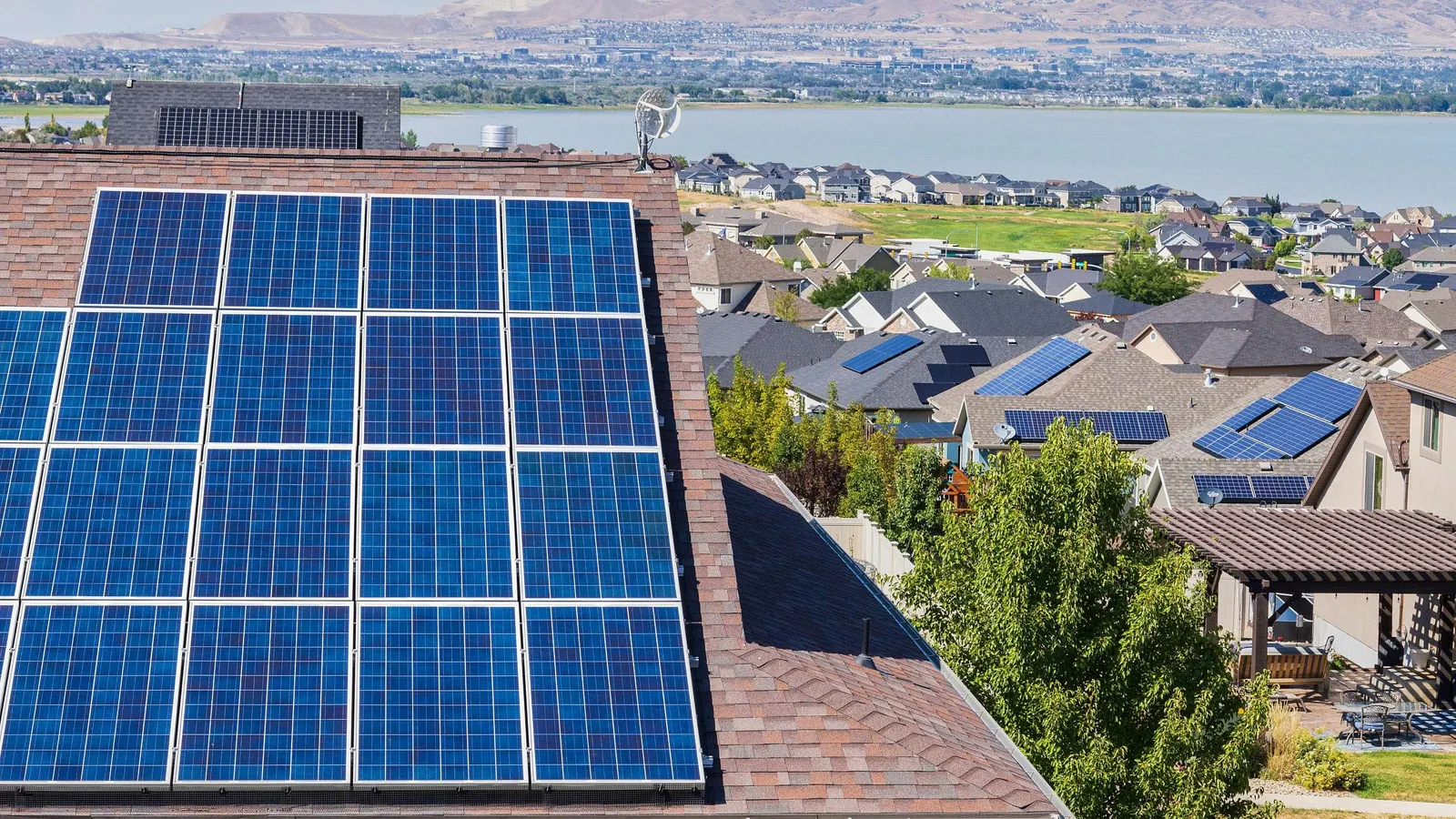
COLORADO — In an era where public institutions are increasingly called upon to model environmental stewardship, Colorado’s Rangeview Library District has taken a definitive step forward. The innovative Anythink Nature Library—hailed as the state’s first public nature library—is now drawing directly on the natural elements it celebrates to power its campus.
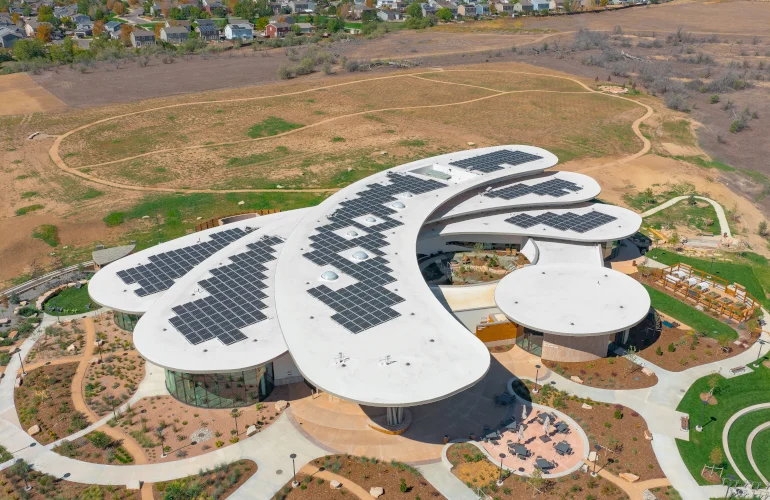
Following the recent completion of a state-of-the-art rooftop solar installation by Colorado-based commercial solar developer Namaste Solar, the institution has seamlessly integrated clean, renewable energy into its overarching architectural and educational mandate. The 203.5-kilowatt (kW) photovoltaic array is projected to generate roughly half of the facility’s total electricity consumption, turning the building itself into a living textbook on sustainability.
Beyond its immediate environmental benefits, the project represents a triumph of financial planning and civic foresight. Expected to save the library district more than $1 million over its operational lifetime through lowered utility expenses and federal clean energy incentives, the solar array fortifies the institution’s budget. These financial savings will be directly redirected toward expanding environmental education, immersive community experiences, and lifelong learning programming for patrons of all ages.
Main Facts
The partnership between Anythink Libraries and Namaste Solar centers on a robust, multi-faceted sustainability framework designed to align the facility’s physical footprint with its philosophical mission.
The Installation: Completed by Namaste Solar, the project features a 203.5-kW rooftop solar array strategically positioned to maximize Colorado’s abundant sunshine.
Energy Offset: The system is engineered to produce approximately 50% of the library campus’s total annual electricity needs on-site.
Financial Impact: The library district is projected to save over $1 million across the lifespan of the system, achieved via slashed utility bills and federal clean energy incentives.
Campus Setting: The library sits on a sprawling 15-acre campus embedded within the 140-acre Aylor Open Lands, providing a pristine backdrop for outdoor and environmental learning.
Holistic Sustainability: Solar energy is just one pillar of the building’s green infrastructure, which also features advanced geothermal heating and cooling, extensive water conservation systems, and active pursuit of prestigious LEED Gold certification.
Partnership Legacy: This project marks a continuation of a trusted collaborative relationship between Anythink Libraries and Namaste Solar, which have previously teamed up on other regional library installations.
Chronology of the Project
The realization of the Anythink Nature Library and its crowning solar installation is the culmination of years of strategic planning, ecological assessment, and community-focused design.
Phase I: Conceptualization and Site Selection
Long before the first solar panel was mounted, the Rangeview Library District envisioned a public space that transcended traditional library walls. Recognizing the unique opportunity presented by the region’s geography, planners selected a 15-acre campus integrated into the 140-acre Aylor Open Lands. The goal was clear: to create an immersive environment where patrons could interact directly with the outdoors. Early architectural blueprints mandated that the physical building must reflect these conservation values, ruling out traditional, fossil-fuel-reliant designs in favor of an all-encompassing sustainability strategy.
Phase II: Integrating Sustainable Architecture
During the design and construction phases, the project team incorporated a comprehensive suite of eco-friendly infrastructure. Engineers integrated geothermal heating and cooling systems to regulate indoor temperatures efficiently, alongside rigorous water conservation measures tailored to Colorado’s semi-arid climate. To achieve the coveted LEED Gold certification, the facility needed a significant on-site renewable energy generator capable of earning critical "Energy and Atmosphere" credits. Rooftop solar emerged as the logical and necessary solution.
Phase III: Selecting a Contractor and Engineering the System
Tasked with finding a regional partner with deep technical expertise in complex public infrastructure, Anythink leadership turned to Namaste Solar. Building upon a history of successful past collaborations on other library district projects, Namaste Solar was brought on board to design and execute a robust photovoltaic system. Engineers calculated that a 203.5-kW array would be optimal for the facility’s structural load, aesthetic integration, and energy goals, balancing upfront investment against long-term operational yields.
Phase IV: Installation, Commissioning, and Future Operations
The rooftop installation proceeded systematically, culminating in the successful grid connection of the 203.5-kW system. With the solar array now fully operational, the campus functions as a decentralized power generator. The facility continuously harvests solar energy to offset grid reliance, while the library district benefits from locked-in energy cost predictability. Moving forward, the installation will serve as both a functional utility asset and an educational exhibit for students and community members visiting the nature library.
Supporting Data and Technical Insights
To fully appreciate the scale and impact of the Anythink Nature Library solar project, it is helpful to examine the underlying metrics, architectural specifications, and economic frameworks that made the installation possible.
Table: Anythink Nature Library Solar Project Overview
Metric / Feature
Specification
System Capacity
203.5 Kilowatts (kW)
Estimated Annual Generation
~50% of facility’s total electricity consumption
Projected Lifetime Savings
Over $1,000,000 (via utility reduction & incentives)
Campus Acreage
15-acre campus within the 140-acre Aylor Open Lands
Environmental Target
LEED Gold Certification
Key Green Infrastructure
Rooftop Solar, Geothermal Heating/Cooling, Water Conservation
Primary Contractor
Namaste Solar
Operating District
Rangeview Library District (Anythink Libraries)
Financial Engineering and Clean Energy Incentives
One of the most notable aspects of the installation is how municipalities and nonprofit entities can leverage modern clean energy financing. Public libraries operate on fixed taxpayer-funded budgets where cost overruns or volatile utility spikes can strain community services.
By utilizing structured financing options and safely secured federal tax incentives—often accessible to public-sector entities through modern clean energy credit transfers and direct pay provisions—Namaste Solar helped Anythink minimize upfront capital barriers. This financial architecture ensures that the project pays for itself over time, eventually generating net-positive savings that cushion the library’s operational budget against future inflation in energy markets.
Official Responses and Leadership Perspectives
The convergence of civic infrastructure, environmental advocacy, and commercial solar engineering elicited enthusiastic responses from the key leaders driving the initiative.
Mark Fink, executive director of Anythink Libraries, emphasized the philosophical alignment between the building’s physical operations and its core educational mission:
"Anythink Nature Library was envisioned as a place where people can deepen their connection with the natural world, so it was important that the building reflected those values. Solar was a natural extension of that vision. We wanted a Colorado partner with proven experience delivering complex public projects. Having partnered with Namaste Solar on previous library projects, we knew they had the technical expertise and take a collaborative approach."
Fink’s remarks underscore a growing design philosophy among public institutions: that buildings should not merely house educational programs, but actively demonstrate the principles they teach.
Echoing this sentiment, Rachel Mountain, co-owner and director of commercial sales at Namaste Solar, highlighted the broader replicability of the Anythink model for other municipal and nonprofit organizations:
"Projects like Anythink Nature Library show how nonprofit organizations and municipalities can use solar as a long-term strategy to lower operating costs, create more predictable energy budgets and preserve more resources for the programs and services that matter most to their communities. With our financing options and the safe-harbored tax incentives we’ve secured, many organizations can reduce or even eliminate upfront costs while creating long-term financial value."
Mountain’s perspective points to a paradigm shift in how public entities view solar installations—shifting them from discretionary "green" expenses to essential fiscal management tools.
Broader Implications for Communities and Public Infrastructure
The successful completion of the solar installation at the Anythink Nature Library carries profound implications that extend far beyond the borders of its 15-acre campus in Colorado.
1. Setting a New Benchmark for Public Architecture
For decades, public buildings—including libraries, community centers, and municipal offices—were designed with a primary focus on initial construction costs, often leaving operational and energy expenses to burden future budgets. The Anythink model flips this script by treating sustainability as a core component of fiscal prudence. By combining geothermal systems, water conservation, and rooftop solar, the library district has established a gold standard for civic architecture in the American West.
2. Amplifying Educational Impact
A library dedicated to nature education requires an authentic environment to inspire its visitors. When children, students, and community members visit the library, they are not just reading about ecology in books; they are walking through a facility that actively minimizes its carbon footprint. The integration of visible green technologies turns the building itself into an interactive educational exhibit. Visitors can learn firsthand how photons are converted into electricity, how geothermal loops regulate indoor climates, and how water-saving designs protect local ecosystems.
3. Financial Resilience for Public Entities
Public libraries across the United States frequently face funding pressures, budget cuts, and rising operational overhead. Utility costs represent a notoriously volatile line item in municipal budgets, subject to shifting fossil fuel markets and regional grid demands. By locking in half of its electricity generation via an on-site, zero-marginal-cost resource like solar, the Rangeview Library District has insulated itself against future energy price shocks. The projected $1 million in lifetime savings translates directly into job security for library staff, expanded book collections, enriched children’s programs, and robust outdoor community outreach initiatives.
4. A Blueprint for Municipal Decarbonization
As state and local governments set ambitious climate goals to reduce greenhouse gas emissions, municipal leaders are actively searching for proven, low-risk pathways to decarbonize their building portfolios. The collaboration between Anythink Libraries and Namaste Solar demonstrates that complex public projects can be executed smoothly when paired with experienced regional contractors. By utilizing federal clean energy incentives and creative financing models, public agencies can achieve net-zero or low-carbon footprints without compromising their core public missions.
Conclusion
The Anythink Nature Library stands as a shining example of what is possible when public vision meets private engineering expertise. By drawing power directly from the sun, Colorado’s first public nature library has closed the loop between its physical environment and its philosophical purpose.
With a robust 203.5-kW rooftop solar array offsetting half of its energy needs, securing over $1 million in projected lifetime savings, and paving the way for LEED Gold certification, the project proves that ecological responsibility and fiscal common sense go hand in hand. As municipalities and nonprofit organizations nationwide look for innovative ways to stretch taxpayer dollars while protecting the environment, the Anythink Nature Library illuminates a clear, sustainable path forward.