




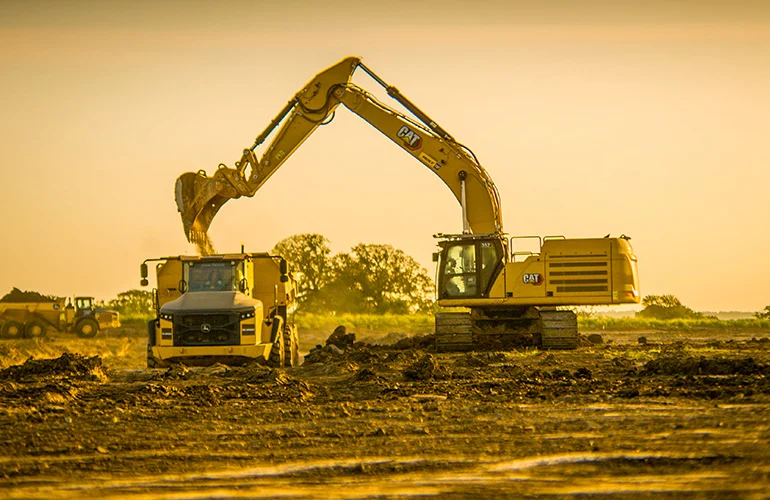
SAN FRANCISCO — In a milestone signaling a profound technological shift in the heavy civil and commercial building sectors, Bedrock Robotics has secured a $600 million Series C funding round. Co-led by prominent growth funds CapitalG and Emergence Capital, the financing values the San Francisco-based autonomous technology company at $4.1 billion.
This latest influx of capital brings Bedrock Robotics’ cumulative funding to nearly $1 billion. The rapid succession of financial backing highlights a surging, nationwide demand for autonomous heavy equipment designed to counteract persistent labor shortages, slash project timelines, and modernize job sites that have historically relied entirely on manual operation.
Main Facts
The $600 million Series C financing was anchored by CapitalG and Emergence Capital, with participation from a heavy-hitting roster of new and returning investors. New strategic backers include the U.S. Innovative Technology Fund (USIT), Bessemer Venture Partners, and Singapore-based investment giant Temasek. They join a group of existing investors who have consistently supported Bedrock’s trajectory, including 8VC, Georgian, Valor Equity Partners, Xora, Eclipse, Perry Creek Capital, and AI computing giant NVIDIA.
With this substantial war chest, Bedrock Robotics intends to accelerate the nationwide deployment of its proprietary autonomous retrofit systems. By integrating advanced perception, machine learning, and automated control hardware onto standard heavy machinery—beginning prominently with large excavators—the company enables contractors to execute complex earthwork with unprecedented safety, predictability, and efficiency.
The financial milestone coincides with aggressive geographic and operational expansion. Initially concentrated in the West and Central South, Bedrock’s technology is now actively deployed across live commercial job sites in the Midwest and South Atlantic. The company’s hardware operates on sites destined for data centers, healthcare facilities, and critical heavy civil infrastructure, reshaping how the construction industry approaches large-scale site preparation.
Chronology: From Stealth to Scale
The journey of Bedrock Robotics reflects the hyper-accelerated timeline of modern deep-tech and robotics companies addressing massive industrial pain points.
- The Stealth Era (2024): Bedrock Robotics emerged from stealth mode, revealing its mission to bring autonomy to the heavy construction sector—an industry notoriously slow to adopt automation due to the unstructured, dynamic nature of outdoor job sites.
- Initial Deployments (2025): The company quickly established foundational partnerships, rolling out its early retrofitted excavators with key design partners primarily in the Western and Central South regions of the United States.
- Commercial Breakthrough (2026): Bedrock achieved a major operational milestone by launching fully autonomous excavators onto live, commercial job sites just two years after emerging from stealth. A cornerstone partnership with major Southwest contractor Haydon cemented the technology’s viability in heavy-duty Texas earthwork operations.
- Geographic Expansion and Leadership Growth (Late 2026): The company expanded its footprint into Minnesota, Florida, Georgia, Missouri, and Virginia. To manage this hyper-growth, Bedrock fortified its executive ranks, bringing in seasoned operations talent from Amazon, Nuro, and Uber, alongside legal leadership from Uber’s Autonomous Mobility & Delivery business.
- The $600M Series C (2027): Bedrock secured its massive $600 million Series C funding round at a $4.1 billion valuation, bringing its total funding close to the $1 billion threshold and setting its sights on triple-digit active autonomous machine fleets.
Supporting Data & Economic Impact
The market tailwinds propelling Bedrock Robotics are rooted in profound macroeconomic realities. The U.S. construction industry accounts for roughly 4% to 5% of the nation’s Gross Domestic Product (GDP), yet it faces an unprecedented labor crisis. Chronic shortages of skilled equipment operators have led to delayed timelines, ballooning budgets, and constrained housing and infrastructure development.
Bedrock’s value proposition is fundamentally economic. According to CEO Boris Sofman, the implementation of autonomous heavy machinery introduces efficiencies that radically alter project finance:
- Around-the-Clock Operations: Autonomous excavators are capable of running safely beyond standard shift hours, substantially compressing project schedules.
- Interest and Financing Savings: In a high-interest-rate environment, time is literal money. Sofman points to a hypothetical project funded by a $400 million loan at a 9% interest rate. If autonomous machinery allows a project to be completed two months ahead of schedule, the developer saves approximately $6 million in interest payments alone—capital that can be reinvested into future construction projects.
- Downstream Job Creation: By alleviating the primary bottleneck in the construction pipeline (site prep and earthwork), general contractors can take on more projects. This steady expansion creates a cascading volume of predictable work for downstream trades, including plumbing, electrical, and structural finishing.
Official Responses and Leadership Perspectives
Leadership at Bedrock Robotics emphasizes that the company’s success lies in its collaborative approach to the existing construction ecosystem. Rather than attempting to replace human crews, Bedrock positions its technology as a force multiplier for experienced operators.
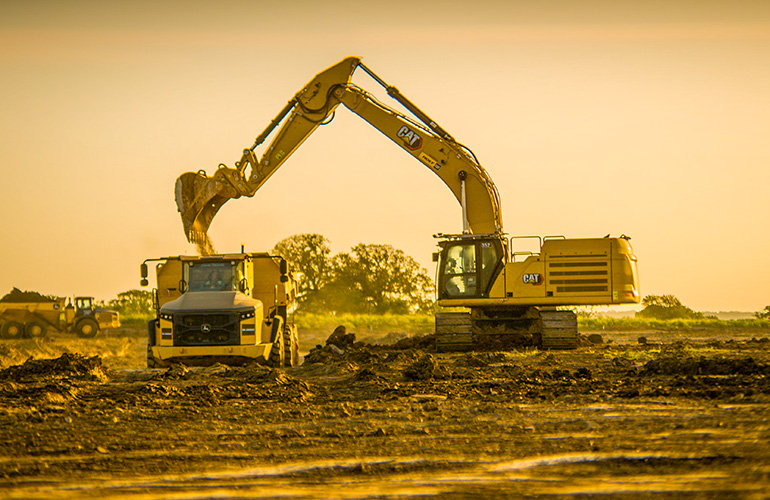
"We have proven that fully autonomous excavators can perform real work of value alongside the crews and workflows already in place on job sites," said Boris Sofman, co-founder and CEO of Bedrock Robotics, in a statement to The Robot Report. "The next challenge is delivering that capability to more contractors as a dependable part of how projects get built."
Sofman elaborated on the company’s current operational mindset: "New customer demand is very high. We’re responsibly growing into the demand, bringing on new customers we can serve alongside our longtime design partners. We’re scaling across the board, from operations to hardware to supply chain operations, to keep pace with the needs of our customers."
Strengthening the Executive Team
To successfully execute this scale-up, Bedrock has strategically expanded its leadership and operational infrastructure:
- Amy Jones Satrom (VP of Operations): Bringing deep operational expertise honed at tech giants like Amazon, Nuro, and Uber, Satrom is tasked with building the robust systems and support networks required to make successful hardware deployments repeatable nationwide.
- Ajay Gummalla (Co-founder & VP of Engineering): Gummalla continues to anchor the hardware and engineering side of the business, specifically focusing on building supply chain resilience to ensure Bedrock can manufacture machines at the scale demanded by the market.
- Lando Juarez (General Counsel): Formerly the head of legal for Uber’s Autonomous Mobility & Delivery business, Juarez brings critical expertise in navigating complex commercial partnerships and regulatory pathways for autonomous vehicle technologies.
Future Implications and Industry Horizons
As Bedrock Robotics looks toward the remainder of the decade, its roadmap extends far beyond standard excavation.
Near-Term Expansion: New Machines and Use Cases
In the immediate term, the construction sector remains the primary growth engine. Through expanded partnerships with firms like Haydon, Bedrock is testing its excavators for complex autonomous trench work. Furthermore, the company is actively evaluating larger machine models and complementary vehicle categories. Haydon and other early adopters are slated to explore the automation of bulldozers, articulated dump trucks (ADTs), and wheel loaders.
Long-Term Horizons: Mining and Agriculture
Looking further ahead, Sofman and his leadership team see natural adjacencies in industries that share the exact same structural characteristics as heavy construction: they face severe labor constraints and utilize the identical heavy machinery deployed by general contractors. Mining and large-scale agriculture represent prime long-term frontiers for Bedrock’s retrofit autonomy stack.
The 2027 Vision
For the immediate future, however, the mission is clear. "For 2027, we are relentlessly focused on getting more Bedrock-equipped machines on more job sites around the country," Sofman concluded. "It was just a few months ago that we first launched fully autonomous excavators on live, commercial job sites… 2027 is about doubling down on that progress, getting to triple-digit machines working autonomously across the country."
With nearly $1 billion in total backing, a $4.1 billion valuation, and a growing roster of tier-one investors and enterprise partners, Bedrock Robotics is well-positioned to transition autonomous heavy equipment from a visionary concept into the indispensable operational backbone of modern American infrastructure.