





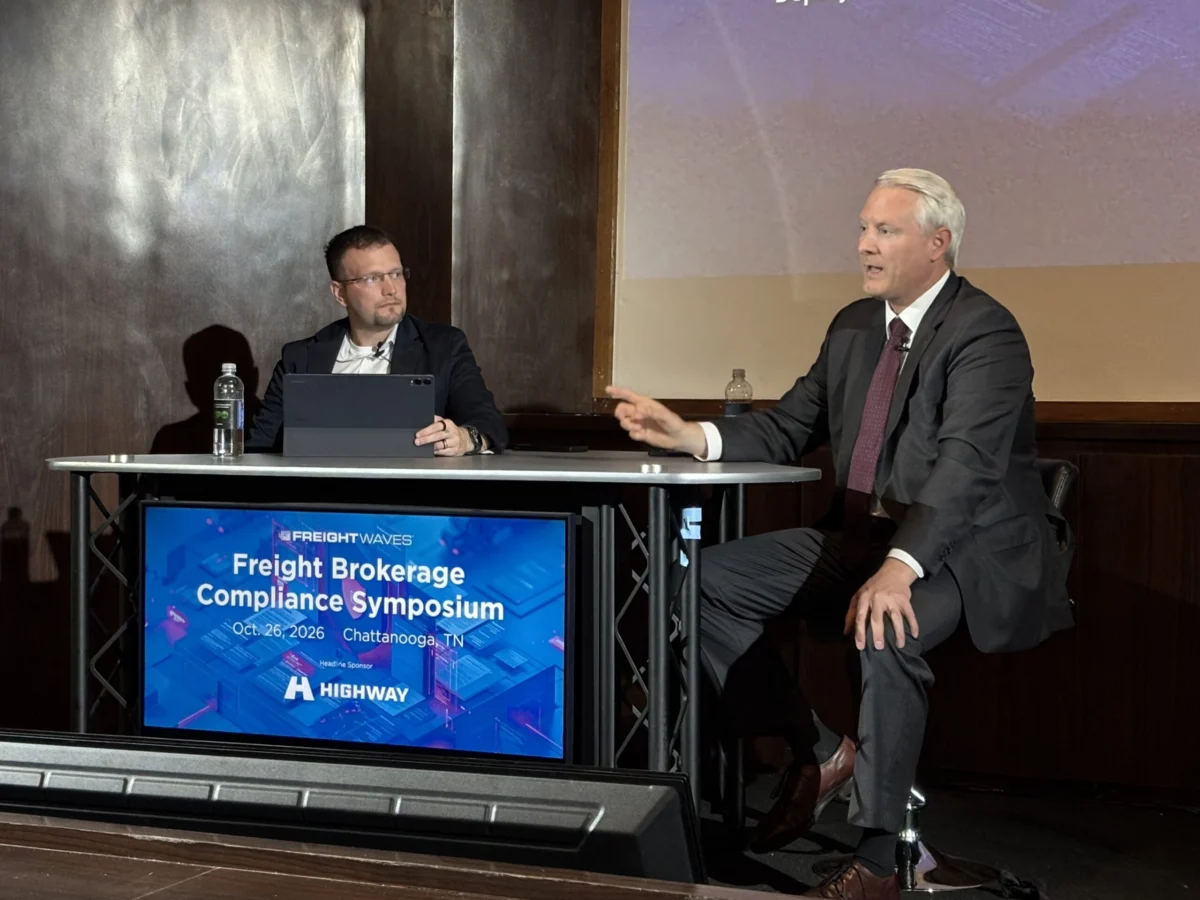
WASHINGTON — The Federal Motor Carrier Safety Administration (FMCSA) continues to navigate a turbulent period defined by digital infrastructure failures, sweeping regulatory crackdowns, and mounting anxiety over upcoming policy shifts. During a recent interview on a FreightWaves podcast hosted by Charles Gracey, agency leadership addressed the ongoing fallout from the disastrous rollout of the agency’s new registration system, known as Motus.
While the overarching message from leadership aimed to project long-term optimism and unwavering commitment to safety reform, the immediate reality for motor carriers, freight brokers, and industry stakeholders remains fraught with technological bottlenecks, uncertainty, and frustration.
Main Facts: The Current State of the Motus Registration System
The central narrative surrounding the FMCSA’s technological evolution is one of delayed stabilization. Just weeks after telling the National Motor Freight Traffic Association (NMFTA) in early October that the agency was merely "weeks away" from resolving the pervasive issues plaguing the Motus platform, leadership offered no concrete, immediate timeline for a definitive fix.
Instead, the response has shifted toward a broader horizon. While conceding that stabilization will take "really weeks and not months" rather than an extended six-month timeline, officials acknowledged that the platform’s user experience has effectively acted as an aggressive gatekeeper.
The primary design intent of Motus is twofold:
- To streamline carrier onboarding.
- To aggressively block unqualified or fraudulent carriers from entering the system.
However, the execution has severely overshot its target. While the system has successfully locked out bad actors, it has simultaneously ensnared legitimate, safety-compliant motor carriers attempting to legitimately register and build trust within the marketplace.
"You’re trying to fix something and then you break it, and then you need to get your handle around that where you’re not breaking things and you’re going in the right direction," leadership noted, describing the first four to six weeks of Motus operations as "really, really brutal."
Despite these severe growing pains, the agency remains steadfast in its belief that Motus represents a necessary evolution. Officials insist that the platform will eventually fulfill its promise to serve the trucking industry effectively, even if current users must continue to weather ongoing operational headaches.
Chronology of Events: From Deployment to Damage Control
To understand the current friction points within the FMCSA’s regulatory ecosystem, it is vital to trace the timeline of events leading up to the present day:
- Initial Motus Deployment (Late Summer/Early Fall): The FMCSA rolls out the Motus registration system, inheriting a complex digital modernization project designed to overhaul outdated federal database infrastructure.
- The "Brutal" First Month: Within the first four to six weeks of operations, users encounter widespread glitches, system lockouts, and severe registration delays. The platform’s automated filters begin blocking legitimate carriers alongside fraudulent ones.
- Early October (NMFTA Address): Addressing the National Motor Freight Traffic Association, FMCSA leadership reassures the industry that technical teams are "weeks away" from ironing out the system’s critical bugs.
- Mid-to-Late October: With system errors persisting, the agency takes the extraordinary step of waiving certain mandatory registration requirements to prevent widespread supply chain disruptions. Stakeholders are officially advised: "If you don’t need to go in, don’t go in yet."
- Present Day (Podcast Interview): Agency leadership acknowledges that full stabilization will still take a matter of weeks, continuing damage control while directing stranded applicants to bypass automated channels and contact insurance providers or FMCSA staff directly for manual intervention.
Supporting Data and Operational Workarounds
The quantitative and qualitative impact of the Motus failure has forced the FMCSA to implement emergency operational workarounds. Because the digital gateway remains hyper-restrictive—keeping out "more people than just the bad actors we intended it for"—the agency has had to ease administrative burdens on the ground.
Agency Guidance for Affected Carriers
Recognizing that the platform’s measuring stick is failing to properly distinguish between illicit operations and legitimate businesses seeking market entry, the FMCSA has issued explicit tactical advice for registrants:
- Defer Non-Essential Actions: If a carrier’s operational timeline does not strictly require immediate registration updates, they are advised to stay entirely clear of the platform to avoid getting trapped in technical limbo.
- Leverage Industry Networks: For those with urgent registration needs who find themselves blocked by the system, leadership recommends leaning heavily on private-sector allies. Carriers are encouraged to reach out to insurance contacts, industry associations, and professional networks to bridge the compliance gap.
- Direct Agency Intervention: The FMCSA has opened direct communication channels for stranded applicants. By contacting the agency directly, carriers can prompt manual reviews. Leadership assures the industry that staff are mobilized to address these direct appeals "in real time."
Official Responses and Political Resilience
The leadership duo steering the Department of Transportation and the FMCSA—Secretary of Transportation Sean Duffy and FMCSA Administrator Derek Barrs—has fundamentally altered the regulatory landscape. Over the past year, the agency has pursued an aggressive enforcement agenda unmatched in recent history. Notable actions include cracking down on CDL fraud by shutting down over 110 truck driving schools and heavily restricting non-domiciled commercial driver’s license (CDL) holders.
Although Motus was an inherited technological project, current leadership has refrained from deflecting blame onto previous administrations, instead taking full ownership of the modernization effort and its subsequent hurdles.
Political Winds and Policy Continuity
With consequential elections looming on the national stage and projections pointing toward potential political shifts in Washington, questions have naturally arisen regarding whether federal transportation policies will experience whiplash.
FMCSA leadership has firmly dismissed this notion, emphasizing that the agency’s strategic direction is insulated from short-term political turbulence.
"Regardless of how things go over in the next week or so, we are going to continue to deliver, and we’ve got the support from the Secretary, which is an absolute game changer," leadership stated. While acknowledging that external forces may attempt to "take that out of our sail," the administration remains unified in executing its long-term regulatory vision.
Implications: The Horizon of Regulatory Reform
Beyond the immediate technical crisis of the Motus rollout, the FMCSA is gearing up to release several high-stakes regulatory measures that will fundamentally reshape freight compliance, broker operations, and new entrant vetting.
1. The Looming Broker Transparency Rule
One of the most anticipated and hotly debated actions on the federal docket is the broker transparency rule. While the precise details of the final text remain under wraps, the rule is expected to mandate greater financial and operational disclosures from freight brokers regarding transactions between shippers and motor carriers.
Industry stakeholders have anticipated this rule for months amid fierce debates over market fairness, margin disclosures, and data visibility. Leadership confirmed that the broker transparency rule is part of a broader wave of enforcement actions that will drop in the near future.
2. Overhauling New Entrant Safety Standards
Rooted in the agency’s ambitious Unified Agenda released over the summer, the FMCSA is prioritizing a structural rewrite of how new trucking companies are vetted before receiving operating authority.
Key proposals within this initiative include:
- Proficiency Examinations: The agency is actively considering implementing a formal testing process to ensure that new applicant carriers possess a comprehensive, demonstrable understanding of federal safety requirements before operating authority is granted.
- Eliminating Self-Certification: As part of a push to bring "uniformity across the board," the FMCSA aims to dismantle the current system that allows CDL training schools to self-certify their compliance with federal standards. This directly aligns with the agency’s recent aggressive posture against fraudulent training institutions.
Broader Industry Impact
The convergence of these regulatory pushes signals a new era for American trucking. While the short-term friction caused by technological missteps like Motus creates genuine economic pain and administrative drag for carriers trying to do business, the agency’s long-term destination is clear.
By tightening the digital perimeter against fraudulent actors, raising the barrier to entry via proficiency testing, and forcing transparency onto broker-carrier relationships, the FMCSA is betting that temporary administrative suffering will yield a safer, more professional, and more accountable freight marketplace.
For now, however, carriers and brokers must continue to practice patience, utilize manual workarounds, and stay closely attuned to real-time updates as federal regulators attempt to steer a massive ship through both digital and political storms.