In the modern landscape of site selection and economic development, the "college town" archetype is often misunderstood. Many view these hubs solely through the lens of academia—centers of research and student life. However, for those looking deeper, cities like Stillwater, Oklahoma, represent a sophisticated model of economic symbiosis where public-private partnerships, institutional research, and local culture converge to create a high-growth environment.
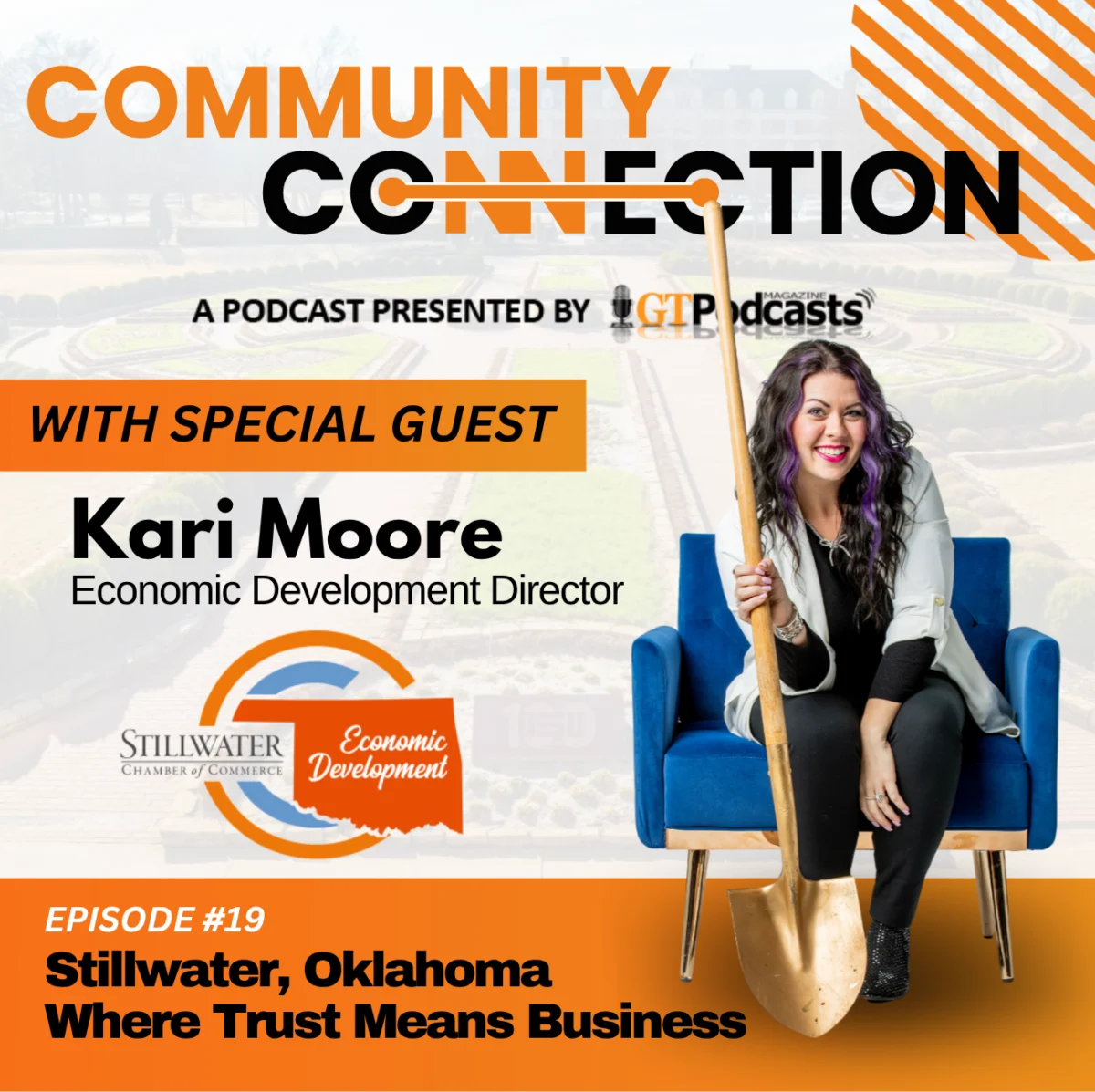
In the latest installment of Community Connection, a podcast series by Global Trade Magazine, listeners are invited to pull back the curtain on the Stillwater success story. Featuring Kari Moore, the Economic Development Director for Stillwater, the episode explores the strategic interplay between a historic university identity and a forward-thinking business climate.
Main Facts: The Stillwater Value Proposition
Stillwater, Oklahoma, has evolved from a regional agricultural and educational hub into a diversified economic engine. At the heart of this transformation is the realization that economic development is not merely about landing large-scale manufacturing deals; it is about cultivating an ecosystem where businesses of all sizes can thrive.
Key Pillars of the Stillwater Model:
- The Institutional Engine: Oklahoma State University (OSU) serves as the anchor, providing a steady pipeline of specialized talent and high-level research capabilities.
- Trust-Based Commerce: A deliberate focus on building long-term, relationship-based partnerships between the Chamber of Commerce, city government, and the private sector.
- Quality of Life as an Asset: Leveraging the "Cowboy" spirit and the unique cultural resonance of Red Dirt music to create an environment that attracts and retains a high-quality workforce.
- Strategic Diversification: Moving beyond traditional retail to focus on high-tech sectors, advanced manufacturing, and service-based industries.
Chronology: The Evolution of an Economic Hub
The trajectory of Stillwater has been marked by a series of deliberate shifts, moving from a town defined by its university to a city defined by its enterprise.
The Foundation Era (1890s – 1950s)
Stillwater’s identity was forged alongside the founding of Oklahoma State University (then Oklahoma A&M). During this period, the economy was largely driven by the university and regional farming. The relationship between the "gown" and the "town" was symbiotic but localized.
The Industrial Awakening (1960s – 1990s)
Recognizing that reliance on a single institution created vulnerability, Stillwater began to seek industrial diversification. This era saw the initial development of infrastructure projects designed to welcome manufacturers and distribution hubs that could capitalize on the city’s central location in the United States.
The Modern Synergy Era (2000s – Present)
In the last two decades, Stillwater has pivoted toward a "knowledge-based" economy. By integrating the university’s research output directly into the local business development strategy, the city has successfully lured companies that require specialized technical talent. Kari Moore and the current administration have focused on streamlining the "red tape" of business development, making trust the currency of every transaction.
Supporting Data: Why Businesses Choose Stillwater
For corporate decision-makers and site selectors, the data behind the Stillwater decision is compelling. The city offers a unique blend of affordability and high-level infrastructure.
Workforce Development
Stillwater benefits from a "brain gain" effect. Because of the presence of OSU, the city maintains a younger, more educated demographic than many comparably sized rural communities. The University’s focus on engineering, aerospace, and veterinary medicine creates a steady influx of high-skill graduates who are often looking for reasons to remain in the region.
Infrastructure and Logistics
Strategically situated within the "Golden Triangle" of Oklahoma (connecting Tulsa, Oklahoma City, and Stillwater), the city provides companies with regional connectivity while maintaining a lower cost of doing business. Recent investments in fiber-optic infrastructure and industrial park expansion have made it an increasingly attractive destination for firms requiring high-speed data and reliable utility access.
The "Trust" Metric
While economic indicators usually rely on tax rates and labor costs, the "soft data"—the ease of doing business—is where Stillwater excels. According to reports from the Stillwater Economic Development Authority (EDA), the time-to-market for new commercial developments has been reduced by nearly 20% over the last five years due to a collaborative effort between the city council and private developers.
Official Responses: Insights from Kari Moore
In the Community Connection podcast, Kari Moore emphasizes that the "Stillwater difference" is fundamentally about human connection.
"When a business comes to us, they aren’t just looking for a spreadsheet of incentives," Moore notes. "They are looking for a community that will show up for them. They want to know that the local leadership, the university, and the community at large are rowing in the same direction."
Moore highlights that the role of an Economic Development Director has shifted from being a salesperson to being a "connector." She argues that the success of the city is found in the "collision of ideas"—where a professor at OSU might meet a local startup founder at a community event, leading to a partnership that stays local.
"We don’t want to be a place that just imports industry," Moore adds. "We want to be a place that grows it from the ground up, while being a welcoming home for companies that want to relocate here because of our culture and our people."
Implications: The Future of Mid-Sized Cities
The Stillwater model has profound implications for other mid-sized cities across the United States. As remote work trends shift the geography of talent, secondary cities are finding themselves in a unique position of strength.
The End of the "Brain Drain"
Stillwater demonstrates that cities do not have to lose their best and brightest to coastal tech hubs. By fostering a "sticky" economy—one where graduates can find meaningful, high-paying work within ten miles of their university—communities can reverse the decades-long trend of rural flight.
The Rise of Identity-Driven Development
The episode highlights the importance of "Red Dirt" culture and Cowboy traditions. In an era where many cities are becoming homogenized, Stillwater’s success suggests that companies are actually looking for authenticity. A strong, vibrant community identity is not just a "nice to have"; it is a competitive advantage in the race for talent. If employees love where they live, they are significantly more likely to commit to a company for the long haul.
Collaboration Over Competition
Finally, the Stillwater experience underscores that the most successful economic development occurs when regional entities stop competing and start collaborating. The partnership between the city and the university is a template for any community attempting to revitalize its local economy.
Conclusion: A Blueprint for Growth
As we look toward the future of global trade and domestic expansion, the story of Stillwater, Oklahoma, serves as a poignant reminder that business is, at its core, a human endeavor. Whether you are a corporate decision-maker looking for a new site, a site selector analyzing regional hubs, or a business owner looking for a place to grow, the lessons from Stillwater are clear:
- Invest in your institutions: Ensure that local education is aligned with the future of industry.
- Cultivate relationships: Business thrives where trust is the baseline.
- Celebrate your identity: Don’t apologize for your community’s character; lean into it.
- Prioritize the "Human Experience": Quality of life is the primary driver of workforce retention.
For those interested in exploring the Stillwater landscape further, the Stillwater Economic Development Authority remains a primary resource. The city stands as a beacon for how a community can honor its past while aggressively pursuing a future built on innovation, collaboration, and a deep-seated commitment to the people who call it home.
To listen to the full conversation with Kari Moore, subscribe to the "Community Connection" podcast via Global Trade Magazine on Apple Podcasts, Amazon Music, or your preferred streaming platform.
References & Resources:
- Stillwater Economic Development Authority (EDA): https://growstillwater.org/
- Global Trade Magazine: GT Podcast Series
- Stillwater Chamber of Commerce: https://www.stillwaterchamber.org/