WASHINGTON — A robust wave of domestic manufacturing expansion is sweeping across the United States. Five major industrial manufacturers have collectively announced more than $1.6 billion in new or expanded production facilities, spanning Texas, Illinois, Georgia, Kentucky, and Arkansas.
This multi-state wave of capital deployment highlights an ongoing, strategic push toward supply chain localization. By bolstering domestic capabilities in vital sectors—ranging from commercial freight equipment and sustainable school buses to advanced HVAC systems and consumer beverage production—these companies are betting heavily on the resilience of the North American market.
For the trucking, intermodal, and logistics sectors, these projects promise to rewrite traditional freight lanes. Analysts note that these multi-million and multi-billion-dollar investments will inevitably trigger a dual-sided economic windfall: an immediate surge in inbound shipments for heavy raw materials, specialized components, and construction supplies, followed by long-term, high-volume outbound movements of finished consumer and commercial goods.
1. Main Facts: The Anatomy of the $1.6 Billion Industrial Expansion
The sweeping wave of industrial announcements is anchored by massive capital investments from both established market leaders and newly formed corporate entities. Geographically diverse, the projects target strategic transportation corridors and logistics hubs designed to optimize regional and national distribution.
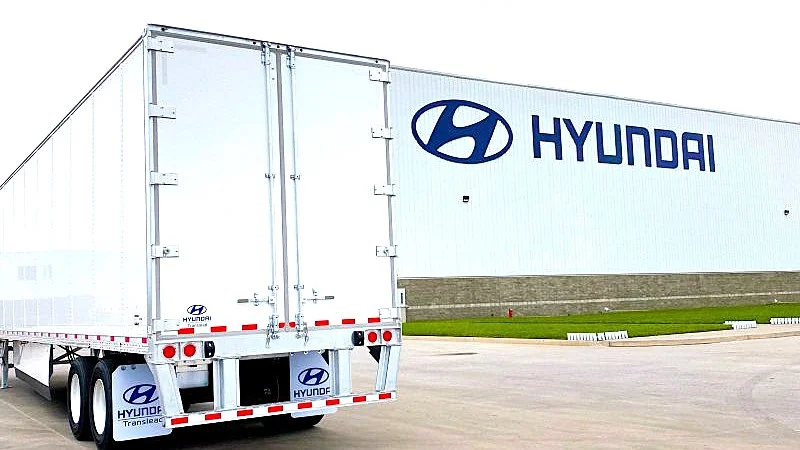
- Hyundai Translead (Will County, Illinois): The commercial trailer giant amplified its commitment to the Midwest, scaling its total investment to a staggering $600 million. The project will generate 3,750 full-time positions, targeting advanced commercial transportation equipment.
- Carrier Global Corp. (Fort Worth, Texas): Marking its footprint in the Lone Star State, Carrier is pouring more than $600 million into a massive 1-million-square-foot advanced manufacturing and engineering hub at AllianceTexas, creating 1,500 jobs.
- Blue Bird Corp. (Fort Valley, Georgia): The iconic school bus manufacturer is injecting $300 million into a historic Peach County site to transform a former diesel motorhome facility into a cutting-edge, 1-million-square-foot green bus production plant, creating 375 jobs.
- Niagara Bottling (Elsmere, Kentucky): Celebrating its grand opening in Northern Kentucky, this $141 million, 436,000-square-foot beverage production and distribution facility adds 60 permanent jobs to the local economy.
- Primo Brands (Hot Springs, Arkansas): Newly minted through a 2024 merger, Primo Brands has officially opened a 200,000-square-foot facility dedicated to scaling production of its premium Mountain Valley spring and sparkling water brand, backed by a significant, undisclosed multi-million-dollar capital commitment.
Combined, the publicly disclosed figures total more than $1.641 billion in direct industrial investment, alongside a projected creation of thousands of high-paying engineering, assembly, and logistics roles.
2. Chronology of Investments: From Blueprints to Ribbon-Cuttings
The timeline of these announcements reveals a steady, accelerating drumbeat of corporate confidence in U.S. industrial policy and regional infrastructure over the past several quarters.
Late 2024: Laying the Groundwork
The momentum began taking tangible shape when Niagara Bottling initially staked its claim in Elsmere, Kentucky, announcing plans in September 2024 for a major beverage plant. Concurrently, the corporate landscape shifted with the formation of Primo Brands through a high-profile merger, which immediately set sights on upgrading its heritage Arkansas footprint.
Early to Mid-2025: Groundbreakings and Construction
As supply chain constraints eased and demand for domestic manufacturing stabilized, physical construction kicked into high gear.
- Niagara Bottling broke ground in early 2025 on a 52-acre parcel developed by CORE5 Industrial Partners at the C5 Airport East Logistics Center in Kenton County, Kentucky.
- Simultaneously, Hyundai Translead initially signaled a $450 million commitment to Will County, Illinois, setting off a wave of regional economic development interest.
March to October 2026: The Strategic Upgrades
The year 2026 emerged as a banner period for industrial expansions:
- March 2026: Hyundai Translead initially outlines its major Illinois footprint, promising 2,500 jobs.
- October 14, 2026: Primo Brands officially cuts the ribbon on its state-of-the-art 200,000-square-foot Mountain Valley factory in Hot Springs, Arkansas, integrating high-speed retail production lines with dedicated logistics spaces.
- October 21, 2026: Georgia Governor Brian Kemp and Blue Bird announce a $300 million conversion project in Peach County, targeting a construction kickoff for early 2027.
- October 22, 2026: Niagara Bottling celebrates the official grand opening of its expanded Kentucky facility, having quietly boosted its budget by $11 million over initial estimates to total $141 million.
- Late October 2026 (The Double Header): In a single week, both Carrier Global Corp. and Hyundai Translead supercharge the market headlines. Carrier announces its massive $600 million Fort Worth center targeting operations by 2027, while Hyundai Translead returns to the table to boost its Illinois commitment by an additional $150 million, elevating its total investment to $600 million and its job target to 3,750 positions.
3. Supporting Data: Project Metrics and Regional Breakdown
To fully understand the magnitude of this industrial renaissance, examining the raw metrics reveals the immense physical scale and operational capacity being introduced into the U.S. supply chain:
| Company | Facility Location | Investment Capital | Primary Product Output | Projected Job Creation | Facility Size / Footprint |
|---|---|---|---|---|---|
| Hyundai Translead | Will County, Illinois | $600 million (Revised Total) | Commercial Transportation Equipment (Dry Vans, Reefers, Flatbeds) | 3,750 full-time jobs | Not Disclosed |
| Carrier Global Corp. | Fort Worth, Texas | $600+ million | Advanced Thermal Management Systems & Commercial Chillers | 1,500 full-time jobs | 1+ million square feet (AllianceTexas) |
| Blue Bird Corp. | Fort Valley, Georgia | $300 million | Alternative-Fuel & Electric School Buses (Type C) | 375 full-time jobs | 1 million square feet (Converted Site) |
| Niagara Bottling | Elsmere, Kentucky | $141 million | Bottled Water, Sports Drinks, & Flavored Beverages | 60 full-time jobs | 436,000 square feet (C5 Airport East) |
| Primo Brands | Hot Springs, Arkansas | Undisclosed (Multi-million) | Mountain Valley Spring & Sparkling Water | Not Disclosed | 200,000 square feet |
Note: Disclosed capital expenditures alone exceed $1.641 billion, excluding the unspecified multi-million-dollar capital injection by Primo Brands.
4. Official Responses and Corporate Strategies
Leadership across these corporate giants and state government bodies have underscored that these investments are calculated responses to structural market shifts, soaring demand backlogs, and a regionalized approach to manufacturing resilience.
Hyundai Translead: Betting on Transport Recovery
Commenting on the substantial upward revision of their Illinois commitment, corporate representatives emphasized that the decision to inject an additional $150 million and add a third production shift directly addresses surging customer interest. As the commercial transportation sector navigates cyclical recoveries, expanding domestic trailer manufacturing capacity ensures the company can rapidly respond to dry van and refrigerated transport demands without relying on overseas choke points.
Carrier Global: Engineering the Future of Data Centers and Infrastructure
Carrier’s decision to plant a $600 million flag in Fort Worth, Texas, speaks volumes about the intersection of advanced manufacturing and the digital economy. With data centers, modern hospitals, and sprawling commercial facilities facing unprecedented cooling demands, Carrier’s leadership noted that the AllianceTexas facility is a direct response to a record backlog in their commercial HVAC division.
"This facility is not merely about assembling units; it is an integrated engineering ecosystem," corporate briefings noted, highlighting that the site will house advanced laboratories and dedicated workforce development initiatives to train the next generation of industrial engineers.
Blue Bird Corporation: Greening the Fleet
For Blue Bird, repurposing a former diesel motorhome facility in Peach County, Georgia, represents a pragmatic yet forward-looking industrial pivot. Founded nearly a century ago in 1927, the company is leaning hard into alternative-energy propulsion. The $300 million Georgia plant will manufacture Type C school buses running on propane, gasoline, diesel, and electricity, directly supporting school districts striving to meet stringent state and federal environmental mandates. Georgia Governor Brian Kemp hailed the project as a monumental win for Peach County’s economic pipeline.
Niagara Bottling and Primo Brands: Proximity to Consumer Markets
In the fast-moving consumer goods (FMCG) sector, logistics efficiency dictates profitability. Niagara Bottling’s expanded $141 million footprint in Elsmere, Kentucky, leverages the strategic crossroads of the Kenton County logistics network to minimize transit times to major Midwestern and Eastern population centers. Similarly, Primo Brands’ new Hot Springs, Arkansas facility ensures that its heritage Mountain Valley spring water brand can efficiently scale production and leverage dedicated warehouse space to meet surging national appetites for premium, wellness-focused beverages.
5. Strategic Implications for Freight, Logistics, and Supply Chains
The ripple effects of $1.6 billion in heavy manufacturing investments extend far beyond factory floor employment figures. For the American logistics and transportation sectors, these developments signal a fundamental realignment of freight generation patterns.
The Inbound Freight Boom: Raw Materials and Components
Before a single commercial trailer, school bus, commercial chiller, or bottled beverage rolls off a loading dock, a massive wave of inbound freight must feed these production lines.
- Steel, Aluminum, and Composites: Facilities like Hyundai Translead and Blue Bird will require consistent, high-volume flatbed and specialized open-deck movements to supply raw metals, fiberglass, and structural frames.
- Industrial Components and Electronics: Carrier’s advanced thermal management systems will depend on steady streams of precision valves, compressors, electronic control units, and specialized wiring harnesses—frequently moving via dry van and expedited logistics networks.
- Packaging and Resins: For Niagara Bottling and Primo Brands, packaging plants will drive high-frequency inbound movements of preforms, resin pellets, corrugated cardboard boxes, and shrink-wrap materials.
The Outbound Logistics Dividend: Finished Goods and Regional Distribution
Once operational, these facilities will act as powerful magnets for regional trucking fleets, intermodal providers, and third-party logistics (3PL) operators:
- Flatbed and Dry Van Opportunities: Finished commercial trailers leaving Will County, Illinois, or fully assembled Type C buses rolling out of Fort Valley, Georgia, represent high-value, specialized outbound freight movements that smaller carriers and specialized owner-operators can successfully capture.
- Consumer Goods Distribution: The high-volume output from Niagara’s Kentucky plant and Primo Brands’ Arkansas headquarters will feed dedicated regional distribution lanes, supporting retail replenishment schedules and grocery supply chains.
Mitigating Supply Chain Vulnerabilities
By reshoring and expanding manufacturing capacities domestically, these enterprises are drastically shrinking their exposure to international shipping bottlenecks, geopolitical trade friction, and oceanic freight rate volatility. For logistics providers, this localization translates into shorter, more predictable transit lanes, reduced lead times, and an enhanced ability to forecast equipment utilization.
As these five manufacturing powerhouses break ground, finalize construction phases, and spin up new production lines through 2027, the American supply chain is quietly forging a more resilient, localized, and freight-rich future.