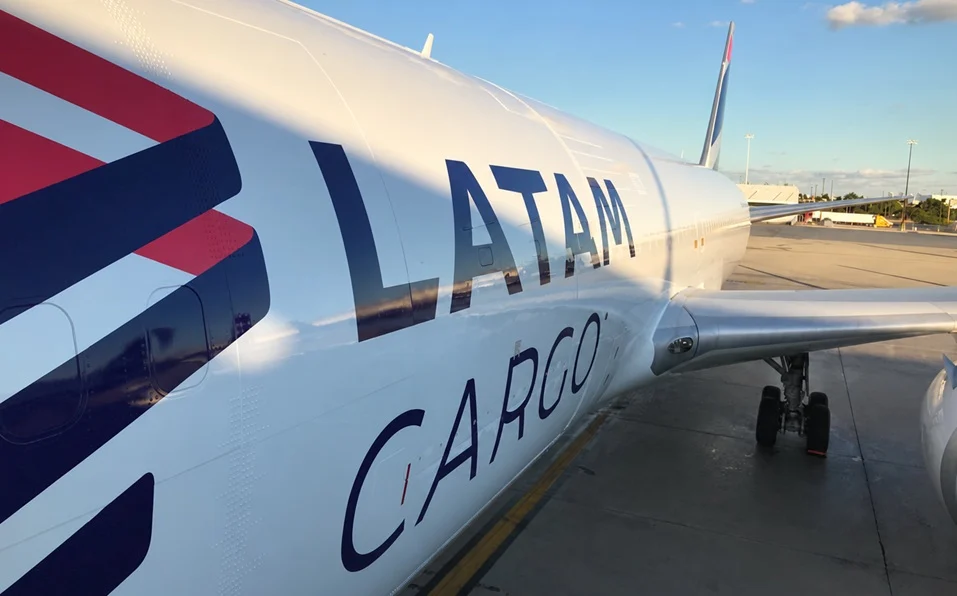
LATAM Cargo has reported a staggering 150% year-on-year increase in pharmaceutical shipments moving from Europe to Brazil between January and July. This unprecedented acceleration in cold-chain and specialized medical logistics has been predominantly propelled by booming global demand for GLP-1-based medications, which are widely utilized in treatments for type 2 diabetes and modern weight management therapies.
During the first seven months of the year, these specialized GLP-1 treatments alone accounted for approximately 15% of the total pharmaceutical volume transported by the airline between the two continents.
Simultaneously, the carrier experienced robust growth across its broader network. Across all cargo categories, LATAM Cargo moved nearly 32,000 tonnes of freight between Europe and Brazil during the seven-month window, translating to a substantial 27% increase compared to the same period in 2025. General and consolidated cargo—encompassing heavy industrial goods such as automation products, specialized mining machinery, textiles, and traditional commodities—comprised roughly 75% of this overall tonnage.
The convergence of soaring pharmaceutical requirements and steady industrial throughput highlights a period of dynamic economic exchange between the European Union and South America’s largest economy. By scaling its narrow-body, wide-body passenger bellyhold, and dedicated freighter capacities, LATAM Cargo has positioned itself as a critical logistical bridge for high-value, temperature-sensitive, and time-critical medical freight.
Chronology
To understand the rapid scaling of LATAM Cargo’s operations, it is helpful to examine the timeline of network developments, capacity expansions, and market trends that culminated in this year’s record-breaking metrics:
Pre-2025 Foundation: LATAM Cargo steadily builds out its European gateway infrastructure, focusing on major pharmaceutical hubs in Germany, Belgium, Spain, and Italy, while refining its Pharma-certified handling processes to meet stringent international standards (such as CEIV Pharma guidelines).
January – July 2025: The baseline period for year-on-year comparisons. LATAM Cargo moves a healthy volume of cargo, though total tonnage and pharmaceutical numbers remain modest compared to the subsequent demand explosion.
Late 2025 – Early 2026: Global pharmaceutical markets experience a paradigm shift, marked by surging clinical adoption and consumer demand for GLP-1 receptor agonists. Supply chains face intense pressure to move these temperature-sensitive therapies swiftly and securely from European manufacturing plants to Latin American distribution centers.
January – July 2026: LATAM Cargo records its explosive metrics. Pharmaceutical volumes between Europe and Brazil skyrocket by 150%, with GLP-1 drugs capturing 15% of the carrier’s total pharma payload. Total tonnage across all sectors climbs 27% year-on-year to hit nearly 32,000 tonnes.
Mid-2026: Strategic network expansions take root. New passenger routes from Brussels and Amsterdam to São Paulo introduce vital bellyhold capacity, while a newly established freighter service linking Brussels directly to São José dos Campos creates an entirely fresh logistics channel for specialized trade.
Supporting Data
A granular analysis of the operational figures reveals the true scale of LATAM Cargo’s performance between January and July:
Pharmaceutical Growth Rate: Up approximately 150% year-on-year from Europe to Brazil.
GLP-1 Market Share: Represented roughly 15% of the total pharmaceutical volume transported by the company on these trade lanes.
Total Cargo Tonnage: Reached nearly 32,000 tonnes moved between Europe and Brazil—a 27% increase compared to the first seven months of 2025.
Cargo Composition: General and consolidated freight accounted for 75% of the total volume, featuring automation tools, mining equipment, textiles, and commodities.
Key European Origins: Germany, Belgium, Spain, and Italy served as the primary countries of origin, followed closely by the Netherlands and France.
Passenger Belly Capacity Routes: Dominant flows occurred via the Lisbon–São Paulo, Madrid–São Paulo, and Frankfurt–São Paulo corridors.
Freighter Operation Corridors: Standout performance was recorded on the Frankfurt–Viracopos and Brussels–Viracopos routing options.
Official Responses
Industry leadership has pointed to these milestones as proof of a fundamental structural shift in transatlantic trade priorities, highlighting the critical importance of specialized asset management and network diversification.
Jorge Carretero, Cargo Sales Manager Europe at LATAM Airlines Group, emphasized the transformative nature of the medical logistics boom:
"The growth in pharmaceutical transport demonstrates how demand for specialized logistics solutions is gaining prominence between Europe and Brazil. Our priority is to support this evolution through a safe, efficient operation equipped for the specific requirements of each cargo type."
Carretero also underscored the broader economic health reflected in the company’s across-the-board volume increases:
"At the same time, the 27% growth in total volume reinforces the importance of connectivity between both markets and our network’s capacity to serve diverse economic sectors."
Behind these executive statements lies a massive operational undertaking. Transporting high-value pharmaceuticals—particularly delicate biological compounds like GLP-1 treatments—requires strict adherence to temperature thresholds, real-time data tracking, seamless tarmac handovers, and specialized airport handling facilities. LATAM Cargo’s investments in its cold-chain infrastructure have allowed the carrier to capture this lucrative market segment without compromising the reliability of its standard industrial freight services.
Implications
The dramatic expansion of LATAM Cargo’s European-Brazilian operations carries far-reaching implications for the global supply chain, regional healthcare access, and the broader competitive landscape of international air freight.
1. The Elevation of Pharma Logistics Standards
The 150% surge in pharmaceutical volumes is not merely a statistical anomaly; it is a clear indicator of the permanent elevation of life-science logistics within commercial aviation. Moving forward, airlines that fail to invest in state-of-the-art cold-chain facilities, certified packaging protocols, and continuous temperature-monitoring technology risk being squeezed out of high-margin healthcare contracts. For LATAM Cargo, mastering the transport of sensitive compounds like GLP-1 inhibitors cements its reputation as a trusted partner for global pharmaceutical giants.
2. Network Redundancies and Modal Shift
The introduction of new routing alternatives—such as passenger services from Brussels and Amsterdam to São Paulo, alongside dedicated freighter links like Brussels to São José dos Campos—illustrates how airlines are adapting to regional bottlenecks. By diversifying entry points into Brazil (utilizing Viracopos, São Paulo International, and São José dos Campos), LATAM Cargo is helping shippers bypass traditional congestion hubs, thereby reducing transit times and preserving the integrity of time-sensitive payloads.
3. Macroeconomic Resilience
Beyond healthcare, the 27% jump in total tonnage (encompassing mining machinery, automotive automation, and textiles) signals resilient industrial demand across South America. As European manufacturers look to South American markets for raw materials and finished goods—and vice versa—the availability of balanced trade lanes (combining heavy industrial exports with high-value medical imports) optimizes aircraft utilization and supports sustainable route profitability.
Ultimately, LATAM Cargo’s performance in the first half of the year serves as a case study in agility. By successfully balancing the rigorous demands of pharmaceutical cold-chains with the high-volume requirements of traditional industrial freight, the airline has reinforced the vital economic lifelines connecting Europe and Brazil.