





The promise of Industrial AI has long been shrouded in the fog of "pilot purgatory," where promising proofs-of-concept vanish into the ether of theoretical research. However, the narrative shifted decisively at Hannover Messe 2026. Data-driven insights, gathered by IIoT World during the event, reveal that the industry has moved past the era of experimentation and into an era of verifiable, scalable, and high-impact deployment.
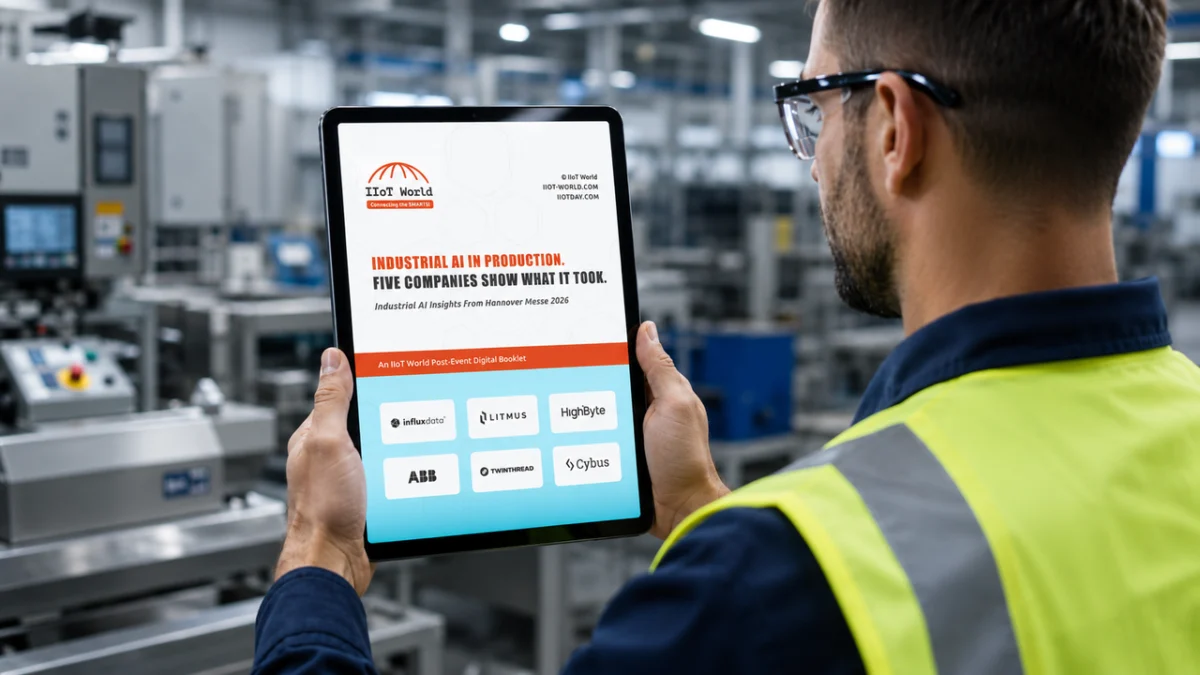
The new digital booklet, Industrial AI in Production: Six Companies Show What It Took, serves as a roadmap for this transition. By synthesizing technical architecture, deployment timelines, and concrete performance metrics from six industry leaders—ABB, HighByte, InfluxData, Litmus, TwinThread, and Cybus—the report confirms that Industrial AI is no longer a luxury; it is a fundamental driver of operational excellence.
The New Standard: Quantifiable Production Results
The primary takeaway from the Hannover Messe 2026 conversations is that the "wait and see" approach to AI is becoming a liability. Companies that have successfully integrated AI into their manufacturing stacks are reporting outcomes that were considered aspirational only a few years ago.
Key Performance Breakthroughs
- ABB: By deploying an AI-driven copilot for measurement devices, ABB has successfully resolved 80% of technical faults autonomously. This eliminates the need for human-led support calls, significantly reducing mean time to repair (MTTR) and freeing up expert staff for higher-value engineering tasks.
- HighByte: Speed to value is the new mandate. HighByte demonstrated a remarkable capability by compressing a project that would typically span one year—a plant-wide digital transformation for Alcon—into a window of less than one month. This radical acceleration of integration underscores the efficacy of modern data contextualization tools.
- InfluxData and Litmus: Scalability, the perennial hurdle for IIoT, has been addressed by the partnership between InfluxData and Litmus. Their collaborative infrastructure allows manufacturers to transition from small-scale pilots at three sites to massive, enterprise-wide deployments at 300 sites, achieving a positive return on investment (ROI) in as little as 60 to 90 days.
- Cybus: For industrial giants like Porsche, Claas, and Blum, the challenge was balancing high-speed data processing with cloud costs. Cybus has delivered a double-win: a 9% reduction in unplanned downtime and a 23% decrease in cloud infrastructure expenditure, proving that efficiency and AI deployment are not mutually exclusive.
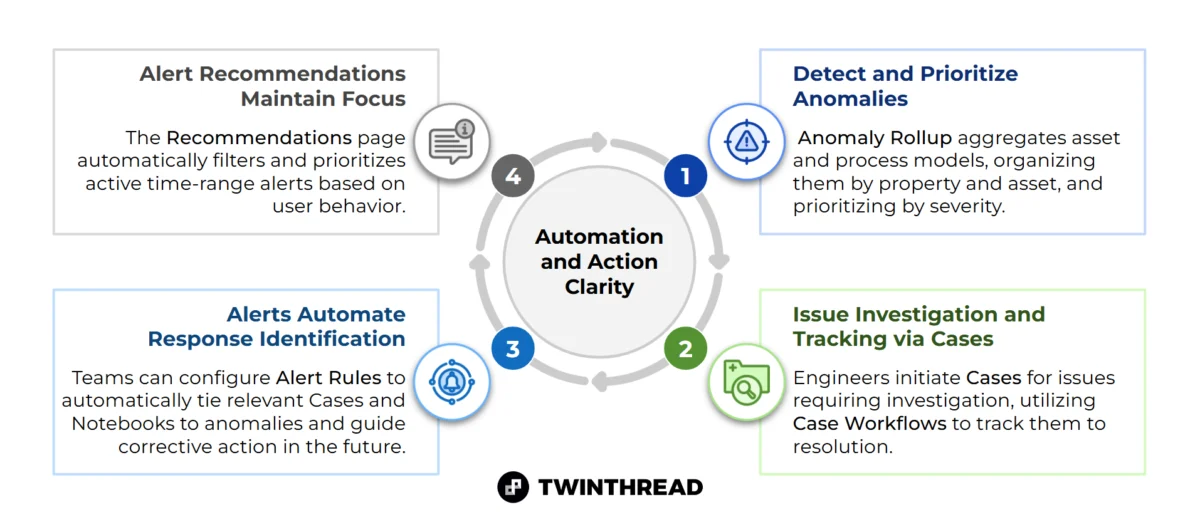
- TwinThread: The human element remains critical in manufacturing. TwinThread has tackled the "knowledge drain" problem by running over one million digital twins. These models distill the expertise of veteran operators and make that specialized intelligence available to every shift, standardizing performance across the workforce.
Chronology of a Digital Transformation: From Infrastructure to Autonomy
To understand how these companies achieved such results, one must look at the chronology of their digital journeys. The report highlights a common evolutionary arc that most successful industrial AI adopters follow.
Phase 1: The Data Infrastructure Foundation (Months 0–3)
Before any AI can function, the data must be liberated. Successful companies prioritize data contextualization—the process of transforming raw, disparate machine signals into unified, usable information. HighByte’s work with Alcon exemplifies this phase, where the focus is on breaking down silos to create a "single source of truth."
Phase 2: The Scalability Bridge (Months 3–6)
Once the data is contextualized, the challenge shifts to connectivity and governance. The InfluxData and Litmus framework highlights this stage, where the focus moves from "can we see the data?" to "can we replicate this across 300 sites?" This phase is characterized by the implementation of lightweight, scalable edge architectures that ensure consistency across global plant locations.
Phase 3: The Intelligence Layer (Months 6–12)
Only after the infrastructure is robust can AI provide true value. This is where ABB’s copilot and TwinThread’s digital twins come into play. By running AI models against a reliable data stream, companies move from predictive maintenance (knowing a machine might fail) to prescriptive action (the system fixing the issue or providing the operator with the exact steps to resolve it).
Supporting Data: The Anatomy of the Industrial AI Stack
The booklet dissects the full industrial AI stack, moving beyond the buzzwords to examine the specific layers required for production-grade deployment:
- Data Ingestion & Edge Connectivity: The bedrock. Without secure, low-latency connectivity, AI models are starved of quality inputs.
- Contextualization: The critical bridge. Transforming time-series data into business logic, enabling cross-departmental understanding.
- Governance & Security: The prerequisite for scale. Enterprises cannot adopt AI without clear policies on data ownership, privacy, and model validation.
- Application Deployment: The user interface. Whether it is an operator-facing digital twin or an autonomous copilot, the AI must be delivered in a way that is intuitive and actionable for floor staff.
Three recurring patterns emerged across all six case studies, which the booklet identifies as the "Triple Pillar of Success": Standardization of data formats, decoupling of data from legacy hardware, and centralized governance with decentralized execution.
Official Responses and Insights from the Field
The insights shared in the Industrial AI in Production booklet reflect a consensus among industry leaders. Speaking at Hannover Messe 2026, representatives from the participating companies emphasized that the technical barriers to AI are falling, while the organizational barriers remain the primary challenge.
"The technology is ready," noted a lead systems architect featured in the report. "The difference between success and failure is no longer about whether the AI works; it is about how the company manages the transition from manual, siloed processes to a governed, AI-enabled ecosystem."
The report stresses that successful deployments are rarely the result of a single "silver bullet" solution. Instead, they are the result of choosing modular, interoperable components—like those provided by Cybus or InfluxData—that allow for incremental growth without requiring a complete "rip-and-replace" of legacy machinery.
Implications for Manufacturing Leaders: A Call to Action
For plant managers, CTOs, and manufacturing engineers, the implications of these findings are clear:
1. Shift the Focus from "Why" to "How"
The question is no longer whether AI can improve uptime or reduce costs; the results from Porsche, Alcon, and others confirm that it can. The priority for leadership must now be the "how": how to architect data pipelines that are future-proof, how to select vendors that prioritize interoperability, and how to scale from the pilot plant to the entire global network.
2. Prioritize "Time-to-Value"
As HighByte demonstrated with their one-month transformation project, long implementation timelines are often a result of poor planning or overly complex integration strategies. Leadership should demand solutions that offer rapid, measurable milestones, ensuring that the project generates its own momentum through early, incremental successes.
3. Embrace the "Human-in-the-Loop" Philosophy
Industrial AI is not about replacing operators; it is about empowering them. The success of TwinThread’s digital twins shows that when you provide operators with the collective knowledge of the entire organization, performance across all shifts converges toward the level of your best employees.
4. Evaluate the Governance Model
As organizations move from three sites to 300, governance becomes the single biggest risk factor. The booklet emphasizes that without a governed approach to AI deployment, companies risk creating "shadow AI" or inconsistent data standards that hinder future growth.
Conclusion: The Path Forward
The Hannover Messe 2026 conversations prove that the industrial sector has reached a tipping point. The era of the "Industrial AI pilot" is ending, and the era of "Production AI" has begun.
For those looking to navigate this shift, the Industrial AI in Production booklet provides the blueprint. By studying the architecture decisions and deployment strategies of the six companies featured, manufacturing leaders can bypass the common pitfalls that have historically derailed digital transformation efforts.
As the industry continues to evolve, the distinction between "smart" and "traditional" factories will vanish. In its place will be a new class of enterprise: one that is data-fluent, AI-enabled, and capable of adapting to market demands in real-time. The results are in, the architectures are proven, and the ROI is clear. The question for manufacturers today is not whether they can afford to implement AI, but whether they can afford to wait.
To explore the full insights from these six industry leaders and review the specific architectural patterns that are driving the next generation of manufacturing, download the IIoT World digital booklet: Industrial AI in Production: Six Companies Show What It Took.