





For the better part of a decade, "Predictive Maintenance" (PdM) stood as the poster child for Industrial AI. It was the low-hanging fruit—a non-intrusive way to experiment with data science without disrupting the delicate equilibrium of a production line. However, as the industry reflects on the lessons of the early 2020s, a consensus has emerged: early implementations failed to deliver on their promise. They were often little more than glorified alarm systems.
At the Industrial AI Summit 2026, industry experts Boris Scharinger of Siemens and Karthikeyan Natarajan of Infinite Uptime dissected the decline of PdM as a primary AI use case and outlined a roadmap for its resurgence. The message was clear: the era of vague anomaly detection is over; the era of prescriptive classification has begun.
The Rise and Fall of First-Generation PdM
The "Comfort Zone" Trap
When data scientists first entered the industrial sector, they were met with a culture of extreme caution. Production heads, naturally wary of probabilistic software interfering with mission-critical machinery, pushed AI toward the periphery. PdM became the "safe" entry point because it operated in parallel to the production process. It provided snapshots of machine health without demanding control over the line itself.
However, this safety came at a cost. The economic ceiling for traditional PdM was notoriously low. Industry benchmarks suggested that for a million-dollar asset, the value of eliminating all unscheduled downtime translated to roughly $1,000 per month. With a $12,000 annual revenue cap per asset, providers were forced to scale to thousands of machines across hundreds of factories just to achieve basic commercial viability. This thin margin, combined with the lack of deep integration, caused PdM to fall off the top of the investment priority list for many industrial conglomerates.
Anomaly Detection vs. True Prediction
The fundamental failure of early PdM was a misidentification of capability. What was marketed as "prediction" was, in reality, simple anomaly detection.
- Anomaly Detection: Operates on pattern deviation. It alerts the user that "something seems wrong." It provides no context, no root cause analysis, and no timeline. It places the burden of investigation squarely on the operator, who must then manually verify the alert.
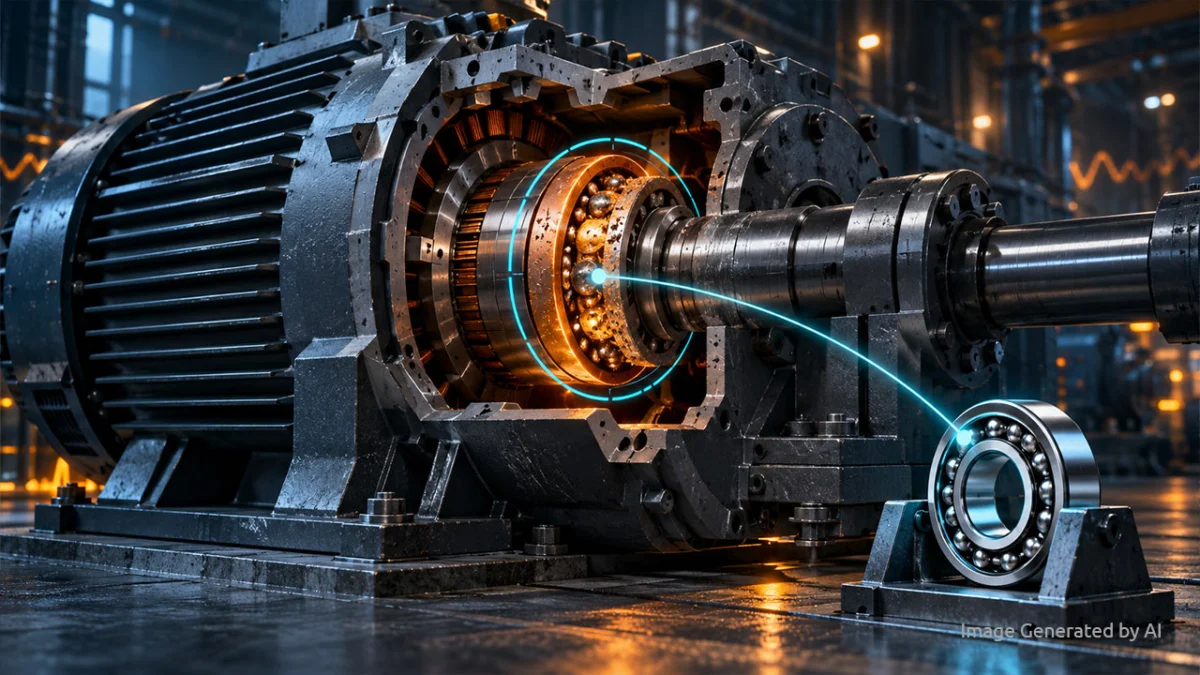
- Prescriptive Classification: Represents the maturation of the technology. It identifies the specific failure mode—for instance, a failing bearing—and calculates a precise window for intervention, such as "replace within 10 days." This requires complex multi-modal analysis, including vibration and sound signatures, and models trained across vast, diverse machine fleets.
The Trust Gap: Why Operators Abandon AI
The 95% Threshold
The adoption of AI on the factory floor is governed by a brutal reality: trust is fragile. Infinite Uptime’s research indicates that if a system produces false positives at a rate of 30% to 40%, operators will abandon the tool within 30 days.
The manufacturing sector hemorrhages approximately $100 billion annually due to unscheduled downtime. Yet, if an AI assistant provides five recommendations where only three are accurate, the operator’s trust is permanently eroded. For sustained adoption, the industry has established a clear benchmark: systems must maintain a true-positive rate above 95% and keep false positives below 5%.
The Engineering of Context
Infinite Uptime’s strategy for clearing this hurdle involves moving beyond generic algorithms. Over the past eight years, they have developed "Verticalized AI Shields." These are not broad, one-size-fits-all models, but context-rich frameworks built across 1,000 factories in 27 countries. By integrating process data, route-based inspections, ultrasound, thermography, maintenance history, and OEM operating procedures, the AI is no longer "guessing." It is contextualizing.
When a technician adds audio, video, or textual notes to an inspection, the AI incorporates this human expertise into its decision-making loop. This creates a feedback cycle where the AI becomes increasingly attuned to the specific quirks of a machine’s operating environment.
Chronology of an Industrial Shift
- 2018–2021 (The Pilot Era): Industry focus was on "low-hanging fruit." PdM projects were siloed, aiming to prove feasibility rather than generate significant ROI. The market was flooded with "anomaly detection" tools that lacked depth.
- 2022–2024 (The Market Correction): The limitations of the $12,000-per-asset revenue model became apparent. Many AI pilot projects were shuttered as they failed to demonstrate ROI within the expected 3-to-6-month window.
- 2025–2026 (The Rise of Prescriptive Intelligence): A pivot occurred toward verticalized, highly accurate models. Companies like Siemens and Infinite Uptime began focusing on deep-tier integration, where AI is no longer a peripheral alarm but a core component of plant design and maintenance strategy.
- 2027 and Beyond (The Era of Redundancy Elimination): As confidence in predictive models reaches 99%+, the industry is moving toward its next major value pool: the physical redesign of the factory.
Official Responses and Expert Insights
During the panel discussion, Boris Scharinger emphasized that the industry is at a crossroads. "We are seeing a shift from optimizing maintenance schedules to redesigning plant infrastructure itself," he noted.
Scharinger believes that the current state of industrial AI is merely the foundation for a much larger transformation. When the AI can tell you with near-certainty when a component will fail, you no longer need the "insurance policy" of spare lines and massive on-call engineering teams. This is not just about keeping a machine running; it is about reducing the capital expenditure (CapEx) required to build a factory in the first place.
Karthikeyan Natarajan highlighted the importance of scaling. "Of the 1,000-plus factories we work with, we’ve seen more than 600 move into the scaling phase, with over 300 achieving 70% to 80% coverage of their critical equipment," he stated. This level of adoption is only possible when the AI moves from being a "nudge" to being a "prescriptive guide."
Implications: The Death of Redundancy
The most significant implication of mature, prescriptive AI is the potential to eliminate the "redundancy tax." Currently, factories are designed with 30% to 40% additional costs built in: spare production lines that sit idle, backup equipment maintained for years without use, and armies of engineers on standby.
This redundancy was an evolutionary response to uncertainty. Because no system could reliably predict failure, the only logical defense was to duplicate everything. However, if prescriptive AI can accurately determine the Remaining Useful Life (RUL) of components, the need for this duplication evaporates.
The Future of Factory Design
If we can predict failures with high precision, the factory of the future will be leaner, faster, and more capital-efficient. The implications are profound:
- Capital Allocation: Companies can reallocate funds previously tied up in "spare parts inventory" and "redundant capacity" toward core innovation.
- Resource Management: On-call engineering staff can be transitioned from "firefighting" roles to value-added optimization roles.
- Infrastructure Design: We may see the birth of the "just-in-time" factory, where physical capacity is matched precisely to demand, with no need for the safety buffer of shadow lines.
As Scharinger concluded, the next five years will see predictive maintenance return to the top three industrial AI use cases—not because it is a convenient experiment, but because it will become the primary engine for redesigning the industrial landscape. The shift is complete: we are no longer looking for anomalies; we are engineering for certainty.