In the high-stakes world of industrial manufacturing, data is often described as the "new oil." Yet, for many of the world’s largest industrial enterprises, that oil remains unrefined—trapped in fragmented, siloed, and context-free systems that render it largely unusable for the next generation of artificial intelligence. Today, HiveMQ, a global leader in MQTT-based messaging infrastructure, announced the launch of the HiveMQ Platform. This evolution marks a significant departure from traditional data streaming, positioning the company to provide the foundational architecture required for agentic AI in mission-critical manufacturing environments.
For over 12 years, HiveMQ has served as the backbone for connectivity in complex industrial settings. Now, the company is pivoting to address a fundamental bottleneck: the inability of AI models to interpret raw operational technology (OT) data without months of manual cleaning and preparation. By introducing a platform that bridges the gap between OT and IT, HiveMQ claims it can reduce the time-to-deployment for AI use cases from six months to just two weeks.
The Core Problem: Why Most Factory Data Is Not "AI-Ready"
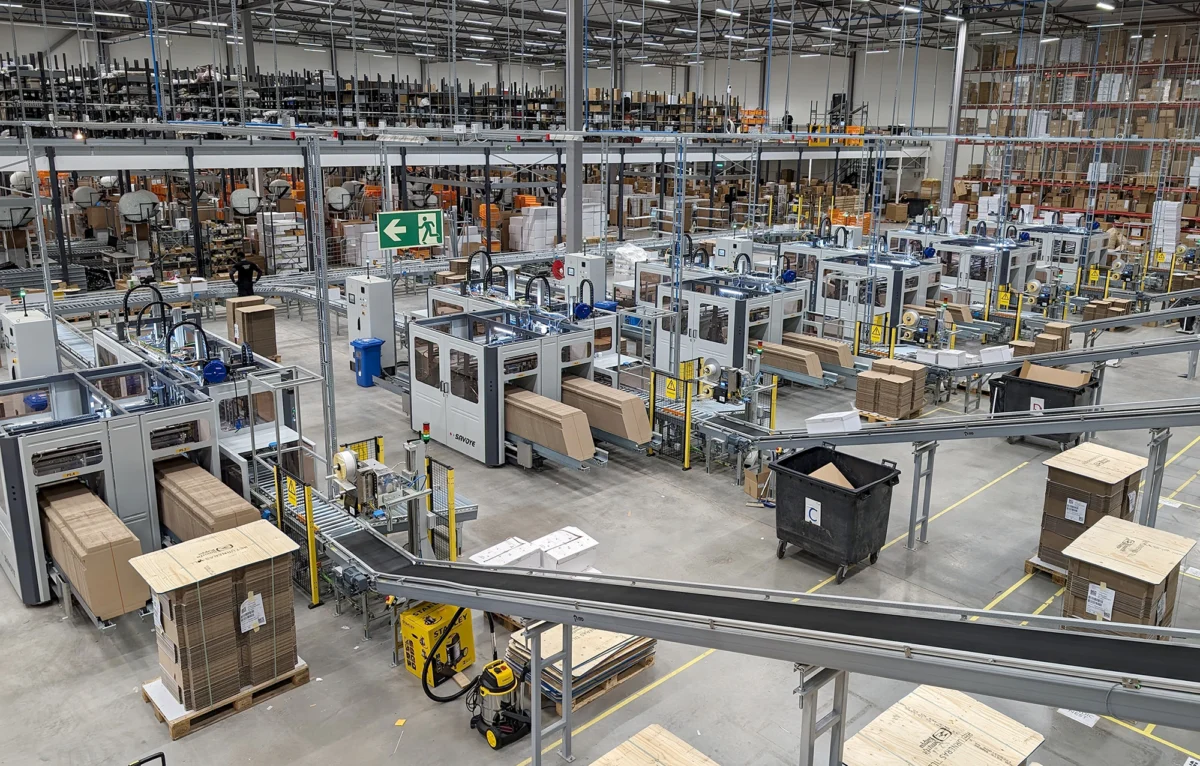
To understand the necessity of the HiveMQ Platform, one must first look at the state of the modern plant floor. Factories generate continuous, high-velocity signals from thousands of sensors, programmable logic controllers (PLCs), and robotic systems. However, this data is rarely delivered in a format that AI can consume.
The Fragmented Landscape
In a typical manufacturing environment, data arrives in a "raw" state. It lacks the critical metadata that identifies which specific asset produced the signal, which production shift it belongs to, or whether the reading is even valid. When manufacturers attempt to plug large language models (LLMs) or agentic AI into this foundation, they encounter the "garbage in, garbage out" phenomenon. Every insight, forecast, or recommendation generated by the AI inherits the inherent weaknesses and inconsistencies of the underlying data.
Recent industry research highlights the severity of this friction: approximately 84% of manufacturing companies report that data accessibility and quality issues significantly impede their operational progress. Without a unified, consistent framework, companies are forced to spend the vast majority of their budget on data wrangling rather than actionable intelligence.
A Four-Pillar Architecture for Industrial Intelligence
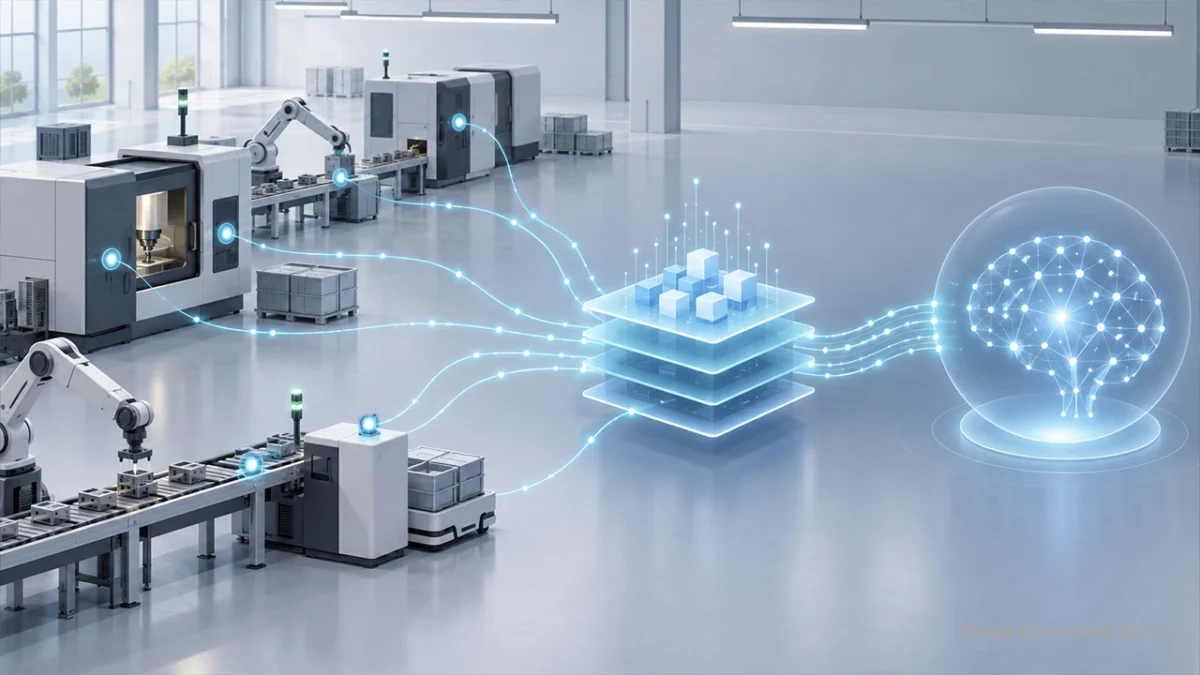
The HiveMQ Platform is designed to move beyond simple connectivity. It introduces a comprehensive architecture focused on four specific capabilities: Connect, Contextualize, Analyze, and Act.
1. Connect: Creating the Real-Time Backbone
The platform establishes a persistent, real-time communication channel across existing OT and IT systems. By acting as a unified namespace, it allows disparate machines and cloud services to "speak" the same language, enabling new plants and use cases to be integrated with minimal reconfiguration.
2. Contextualize: Governance at Scale
Perhaps the most significant challenge in industrial IoT (IIoT) is scaling a solution from one machine to an entire enterprise. HiveMQ addresses this by allowing data models and governance rules to be defined once and applied globally. Once a model is proven at a pilot facility, it can be replicated across international sites, ensuring that KPI calculations and data structures remain consistent.
3. Analyze: Edge-Based Intelligence
By moving analysis close to the source, the platform surfaces deviations in real time. This capability allows teams to diagnose operational anomalies—such as temperature spikes or vibration irregularities—before they result in costly downtime or defective products.
4. Act: Human-Supervised Workflows
The final pillar acknowledges the critical role of human expertise. By embedding intelligence into structured workflows, the platform ensures that AI recommendations are vetted by human operators. This preserves institutional knowledge while automating the routine aspects of decision-making.
The Economic Impact: Quantifiable Success Stories
The transition to an AI-ready infrastructure is not merely a technical upgrade; it is a significant value driver for global manufacturing giants. Companies including BMW, Mercedes-Benz, Ford, Eli Lilly, and Unilever have already integrated HiveMQ’s infrastructure, reporting massive efficiency gains.
Measurable Outcomes
The financial implications of implementing a robust data architecture are profound:
- Downtime Mitigation: One enterprise implementation saw a reduction in unscheduled downtime that saved $83 million, achieved by improving uptime from 99.99% to 99.999%.
- Energy Efficiency: By leveraging real-time data to optimize consumption, another manufacturer reduced annual energy costs by $35 million, representing a 20% total reduction in consumption.
- Operational Scale: Centralized monitoring across 513 global plants resulted in a $98 million reduction in operational costs, proving that consistency across facilities is the key to scalability.
The Human-in-the-Loop Philosophy
Despite the hype surrounding autonomous manufacturing, the leadership at HiveMQ remains grounded in a pragmatic approach to automation. Magnus McCune, CTO of HiveMQ, emphasizes that the journey toward autonomy is a gradual process of discovery.
"Manufacturers are not going to jump from dashboards to autonomous operations overnight, and they shouldn’t," says McCune. "They need to understand what is happening, diagnose why, and determine the right response before they automate it."
This philosophy underpins the "Act" capability of the new platform. By focusing on human-supervised workflows, HiveMQ is providing a bridge between traditional manual oversight and the eventual deployment of autonomous, agentic AI systems. This prevents the "black box" syndrome, where AI makes decisions that operators do not understand or cannot trust.
Strategy: Do You Need to Model Everything?
A common misconception in the digital transformation space is the need for an "all-or-nothing" approach. Many manufacturers stall their AI projects because they believe they must first build a perfect, enterprise-wide digital twin before starting.
HiveMQ challenges this narrative. The platform is designed for incremental success. Teams can begin by targeting one specific operational pain point—such as diagnosing why a specific production line’s performance dropped or identifying the root cause of a quality deviation. Once the data is contextualized for that specific use case, that same framework can be "lifted and shifted" to other production lines and facilities. This modular approach allows organizations to prove the ROI of AI on a small scale, building the momentum necessary to scale across the entire enterprise.
The Road Ahead: Implications for the Industry
The launch of the HiveMQ Platform represents a shift in the IIoT market. As industrial firms move from the "connectivity phase" (simply getting data off the floor) to the "intelligence phase" (using that data to drive automated decisions), the demand for robust data governance and context will only intensify.
Implications for Manufacturers
For manufacturers, the adoption of such a platform is no longer a competitive advantage—it is becoming a requirement for survival. As global supply chains face increasing pressure to be more resilient and sustainable, the ability to turn raw sensor data into immediate, high-fidelity insights will define the market leaders of the next decade.
The Role of Agentic AI
The mention of "agentic AI" in the platform’s launch is particularly notable. Unlike standard predictive analytics, agentic AI refers to systems capable of taking proactive steps—such as autonomously adjusting machine settings or re-routing supply chains—based on a goal set by a human. By providing the underlying data infrastructure, HiveMQ is effectively building the "nervous system" that these AI agents will require to interact with the physical world.
Conclusion
The transition toward the "Factory of the Future" is rarely a story of a single breakthrough technology; it is a story of infrastructure, data integrity, and the gradual layering of intelligence over operational processes. With the launch of its new platform, HiveMQ is providing the missing link between the noisy, fragmented reality of the factory floor and the high-level decision-making capabilities promised by AI.
For industrial leaders currently overwhelmed by data complexity, the path forward is becoming clearer: connect, contextualize, and start small. As HiveMQ has demonstrated with its global enterprise partners, the results of doing so—in terms of uptime, sustainability, and cost savings—are not just theoretical; they are already changing the bottom line of the world’s most sophisticated manufacturers.
The HiveMQ Platform is now available for evaluation, and for those looking to move beyond the pilot phase of AI, it offers a blueprint for scaling success in an increasingly automated world.