




Main Facts
The modern manufacturing landscape is defined by a paradox. While the global market demands unprecedented levels of agility, scalability, and efficiency in material handling, the physical reality for a vast majority of producers is rooted in the past. Thousands of industrial facilities currently operating are "brownfield" spaces—factories built decades ago with aging infrastructure, spatial constraints, variable lighting conditions, and deeply entrenched human workflows.
When plant executives look to automation to bridge productivity gaps, they frequently encounter a harsh truth: cutting-edge robotics are often designed for pristine, greenfield laboratories rather than cracked concrete floors, cramped aisles, and organically evolved layouts.
However, a technological shift is underway. Autonomous Mobile Robots (AMRs) are emerging as a viable solution to overcome the inherent physical limitations of legacy facilities. Rather than requiring millions of dollars in infrastructure overhauls—such as relaying floors, installing magnetic tape, or mounting ceiling beacons—the latest generation of AMRs leverages advanced 3D lidar-based navigation, infrastructure-free deployment, and high-compatibility hardware.
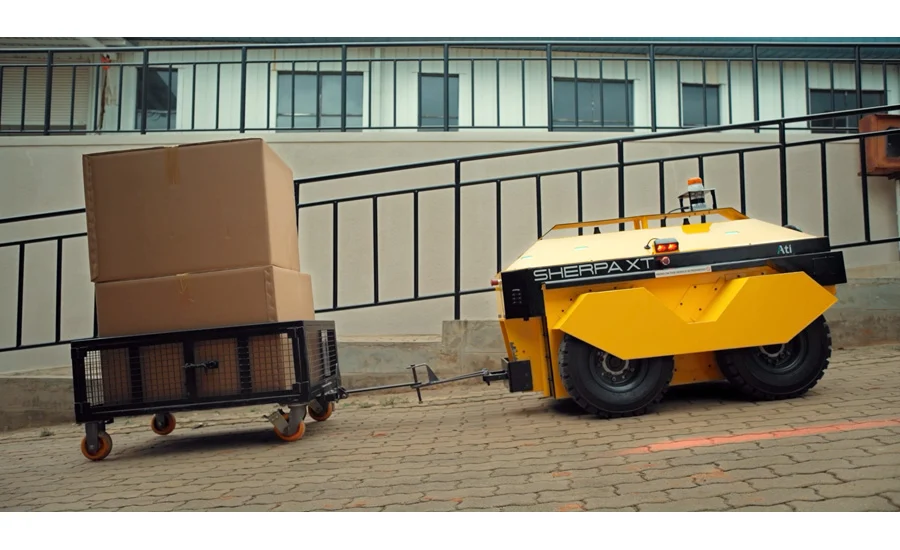
Companies like Ati Robotics, with specialized lines such as the Sherpa series, are proving that modernization does not require a factory to change its DNA. By focusing on adaptive navigation, seamless cart compatibility, VDA-5050 fleet interoperability, and human-centric change management, manufacturers can successfully deploy fleets of intelligent robots into decades-old plants without sacrificing continuous production.

Chronology of Factory Automation and the Brownfield Evolution
To understand why integrating AMRs into brownfield sites is both uniquely challenging and revolutionary, it is helpful to trace the evolution of industrial material handling:
- The Era of Fixed Infrastructure (Mid-to-Late 20th Century): Early factory automation relied heavily on fixed systems—conveyor belts, overhead cranes, and rigid monorails. These setups required massive capital investments and permanent structural commitments, making them exceedingly difficult to alter when product lines changed.
- The Introduction of AGVs (Late 20th Century to Early 2010s): Automated Guided Vehicles (AGVs) represented a major step forward, introducing mobility to material transport. However, these systems traditionally relied on physical guides embedded in or on the floor, such as magnetic tape, wires, or reflective beacons. While effective in controlled settings, they lacked flexibility and struggled significantly in dynamic brownfield environments where layouts shift over time.
- The Greenfield Bias (2010s): As robotics technology matured, the robotics industry largely optimized for "greenfield" facilities—brand-new smart factories built from scratch with perfectly flat floors, optimal Wi-Fi coverage, and wide, unobstructed aisles. This left legacy operators struggling to adapt lab-tested automation to messy, real-world conditions.
- The Rise of Infrastructure-Free AMRs (Present Day): The current era is marked by the advent of intelligent Autonomous Mobile Robots. Powered by real-time 3D mapping, sophisticated onboard processing, and advanced fleet management software, contemporary AMRs can interpret their surroundings dynamically, bypassing the need for physical infrastructure modifications and finally unlocking automation potential for legacy brownfield sites.
Supporting Data and Technical Realities
Integrating AMRs into environments that predate modern robotics requires navigating a distinct set of physical and digital constraints. Industry data and deployment case studies highlight the core technical hurdles—and how modern engineering solves them:
1. The Physical Terrain
Brownfield facilities are rarely static. Over decades of operation, plant managers add equipment, partition rooms, and build makeshift transitions between plant zones.
- Flooring and Clearance: Cracked concrete, ramps, uneven surfaces, and debris are standard features of older plants. Robots originally designed for smooth, indoor laboratory floors frequently stall or lose tracking. Modern industrial AMRs—such as those adapted from rugged outdoor navigation platforms—feature high ground clearance, heavy-duty suspension, and superior ramp performance to handle worn flooring effortlessly.
- Spatial Constraints: Tight aisles and congested intersections demand exceptional maneuverability. AMRs with compact footprints and tight turning radii (such as specialized tow tractors) can navigate cramped layouts without requiring facility redesigns.
2. Software and System Interoperability
Legacy plants often operate on a patchwork of older and newer digital tools.

- Coexisting with AGVs: It is common for a brownfield plant to utilize older AGVs alongside new AMRs. Modern deployment strategies utilize layered intelligence—such as external overhead vision systems—to ensure new autonomous units can detect and yield to legacy vehicles at blind intersections.
- Standardized Communication: Fleet management platforms utilizing open standards like VDA-5050 allow different brands and types of robots to "speak" the same language, enabling smooth multi-vendor coordination.
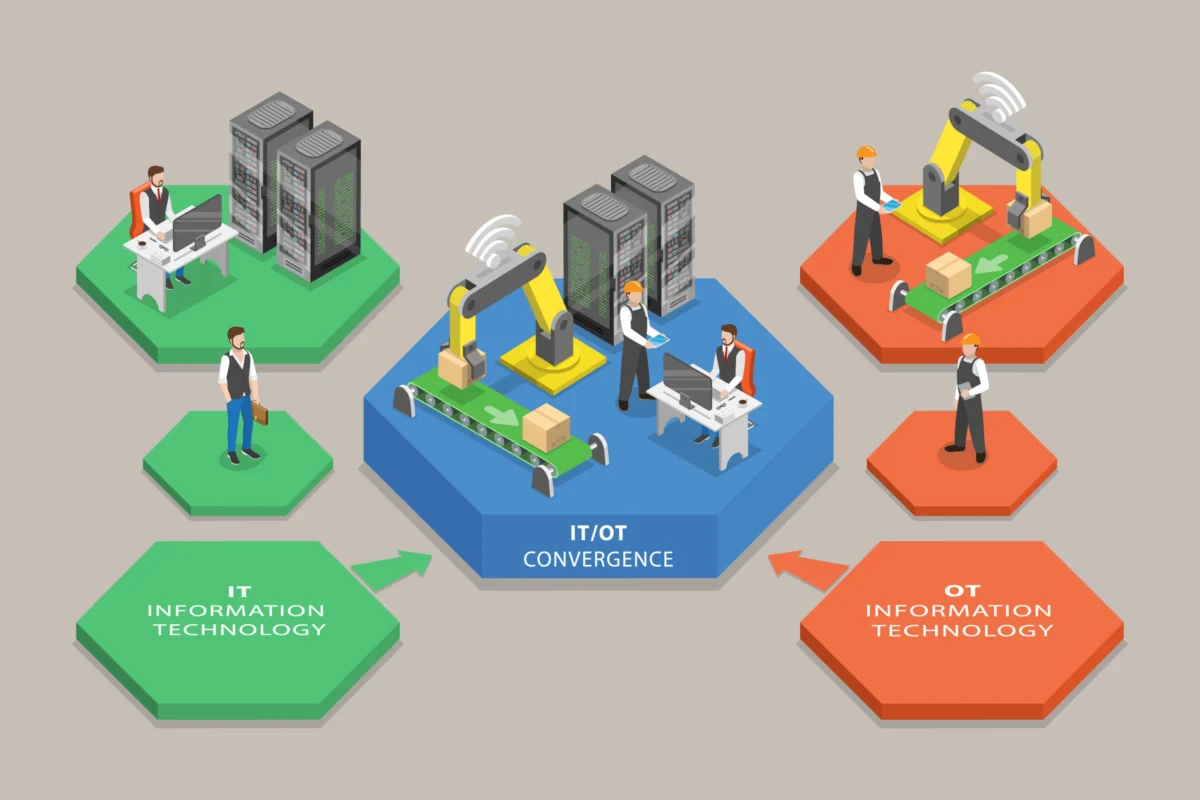
- MES and ERP Integration: Connecting AMRs directly to Manufacturing Execution Systems (MES) and Enterprise Resource Planning (ERP) platforms shifts operations from static schedules to event-driven, pull-based workflows. Robots move only when production triggers demand it, drastically boosting plant-wide efficiency.
Official Responses and Industry Insights
Factory floor automation is as much a human challenge as it is a technological one. Industry leaders emphasize that successful deployment requires a balanced strategy combining robust hardware, flexible software, and careful change management.
"In brownfield settings, the most successful AMR deployments don’t force the facility to change. They work with what’s already there, physically and operationally," notes engineering leadership at Ati Robotics. "Focusing on infrastructure-free deployment ensures companies are not dependent on navigating complex infrastructure updates to implement AMRs."
Industry experts stress that avoiding production disruption is the ultimate litmus test for any automation project. Because continuous-run manufacturing leaves virtually zero room for scheduled downtime, technologies must adapt to the plant rather than demanding structural renovations.
Furthermore, human-robot collaboration requires intentional foresight. Because AMRs roam freely throughout a facility rather than running on fixed tracks, they interact constantly with human workers across various departments.

- Change Management Protocols: Industry safety directives highlight that brief, accessible training sessions and orientation modules are vital. Employees must understand basic safety protocols and the operational "do’s and don’ts" of interacting with mobile robots to build trust, eliminate floor-level resistance, and prevent misuse.
Implications for the Future of Manufacturing
The successful adaptation of AMRs to brownfield facilities carries profound strategic and economic implications for the global manufacturing sector:
Accelerated Return on Investment (ROI)
By eliminating the need for costly civil engineering projects—such as re-pouring concrete floors, installing overhead wire guides, or gutting legacy workflows—manufacturers drastically lower the total cost of ownership for automation. Lower upfront capital expenditure combined with fast deployment translates directly into a accelerated ROI.
Democratization of Smart Factory Tech
For decades, high-tech automation was largely the domain of massive corporations with the capital to build greenfield mega-plants. The ability to deploy infrastructure-free AMRs democratizes advanced manufacturing, allowing mid-sized tier-1 suppliers and older legacy operations to compete on equal footing with newly built smart factories.
Sustainable Industrial Evolution
Sustainability in manufacturing is not just about energy efficiency; it includes the responsible utilization of existing industrial real estate. Tearing down and rebuilding older facilities incurs a massive environmental and financial toll. By proving that legacy buildings can be retrofitted with cutting-edge intelligence, the AMR industry is championing a sustainable model of industrial evolution—one that honors the infrastructure of the past while aggressively driving productivity into the future.