CHICAGO, IL – At the International Manufacturing Technology Show (IMTS) 2026, a transformative alliance was unveiled that promises to reshape the landscape of industrial cybersecurity. Event Horizon Group, the parent company behind the advanced cryptographic suite Q, WARP10, and CEW Systems Canada, announced an exclusive worldwide licensing agreement with Cheyenne-based MSP4MFG LLC. This partnership brings "Quantum Resilient Encryption" (QRE)—a revolutionary, bi-symmetric hybridized handshake technology—directly to the manufacturing sector, aiming to fortify the most vulnerable link in the global supply chain: the industrial machine tool.
The Dawn of a New Defensive Paradigm: Main Facts
As the manufacturing sector faces an unprecedented surge in industrial espionage and ransomware attacks, the traditional IT-centric approach to security has proven insufficient. The core of the problem lies in the transition of data from secure engineering networks to the exposed, often legacy-driven environments of the factory floor.
The partnership between Event Horizon Group and MSP4MFG seeks to bridge this gap. QRE is not merely a software patch; it is a fundamental shift in how data is secured at the "smart edge." By utilizing bi-symmetric encryption, the technology creates a hardened handshake that remains secure even in the face of future quantum computing threats. This technology will be integrated into MSP4MFG’s new "MSP4" secure edge device, a piece of hardware designed specifically to interface with CNC (Computer Numerical Control) machines, effectively creating an encrypted tunnel that protects intellectual property—including CAD drawings, part programs, and proprietary technical models—from the point of origin to the physical spindle.
A Chronology of Escalating Threats
The need for this technology has been accelerated by a decade of evolving digital warfare.
- 2020–2022: The rapid digitization of manufacturing during the pandemic created a sprawling attack surface. As plants connected legacy machines to the cloud to monitor efficiency, they inadvertently opened backdoors for threat actors.
- 2023–2024: Ransomware groups began targeting manufacturing as their primary vertical, recognizing that the cost of downtime—often exceeding $100,000 per hour—made these firms prime targets for extortion.
- 2025: Regulatory bodies, including those managing CMMC 2.0 and NIST frameworks, began imposing stricter requirements for the protection of Controlled Unclassified Information (CUI). Manufacturers found themselves scrambling to meet compliance while maintaining legacy OT (Operational Technology) equipment.
- September 2026: At IMTS 2026, the formal introduction of QRE signals a pivot from reactive security to proactive, quantum-ready defense. The launch of the MSP4 secure edge device marks the first time that enterprise-grade, quantum-resistant security is being deployed as a standard for industrial hardware.
Supporting Data: The Cost of Vulnerability
The urgency behind the QRE deployment is rooted in staggering economic data. According to industry analysts at DataM Intelligence, the industrial cybersecurity market was valued at approximately $84.5 billion in 2024. Projections indicate a robust growth trajectory, reaching $135.9 billion by 2029, representing a 9.6% CAGR.
This growth is driven by the reality that manufacturers remain the "number-one" target for cyber-extortion. Unlike office environments, where data theft might lead to a privacy breach, the compromise of a manufacturing machine tool can lead to the total cessation of production, the destruction of specialized tooling, or the permanent loss of unique engineering IP.
Furthermore, the complexity of compliance is reaching a boiling point. Manufacturers are currently grappling with a "alphabet soup" of regulatory frameworks, including:
- CMMC 2.0 & NIST SP 800-171: Essential for defense contractors.
- ITAR & DFARS: Mandatory for aerospace and defense supply chains.
- ISO/IEC & SOC2: Global standards for data governance.
- NIS2 & CRA: Emerging European regulations that hold manufacturers accountable for the security of their products and supply chains.
QRE is specifically engineered to support these frameworks by providing an immutable audit trail and hardened security protocols that cover data at rest, in motion, and at the machine level.
Official Commentary: Bridging the IT/OT Divide
The collaboration is viewed by industry leadership as a necessary intervention in an era where "office-centric" security providers have failed to understand the nuances of the factory floor.
Tom Gaasenbeek, Managing Director of MSP4MFG LLC, emphasized the specific nature of the threat: "The machine tool is where a manufacturer’s intellectual property is most exposed, and it is the one place traditional security vendors never seem to reach. Exclusive access to QRE lets us protect part programs and engineering data all the way to the spindle—without taking production offline."
This sentiment was echoed by David Palachik, CEO of Event Horizon Group, who highlighted the forward-looking nature of the encryption: "Manufacturing is exactly the environment Quantum Resilient Encryption was built for: high-value data, legacy equipment, and adversaries with growing computational power. MSP4MFG’s plant-floor reach makes them the right exclusive partner to carry QRE into this important sector."
Implications for the Global Supply Chain
The implications of this partnership extend far beyond the immediate security of a single machine. By standardizing QRE, the industry is setting a new baseline for what constitutes "secure" manufacturing.
1. Hardening the Defense Industrial Base (DIB)
For aerospace and defense contractors, the protection of CUI is not optional. The deployment of QRE allows these firms to demonstrate compliance with rigorous government mandates while simultaneously protecting their competitive advantage. It effectively "air-gaps" the data flow without sacrificing the connectivity required for modern production.
2. Protecting the Mid-Market
Small and medium-sized manufacturers (SMEs) have historically been the "weak link" in supply chains. Lacking the massive cybersecurity budgets of Fortune 500 companies, they are often targeted by state-sponsored actors looking to steal blueprints from secondary suppliers. MSP4MFG’s platform, by bundling QRE with SOC (Security Operations Center) and SIEM (Security Incident and Event Management) capabilities, provides these smaller shops with enterprise-level protection.
3. Future-Proofing Against Quantum Threats
While quantum computers capable of breaking current RSA or ECC encryption are still in development, the "store now, decrypt later" threat is very real. Adversaries are currently intercepting and storing encrypted data with the intention of unlocking it once quantum hardware matures. By adopting QRE today, manufacturers are ensuring that the sensitive technical data they share now will remain secure for decades to come.
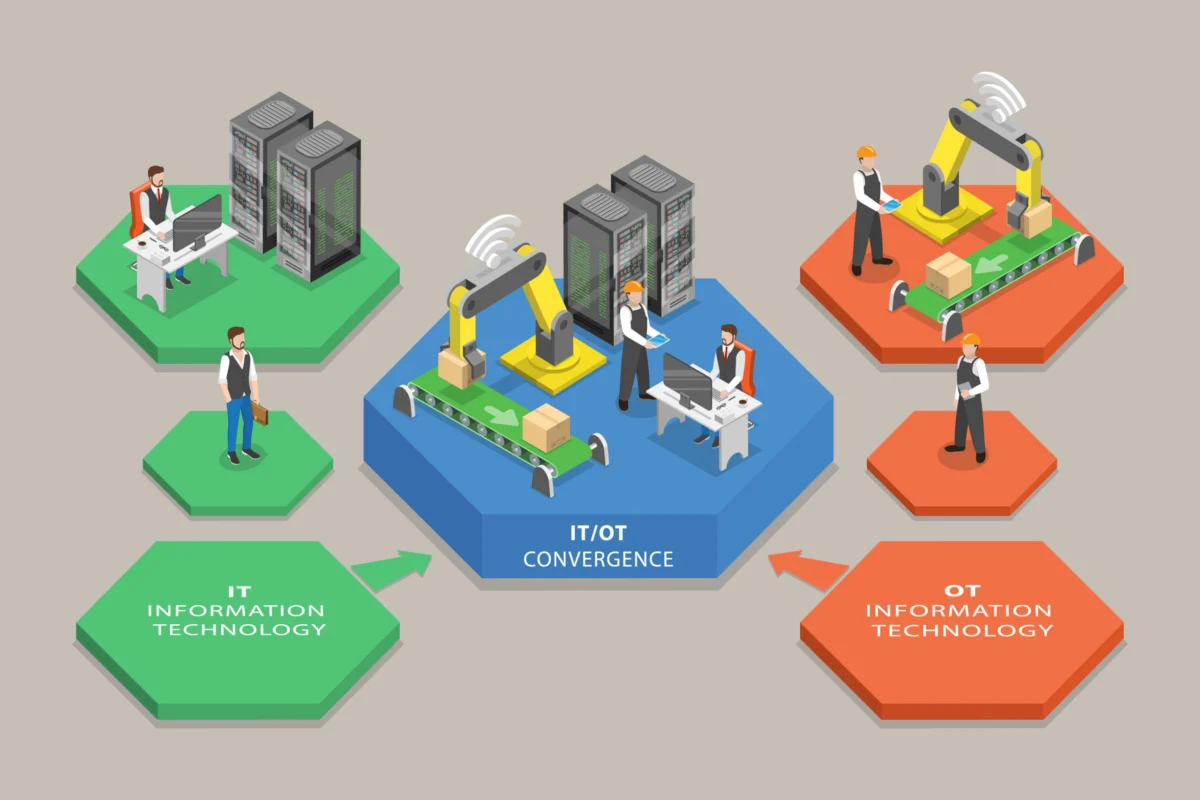
4. Convergence of IT and OT
The MSP4 platform represents the maturation of IT/OT convergence. By building a security architecture that respects the latency and uptime requirements of CNC equipment, MSP4MFG is proving that security does not have to come at the expense of productivity. The inclusion of patch management, vulnerability management, and automated penetration testing creates a "living" security environment that evolves alongside the threat landscape.
Conclusion: A New Standard for Industrial Integrity
As the manufacturing sector continues to integrate AI, IoT, and advanced robotics, the vulnerability of the physical world to digital interference will only grow. The licensing of QRE to MSP4MFG marks a pivotal moment in this journey. By securing the "smart edge" of the factory floor, these companies are not just protecting individual machines—they are protecting the integrity of the global supply chain. In an age where digital trust is the most valuable currency in manufacturing, the ability to guarantee the authenticity and confidentiality of production data is no longer a luxury; it is the fundamental requirement for industrial survival.