By: Industry Insights Desk
Published: September 2026
Main Facts
In the modern era of smart manufacturing, the seamless flow of data from engineering design to the factory floor is no longer a luxury—it is an operational imperative. Recently released industry research from Tech-Clarity, based on a comprehensive survey of over 200 manufacturing organizations, sheds light on the current state of Product Lifecycle Management (PLM) and Manufacturing Execution System (MES) integration.
The study reveals that manufacturers are primarily pursuing PLM-MES integration to achieve two critical business outcomes: accelerating time-to-market and enhancing product quality. Furthermore, emerging drivers such as the desire to power artificial intelligence (AI) initiatives have surfaced as key catalysts for digital transformation.
However, the survey data uncovered a stark reality: despite widespread recognition of the value of a connected digital thread, a significant maturity gap exists across the sector. Even among larger, more technologically mature enterprises, integration remains uneven, highlighting substantial room for improvement in how organizations link engineering intent with manufacturing execution.
To unpack these findings, Tech-Clarity’s President and principal researcher, Jim Brown, recently hosted an in-depth webinar alongside seasoned consultants Howard Schmillor and Cameron Carr from Kalypso, a Rockwell Automation business. The panel explored the survey’s key takeaways, examined real-world integration challenges, and provided strategic advice for manufacturers looking to mature their digital thread strategies.
Chronology
Phase 1: The Historical Divide (Pre-Digital Thread Era)
For decades, manufacturing enterprises operated in siloed environments. Engineering teams designed products within CAD and PLM software, finalizing bills of materials (BOMs) and engineering change orders (ECOs) before tossing them "over the wall" to manufacturing operations. Meanwhile, production teams managed plant-floor execution through standalone MES platforms, enterprise resource planning (ERP) systems, or even manual paperwork. This historical disconnect frequently led to costly delays, misinterpretations of product specifications, scrap, and rework when engineering changes failed to reach the shop floor in real time.
Phase 2: The Rise of Point-to-Point Interfaces
As automation advanced in the 2000s and 2010s, organizations recognized the need to bridge the gap between design and production. However, early integration efforts relied heavily on fragile, custom point-to-point interfaces. These brittle connections were difficult to maintain, costly to upgrade, and prone to breaking whenever a company updated its core enterprise software. Consequently, true end-to-end visibility remained elusive for the vast majority of industrial firms.
Phase 3: The Modern Digital Thread Initiative (Early 2026)
Recognizing the limitations of legacy architectures, industry leaders began prioritizing a unified "digital thread"—a continuous, contextualized data flow spanning product conception, engineering, production, and service. To understand how far the industry has progressed, Tech-Clarity launched a targeted global survey in early 2026, polling more than 200 manufacturing decision-makers across diverse sectors. The findings confirmed that while awareness of the digital thread is near-universal, execution varies wildly.
Phase 4: Expert Analysis and Strategic Evaluation (Mid-2026)
Following the publication of the research, Tech-Clarity partnered with Kalypso experts Howard Schmillor and Cameron Carr to analyze the dataset. Through a collaborative webinar event, the panel evaluated why manufacturers are struggling to bridge the PLM-MES gap, how integration maturity impacts business performance, and what actionable steps organizations must take to prepare their data ecosystems for advanced technologies like artificial intelligence.
Supporting Data
The Tech-Clarity research study provides quantifiable insights into the motivations, hurdles, and maturity levels associated with PLM-MES integration:

- Survey Scope: Over 200 global manufacturing organizations participated in the study, representing a cross-section of discrete and process industries.
- Primary Drivers: Accelerating time-to-market and driving product quality emerged as the two leading motivations for integrating PLM and MES systems. In a hyper-competitive global marketplace, reducing the friction between product design updates and shop-floor execution directly correlates with faster revenue realization and reduced defect rates.
- Emerging Drivers: While speed and quality remain paramount, the survey highlighted an increasing focus on supporting AI and machine learning initiatives. Modern AI applications—such as predictive maintenance, computer vision quality inspection, and generative design optimizations—rely heavily on clean, contextualized, and continuous data streams that only an integrated digital thread can provide.
- Maturity Disparities: The data revealed a wide dispersion of PLM-MES integration maturity. Crucially, the research proved that even larger and traditionally more advanced manufacturers struggle with integration. Many organizations find themselves stuck in intermediate maturity phases, characterized by partial integrations, fragmented master data management, and heavy reliance on manual intervention to reconcile engineering and manufacturing changes.
Official Responses and Expert Insights
During the collaborative webinar discussion, Jim Brown guided Kalypso consultants Howard Schmillor and Cameron Carr through an exploration of what the data means for modern manufacturers.
The Value of a Continuous Digital Thread
Howard Schmillor emphasized that the primary challenge manufacturers face is not a lack of technology, but a lack of structural alignment between engineering and operations teams. "When PLM and MES operate in separate universes, you create invisible barriers that drain efficiency," Schmillor noted. By establishing a direct bridge between the digital product definition and the physical manufacturing execution environment, companies can eliminate ambiguity on the shop floor. This ensures that operators always work from the most up-to-date instructions, tooling specifications, and quality parameters.
Operationalizing AI Through Better Data
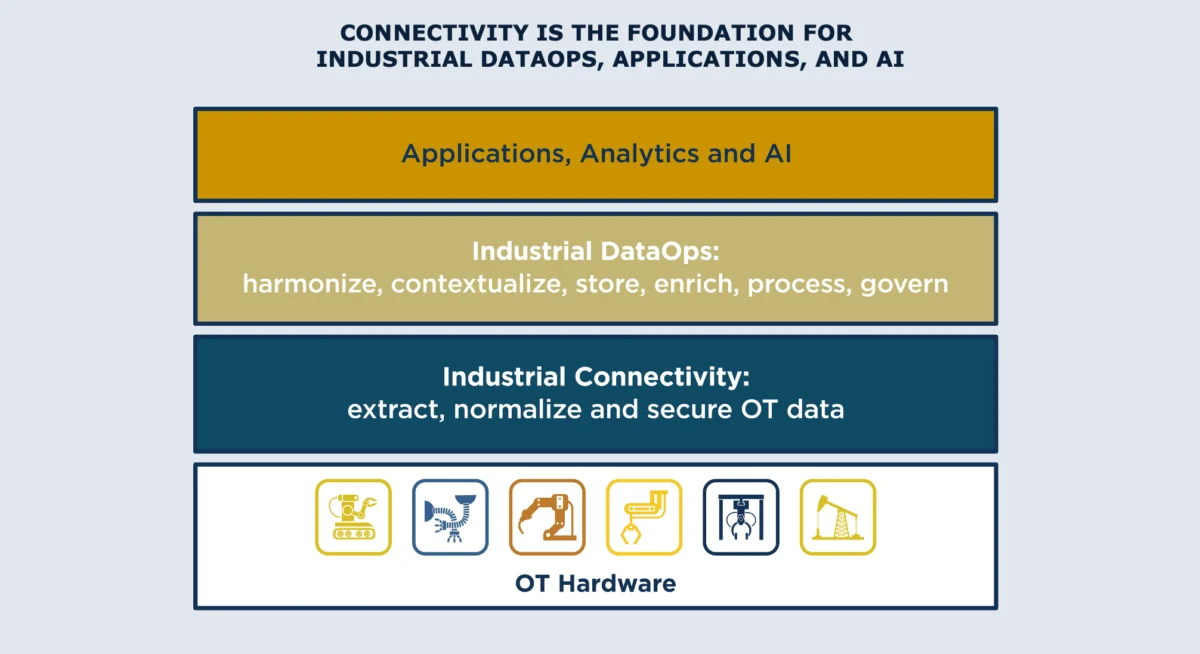
Cameron Carr addressed the growing intersection between PLM-MES integration and artificial intelligence. Many manufacturers are eager to deploy AI tools to optimize production flows or predict product failures. However, Carr warned that "AI is only as good as the data feeding it." Without a cohesive digital thread linking engineering design intent with real-time shop-floor telemetry, AI models lack the comprehensive context needed to deliver actionable insights. Integrating PLM and MES lays the foundational data architecture required to make enterprise AI initiatives successful.
Overcoming Cultural and Technical Roadblocks
Both consultants stressed that closing the maturity gap requires a holistic approach encompassing people, processes, and technology. Organizations must break down internal silos between engineering departments, IT groups, and manufacturing operations. Establishing cross-functional governance ensures that software implementations align with overarching business goals rather than serving isolated departmental needs.
Implications
The findings from the Tech-Clarity research and subsequent Kalypso expert discussions carry profound implications for the global manufacturing sector:
1. Competitive Differentiation Through Speed
Manufacturers that successfully bridge the PLM-MES gap will enjoy a distinct competitive advantage. By shrinking the cycle time required to push engineering changes, process updates, and new product introductions to the factory floor, these agile enterprises can respond to market demands and customer customizations faster than their siloed competitors.
2. Heightened Quality and Compliance Standards
Quality management is increasingly tied to traceability. When an issue arises in the field or during production, an integrated digital thread enables root-cause analysis in a fraction of the time. Manufacturers can trace a defect backward from the finished good on the factory floor to the specific engineering revision, material lot, and machine parameters used. This level of traceability is vital for highly regulated sectors such as aerospace, defense, medical devices, and automotive.
3. Readiness for the AI-Driven Future
As artificial intelligence and industrial automation continue to converge, the cost of fragmented data will rise exponentially. Companies that fail to integrate their digital threads risk building technical debt that precludes them from leveraging advanced predictive analytics, digital twins, and generative manufacturing technologies. Conversely, firms that prioritize PLM-MES integration today are building the robust data foundations necessary to thrive in tomorrow’s smart manufacturing landscape.
Next Steps for Manufacturers
Industry leaders looking to assess their own digital thread maturity are encouraged to review the comprehensive research resources made available by Tech-Clarity and Kalypso. Organizations can access the full research report, read supplementary documentation, and watch the complete webinar replay by visiting the official Kalypso PLM-MES Research Page and registering to watch the Webinar Replay.