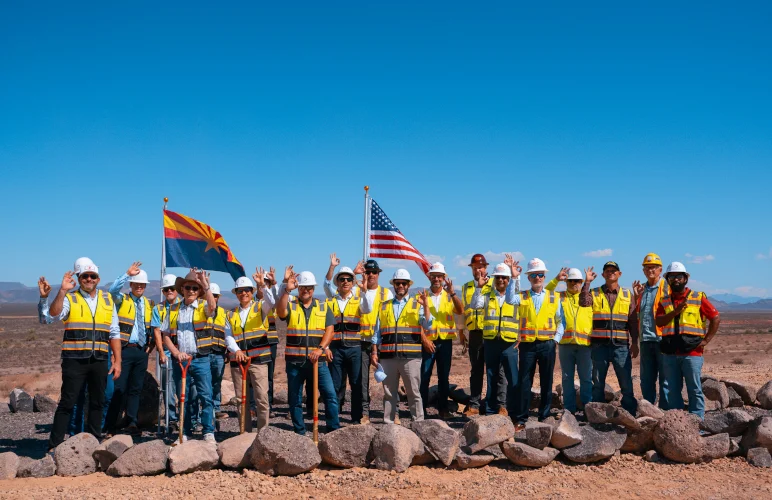
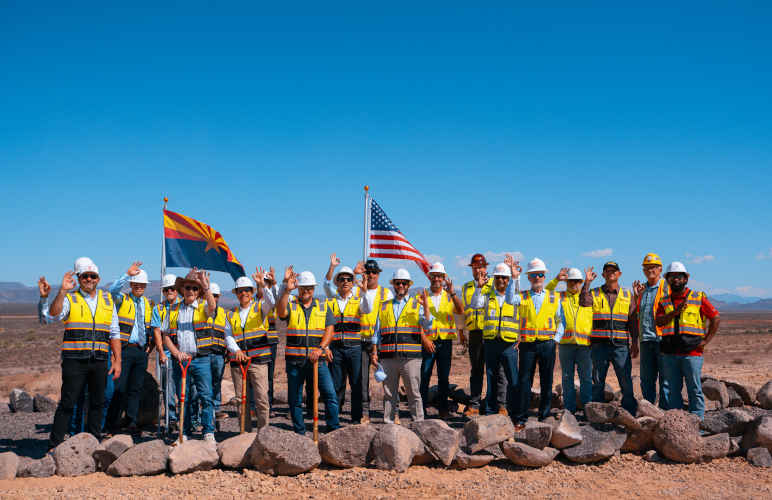
MOHAVE COUNTY, Ariz. — Amid the vast, sun-drenched expanses of the American Southwest, a new chapter in energy infrastructure is officially underway. ContourGlobal, a major international power generation company, has broken ground on Project Sterling, a massive utility-scale solar-plus-storage installation situated in Mohave County, Arizona.
Spanning thousands of acres just off a historic stretch of Route 66 between Topock and Kingman, the colossal facility will boast a 509-megawatt (MW) photovoltaic solar array paired with an expansive 1.4-gigawatt-hour (GWh) battery energy storage system (BESS). Once fully operational, Project Sterling is poised to become a cornerstone of the region’s evolving energy grid, bridging the gap between intermittent renewable generation and round-the-clock power reliability.
The project has already secured a high-profile offtake commitment, with Tesla having previously signed a Power Purchase Agreement (PPA) for the facility’s vast energy output. By combining state-of-the-art solar photovoltaic technology with utility-scale battery storage, Project Sterling represents a critical leap forward in the ongoing transition toward decarbonized, resilient electricity networks across the United States.
Main Facts
Project Sterling is a monumental engineering and construction undertaking designed to harness the abundant solar irradiance of the Arizona desert and convert it into dispatchable, clean electricity.
- Location: Mohave County, Arizona, situated between the communities of Topock and Kingman, just off historic Route 66.
- Developer and Constructor: ContourGlobal.
- Key Offtaker: Tesla, which has secured a long-term Power Purchase Agreement (PPA) to manage and utilize the project’s energy output.
- Generation Capacity: 509 MW of clean solar power.
- Storage Capacity: 1.4 GWh of advanced battery energy storage.
- Physical Scale: The installation will integrate more than 760,000 individual high-efficiency solar modules and over 300 custom-engineered battery storage containers.
- Operational Capability: Designed to deliver reliable clean power for up to 16 hours a day, effectively bridging the gap between peak daytime solar generation and high evening electricity demand.
- Access Infrastructure: Construction includes the creation of Polaris Road, a dedicated 5.2-mile route connecting historic Route 66 directly to the site to facilitate heavy logistics and long-term maintenance access.
Chronology of Development
The realization of Project Sterling is the result of years of meticulous planning, site evaluation, environmental review, and commercial negotiations. While physical construction has only recently commenced, the project’s timeline highlights the rapid acceleration required to bring multi-gigawatt-scale renewable assets from concept to reality.
Early Planning and Siting (2022–2024)
As demand for clean, reliable power surged across Western energy markets—driven largely by industrial growth, data center expansion, and state-level clean energy mandates—developers scouted the American Southwest for optimal locations with high solar resource availability and robust transmission connectivity. Mohave County emerged as a prime candidate due to its vast, flat terrain and high solar irradiance. ContourGlobal identified the strategic parcel of land near Topock and Kingman, initiating preliminary land acquisition, environmental impact assessments, and grid interconnection studies.
Commercial Agreements and the Tesla PPA (2025–Early 2026)
With preliminary permits secured, the commercial framework for Project Sterling fell into place. ContourGlobal finalized engineering designs tailored to meet specific market demands for long-duration, dispatchable energy. A critical milestone was reached when Tesla signed a comprehensive Power Purchase Agreement (PPA) for the project. This agreement provided the financial certainty and revenue backing necessary to secure project financing and move the massive undertaking into its execution phase.
Groundbreaking and Logistics Phase (Late 2026–Present)
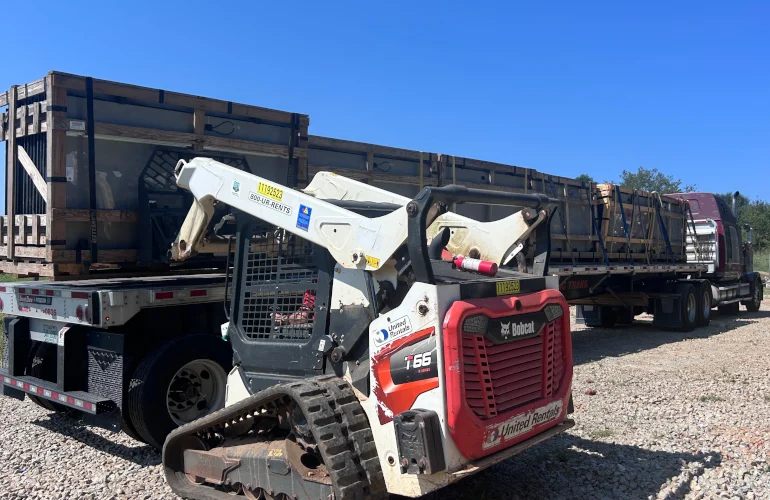
The official commencement of construction kicked off with site preparation and civil works. Recognizing the logistical challenges of transporting hundreds of thousands of solar panels and massive battery containers to a remote desert location, ContourGlobal prioritized infrastructure development. Crews began constructing Polaris Road, a brand-new 5.2-mile access artery connecting historic Route 66 directly to the project site. With site access established, local construction teams mobilized heavy machinery to begin grading, civil works, and the installation of foundational racking systems.
Supporting Data and Technical Architecture
Project Sterling is not merely large in physical footprint; it is a marvel of modern energy systems engineering designed to solve one of renewable energy’s greatest historic challenges: intermittency.
Harnessing the Desert Sun
The Mohave Desert offers some of the most consistent and intense solar resource potential in North America. To capture this energy, the project will deploy over 760,000 photovoltaic modules. These panels will be mounted on advanced tracking systems that tilt dynamically throughout the day, following the sun from East to West to maximize energy yield from dawn until dusk.
The 1.4-GWh Storage Advantage
What sets Project Sterling apart from older, generation-only solar farms is its massive 1.4-GWh battery energy storage system (BESS). Comprising over 300 heavy-duty battery containers, the BESS will capture surplus electricity generated during peak daylight hours—when solar production frequently exceeds immediate grid demand—and store it safely within lithium-ion or similarly advanced battery chemistries.
According to project developers, this architecture enables the facility to dispatch reliable clean power for up to 16 hours a day. By shifting midday solar generation into the evening hours when residential and commercial energy demand spikes (often referred to as the "duck curve" phenomenon), Project Sterling functions more like a traditional baseload power plant than a weather-dependent generator.
Civil Engineering and Regional Access
Building a facility of this magnitude in a remote desert environment requires substantial civil infrastructure. The creation of Polaris Road—a 5.2-mile paved and stabilized route connecting historic Route 66 to the project footprint—was a mandatory prerequisite. This road allows heavy transport vehicles to deliver transformers, inverters, battery skids, and millions of pounds of steel and glass without placing undue wear and tear on local municipal roads. Local construction crews are also executing extensive grading, drainage management, and perimeter security fencing across the multi-thousand-acre site.
Official Responses and Stakeholder Perspectives
The launch of construction on Project Sterling has drawn praise from corporate leadership, clean energy advocates, and regional economic development groups who view the project as a monumental win for both environmental sustainability and local growth.
ContourGlobal’s Vision
Antonio Cammisecra, speaking on behalf of the development team, emphasized the symbolic and practical significance of utilizing the desert’s natural endowments for modern energy needs.
“Arizona’s sun has been shining on this land for billions of years. Project Sterling will put it to work by turning sunlight into electricity and storing part of that energy for delivery after sunset,” Cammisecra stated. “Our teams engineered the project around the specific needs of our customer, enabling it to deliver reliable clean power for up to 16 hours a day.”
By tailoring the generation-to-storage ratio, ContourGlobal has ensured that the facility acts as a predictable, dispatchable asset capable of meeting the rigorous reliability standards demanded by modern corporate offtakers like Tesla.
Economic and Community Impact
Local officials in Mohave County have welcomed the infusion of capital, temporary construction jobs, and long-term tax revenues associated with Project Sterling. While utility-scale solar installations require relatively small operations and maintenance crews once completed, the construction phase brings hundreds of civil, electrical, and logistical jobs to the region, boosting local hospitality, supply chain, and service sector businesses.
Implications for the Energy Landscape
Project Sterling is much more than a regional power plant; it serves as a bellwether for the future of utility-scale renewable energy development in the United States.
Redefining Renewable Reliability
For decades, critics of solar and wind energy pointed to intermittency—the fact that the sun does not shine at night and the wind does not always blow—as an insurmountable barrier to deep grid decarbonization. Project Sterling directly challenges that narrative. By pairing 509 MW of solar generation with an unprecedented 1.4 GWh of storage, the facility demonstrates that renewables can be scaled to provide continuous, predictable power across the majority of the 24-hour cycle.
The Convergence of History and Future
The geographic placement of Project Sterling carries a powerful poetic symmetry. Situated just off a historic stretch of Route 66 between Topock and Kingman—a legendary highway that once powered America’s westward expansion and automotive age—the project occupies land where old infrastructure now yields to the technology powering the nation’s next phase of growth. Just as Route 66 connected coast to coast in the 20th century, modern transmission and storage networks anchored by facilities like Project Sterling will connect the clean energy resources of the rural West to the high-demand urban centers and industrial hubs of the future.
Market Signals and Corporate Offtake
The involvement of Tesla as the primary PPA holder underscores a broader trend: major technology companies, industrial giants, and corporate energy buyers are increasingly demanding dedicated, round-the-clock clean power solutions. Rather than relying on standard grid-mix certificates, corporate leaders are backing dedicated hybrid generation-and-storage facilities to power their operations, data centers, and manufacturing plants with verified zero-emission electricity.
Looking Ahead
As construction crews continue grading land, pouring foundations, and installing the first waves of solar modules and battery containers along Polaris Road, all eyes will be on Mohave County. When Project Sterling reaches full commercial operation, it will stand as a benchmark for how modern clean energy projects can achieve massive scale, exceptional reliability, and seamless grid integration—proving that the boundless energy of the Arizona sun can finally work around the clock.