
By Andy Turudic, Technology Editor
The finalization of the federal Corporate Average Fuel Economy (CAFE) standards rollback by the Department of Transportation marks the conclusion of an era of unprecedented industrial volatility. Slashing the 2031 fleetwide milestone target from 50.4 miles per gallon (mpg) down to 34.9 mpg, the policy shift was ostensibly framed by legacy automotive executives as a victory for "market pragmatism."
However, a comprehensive chronological audit of Detroit’s strategic maneuvers reveals a far more complex reality. Short-term asset management, intensive political lobbying, and severe execution failures collectively transformed a highly publicized technological transition into an existential corporate retreat.

Main Facts: The Anatomy of a Policy Reversal
The modern era of U.S. automotive electrification began not as an organic response to immediate consumer demand, but as a regulatory defense mechanism. To offset the high fuel consumption of lucrative internal combustion engine (ICE) pickup and SUV lines, automakers leaned heavily on compliance vehicles like the Chevrolet Bolt EV.
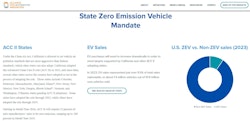
By 2021, emboldened by plunging global lithium-carbonate prices and promising battery chemistry breakthroughs, General Motors made a historic pledge: a commitment to an all-electric light-duty lineup by 2035. Ford Motor Company quickly followed, splitting its corporate structure into "Model e" (EVs) and "Ford Blue" (ICE) to target a 50% global EV sales mix by 2030.
Yet, this momentum stalled under the weight of commodity shocks, capital reallocations, and regulatory capture. By late 2026, facing billions in potential compliance fines due to artificially suppressed EV production volumes, Detroit’s leadership pivoted from product engineering to political lobbying. The resulting CAFE standard rollback dismantled stringent emissions trajectories, leaving the U.S. automotive base isolated from rapidly advancing international competitors while shifting substantial environmental and financial liabilities onto the American public.

Chronology: A Decade of Strategy, Panic, and Retreat
Phase I: The Compliance Era and the 2035 Pledge (2016–2021)
In 2016, GM launched the Chevrolet Bolt EV—a classic compliance car designed to satisfy California’s Zero-Emission Vehicle (ZEV) mandates. By 2021, raw lithium-carbonate prices were trending downward, and manufacturing efficiencies were accelerating. GM executives projected breaking the elusive $100/kWh pack-level cost barrier via the Ultium Cells joint venture with LG Energy Solution.
This inspired GM CEO Mary Barra’s January 2021 announcement committing the automaker to an all-light-duty EV lineup by 2035. Ford’s Jim Farley soon matched this ambition, signaling to Wall Street that the internal combustion era was drawing to a close.
Phase II: The Lithium Speculator Bubble and Executive Panic (2022–2023)
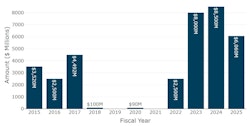
The operational foundation of the 2035 targets assumed stable commodity pricing, an assumption that shattered in 2022. As global automakers rushed to secure raw minerals, Wall Street futures speculation drove lithium-carbonate prices to an astronomical peak exceeding $80,000 per metric ton.

To secure supply, GM invested $650 million in Thacker Pass mining operations. However, the prolonged price spike triggered panic in Detroit boardrooms. Rather than employing long-term hedging strategies, executives grew fearful of unhedged battery costs and began questioning the near-term capital viability of mass-market EV architectures.
Phase III: Capital Revectoring and Product Disconnect (Late 2023–2024)
Convinced near-term EV margins were compromised, GM executed a strategic pivot. To pacify institutional investors demanding immediate returns, GM authorized a massive ~$16 billion stock buyback program while redirecting $9 billion to retool traditional ICE truck and SUV assembly lines at Flint and Fort Wayne.
Ford executed an identical retreat, indefinitely delaying its next-gen electric pickup platform at its Blue Oval City complex in Tennessee to refocus on ICE and hybrid heavy-truck production.
Phase IV: Regulatory Capture and the Final Rollback (September 2026)
By halting EV rollbacks while continuing to manufacture high-volume V8 trucks, Detroit engineered an existential regulatory crisis. Under existing EPA and CAFE guidelines, suppressed EV sales volumes meant automakers were facing over $30 billion in cumulative federal fines through 2031.
Automakers pivoted to aggressive lobbying, directing millions toward political campaigns to dismantle emissions frameworks. On September 28, 2026, the administration finalized the CAFE rollback, slashing the 2031 target from 50.4 mpg to 34.9 mpg. With legal compliance requirements erased, GM and Ford systematically scaled back or cancelled affordable EV programs, such as the LFP-chemized Chevrolet Bolt variant, slashing production and laying off assembly workers.
Supporting Data: The Economics of Towing and Fuel Costs
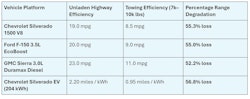
To justify the return to ICE platforms, executive management heavily emphasized the towing range penalty of electric trucks, pointing to real-world tests showing a 50% to 60% range reduction when hauling trailers. However, quantitative engineering analysis reveals this is a universal consequence of Newtonian physics rather than an exclusive flaw of electric propulsion.
| Powertrain Type | Unladen Highway Range | Towing Range (7,500 lbs) | Operating Energy Cost Equivalent |
|---|---|---|---|
| ICE V8 Silverado | ~456 miles (24-gal tank) | ~204 miles | Baseline ($4/gal gasoline) |
| Silverado EV (204-kWh) | ~450+ miles | ~160–195 miles | ~30.8 mpg equivalent at 1 mi/kWh |
The data demonstrates that the operating range of a gas truck towing a load is functionally identical to that of an electric truck under the same structural conditions. The true bottlenecks are infrastructural: a 5-minute liquid refueling delta versus a 45-minute DC fast-charge cycle, and a widespread lack of "pull-through" charging lanes.
Official Responses and Industry Divergence
While Detroit and North American manufacturers lobbied successfully to depress efficiency metrics—with Toyota simultaneously protecting its profitable body-on-frame truck lines—international competitors charted a different path.
Vertically integrated manufacturers such as China’s BYD ignored short-term commodity speculation, secured direct control over mineral processing, and aggressively scaled efficient, low-cost battery architectures. The consequences of Detroit’s inward retreat quickly materialized globally; notably, GM officially discontinued retail sales of its Chevrolet brand in China in August 2026, marking a near-total wipeout from its historically largest volume market.
Meanwhile, state regulators pushed back against the federal rollback. Over a dozen state attorneys general filed lawsuits challenging the administration’s rule change, arguing that the relaxation of emissions standards unlawfully disregards public health and environmental safety.
Implications: The Half-Trillion-Dollar Public Cost
The financial protectionism engineered by the 2026 CAFE rollback does not erase the liabilities generated by Detroit’s strategic whiplash; it shifts the balance sheet from corporate ledgers directly onto the American public.
1. The Consumer Pump Penalty
Federal dockets concede that a decade’s worth of retrograde vehicle efficiency standards will result in an additional 100 billion gallons of gasoline burned through 2050. At projected fuel prices, this represents a $441 billion capital drain directly from consumer pockets into fossil fuel reserves. From an economic multiplier standpoint, this siphoning creates a zero-growth trap, extracting capital from local distribution networks without driving R&D cycles in advanced software, automated manufacturing, or grid modernization.
2. The Total Societal Ledger
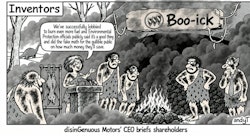
When aggregating direct treasury losses, structural tax avoidance, localized write-downs, and inflated energy costs, the true cost to the public base scales to a $477.38 billion total bill—excluding intangible metrics like healthcare costs associated with degraded air quality and urban smog.
3. Terminal Obsolescence for Domestic Manufacturing
By freezing domestic manufacturing at a nearly 100% ICE mix while the rest of the industrialized world scales highly efficient, low-cost EV architectures, General Motors and Ford Motor Company face long-term structural obsolescence. Shielding short-term V8 profit margins and stock buybacks through political protectionism has locked the American public into an immense fuel invoice while steering the nation’s core manufacturing base toward an uncompetitive, protection-dependent dead end.