





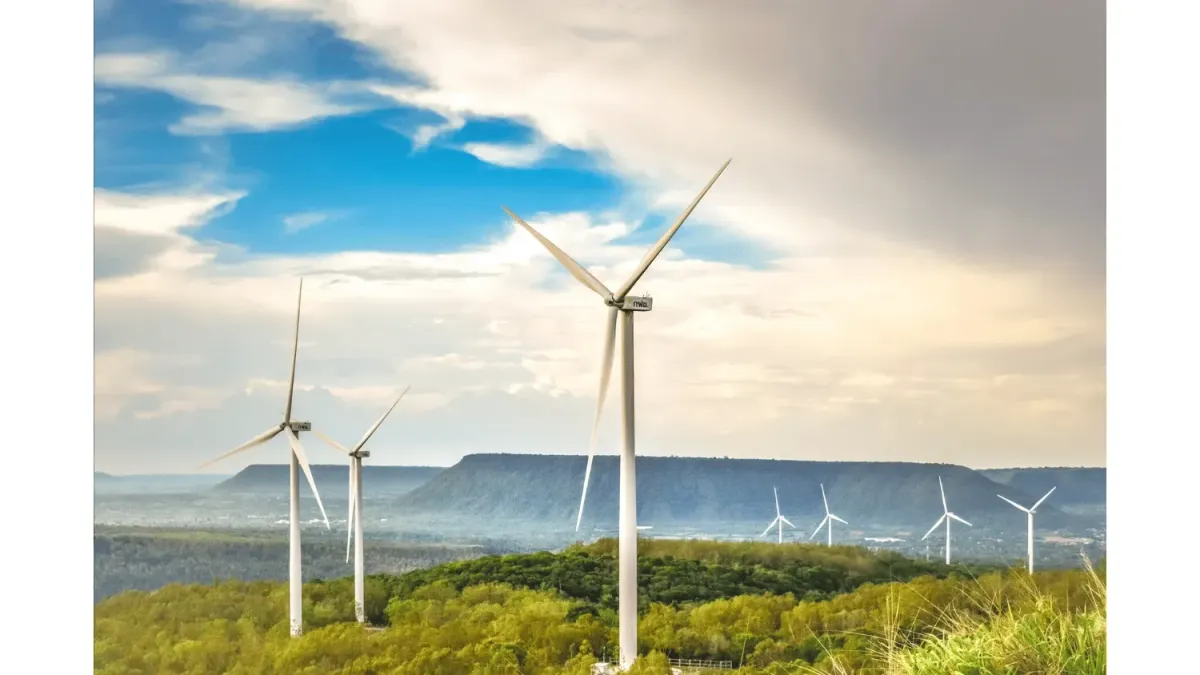
LONDON — As the global transition toward renewable energy accelerates, wind turbines are scaling to unprecedented heights. Modern offshore and onshore turbines feature rotor diameters spanning over 200 meters and nacelles housing multi-megawatt drivetrains, heavy generators, and complex hydraulic systems. Yet, while engineering teams pour billions into optimizing energy capture, structural fatigue life, and material costs, a critical operational reality often gets sidelined until the commissioning phase: maintainability.
Wind turbine maintenance is no longer just a service consideration—it is a foundational design property. From routine inspections and lubrication to major component overhauls, the safety and efficiency of field technicians are fundamentally determined long before a turbine ever sees a gust of wind, right at the mechanical engineering drawing board.
Main Facts: The Hidden Human Factor in Wind Energy
Inside the confined spaces of a wind turbine tower, hub, and nacelle, mechanical architecture dictates physical human capability. Component positioning, access geometry, lifting provisions, tool clearances, and energy-isolation features dictate whether technicians can work with stable postures, controlled loads, and predictable safety margins.
A component can be mechanically flawless on paper yet functionally hazardous in the field. Filters buried behind dense pipework, fasteners positioned outside comfortable reach zones, or inspection points requiring awkward contortions routinely turn short, simple tasks into prolonged physical exposure. The issue becomes exponentially more complex when technicians are operating in bulky Personal Protective Equipment (PPE)—including harnesses and fall-protection gear—while carrying heavy maintenance tools within restrictive clearances.
Consequently, modern wind engineering is undergoing a quiet paradigm shift. Rather than treating safety training and certifications (such as standard Global Wind Organisation—GWO—courses covering working at height and manual handling) as the sole defense against occupational hazards, the industry is recognizing that equipment design must actively support safe working envelopes.
Chronology: The Evolution of O&M and the Push for Design-Stage Safety
To understand how the wind industry arrived at its current approach to Operations and Maintenance (O&M), it is helpful to trace its evolution over the past three decades:
- Early Era (Late 20th Century): Wind turbines were relatively small (under 1 MW). Maintenance was largely reactive, performed by general technicians who improvised fixes on-site. Little attention was paid to human factors engineering in the nacelle.
- The Scaling Phase (2000–2010s): As turbine capacities surged past 2 MW to 5 MW, components grew exponentially heavier. Maintenance transitioned from purely reactive to scheduled preventive routines. However, access routes and lifting points were frequently treated as secondary afterthoughts, leading to high rates of ergonomic strain and rising Mean Time to Repair (MTTR) metrics.
- The Offshore Boom (2010s–2020s): Offshore installations introduced severe weather constraints, high vessel charter costs, and restricted technician deployment windows. Every hour spent struggling with an awkward component or improvising a lift translated into massive financial losses and heightened safety risks.
- The Modern Paradigm (Present Day): Today, developers, original equipment manufacturers (OEMs), and mechanical engineers are integrating human factors, digital human modeling, and comprehensive maintainability reviews early in the design cycle. Field feedback, near-miss data, and digitized service analytics are actively feeding back into the CAD environments of the next generation of turbines.
Supporting Data: The Impact of Poor Design on Service Metrics
Data from industrial safety bodies and wind farm operators highlight a clear correlation between ergonomic design and operational downtime.
Studies into industrial ergonomics indicate that repetitive awkward postures, overreaching, and manual handling of heavy items in confined spaces are primary contributors to musculoskeletal disorders (MSDs) and safety incidents among field service technicians. In the wind sector, these risks are amplified by environmental stressors such as high winds, noise, and vibration.
Furthermore, field analytics reveal that a significant percentage of turbine downtime is driven by "non-value-added" maintenance steps—time spent rigging temporary lifting devices, dismantling unrelated subsystems to reach a failed part, or fighting with poorly positioned fasteners.
- Component Handling: Motors, pumps, brake assemblies, and hydraulic units—though relatively small compared to main shafts or blades—frequently require complex rigging because dedicated lift paths were omitted.
- Fastener Access: Standard bolted joints often lack adequate reaction space for hydraulic torque tools, forcing technicians to use extensions or awkward angles that compromise preload accuracy.
- Module Interchangeability: Turbines that rely on tightly integrated systems rather than modular sub-assemblies often require major in-situ repairs, dramatically expanding intervention windows.
When maintainability is poor, downtime cascades. A minor component failure that should take two hours to replace can easily stretch into a multi-day ordeal if removal paths require disturbing adjacent systems.
Official Perspectives: Industry Leaders on Human-Centric Engineering
As safety standards tighten globally, industry stakeholders are increasingly vocal about the need to align mechanical design with human capabilities.
The Engineering Perspective:
Mechanical design engineers are urged to look beyond static CAD validation. A digital assembly showing that a technician can technically "reach" a bolt with their fingertips is vastly different from reality. As industry engineering groups emphasize, clearances must be verified against the combined envelope of a technician, a safety harness, a torque tool, and the removed component itself.
The Safety Trainer Perspective:
Training providers, such as those administering GWO-certified programs, note that while training equips technicians with vital survival and handling skills, it cannot completely neutralize poorly engineered machinery.
"Our training prepares technicians to manage hazardous energies, work at height, and execute safe manual handling," notes a safety training coordinator. "However, the machine itself must cooperate. If an energy-isolation point is ambiguous or a heavy valve has no designated lift eye, the technician is placed in an avoidable defensive position."
The Operations Management Perspective:
Asset managers operating multi-gigawatt portfolios point directly to the bottom line. Field data proves that turbines engineered with clear removal paths, predictable centers of gravity, and accessible locking mechanisms experience lower lifecycle O&M costs and higher availability percentages.
Implications: Building Maintainability into the Future of Wind Energy
The integration of maintainability into wind turbine design carries profound implications for the future of the renewable energy sector.
1. Re-Engineering the Mechanical Interface
Bolted joints, hydraulic fittings, and bearing housings must be treated as complete maintenance features. This means ensuring adequate reaction space for power tools, designing predictable locating surfaces, and incorporating replaceable wear elements to prevent alignment struggles during reassembly.
2. Mastering Stored Mechanical Energy
Wind turbines concentrate immense amounts of potential and kinetic energy—from gravity loads and high-pressure hydraulics to preloaded springs and massive rotating assemblies. Future designs must feature unambiguous, easily accessible mechanical locking mechanisms and clearly visible pressure-relief points, ensuring that establishing a safe working state is foolproof.
3. Advanced Simulation and Physical Prototyping
To eliminate design flaws before serial production, engineering firms are increasingly adopting digital human modeling (DHM) and tool-envelope simulations. However, digital tools must be complemented by physical mock-ups, particularly for high-frequency or high-consequence maintenance tasks where physical feedback on posture and visibility is irreplaceable.
4. Closing the Loop with Field Data
The ultimate test of a turbine’s design lies in the field. By treating maintenance logs, near-miss reports, and technician feedback as rigorous engineering data, design teams can close the feedback loop. Repeated workarounds in the field—such as technicians consistently relying on improvised lifts or unusual body positions—must be recognized as clear indicators of design deficiencies.
Conclusion
A wind turbine that generates clean electricity efficiently over its 25-to-30-year lifespan while forcing technicians into dangerous, ergonomically stressful maintenance scenarios carries an invisible design defect.
By treating maintenance as a core mechanical performance metric—alongside fatigue life, structural integrity, reliability, and cost—engineers can build machines that actively protect the workforce. When equipment architecture supports the safe methods technicians are trained to execute, the result is a safer, more reliable, and ultimately more sustainable wind energy industry.