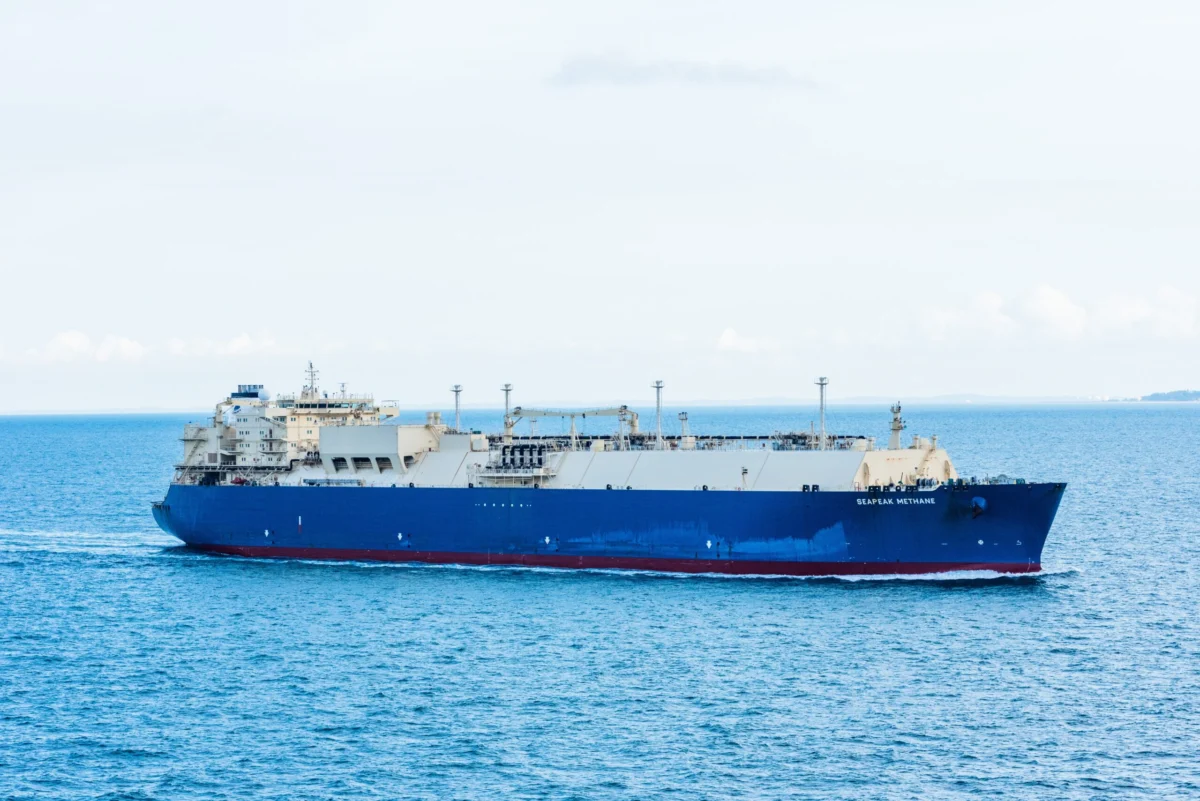
The maritime industry, responsible for transporting roughly 90% of global trade, faces an existential challenge: the urgent mandate to transition away from heavy fuel oils (HFO) toward sustainable, low-carbon alternatives. While ammonia, hydrogen, and methanol have dominated the headlines, a new, pragmatic contender is gaining traction. According to a landmark study by the Mærsk Mc-Kinney Møller Center for Zero Carbon Shipping, ethanol—a fuel already ubiquitous in the automotive sector—is emerging as a viable marine fuel capable of bridging the gap for both modern methanol-ready vessels and the legacy diesel fleet.
Main Facts: A Dual-Track Strategy
The report, Ethanol as a Marine Fuel: Exploring Its Usability, developed in collaboration with industry heavyweights including NORDEN, TotalEnergies, and ABS, outlines a dual-track strategy for adoption.
The primary advantage of ethanol lies in its existing global infrastructure. Unlike green hydrogen or ammonia, which require significant investment in specialized bunkering terminals and transport networks, ethanol production and distribution are already robustly established in major agricultural hubs like the United States and Brazil. This infrastructure readiness could allow shipowners to bypass the "chicken-and-egg" dilemma that has stalled the adoption of other alternative fuels.
However, the technical path forward is bifurcated. For vessels already equipped with methanol-dual-fuel engines, ethanol represents a "drop-in" or near-drop-in solution. Because ethanol and methanol share similar chemical characteristics, engine modifications are relatively minor, involving adjustments to fuel injection timing and control software. Conversely, for the massive existing fleet of conventional diesel-powered ships, the path to using ethanol is fraught with technical hurdles related to fuel stability, flashpoints, and engine combustion chemistry.
A Chronology of Progress: From Lab to Ocean
The push toward ethanol as a marine propellant has gained significant momentum over the past two years, moving rapidly from theoretical modeling to real-world deployment.
- 2025 – Early Trials: Maersk began testing ethanol blends aboard its methanol-fueled container ship, Laura Maersk. These initial trials focused on a conservative 10% ethanol-to-methanol blend to monitor engine behavior and fuel system integrity.
- Early 2026 – Scaling the Concentration: As technical data validated the performance of low-concentration blends, the company ramped up testing, eventually achieving successful operation on pure ethanol by June 2026.
- Late 2026 – Commercial Validation: The milestone of commercial scalability was reached in Houston, where the 9,016-TEU Tangier Maersk successfully conducted a ship-to-ship ethanol bunkering operation. This event marked the first commercial-scale, deep-sea ethanol bunkering of a container vessel in the United States, signaling that the fuel is ready for more than just experimental use.
- Mid-2027 – OEM Engagement: Engine manufacturers have followed suit. Major players including Everllence, WinGD, and Wärtsilä have intensified their R&D efforts. Notably, Caterpillar announced the rollout of conversion kits for specific MaK engine models, allowing operators to retrofit older machinery to handle methanol or ethanol, further proving that the technology is transitioning from the laboratory to the shipyard.
Supporting Data: The Economics of Retrofitting
One of the most compelling aspects of the Mærsk Mc-Kinney Møller Center’s research is the economic analysis of retrofitting existing tonnage. The report utilizes a Kamsarmax bulk carrier as a case study to assess the financial viability of converting traditional diesel engines to run on ethanol-marine gas oil (MGO) blends.
Cost-Benefit Analysis
The findings suggest that retrofitting a vessel for ethanol-MGO blending could cost approximately 50% less than a full conversion to a methanol dual-fuel system. While the initial capital expenditure (CAPEX) is lower, the operational expenditure (OPEX) remains sensitive to fuel prices and the emerging IMO Net-Zero Framework.
- The Baseline Scenario: Under current market conditions and without heavy carbon taxation, ethanol-MGO blends struggle to compete with Very Low-Sulfur Fuel Oil (VLSFO).
- The "Sweet Spot": The economic outlook improves significantly for vessels operating within Sulfur Emission Control Areas (SECAs), where the costs of compliance with conventional fuels are higher. Furthermore, for high-consumption vessels—such as large container ships burning 25,000 tonnes of fuel annually—the economies of scale render a 30% ethanol blend economically viable, provided the carbon intensity of the fuel remains low.
The Technical Hurdle of Blending
The study identified two critical barriers to widespread adoption in the conventional diesel fleet:
- Flashpoint Risks: Under SOLAS (Safety of Life at Sea) regulations, marine fuels must maintain a flashpoint above 60°C. Ethanol, being highly volatile, lowers the flashpoint of any blend significantly. Testing a 10% ethanol-diesel mixture resulted in a flashpoint of approximately 13.5°C, creating an unacceptable safety risk that could not be mitigated even with the addition of biodiesel or proprietary additives.
- Stability Issues: The mixtures proved physically unstable. When stored at 10°C, the ethanol and diesel components separated after just one week, which would wreak havoc on shipboard fuel management systems and engine performance.
Official Responses and Industry Perspective
The report has received a measured but optimistic reception from industry stakeholders. Representatives from ABS (American Bureau of Shipping) have emphasized that while the chemical compatibility is promising, the safety requirements for storing and handling ethanol—which is highly flammable and requires different seal materials than traditional oil—cannot be overlooked.
"The industry is looking for options, not just mandates," noted a spokesperson for the Mærsk Mc-Kinney Møller Center. "Ethanol is not a panacea, but it offers a pragmatic pathway for shipowners who need to reduce their carbon footprint today without waiting for the massive scale-up of synthetic fuels like green ammonia."
Engine manufacturers, led by Caterpillar and Wärtsilä, have pivoted toward a modular approach. By developing conversion kits that allow for flexible fuel intake, these companies are effectively hedging their bets, ensuring that shipowners can adapt their assets as the global fuel market evolves.
Implications: The Sustainability Mandate
The long-term role of ethanol in the global shipping transition will ultimately be dictated not by engine capability, but by life-cycle sustainability. The study acknowledges that "ethanol" is a broad term, and its environmental credentials depend entirely on the production methodology.
The Carbon Intensity Factor
Ethanol derived from first-generation feedstocks (such as corn or sugarcane) must be evaluated against the land-use changes and farming practices required to produce it. If the fuel is produced in a way that leads to deforestation or high-emission agricultural processes, its benefit to the climate is nullified. The Mærsk Mc-Kinney Møller Center has indicated that a forthcoming report will deep-dive into the scalability of sustainable ethanol, specifically looking at second-generation feedstocks and the carbon-capture potential of production facilities.
Strategic Flexibility
For shipowners, the implication is clear: the future of maritime fuel will be a mix, not a single winner. For companies that have invested in methanol-capable vessels, ethanol provides a vital alternative that allows them to shift suppliers based on local availability, carbon pricing, and price volatility. For the rest of the fleet, the focus remains on finding a "safe" way to utilize ethanol, likely through onboard blending systems that mix fuel only as needed, thereby bypassing the storage stability issues identified in the study.
Conclusion
As the International Maritime Organization (IMO) faces pressure to tighten 2030 clean-fuel targets, the shipping industry is in a race against time. The transition to ethanol represents a bridge, not a final destination. By leveraging existing infrastructure, reducing the cost of retrofits, and providing a flexible alternative to methanol, ethanol provides a tangible, immediate, and scalable tool for decarbonization. However, the industry must remain vigilant regarding the safety challenges of diesel-ethanol blends and the critical need for truly sustainable, low-lifecycle-carbon ethanol production.
The path to net-zero is rarely a straight line; with the integration of ethanol, the maritime industry has simply added a crucial new gear to its engine for the long voyage ahead.