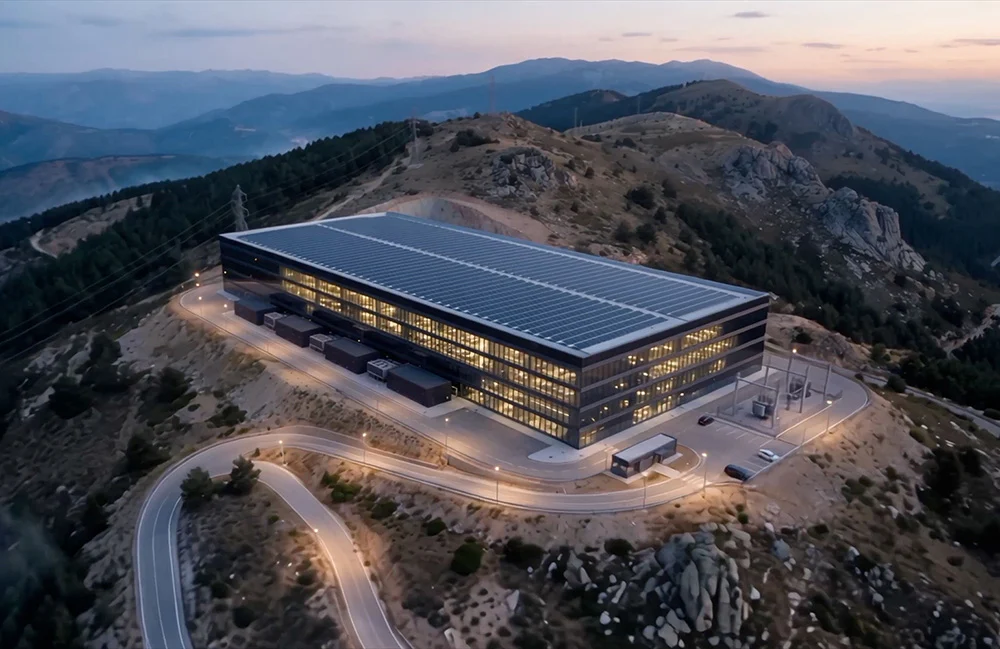
GENOA, ITALY — In a strategic move designed to reshape the global humanoid robotics landscape, Generative Bionics has announced plans to construct a massive, proprietary, multi-site "Physical AI Data Factory" in Italy. Slated to become operational by the fourth quarter of 2027, the 5,000-square-meter (53,819-square-foot) facility aims to bridge the long-standing gap between laboratory demonstrations and reliable, industrial-grade deployment.
The initiative is not merely a corporate expansion; it represents a calculated bid for European technological sovereignty. By anchoring the data, models, and engineering know-how firmly within the continent, Generative Bionics seeks to harness Europe’s deep-seated industrial automation heritage to fuel the next generation of physical artificial intelligence.
1. Main Facts: The Anatomy of Europe’s New Physical AI Hub
The upcoming facility in Italy is engineered to be one of Europe’s premier training grounds for humanoid robots. Designed as a comprehensive ecosystem, the Data Factory will tackle the fundamental scarcity of real-world physical data that has historically hindered embodied AI development.
- Project Scope: A 5,000-sq.-m (approx. 53,820-sq.-ft.) multi-site physical AI hub.
- Timeline: Scheduled for full operational status by Q4 2027.
- Infrastructure Partner: Advanced Micro Devices Inc. (AMD), utilizing AMD Helios rack-scale architecture.
- Flagship Platform: The GENE.01 humanoid robot, equipped with full-body multimodal skin and tactile sensing.
- Expansion Roadmap: Follow-up facilities planned for a second European location and a third focused on global markets.
- Foundational Heritage: Spun out of the Italian Institute of Technology (IIT) in 2024, building on over two decades of European humanoid robotics research.
Unlike software-based large language models (LLMs) that harvest billions of pages of text from the internet, humanoid robots require rich, multidimensional physical datasets. The Data Factory will systematically capture parameters such as position, velocity, acceleration, contact forces, proximity, temperature, and visual feedback to train world action models (WAM).
2. Chronology: From Academic Roots to Industrial Ambition
The journey toward the Physical AI Data Factory spans decades of rigorous European research and recent commercial maneuvers.
- Pre-2024 (The IIT Era): Over 20 years of humanoid robotics research, development, and prototyping take place at the Italian Institute of Technology (IIT). Key breakthroughs in motion control and tactile sensing are cultivated in academic settings.
- 2024 (The Spin-Out): Generative Bionics officially spins out of the IIT, securing exclusive licenses to foundational technologies to commercialize advanced humanoid systems.
- Late 2025 – Early 2026 (Strategic Alignment): Generative Bionics forms a crucial technology partnership with AMD, aligning its compute requirements with high-performance hardware designed to handle massive simulation and training workloads.
- October 2026 (The Announcement): Generative Bionics publicly reveals its multi-site Physical AI Data Factory blueprint, targeting a Q4 2027 launch for the flagship Italian hub.
3. Supporting Data: The Infrastructure of "Real-to-Sim-to-Real"
Training humanoid robots for complex industrial workflows requires an intricate loop between physical reality and digital simulation—a methodology Generative Bionics calls the "real-to-sim-to-real cycle."
Powering the Compute Engine with AMD
Processing the sheer volume of data generated by fleets of industrial humanoids requires unprecedented computational power. Generative Bionics has named AMD its official AI infrastructure partner. The Data Factory network will run on AMD Helios, a rack-scale architecture specifically built to handle heavy computational lifting.
This infrastructure supports:
- Simultaneous Processing: Handling massive streams of physical telemetry and synthetic data streams in parallel.
- Digital Twin Scaling: Running thousands of digital-twin scenario variations simultaneously. Iterating through environmental layouts, object variability, material properties, and failure modes that would be physically impractical or cost-prohibitive to test in the real world.
- Model Validation: Rapidly pushing models trained in simulation back to physical robots for real-world verification.
Full-Body Multimodal Sensing
A core differentiator for the GENE.01 platform is its biological-inspired approach to perception. While many market alternatives rely primarily on vision systems and voice recognition, Generative Bionics has engineered GENE.01 with a full-body multimodal skin.
+------------------------------------------------------------+
                GENE.01 MULTIMODAL SENSING SUITE
+------------------------------------------------------------+
  [Vision & Cameras]   --> Spatial awareness & navigation
  [Auditory Systems]   --> Voice command & audio cues
  [Kinematic Telemetry]--> Position, velocity, & acceleration
  [Multimodal Skin]    --> Tactile touch, force, & proximity
  [Thermal Monitors]   --> Environmental temperature constraints
+------------------------------------------------------------+
This comprehensive sensory array allows the robot to safely and accurately interact with human coworkers and sensitive industrial environments alike.
4. Official Responses and Industry Perspectives
Daniele Pucci, CEO of Generative Bionics, has been vocal about the strategic advantages Europe holds, as well as the realities of the global humanoid market. Addressing misconceptions surrounding the competitive landscape—particularly regarding rapid advancements reported in other regions—Pucci offered a grounded assessment.
"The value that Europe has right now is within its industry, and we have to extract physical AI data in order to train our own models," Pucci explained in an interview with The Robot Report. "This is a competitive advantage that Europe right now has, because of armature and automation that we have been putting in place over the last 40 years."
Addressing international competition, particularly from heavily publicized robotics initiatives in China, Pucci drew a sharp line between marketing spectacles and industrial readiness:
"I want to be crystal clear about this. Many of the Chinese robots that are out there are simply not certified to enter industrial settings. The narrative that the Chinese solved all the issues is very far from reality."
She added, "Right now, we believe that many of the existing solutions are basically for entertainment, and this is a market segment that we respect. But, Generative Bionics is taking the issue of safety and certification very seriously because we want to go B2B first."
Pucci also emphasized that achieving true regional autonomy requires a three-tiered approach to manufacturing:
- The manufacturing of data (via specialized facilities like the new Data Factory).
- The manufacturing of robots (scalable hardware platforms like GENE.01).
- The manufacturing of models (advanced physical AI and world action models).
5. Implications: Redefining Industrial B2B Humanoids
The launch of Generative Bionics’ Physical AI Data Factory carries profound implications for the future of European manufacturing, B2B automation, and the global robotics race.
Customization Over Universal Generalization
While many robotics firms strive for a single, universal general-purpose robot that can perform any task out-of-the-box, Generative Bionics is adopting an automotive-style modular strategy. Pucci notes that a humanoid welding components in a high-heat shipyard has radically different operational requirements than a robot operating in a sterile healthcare environment.
To solve this, Generative Bionics has designed GENE.01 with three distinct levels of customization:
- Level 1 (AI & Cognition): Tailored software models optimized for specific industry workflows (e.g., logistics vs. heavy manufacturing vs. caregiving).
- Level 2 (Exterior Design): Physical chassis enhancements, such as thermal shielding, spark resistance, and dust-proofing.
- Level 3 (End-Effectors): Specialized hands and feet engineered to grip heavy tools, delicate medical instruments, or uneven terrain.
The Search for Robotics’ "ChatGPT Moment"
The generative AI boom was catalyzed by massive datasets of human language and imagery. By constructing a dedicated Physical AI Data Factory, Generative Bionics is systematically engineering the foundational dataset required for embodied AI.
By tying real-world industrial testing grounds with advanced AMD-powered digital twins, the company is laying the groundwork to uncover robotics’ elusive "ChatGPT moment"—transforming humanoids from remote-controlled laboratory novelties into indispensable, autonomous members of the modern industrial workforce.