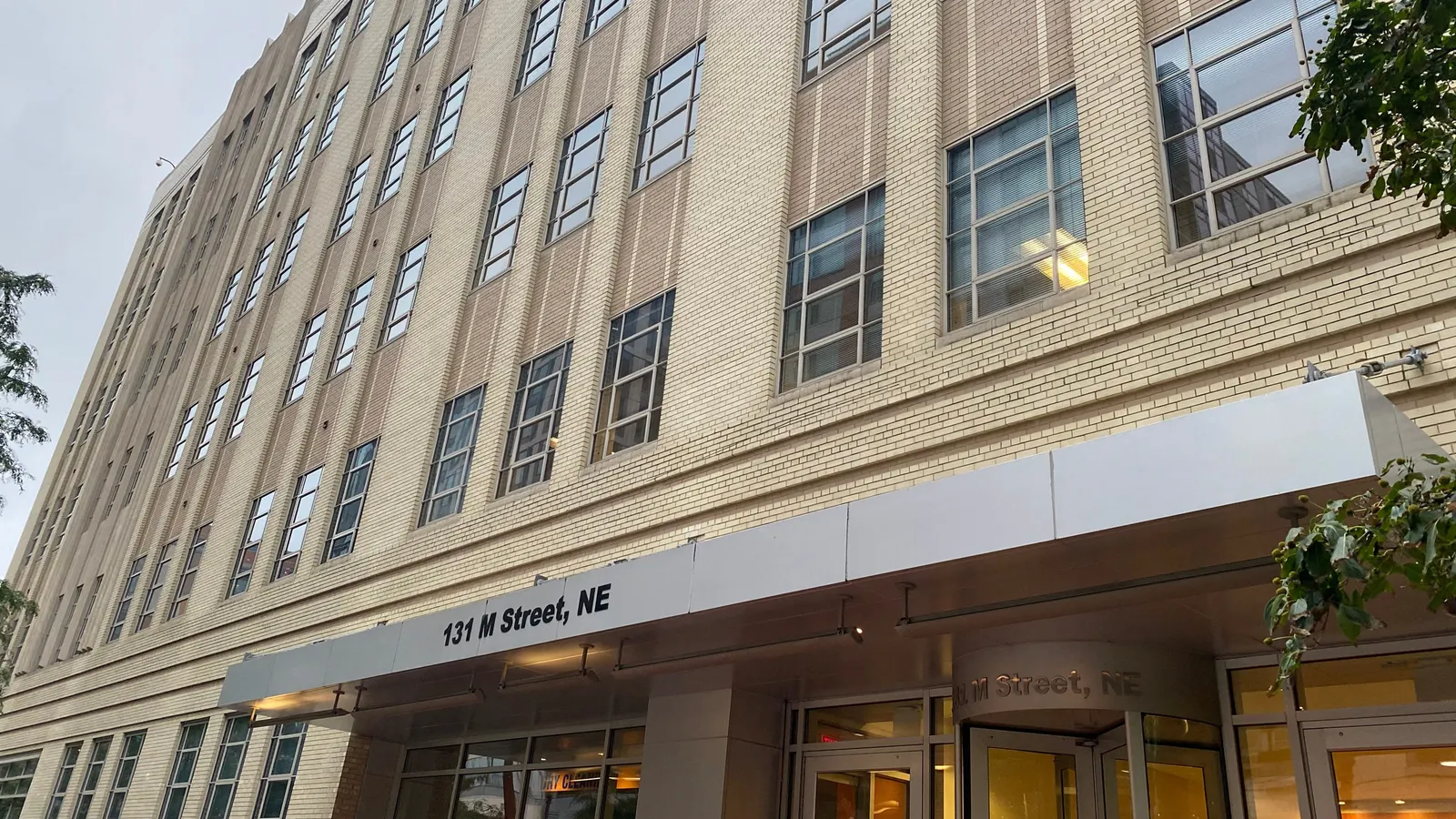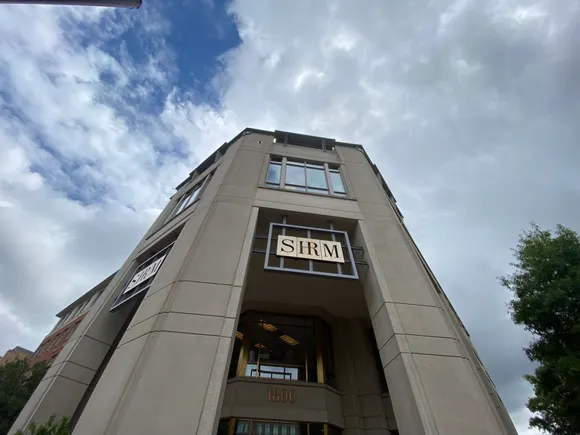
ALEXANDRIA, Va. — The Society for Human Resource Management (SHRM), the world’s largest association for human resources professionals, finds itself once again under the harsh glare of a courtroom spotlight. On Tuesday, a high-stakes federal jury trial kicked off in Alexandria, Virginia, marking the second time in less than a year that the HR titan has failed to convince a federal judge to dismiss a discrimination lawsuit before reaching a jury.
The current legal battle, Torres v. Society for Human Resource Management, centers on a familiar and deeply sensitive issue for workplace professionals: the interactive process surrounding disability accommodations. Filed last December, the lawsuit alleges that SHRM wrongfully rescinded a job offer after a candidate requested permission to bring her medical service dog into the office.
For an organization whose entire brand is built on educating employers on best practices, employment law, and equitable workplace cultures, the trial represents more than just a legal hurdle—it is a significant reputational test during an already tumultuous period for the HR giant.
Main Facts of the Case
The plaintiff, a job applicant who had accepted an offer in June 2024 for a senior specialist position within SHRM’s product management department, claims her employment was abruptly pulled out from under her due to her disability.
According to court documents, the candidate suffers from Type 1 diabetes, a chronic condition characterized by dangerous episodes of hypoglycemia. Left unmanaged, these episodes have historically triggered severe, life-threatening blackouts.
The plaintiff’s complaint paints a stark picture of the transformation brought about by medical assistance:
"Before she had the assistance of her service dog, Ms. Torres blacked out approximately ten times a year. Since acquiring the service dog’s assistance eight years ago, she has had only one such incident."
When SHRM offered her the position, she informed the organization that she required her service dog to accompany her to the office as a reasonable accommodation to ensure her safety while performing her job duties. Rather than moving forward with onboarding, SHRM rescinded the offer, prompting the applicant to file a federal lawsuit alleging violations of the Americans with Disabilities Act (ADA) and the Virginia Human Rights Act.
Recognizing the ongoing nature of her medical needs, U.S. District Judge Patricia Tolliver Giles granted the plaintiff special accommodations for the duration of the trial this week. These include permission to have her service dog by her side, access to her smartphone to monitor critical glucose levels, and necessary breaks to eat or drink as medical dictates.
Chronology of Events
To understand how a standard hiring dispute escalated into a federal jury trial, employment experts have closely tracked the timeline of Torres v. Society for Human Resource Management:
- June 2024: The plaintiff is offered and accepts a senior specialist role in SHRM’s product management department. During the onboarding process, she requests a reasonable accommodation to bring her service dog to the office to manage Type 1 diabetes.
- Summer 2024: Communications break down between the candidate and SHRM leadership regarding the implementation of the accommodation, ultimately resulting in SHRM rescinding the job offer.
- December 2024: The applicant formally files a discrimination lawsuit against SHRM in federal court, alleging ADA and state law violations.
- July 2025: SHRM files a motion for summary judgment, arguing that the plaintiff rejected alternative accommodations, failed to link her disability to the job’s essential functions, and caused the breakdown of the interactive process.
- Late August 2025: U.S. District Judge Patricia Tolliver Giles hears oral arguments from both legal teams regarding the summary judgment motion.
- Mid-September 2025: Judge Giles officially denies SHRM’s motion for summary judgment, ruling that genuine disputes of material facts require a jury trial to resolve.
- September 28, 2025: SHRM releases a public defense statement defending its actions and maintaining that it followed proper interactive procedures.
- Tuesday (Current Week): The jury trial officially commences in Alexandria, Virginia.
Supporting Data and Legal Arguments
The core legal battleground in Torres v. Society for Human Resource Management rests on the mechanics of the "interactive process"—the mandatory dialogue required under the ADA between employers and employees to identify mutually agreeable accommodations.
SHRM’s Defense and Motion for Summary Judgment
In its July motion for summary judgment, SHRM argued that the fault for the breakdown lay entirely with the applicant. The organization asserted that the plaintiff adopted an uncompromising stance during negotiations.
In its court filings, SHRM stated:
"While SHRM remained committed to working with [the worker] to identify a reasonable accommodation that would meet the legitimate needs of both parties, [she] instead adopted a ‘my way or the highway’ approach and refused to engage further with SHRM or to propose any alternative accommodations beyond her preferred option."
Furthermore, SHRM contended that it requested the candidate consult her own physician to evaluate whether alternative accommodations could satisfy her medical needs while meeting the demands of the role. The organization maintained that this step represented a "genuine good-faith attempt to find a mutually agreeable solution."
The Plaintiff’s Counter-Position
Conversely, the plaintiff argued that SHRM’s refusal to allow the service dog effectively shut down the accommodation process before it could meaningfully begin. Legal analysts note that while employers are not legally obligated to grant an employee’s preferred accommodation—so long as an effective alternative is provided—the core question for the jury is whether SHRM acted in good faith and whether its proposed alternatives were genuinely viable or merely served as roadblocks.
Official Responses
Both sides have staked out firm positions through legal filings and public statements, reflecting the high stakes of the litigation.
In a public statement issued shortly after the judge’s denial of summary judgment, SHRM doubled down on its procedural integrity:
"When [the plaintiff] requested an accommodation, SHRM did not say no; we followed proper procedure. SHRM tried to understand [her] need for the accommodation and what reasonable accommodations were available that could permit her to perform the essential functions of the role she would be hired to fill… The ADA does not entitle any candidate or employee to his or her preferred accommodation, and participation in an accommodation process does not guarantee control over its outcome."
Attorneys representing the plaintiff have largely let their courtroom filings and the emerging evidence speak for themselves, declining requests for extensive press commentary as the trial unfolds in Alexandria. However, plaintiff memoranda point to internal deviations from SHRM’s own corporate governance policies as evidence of missteps by the organization’s leadership.
Broader Implications for the HR Industry
The trial carries profound implications not only for SHRM’s corporate standing, but also for human resources professionals nationwide who look to the association for guidance.
A Litigious and Reputationally Damaging Year
This trial compounds an already bruising legal and public relations period for SHRM. Last year, a federal jury handed down a staggering $11.5 million verdict against SHRM in Mohamed v. SHRM, finding the organization liable for racial discrimination and retaliation against a former employee. SHRM is currently appealing that verdict, arguing that the jury was "inflamed by prejudice."
Complicating matters further, SHRM is locked in a separate legal battle with its liability insurance provider, which is attempting to block payout responsibility for the multimillion-dollar race bias award.
The accumulation of high-profile lawsuits has triggered ripples across the broader HR community. Ashley Herd, founder and CEO of The Manager Method and a prominent employment law expert, noted that the controversies have left many certified professionals questioning the value and prestige of their SHRM credentials. In the wake of previous rulings, several regional SHRM affiliate chapters publicly distanced themselves from the national organization to protect their local reputations.
Internal Policy Deviations and Legal Vulnerabilities
One of the most compelling aspects of the Torres case, according to Herd, is how SHRM handled the initial accommodation request internally. According to the plaintiff’s court memoranda, SHRM bypassed its own standard operational policies. Rather than channeling the request through a designated HR professional via standard forms, the matter was escalated directly to the Chief Human Resources Officer (CHRO), who failed to consult the designated HR personnel.
While SHRM argued in court filings that the gravity of the accommodation request justified involving the CHRO, employment experts warn against such deviations.
"If you’re not following your policies and procedures, at the very best, you’re making your life more difficult if you do get to litigation," Herd observed in an interview with HR Dive.
The Psychology of Accommodation Requests
Herd emphasizes that the fundamental takeaway for employers centers on tone and perspective. When managing accommodation requests, organizational mindset dictates legal outcomes.
"Instead of saying, ‘What do we have to do?’ which makes people feel like their condition is an unpleasant roadblock, employers should reframe to a more open-minded, ‘What could we do? How could this work?’" Herd advised.
Furthermore, communication style matters immensely during legal discovery and trial presentation. Herd pointed out that SHRM’s written denials submitted during the case included italicized references to the worker’s "preferred" accommodation. While crafted by legal counsel to emphasize statutory standards—that employees are not guaranteed their first choice—such phrasing can easily backfire.
"The communications, not surprisingly to me, very much read like a lawyer wrote that for them," Herd said. "…It feels condescending to the candidate, which can drive them to want to file an EEOC charge and lawsuit. It can also feel that way to a jury that’s deciding whether what they did was legal or not."
As the jury in Alexandria listens to testimony and evaluates evidence in Torres v. Society for Human Resource Management, the verdict will likely serve as a powerful cautionary tale for corporate leaders everywhere. It underscores a vital truth in modern management: navigating disability accommodations requires not just technical compliance with the law, but empathy, consistent adherence to internal policies, and a genuine commitment to collaborative problem-solving.