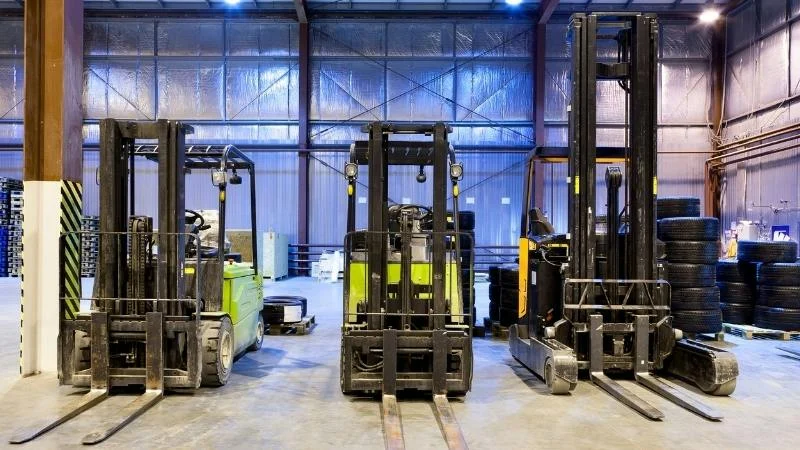
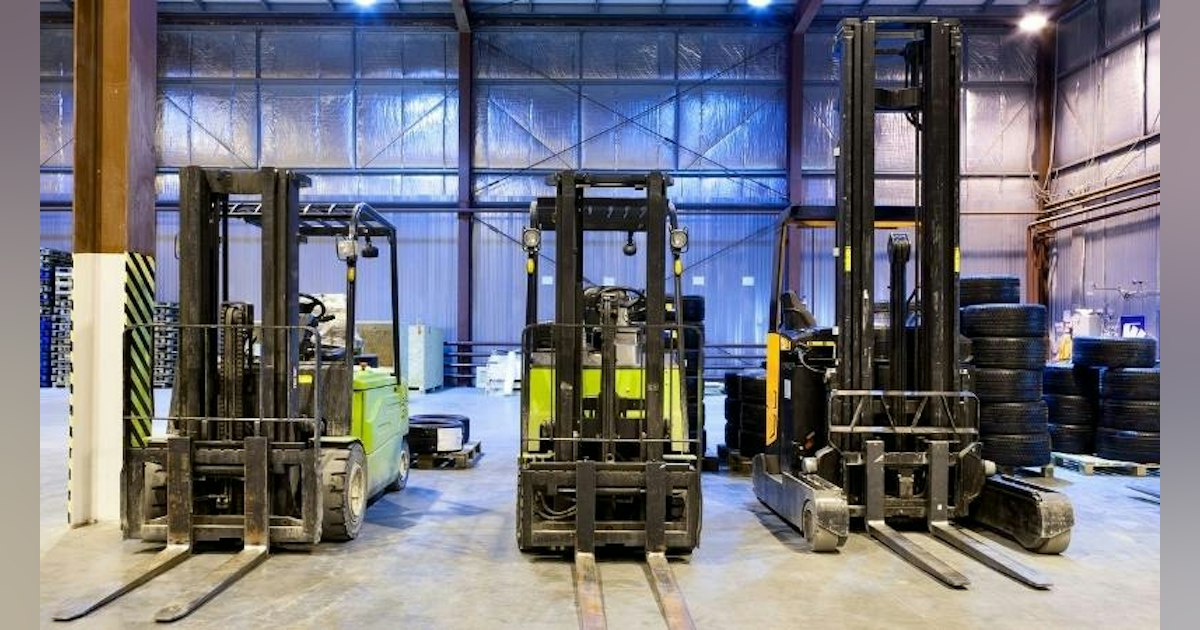
As industrial fleets undergo a historic, rapid transition toward full electrification, equipment designers are grappling with unprecedented engineering challenges. Modern material-handling equipment—ranging from warehouse automated guided vehicles (AGVs) to heavy-duty industrial forklifts—must now support significantly higher power demands, integrate advanced battery chemistries like lithium-ion, and withstand the rigors of frequent "opportunity charging" during breaks.
Simultaneously, OEMs must guarantee unwavering operator safety, absolute equipment reliability, and maximum fleet uptime. Amidst these shifting paradigms, a critical regulatory framework has taken center stage that many original equipment manufacturers (OEMs) still fail to fully comprehend: EN 1175.
This European safety standard governs the electrical and electronic systems of industrial trucks, touching everything from battery management systems (BMS) and power distribution to complex control system safety functions. To unpack the nuances of the latest edition of EN 1175, Electronic Design Senior Content Director William G. Wong spoke with Josh Haney, Engineering Manager at Anderson Power. The discussion illuminates what the standard means for modern OEMs, how it fundamentally changes component evaluation—particularly for high-current connectors—and why treating compliance merely as a finish line is a costly strategic misstep.
Main Facts: Decoding EN 1175 and the Electrification Shift
At its core, EN 1175 is the definitive safety standard for electrically powered industrial trucks, establishing rigorous performance, structural, and safety requirements for their electrical systems and subsystems.
Within the European Union, EN 1175 functions as a harmonized standard. This means it provides a recognized, practical pathway for manufacturers to demonstrate conformity with the EU’s strict machinery safety directives. While compliance is not the absolute sole legal route to market access, it is widely considered the most established framework for proving that a vehicle has been engineered and tested against recognized industrial safety thresholds.
However, the relevance of EN 1175 extends far beyond European borders. Because global OEMs rarely design isolated variants for single regional markets, engineering teams worldwide are adopting the standard. Designing around EN 1175 not only positions a manufacturer for seamless entry into Europe but also establishes a bulletproof safety and performance baseline for products deployed globally.

The Catalyst: Lithium-Ion Adoption
A primary driver behind the rising importance of EN 1175 is the industry-wide migration from traditional lead-acid batteries to high-energy lithium-ion (Li-ion) systems. Unlike passive lead-acid systems, modern Li-ion setups incorporate sophisticated Battery Management Systems (BMS), introduce complex thermal dynamics, and encourage aggressive charging practices. As OEMs pivot to these energy-dense solutions, they require a standardized framework to govern safe performance across the entire electrical architecture of the truck.
Chronology and Evolution: From Static Power to Dynamic Demands
The journey of industrial truck design has evolved in lockstep with battery technology and regulatory oversight. Understanding the trajectory of EN 1175 requires looking at how mechanical and electrical requirements have matured over decades:
- The Lead-Acid Era (Late 20th Century): For decades, industrial trucks relied on heavy lead-acid batteries. Charging routines were predictable—typically occurring once per shift in dedicated charging rooms. Connectors experienced relatively low mating frequencies, and electrical architectures were mechanically straightforward.
- The Introduction of Early Safety Standards: As industrial automation expanded and workplace safety regulations tightened, early iterations of electrical safety standards for machinery were established. However, these often focused on basic shock protection and static current ratings rather than holistic environmental conditioning.
- The Shift to Opportunity Charging and Lithium-Ion: Entering the 2010s and 2020s, warehouses demanded higher productivity. This led to the adoption of fast-charging lithium-ion batteries, enabling "opportunity charging" during short worker breaks. This operational shift dramatically increased thermal cycling, mechanical mating frequencies, and the electrical stress placed on the entire power path.
- The Modern EN 1175 Framework: Responding to these modern operational realities, the EN 1175 standard was updated to rigorously evaluate how electrical components survive the harsh, highly dynamic realities of modern material handling. Today, it serves as the benchmark for next-generation industrial electrification.
Supporting Data: Where Connectors Fit Within EN 1175
While EN 1175 applies comprehensively to the entire electrical architecture of an industrial truck, it explicitly addresses high-stress subsystems, most notably in Annex A, which governs connections for energy sources.
Laboratory Ratings vs. Real-World Abuse
A common engineering pitfall is relying solely on static datasheet specifications. A standard datasheet typically details how a connector performs when it is brand new, operating in a clean, controlled laboratory environment.
EN 1175 shatters this controlled paradigm by subjecting components to punishing physical and chemical test plans meant to simulate years of field abuse. Under Annex A requirements, connectors undergo:
- Rigorous Mechanical Stress Testing: Simulating repeated drop events, physical pulls, and structural deformation.
- Chemical Conditioning: Exposing the connector housing and pins to industrial substances commonly found in warehouses and manufacturing plants, such as hydraulic oils, cleaning solvents, and battery acids.
- Post-Exposure Safety Audits: Verifying that after enduring chemical and mechanical degradation, the connector still maintains proper dielectric strength and prevents operator exposure to hazardous voltages.
Material Selection and Thermal Thresholds
Material science plays a pivotal role in passing these evaluations. Conventional engineering plastics that have served adequately in legacy designs for decades may fail instantly under EN 1175 requirements if they degrade or crack when exposed to corrosive battery acids.
Furthermore, the standard establishes strict thresholds for temperature rise relative to current ratings. Engineers can no longer assume that a connector rated for a specific amperage will maintain that rating when subjected to the elevated ambient temperatures of a tightly packed engine compartment or high-draw lithium-ion discharge cycle.
Official Responses and Expert Insights: Interview with Josh Haney
To gain deeper technical clarity, Electronic Design consulted Josh Haney, Engineering Manager at Anderson Power. Haney brings a decade of specialized connector design experience across multiple regulated markets, working closely with global certification bodies such as UL, CSA, and TÜV.
Rethinking Component Evaluation
According to Haney, the engineering mindset must evolve beyond basic voltage and current checks.

"Historically, engineers may have started primarily with voltage, current rating, and physical fit. Those are still necessary considerations, but they’re not sufficient on their own," Haney explains.
Engineers must interrogate suppliers about the exact environmental and operational boundaries behind published ratings. If an application pushes a subsystem beyond those tested parameters, the safety and performance conclusions of the standard no longer apply.
The Danger of Timing Pitfalls
When asked about the most frequent mistakes OEMs make when attempting to comply with EN 1175, Haney points directly to project management and timeline execution:

"The most consequential mistake is timing. EN 1175 should influence architecture and component decisions early in the design process, rather than being used as a checklist when the equipment is already entering validation."
Waiting until the prototyping or validation phase to consider compliance often forces expensive redesigns, custom fixes, or project delays. Early collaboration with component suppliers allows engineering teams to understand which parts of the standard are rigid mandates and which areas offer flexibility for custom engineering.
Implications: Mitigating Risk, Maximizing Uptime, and Gaining a Competitive Edge
Connectors and power distribution components often suffer from being treated as afterthoughts in the shadow of massive industrial battery packs. Yet, in the field, connectors absorb a disproportionate amount of physical and electrical abuse.
The True Cost of Downtime
Industrial battery connectors are dropped onto concrete floors, dragged across warehouse aisles, mated and unmated thousands of times, and subjected to aggressive chemical washdowns. In fleets utilizing opportunity charging, the mating frequency multiplies exponentially compared to traditional single-shift routines.
While choosing an EN 1175-compliant component may involve a modest initial cost premium over a generic, non-certified alternative—owing to superior materials, robust structural design, and extensive testing—OEMs must weigh this against the staggering cost of field failures. Unplanned forklift downtime, emergency maintenance, service truck dispatches, and warranty claims quickly eclipse any upfront component savings. Simply put: the lowest-cost part at the point of purchase is rarely the most cost-effective option over the multi-year lifecycle of an industrial fleet.
Building Beyond the Compliance Ceiling
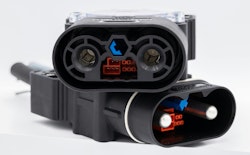
Forward-thinking component manufacturers are already engineering products that surpass the baseline requirements of EN 1175. For example, Anderson Power’s Industrial Battery Connector (IBC) series is engineered to meet EN 1175 alongside complementary global standards including DIN VDE 0623-589, UL 1977, and CSA 22.2.
Rather than stopping at basic compliance, these modern designs incorporate advanced features designed to maximize fleet performance:
- High-Density Auxiliary Signaling: Supporting up to 10 auxiliary contacts for real-time battery monitoring, thermal telemetry, and smart BMS communication.
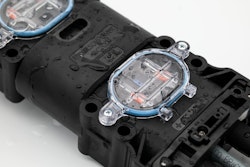
- Modular Cartridge Architecture: Enabling fast, tool-less field servicing and pin replacement to minimize maintenance turnaround times.
- Environmental Sealing: Offering IP68-rated sealing kits and heavy-duty latching handles to protect power paths in extreme outdoor or washdown environments.
Conclusion
As material-handling fleets accelerate their electrification journey, safety standards like EN 1175 must be viewed not as regulatory roadblocks, but as powerful engineering blueprints.
When integrated early in the design cycle, EN 1175 provides OEMs with a rigorous, proven methodology to eliminate common failure points, protect operators from electrical hazards, and safeguard equipment uptime. By partnering with knowledgeable component suppliers and looking past basic compliance toward value-added features, equipment manufacturers can transform safety certification into a definitive competitive advantage in the global industrial marketplace.