When the U.S. Equal Employment Opportunity Commission (EEOC) concluded a relatively subdued 2025 fiscal year, employment law watchers anticipated an explosive surge in litigation for FY 2026. With a clear alignment to the newly inaugurated administration of President Donald Trump, the agency appeared primed for aggressive enforcement. Observers braced for an onslaught of cases targeting national origin discrimination against American workers and scrutinizing Diversity, Equity, and Inclusion (DEI) initiatives deemed to harbor discriminatory elements.
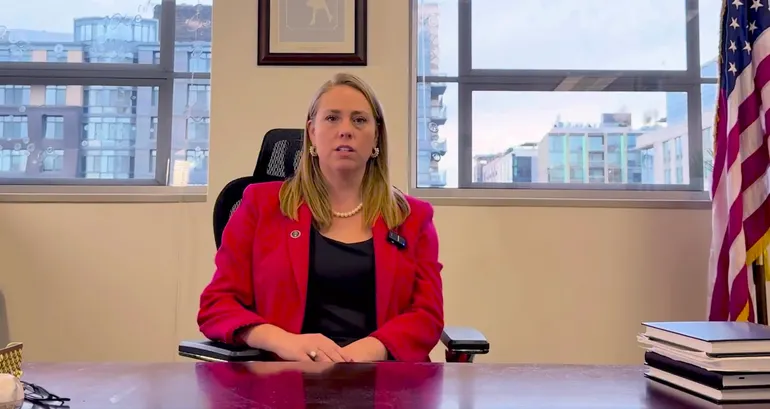
The structural pieces were falling rapidly into place. A quorum-completing Republican commissioner, Brittany Panuccio, was nominated and subsequently confirmed by the Senate just days after the new fiscal year commenced. By November, President Trump designated the outspoken then-Acting Chair, Andrea Lucas, as the official chair of the agency.
Yet, despite aggressive solicitations, public warnings on social media, and an outspoken ideological mandate, the reality of the agency’s docket told a starkly different story. According to a comprehensive legal analysis by the law firm Seyfarth Shaw, the EEOC filed a mere 97 merit lawsuits in fiscal year 2026—representing only a fractional bump from the 93 filings recorded the previous year.
As legal experts and human resources professionals digest the data, a fascinating paradox has emerged: what the EEOC lacked in actual courtroom bite during FY 2026, it more than made up for in ideological bark, heavy media signaling, and strategic centralization.
Main Facts: A Big Agenda on a Small Docket
The core narrative of the EEOC’s 2026 fiscal year is the disconnect between its expansive policy rhetoric and its constrained litigation output. While Chair Andrea Lucas and agency leadership broadcasted an ambitious, politically charged agenda, the actual number of merit lawsuits remained historically low.
According to Seyfarth Shaw partners Andrew Scroggins and associate James Nasiri, who spoke with HR Dive, the agency’s enforcement strategy underwent a profound operational shift. Rather than inundating federal courts with a high volume of standard employment discrimination cases, the EEOC focused its limited resources and newly centralized authority on high-profile, thematic targets that mirrored the administration’s core political priorities.
Title VII of the Civil Rights Act and the Americans with Disabilities Act (ADA) continued to form the bulk of the docket, but the subcategories shifted dramatically. Religious discrimination claims spiked, as did cases alleging reverse discrimination against majority groups (White and American workers). Simultaneously, traditional staples of the agency’s docket—such as age discrimination and claims involving invisible disabilities—plummeted or received markedly less attention.
Crucially, the agency compensated for its low litigation volume by weaponizing the "bully pulpit." By maximizing press releases, leveraging social media platforms like LinkedIn, and publicizing confidential pre-litigation conciliation agreements and subpoena enforcement actions, the EEOC signaled its priorities far beyond the courtroom walls.
Chronology of a Transition: How FY 2026 Unfolded
To understand the trajectory of the EEOC’s 2026 fiscal year, it is essential to trace the chronological milestones that shaped its operational landscape:
- Late 2025 (Pre-FY 2026): Anticipation builds as the EEOC signals a sharp pivot toward administration-aligned priorities, specifically targeting anti-American bias in national origin claims and allegedly discriminatory corporate DEI programs.
- January (The D.C. Rule Change): A pivotal administrative rule change is enacted, requiring that all commission litigation—or decisions to intervene—be vetted and approved by the Washington, D.C.-based headquarters. This effectively strips district offices of their historical autonomy.
- October 1 (FY 2026 Begins): The new fiscal year commences. Days later, the Senate confirms Republican commissioner Brittany Panuccio, officially restoring the agency’s quorum and cementing its ideological leaning.
- November: President Trump formally designates Andrea Lucas as permanent Chair of the EEOC, empowering an already vocal leader known for utilizing public statements to challenge "woke policies."
- December through June: Seyfarth Shaw’s data reveals unusual quarterly spikes in litigation filings (18 in March, 19 in June), breaking away from traditional patterns where cases trickled in steadily before a massive September rush.
- September (End of FY 2026): Traditionally a chaotic month of last-minute filings (e.g., 71 filings in FY 2023), September 2026 sees a surprisingly muted 29 lawsuits as the agency struggles with bottlenecks and resource constraints.
Supporting Data and Regional Disparities
A granular look at Seyfarth Shaw’s analysis of the EEOC’s 97 merit lawsuits reveals striking patterns in geography, staffing, and statutory focus:
Head Count and Regional Bottlenecks
One of the primary drivers behind the subdued docket size was a significant drop in agency headcount. Staffing levels across the EEOC plummeted to a 45-year low, with the most severe attrition hitting district offices in the East, West, and Southwest.
Historically aggressive districts governing major metropolitan hubs like New York City and Los Angeles were "unusually quiet" throughout FY 2026. Conversely, the Chicago and Philadelphia district offices shouldered a massive burden, accounting for nearly a quarter of all agency filings.
"When we’re litigating cases on the East Coast, I’m seeing the same lawyers over and over in all of these cases, and they’re stretched very, very thin," noted Scroggins.
Furthermore, the January rule change centralizing litigation authority in Washington, D.C., created an administrative bottleneck. While this granted leadership absolute message control, it slowed down the pipeline of cases moving from regional desks to federal courtrooms. Rather than a flood of local filings, the agency experienced quarterly peaks—18 in March and 19 in June—while September saw a comparatively low 29 filings.
Breakdown of Claims and Statutes
While ADA and Title VII claims dominated the numerical breakdown, the internal distribution of these charges revealed a distinct ideological realignment:
- Religious Discrimination: Out of 52 Title VII claims counted by Seyfarth, an astonishing 16 dealt with religious discrimination—a historically underrepresented category that suddenly took center stage.
- National Origin and Majority-Group Discrimination: Among 15 race and national origin claims, several targeted "reverse discrimination" against White or American workers, reflecting Chair Lucas’s active solicitation of such charges.
- DEI Scrutiny: Multiple lawsuits challenged corporate Diversity, Equity, and Inclusion programs, fulfilling promises made immediately following the administration’s inauguration.
- Pregnancy and Sex Discrimination: Demonstrating continuity with the previous administration, 29 lawsuits focused on pregnancy or sex-based discrimination, anchored by enforcement of the Pregnant Workers Fairness Act (PWFA).
- Disability Claims: The ADA accounted for 38 lawsuits, focusing heavily on traditional impairments like visual and hearing losses. However, focus waned on "invisible disabilities" such as autism, ADHD, and depression.
- Marginalized Statutes: Age discrimination fell off a cliff to just three filings. Meanwhile, the Equal Pay Act and the Genetic Information Nondiscrimination Act (GINA) made a solitary appearance each.
Official Responses and Expert Insights
Employment law experts from Seyfarth Shaw provided critical context on how the EEOC’s tactical playbook evolved to compensate for its resource limitations.
James Nasiri pointed out that the agency’s reliance on targeted, high-impact filings was a deliberate choice. "The EEOC, I think, is being more targeted in their filings, and that may be a reason why we’re seeing slightly quieter end[s] of the fiscal year," Nasiri explained.
Regarding the agency’s aggressive public relations campaign, Nasiri added: "Chair Lucas has definitely been leveraging their public wing, their press releases, public statements… utilizing social media, putting videos on LinkedIn. She’s clearly trying to put the message out there, express their priorities, and that’s a way for them to get cases that align with those litigation priorities, too."
Scroggins drew attention to an unusual tactical shift regarding pre-litigation conciliation agreements and subpoena enforcement actions. Because conciliation agreements are statutorily confidential, the agency’s decision to publicize them implies that leadership actively negotiated with employers to gain permission for public announcements. Furthermore, the agency began aggressively issuing press releases for subpoena enforcement actions—a tactic Scroggins noted he had not seen in over a decade of historical precedent.
"They’re really going out there and trying to make sure that people know that certain employers are being investigated," Scroggins stated, summarizing the agency’s reliance on public pressure rather than courtroom volume.
Implications for Employers in FY 2027
As the employment law community transitions into fiscal year 2027, the lessons of FY 2026 offer a clear roadmap for corporate compliance officers, human resources leaders, and legal counsel.
1. The Bully Pulpit is the New Courtroom
Employers must recognize that the EEOC no longer measures its influence solely by the volume of lawsuits on its court docket. Through strategic press releases, LinkedIn videos, and publicized subpoenas, the agency is actively shaping public and corporate behavior via intimidation and signaling. Companies under investigation must prepare for potential public relations crises alongside legal challenges.
2. Evolving Compliance Vulnerabilities
Corporate compliance programs must be immediately audited against the administration’s stated priorities. DEI initiatives, hiring practices regarding American workers, and religious accommodation policies are under a microscope. Organizations that fail to re-examine their equity frameworks and accommodation workflows risk becoming the agency’s next high-profile press release.
3. Centralized Oversight Means Slower, Sharper Actions
With D.C. headquarters maintaining a tight grip on litigation approval, employers dealing with regional EEOC offices may experience longer investigative timelines as cases are routed upward. However, when the agency does choose to move forward, those lawsuits are likely to be heavily vetted, ideologically driven, and fiercely prosecuted as test cases.
4. Continuity in Established Protections
While political appointees shift the cultural focus toward religious freedom and majority-group protections, employers cannot afford to neglect statutory basics. Pregnancy discrimination, the Pregnant Workers Fairness Act, and traditional ADA compliance remain active enforcement zones. A balanced compliance strategy must simultaneously address the administration’s new ideological focal points and its enduring statutory mandates.
Ultimately, FY 2026 proved that a smaller federal footprint does not equate to a softer regulatory environment. By substituting litigation volume with digital signaling and centralized control, the EEOC under Chair Andrea Lucas has redefined federal labor enforcement for the modern era—leaving employers on notice that vigilance is required both inside and outside the courtroom.