BOSTON — The Robot Report, a leading media publication covering the global robotics industry, has officially opened the nomination window for the newly rebranded The Robot Report 50 (TRR50) Robotics Innovation Awards. Formerly known as the RBR50, this prestigious program has tracked and honored the most influential organizations, breakthrough technologies, and visionary robots shaping the global automation landscape since 2012.
As the robotics sector experiences rapid convergence with generative artificial intelligence, advanced machine learning, and hardware sophistication, the 2027 TRR50 awards aim to shine a light on the pinnacle of engineering achievement. Innovators, researchers, and commercial enterprises from across the globe have until Friday, January 5, 2027, to submit their nominations for consideration.
Winners of the 2027 TRR50 will be unveiled and celebrated at a premier awards gala during the upcoming Robotics Summit & Expo, scheduled to take place on June 2–3, 2027, in Boston, Massachusetts. Additionally, select honorees will have the unique opportunity to showcase their cutting-edge technologies directly to industry leaders on the exhibition floor within the dedicated TRR50 Pavilion.
Main Facts: The Evolution of the Industry’s Premier Honor
The TRR50 program recognizes innovations that were initiated, released, or commercially executed between January 1 and December 31, 2026. To capture the sweeping breadth of the modern robotics ecosystem, submissions are being accepted across several distinct categories, ranging from disruptive startups to life-changing societal applications.
The core categories for the 2027 awards include:
- Startup of the Year: Reserved for companies operating for less than five years that are already actively testing and deploying their innovations with real-world customers.
- Application of the Year: Highlights breakthrough deployments in domains previously considered too complex or difficult to automate, demonstrating clear operational superiority over legacy processes.
- Robot of the Year: Honors individual robotic systems that serve as game-changers regarding technical innovation, novel use cases, and broader industry influence.
- Robots for Good: Recognizes technologies making a profound positive impact on society—addressing social challenges, elevating human quality of life or work standards, or driving environmental sustainability.
- Best Use of AI: A newly introduced category for 2027 designed to honor real-world implementations that demonstrate how artificial intelligence is fundamentally rewriting the rules of robotic capability.
- Products, Business, and Applications: Traditional pillars honoring pioneering hardware and software enabling technologies, major corporate milestones or unique business models, and operational deployments optimizing productivity and cost-effectiveness.
Chronology: A History of Defining Excellence in Robotics
Since its inception over a decade ago, the RBR50 (now TRR50) has served as an institutional barometer for where the robotics industry has been and where it is heading. Understanding the trajectory of the awards provides valuable context for what judges and industry peers will look for in the 2027 cycle.
The 2026 Milestone Year
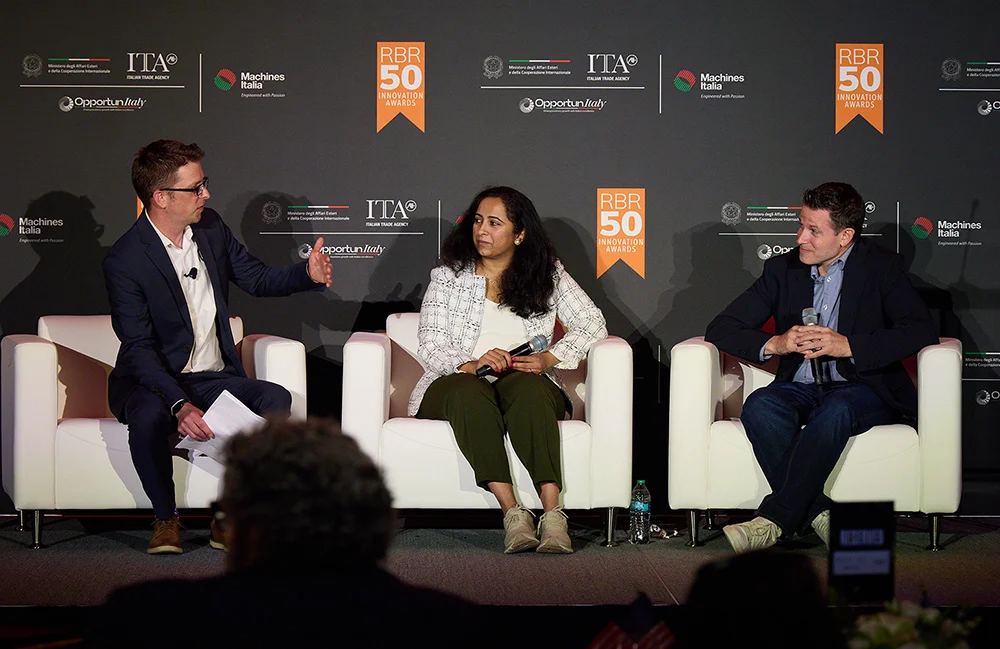
The 2026 awards cycle—whose winners were celebrated at a gala featuring keynote addresses by Aaron Parness, Director of Applied Sciences at Amazon Robotics, and Bhavana Chandrashekhar, Senior Manager of Applied Science—pushed the boundaries of what machines could achieve.
- Physical Intelligence secured Startup of the Year for its foundational AI models that fundamentally alter how robots learn motor tasks.
- Harvard University took home Application of the Year honors for pioneering wearable robotic systems designed to assist stroke survivors and individuals battling ALS.
- Amazon claimed Robot of the Year with its advanced "Vulcan" robot.
- Tatum Robotics won the Robots for Good category for developing a specialized robotic hand capable of facilitating tactile sign language communication for the deaf-blind community.
The 2025 Benchmarks
Looking back further, the 2025 program laid heavy emphasis on societal utility and heavy industrial integration.
- Mytra earned Startup of the Year for its modular warehouse automation architecture.
- TEPCO (Tokyo Electric Power Company) secured Application of the Year for deploying specialized robots tasked with removing hazardous radioactive fuel debris from Japan’s crippled Fukushima Daiichi nuclear plant.
- Waymo took home Robot of the Year for scaling its autonomous vehicle operations.
- Hello Robot won the inaugural Robots for Good award for its flexible Stretch 3 mobile manipulator, designed to assist individuals with limited mobility in home environments.
Supporting Data: The Expanding Footprint of Global Robotics
The launch of the 2027 TRR50 nominations arrives at a pivotal juncture for the global technology market. According to recent industry analytics:
- Market Growth: The global industrial and service robotics market is projected to expand at a compound annual growth rate (CAGR) exceeding 17% through the end of the decade, fueled largely by labor shortages and advancements in edge-AI processing.
- Venture Capital Shifts: Despite broader macroeconomic fluctuations, venture funding for robotics startups specializing in foundational AI and physical intelligence surged by over 22% year-over-year in 2026.
- Human-Robot Collaboration: Collaborative robots (cobots) and humanoid platforms now account for nearly 35% of all new commercial deployment inquiries, marking a sharp pivot away from isolated, caged industrial arms toward flexible, multi-purpose robotic assistants.
These macroeconomic indicators underscore why programs like the TRR50 are critical: they cut through marketing hype to validate genuine engineering milestones that solve tangible economic and societal bottlenecks.
Official Responses and Perspectives
Industry stakeholders and organizers have expressed high enthusiasm regarding the transition to the TRR50 moniker and the introduction of the Best Use of AI category.
"For over a decade, our recognition program has chronicled the incredible maturation of the robotics sector," noted Steve Crowe, executive editor and coordinator of the awards. "By rebranding to TRR50 and introducing specialized categories like the Best Use of AI, we are ensuring that our awards continue to reflect the bleeding edge of engineering—where foundational software intelligence finally meets physical hardware execution."
Past winners have similarly lauded the impact of the award on their corporate trajectories. Representatives from organizations like Physical Intelligence and Harvard University have noted that TRR50 recognition serves as a powerful validation stamp for prospective enterprise clients, investors, and regulatory bodies alike.
Implications for the Industry and How to Enter
The opening of the 2027 TRR50 nominations sends a clear signal to the global engineering community: incremental improvements are no longer sufficient to capture top-tier industry recognition. As generative AI models increasingly migrate from digital chat interfaces into physical actuators, actuators, and mobile bases, the bar for what constitutes a "breakthrough" has risen exponentially.
Key Deadlines and Submission Guidelines:
- Eligibility Window: All nominated technologies, startups, or deployments must have been initiated, released, or executed between January 1 and December 31, 2026.
- Submission Deadline: Nominations must be finalized and submitted via The Robot Report portal no later than Friday, January 5, 2027.
- Inquiries: For questions regarding nomination categories, eligibility criteria, or the submission process, prospective applicants are encouraged to reach out directly to Steve Crowe and the editorial team.
- Awards Ceremony: Honorees will be officially recognized during the gala at the Robotics Summit & Expo in Boston on June 2–3, 2027.
As the countdown to January 5 begins, robotics firms large and small are preparing their case studies, deployment data, and technical specifications to vie for a spot among the elite 50 innovations that will define the future of automation.