





LAS VEGAS — In the fast-evolving landscape of industrial automation, precision, reliability, and uninterrupted operational continuity are no longer merely advantageous—they are fundamental prerequisites. As manufacturing environments become denser, more autonomous, and increasingly reliant on complex robotics, the demand for robust feedback devices has surged to unprecedented levels. At the forefront of this technological shift is Bogen Magnetics, a global leader in high-performance magnetic measurement and sensor technology.
At the upcoming Automate Show—North America’s premier automation, robotics, and machine vision event—industry professionals, engineers, and system integrators will have a front-row seat to Bogen Magnetics’ latest innovations. Anchoring the company’s showcase at Booth #254 is the advanced AKS16-MT absolute magnetic sensing head, a groundbreaking component featuring a battery-backed multi-turn function designed to eliminate the vulnerabilities of power loss in mission-critical applications.
Main Facts: The Core Innovations of Bogen Magnetics
The modern industrial floor demands components that can withstand harsh environments while delivering pinpoint accuracy. Bogen Magnetics has built its reputation on engineering magnetic-based encoders that excel in these exact conditions. Unlike optical encoders, which can be susceptible to dust, oil, and condensation, magnetic encoders leverage the resilient properties of magnetic fields to calculate position, velocity, and direction.
At the heart of Bogen’s exhibition this year is the AKS16-MT absolute magnetic sensing head. Key technical specifications and operational advantages of the device include:
- Absolute Multi-Turn Capability: Equipped with an integrated battery-backed multi-turn function, the AKS16-MT continuously tracks rotations and maintains absolute position information even during unexpected power interruptions.
- Elimination of Homing Cycles: By preserving absolute position data through power outages, the sensor eradicates the need for time-consuming, resource-draining homing routines upon system restarts. This drastically reduces downtime in automated lines.
- Ultra-Compact Footprint: Measuring a mere 24.2 mm x 16 mm, the sensing head is engineered to integrate seamlessly into space-constrained assemblies, making it an ideal choice for compact actuators, medical devices, and articulated robotic joints.
- High-Resolution Feedback: The device delivers exceptional precision with resolutions up to 20-bit, meeting the stringent accuracy requirements of modern high-speed automation.
- Rugged Environmental Protection: Rated to IP67 standards, the AKS16-MT is fully sealed against the ingress of moisture, dust, debris, and other contaminants commonly found in demanding industrial and mobile robotics environments.
Chronology: The Evolution of Bogen’s Sensing Technology
To understand the significance of Bogen Magnetics’ current showcase at the Automate Show, it is helpful to trace the company’s trajectory of continuous technological refinement over recent years.
The Foundation: Establishing Industrial Reliability
Historically, industrial automation relied heavily on incremental encoders, which, while cost-effective, required a reference run (homing cycle) every time a machine was powered down and restarted. Recognizing this inefficiency in high-throughput manufacturing, Bogen began advancing its proprietary magnetic sensing technologies. By harnessing specialized magnetoresistive and Hall-effect principles, the company engineered sensor heads capable of high-resolution linear and rotary feedback that remained unaffected by environmental grime.
Last Year’s Milestone: Direct Engagement at Automate
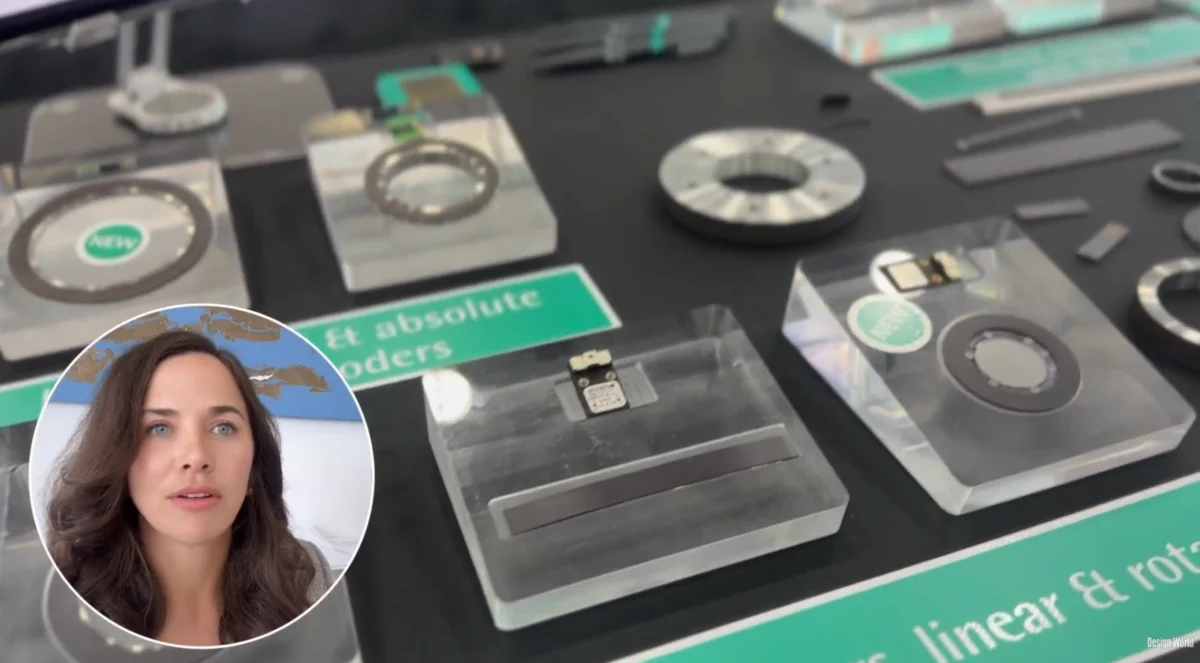
At last year’s Automate Show, Bogen Magnetics leveraged the exhibition floor to demonstrate how its magnetic encoders integrate directly into complex robotics and sensitive medical equipment. In discussions with engineering and sales manager Darrell Davey, industry experts gained insight into how Bogen bridges the gap between theoretical precision and physical durability. Davey detailed the ways in which custom and off-the-shelf Bogen components allow designers to bypass traditional mechanical constraints.
Present Day: The AKS16-MT Leap Forward
Building on the momentum of previous releases—such as the expansion of the IKS9 and IKS15 magnetic sensors tailored for linear motors—Bogen’s introduction of the AKS16-MT marks a major milestone. By successfully integrating a reliable battery-backed multi-turn architecture into a sub-25mm housing, Bogen has solved one of micro-robotics and compact automation’s most persistent engineering challenges: achieving absolute, multi-turn position memory without expanding the physical envelope of the drive system.
Supporting Data: The Technical Paradigm of Magnetic Encoders
The shift toward magnetic encoder technology is underpinned by distinct physical and operational advantages over traditional optical and capacitive sensing methodologies.
| Feature / Metric | Optical Encoders | Magnetic Encoders (e.g., Bogen AKS16-MT) |
|---|---|---|
| Environmental Resilience | Vulnerable to dust, condensation, and oil film. | Highly resilient; immune to non-magnetic particulates and fluids (IP67 rated). |
| Power Interruption Handling | Typically requires battery-backed gears or external absolute counters; susceptible to lost counts. | Seamless tracking via robust absolute magnetic sensing and battery-backed multi-turn electronics. |
| Form Factor | Often bulky due to internal disk diameters and optical paths. | Extremely compact (e.g., 24.2 mm x 16 mm envelope). |
| Startup Behavior | Often necessitates recalibration or homing cycles after a blackout. | Instantaneous absolute position availability; zero homing required. |
| Resolution Limits | High resolution, but degrades if optical tracks are contaminated. | High resolution (up to 20-bit) maintained consistently across harsh operating cycles. |
Furthermore, the mechanics of magnetic encoding rely on a magnetized scale (either linear or rotary) interacting with a sensitive magneto-resistive sensor head. Because physical contact is absent, mechanical wear is entirely eliminated, translating to an exceptionally long operational lifespan—a critical metric for modern "lights-out" manufacturing facilities operating 24/7.
Official Responses and Engineering Perspectives
Industry leaders and Bogen representatives have continually emphasized that the future of automation lies in component intelligence and fail-safe design.

Reflecting on the integration challenges faced by modern machine builders, Darrell Davey, engineering and sales manager at Bogen Magnetics, noted during last year’s event: "When designing for robotics and medical systems, engineers are constantly juggling two competing demands: maximizing performance and minimizing space. Our magnetic encoders are specifically engineered to provide uncompromising position feedback without adding bulk or vulnerability to environmental contamination."
With the deployment of the AKS16-MT at this year’s Automate Show (Booth #254), Bogen’s technical team aims to demonstrate how eliminating homing cycles transforms overall plant productivity. In automated logistics and multi-axis robotic arms, even a minor power blip can historically cost several minutes of diagnostic recovery and recalibration time. Multiply those minutes across hundreds of automated cells within a single automotive or electronics assembly plant, and the cumulative loss of output becomes staggering.
By ensuring that absolute position data is preserved down to the exact bit and revolution through an integrated battery-backed system, Bogen addresses this downtime vector directly.
Implications: What This Means for the Future of Automation
The commercial and operational implications of advanced magnetic sensing heads extend far beyond individual component specifications. As automation scales into new industries, the ripples of these technological refinements will reshape system design.
1. Accelerated Deployment of Autonomous Mobile Robots (AMRs)
Autonomous Mobile Robots operating in dynamic warehouse environments frequently encounter micro-interruptions in power or emergency stop triggers. When an AMR reboots mid-aisle, the ability to instantly resume navigation without executing a manual or automated reset cycle prevents traffic bottlenecks and collision risks. The compact footprint of sensors like the AKS16-MT allows AMR drivetrain designers to embed absolute feedback directly into tight wheel hubs and steering actuators.
2. Enhanced Safety and Precision in Medical Robotics
Surgical assistants and diagnostic imaging machinery operate within strict safety envelopes where millimeter—and sub-millimeter—accuracy is mandatory. The combination of 20-bit resolution, IP67 sealing, and absolute multi-turn memory ensures that medical apparatuses maintain absolute calibration across sterilization cycles and unexpected power fluctuations, safeguarding patient outcomes.
3. Reduced Lifecycle Maintenance Costs
For plant operators, the reduction of mechanical wear and the elimination of fragile optical components translate directly to a lower Total Cost of Ownership (TCO). Magnetic sensors do not suffer from sudden catastrophic failures due to dust accumulation, meaning maintenance schedules can shift from reactive repair to predictable, long-term monitoring.
Conclusion and Next Steps
As the engineering community gathers at the Automate Show, Bogen Magnetics stands ready to demonstrate how microscopic improvements in encoder technology yield macro-level gains in industrial efficiency. Visitors to Booth #254 will have the opportunity to examine the AKS16-MT absolute magnetic sensing head firsthand, speak with technical specialists regarding custom integration, and explore the broader portfolio of linear and rotary magnetic solutions.
For those unable to attend the show in person, comprehensive technical documentation, whitepapers, and product specifications can be accessed directly through the official Bogen Magnetics website.
To deepen your understanding of motion control fundamentals related to these technologies, consider reviewing industry resources on the differences between incremental and sine-cosine encoders and exploring Bogen’s specialized integrations such as the IKS9 and IKS15 magnetic sensors for linear motors.