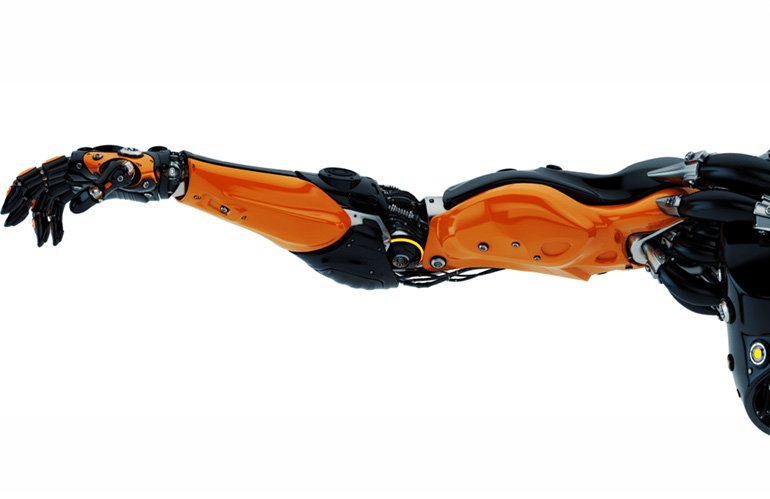
As the robotics industry transitions rapidly from controlled industrial settings to dynamic, unstructured environments, the demand for sophisticated humanoid robots has skyrocketed. Developers are no longer just asking if a bipedal robot can walk; they are demanding human-like dexterity, high payload capacities, energy efficiency, and reliable endurance. At the very core of these requirements lies a complex engineering puzzle: the motion system.
Balancing torque, speed, structural stiffness, weight, positioning accuracy, and severely restricted spatial envelopes is the ultimate hurdle for modern roboticists. Recognizing that a one-size-fits-all approach cannot possibly satisfy every joint on a humanoid platform, Timken Precision Drives—an initiative by The Timken Co.—is placing the application’s unique motion challenges at the absolute center of its engineering philosophy. By unifying industry-leading motion brands like Cone Drive, SPINEA, CGI Motion, and Timken Encoders, the platform offers a diverse, cohesive toolbox designed to solve complex actuation problems from the ground up.
Main Facts
The modern humanoid robot is a marvel of mechatronics, but its joints operate under vastly different physical constraints. A hip or knee joint requires immense torque-to-weight ratios to support the robot’s entire body mass against gravity while absorbing shock upon impact. Conversely, a wrist or an end effector demands micro-positioning accuracy, extreme compactness, and zero backlash to manipulate delicate objects with human-like finesse.
To bridge these disparate performance gaps, Timken Precision Drives has assembled an integrated suite of specialized motion control technologies:
Cone Drive: Specializes in strain wave gearing, delivering high torque density, compact packaging, and zero-backlash positioning essential for precision-critical humanoid joints.
SPINEA: Contributes high-precision cycloidal gearing via its TwinSpin reducers and DriveSpin servo actuators, tailored for applications requiring maximum torsional stiffness and superior load-handling capabilities.
CGI Motion: Provides precision planetary and micro gearing, alongside custom design and manufacturing capabilities optimized for tight spaces and tailored configurations.
Timken Encoders: Rounds out the mechanical portfolio with robust magnetic position feedback technologies, offering both absolute and incremental options for closed-loop motion control.
Rather than pushing isolated parts, the Timken Precision Drives platform focuses on collaborative application engineering. By analyzing variables such as reduction ratios, load capacities, allowable deflection, duty cycles, and service life early in the design phase, the company helps developers determine whether a standard component, a modified design, or a completely custom multi-technology assembly is required.
Chronology of Evolution: From Component Manufacturing to Integrated Motion Platforms
The integration of specialized motion technologies under the Timken umbrella did not happen overnight; it represents a strategic, multi-year evolution designed to meet the rapidly accelerating demands of advanced robotics.
For decades, the companies that now form the Timken Precision Drives ecosystem operated as distinct entities renowned in their respective niches. Cone Drive built a stellar reputation in heavy-duty and precision motion control through advanced worm and strain wave gearing. SPINEA established itself as a powerhouse in European engineering with its high-precision cycloidal reduction gears (TwinSpin). CGI Motion carved out a specialized market in precision planetary gearing and custom motion assemblies.
Phase 2: Consolidation and Synergy under The Timken Co.
Recognizing a profound industry shift toward electromechanical integration—where motors, gears, bearings, and feedback systems must function as a single unified unit—The Timken Co. strategically brought these powerhouses together. The goal was to eliminate friction in the supply chain and engineering pipeline, allowing robotics developers to source fully coordinated motion packages from a single trusted partner.
Phase 3: The Humanoid Focus (Present Day)
As humanoid robotics evolved from academic research projects into commercial-grade products destined for logistics, manufacturing, and consumer applications, motion challenges intensified. Recognizing that humanoids present unique constraints—such as strict weight budgets for dynamic bipedal walking and ultra-tight spaces within robotic hands—Timken formalized its specialized application approach. Today, Timken Precision Drives actively collaborates with humanoid developers from initial concept generation through rapid prototyping and mass production.
Supporting Data & Technical Deep Dive
Building a bipedal robot that can navigate human environments requires uncompromising performance metrics. To understand why a multi-technology platform is necessary, one must examine the specific mechanics of humanoid sub-systems:
In humanoid shoulders, elbows, and certain torso joints, space is severely limited, yet the joint must exert substantial force. Cone Drive’s strain wave gears provide high reduction ratios in a remarkably small footprint. Crucially, their zero-backlash characteristic ensures that when the robot commands a movement, there is no mechanical lag or play, which is vital for dynamic stabilization and precise path-following.
2. Cycloidal Reduction (SPINEA)
Where heavy loads and high impact are constants—such as the lower extremities or waist rotation—torsional stiffness is paramount. SPINEA’s TwinSpin reducers excel in these environments. Their design distributes the load across multiple teeth simultaneously, resulting in exceptional shock-load resistance, high radial and axial load capacity, and minimal hysteresis over millions of cycles.
3. Precision Planetary and Micro Gearing (CGI Motion)
Humanoid dexterity heavily relies on dexterous hands and articulated wrists. CGI Motion brings tailored micro-gearing solutions to the table, allowing engineers to route power through narrow forearms and fingers without exceeding weight limits or sacrificing efficiency.
4. Position Feedback (Timken Encoders)
A gearbox is only as smart as the feedback loop controlling it. Timken Encoders supply reliable magnetic absolute and incremental position feedback. Because humanoids operate in environments with varying temperatures and potential electromagnetic interference, these robust sensing technologies ensure that the central processor always knows the precise angle of every joint.
Official Responses and Industry Perspectives
Engineering leadership at Timken Precision Drives emphasizes that solving humanoid motion is fundamentally a consultative process. According to company spokespersons, the conversation with a roboticist must never start with a product catalog; it must start with the application’s physical reality.
"What does your humanoid robot’s motion system need to do?" asks the engineering team at Timken Precision Drives. "Developers of humanoids face wildly different challenges across load-bearing joints, compact wrists, and delicate end effectors. A system that satisfies the rigorous demands of a knee joint simply cannot work in a robotic fingertip. That is why our approach begins by sitting down with the customer to evaluate what motion is required, what loads must be supported, and where current designs fall short."
Industry analysts have noted that this holistic approach addresses a major bottleneck in robotics development. Many hardware startups spend excessive time trying to force off-the-shelf industrial components into humanoid architectures, leading to bloated weight profiles, excessive power consumption, and frequent mechanical failures. By offering modular, semi-custom, and fully customized integration pathways—backed by global manufacturing and metallurgical expertise—Timken bridges the gap between theoretical robot design and physical manufacturability.
Implications for the Future of Humanoid Robotics
The strategic alignment of motion technologies under platforms like Timken Precision Drives carries profound implications for the broader robotics landscape:
1. Acceleration of Commercialization
By streamlining the sourcing and engineering of complex actuators, Timken reduces the time-to-market for humanoid startups. Instead of managing dozens of disparate suppliers for bearings, gears, motors, and encoders, developers can lean on a consolidated engineering partner to co-develop optimized joint modules.
2. Enhanced Energy Efficiency and Payload Ratios
Every gram saved in an arm or a leg translates directly to extended battery life and increased payload capacity for the humanoid robot. By fine-tuning the interaction between reduction gears, motors, and structural bearings, integrated drives help minimize mechanical losses, allowing robots to operate longer on a single charge.
3. Transition to Mass Production
As humanoid companies transition from building hand-crafted prototypes to scaling manufacturing lines for industrial and commercial deployment, supply chain reliability and manufacturing scalability become non-negotiable. Timken’s extensive global footprint ensures that as humanoid production volumes scale into the thousands and tens of thousands, the underlying motion components will meet rigorous automotive- and industrial-grade quality standards.
Connect with Timken Precision Drives at Humanoids Summit Silicon Valley
For engineers, researchers, and system integrators looking to push the boundaries of what bipedal and multi-limbed robots can achieve, Timken Precision Drives will be showcasing its comprehensive platform at the upcoming Humanoids Summit Silicon Valley.
The event, taking place on December 1 and 2 at the San Mateo County Event Center, offers an ideal venue for developers to meet face-to-face with Timken’s application engineers. Attendees are encouraged to bring their toughest integration questions, spatial constraints, and unsolved humanoid motion challenges to the Timken booth, where experts will be on hand to explore tailored standard, modified, or custom motion solutions.