By Rebecca Trager
October 8, 2026
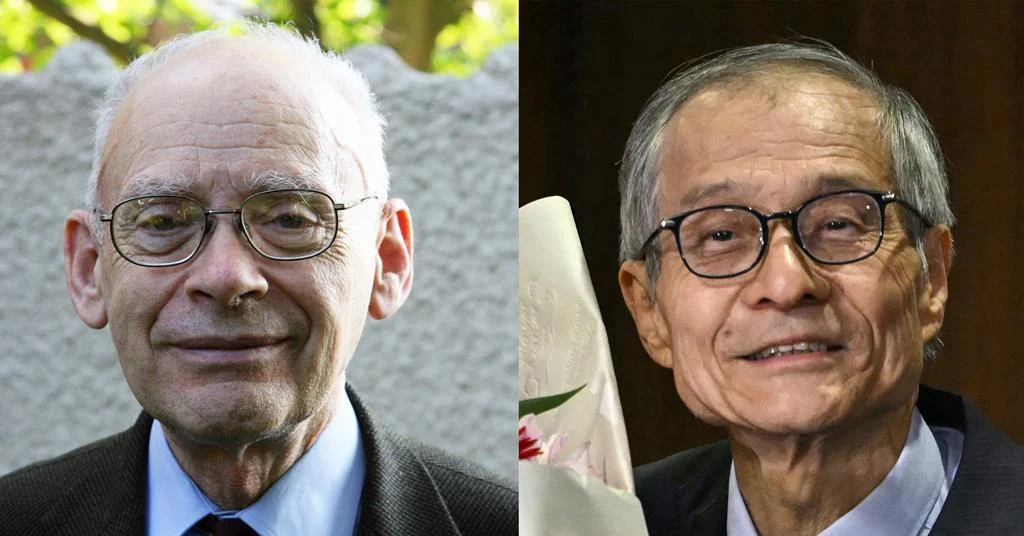
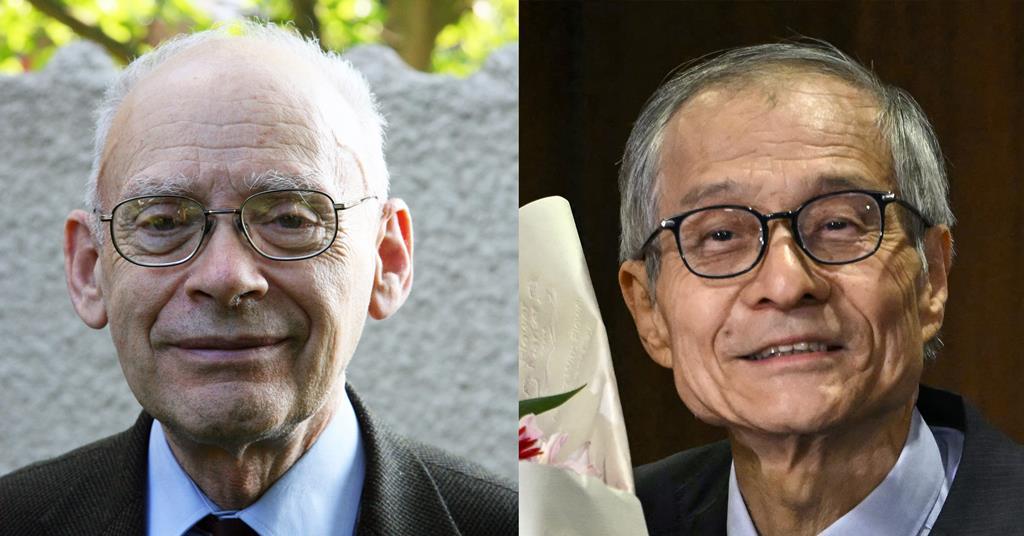
The Royal Swedish Academy of Sciences has awarded the 2026 Nobel Prize in Chemistry to Henri Kagan and Kensō Soai, two pioneers whose work has fundamentally altered our understanding of molecular symmetry. By elucidating the mechanisms of non-linear effects and autocatalysis in asymmetric organic synthesis, Kagan and Soai have provided the chemical industry with the tools to produce pure, mirror-image molecules with unprecedented efficiency. Their discovery sits at the intersection of fundamental physics and practical application, solving a problem that has bedeviled organic chemists for decades: how to control the "handedness," or chirality, of complex molecules.
The Core Achievement: Mastering Molecular Chirality
At the heart of the 2026 prize lies the concept of homochirality. Life on Earth is built upon specific molecular architectures; amino acids are almost exclusively left-handed, while sugars are right-handed. This "homochirality" is essential for biological function. However, synthetic chemistry often produces a 50/50 mix of mirror-image molecules, known as a racemic mixture. Separating these mixtures is notoriously difficult, expensive, and wasteful.
Henri Kagan and Kensō Soai’s work transformed this landscape. Kagan’s development of chiral ligands allowed for the fine-tuning of catalytic reactions, while Soai’s discovery of autocatalysis—where a product acts as its own catalyst to accelerate the formation of more of itself—provided a mechanism to amplify tiny initial imbalances into pure, homochiral substances. Together, their contributions have moved asymmetric synthesis from a laboratory curiosity to an industrial standard.
A Chronology of Discovery
The Kagan Foundation (1960s–1980s)
Henri Kagan, a professor emeritus at the University of Paris-Saclay, began his career at a time when the field of asymmetric catalysis was in its infancy. In the 1970s, Kagan introduced the concept of chiral phosphine ligands—specifically the now-famous DIOP ligand. By creating a "chiral environment" around a metal center, Kagan enabled chemists to influence the orientation of reactants, steering them toward a desired mirror-image configuration. His work provided the scaffolding upon which modern asymmetric catalysis is built.
The Soai Breakthrough (1990s)
Kensō Soai, working at the Tokyo University of Science, took the field into uncharted territory. In 1995, Soai demonstrated a phenomenon that would bear his name: the Soai reaction. He discovered that certain asymmetric autocatalytic reactions could amplify a very small enantiomeric excess (a slight bias in the "handedness" of the starting materials) to near-perfect homochirality. This was the "missing link" that many theorists had sought for years. It suggested how, in the primordial soup of early Earth, a tiny chemical bias could have been magnified into the biological homochirality we observe today.
Supporting Data: The Power of Amplification
To understand the magnitude of this achievement, one must look at the efficiency of the Soai reaction. In standard laboratory processes, achieving 99% purity of one enantiomer often requires multiple rounds of recrystallization or chromatography. The Soai mechanism, however, uses a positive feedback loop:
- Initiation: A minute amount of chiral initiator (sometimes even just a chiral physical field or a slight excess of one isomer) is introduced.
- Acceleration: The product of the reaction acts as a catalyst for its own formation.
- Amplification: Because the favored isomer is produced faster, it consumes the starting materials and eventually dominates the mixture, pushing the enantiomeric excess to over 99.5%.
This is not merely a theoretical gain; it is a massive reduction in chemical waste. By eliminating the need for extensive purification, the work of Kagan and Soai has paved the way for "Green Chemistry" in the pharmaceutical sector, where the synthesis of pure enantiomers is a regulatory requirement for drug safety.
The Human Element: Profiles in Persistence
Henri Kagan: The Architect of Precision
Born in 1930, Kagan has spent over six decades at the bench. Colleagues describe him as a man of relentless curiosity who viewed chemical bonds as structural puzzles. His move to the University of Paris-Saclay provided the academic freedom to pursue "long-shot" projects in organometallic chemistry. Kagan’s persistence in the face of skepticism—when he first proposed his ligand designs, many in the field believed such control was physically impossible—remains a cornerstone of his legacy.
Kensō Soai: The Pioneer of Nonlinearity
Kensō Soai’s career is defined by his willingness to challenge the status quo of chemical kinetics. His breakthrough was not the result of a single "eureka" moment, but the result of systematic, iterative testing of autocatalytic models. Based at the Tokyo University of Science, Soai’s laboratory became a pilgrimage site for researchers interested in the origins of life and the physics of symmetry breaking. His ability to translate complex mathematical models of nonlinearity into tangible, testable chemical reactions is widely considered one of the most significant achievements in late 20th-century chemistry.
Official Responses and Global Recognition
The Nobel Committee, in its official citation, noted that the duo’s work "transformed chemistry from an art of chance into a science of precise, predictable geometry."
Dr. Elina Berg, Chair of the Nobel Committee for Chemistry, stated during the announcement: "Kagan and Soai have provided us with the ‘compass’ for molecular construction. Without their work, the synthesis of modern pharmaceuticals, high-performance materials, and advanced catalysts would be orders of magnitude more expensive and ecologically damaging. Their work honors the elegance of nature’s own symmetry-breaking processes."
The French Ministry of Higher Education and Research hailed Kagan’s award as a "triumph of European fundamental research," while the Japanese Society for the Promotion of Science emphasized Soai’s role in inspiring a new generation of researchers in Asia to explore the complexities of nonlinear chemical dynamics.
Implications for Future Industry
The implications of the 2026 Nobel Prize are far-reaching, particularly for three sectors:

1. Pharmaceutical Manufacturing
The production of chiral drugs is the primary beneficiary of the Kagan-Soai framework. Many modern medicines—from antidepressants to life-saving cardiovascular drugs—require high enantiomeric purity. Kagan’s ligands allow for the rapid screening of catalysts, while Soai’s amplification methods ensure that the final product is pure, reducing the burden on environmental filtration systems.
2. Origin of Life Research
The "Soai reaction" has become a central piece of evidence in the debate over how life became homochiral. Researchers studying abiogenesis now use Soai’s models to test how extraterrestrial circular polarized light or chiral mineral surfaces could have triggered the first self-replicating, homochiral molecules on Earth.
3. Sustainable Chemical Engineering
The push toward net-zero manufacturing requires reactions that are 100% atom-efficient. The principles of autocatalysis identified by Soai allow for reactions that proceed with minimal energy input and negligible byproduct generation. As industry shifts toward circularity, the "Kagan-Soai paradigm" will likely become the standard template for designing new catalytic processes.
Conclusion: A Legacy Written in Geometry
The Nobel Prize in Chemistry 2026 is a recognition of the profound impact that theoretical breakthroughs can have on the physical world. Henri Kagan and Kensō Soai did not just discover new ways to make chemicals; they discovered the rules that govern the very structure of life.
As we look to the future, the work of these two laureates serves as a reminder that the most significant scientific leaps often come from asking the most fundamental questions: Why is the world asymmetrical? And how can we master that asymmetry to build a better future? Through decades of dedication, Kagan and Soai have provided the answers, ensuring that their names will be etched into the history of science alongside the greatest architects of the molecular world.