The intersection of artificial intelligence and heavy industry has moved past the era of vague promotional hype and entered a phase of tangible, high-stakes implementation. Across automotive manufacturing, enterprise software, robotics, and plant engineering, industrial leaders are deploying machine learning to accelerate workflows, optimize factory floors, and compress product development cycles.
Yet, as recent developments from mid-2026 demonstrate, this technological pivot is accompanied by a sobering realization: algorithms are extraordinarily powerful, but they are not autonomous messiahs. The companies succeeding in this landscape are pairing advanced neural networks with the most irreplaceable asset in manufacturing—decades of hard-won human engineering expertise.
1. Main Facts: The 2026 Industrial AI Shift
The current wave of industrial transformation is defined by a dual recognition: advanced software can slash simulation times and generate novel designs in seconds, but real-world manufacturing requires robust data foundations, physical validation, and veteran oversight.
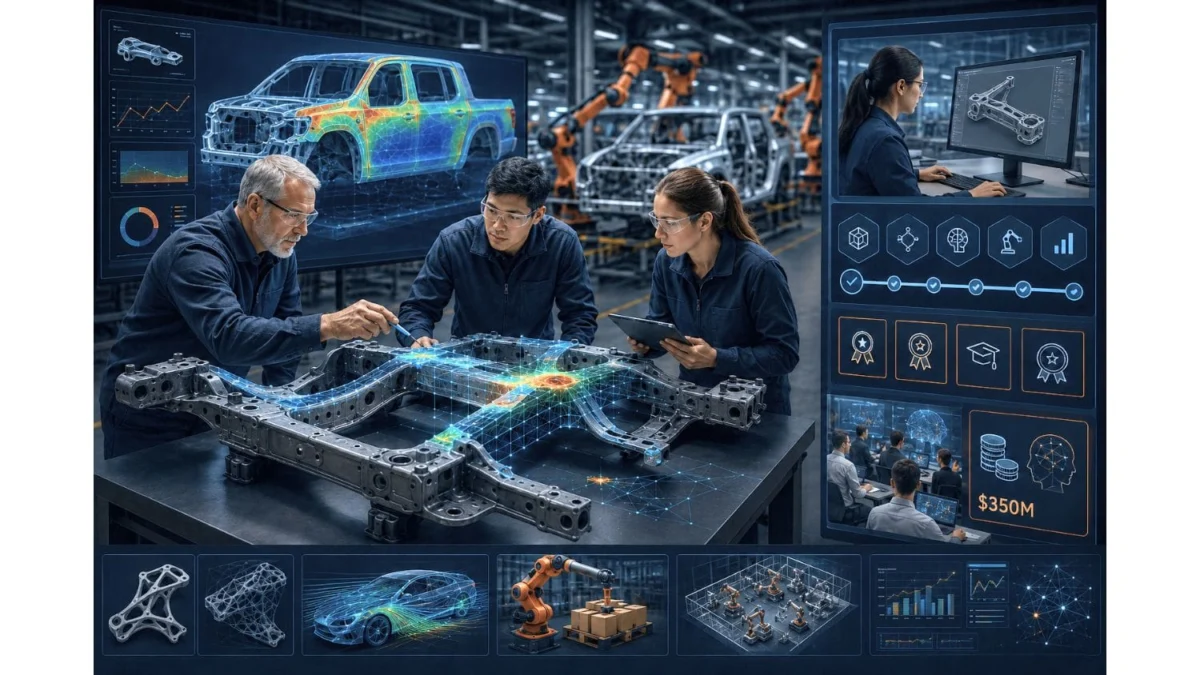
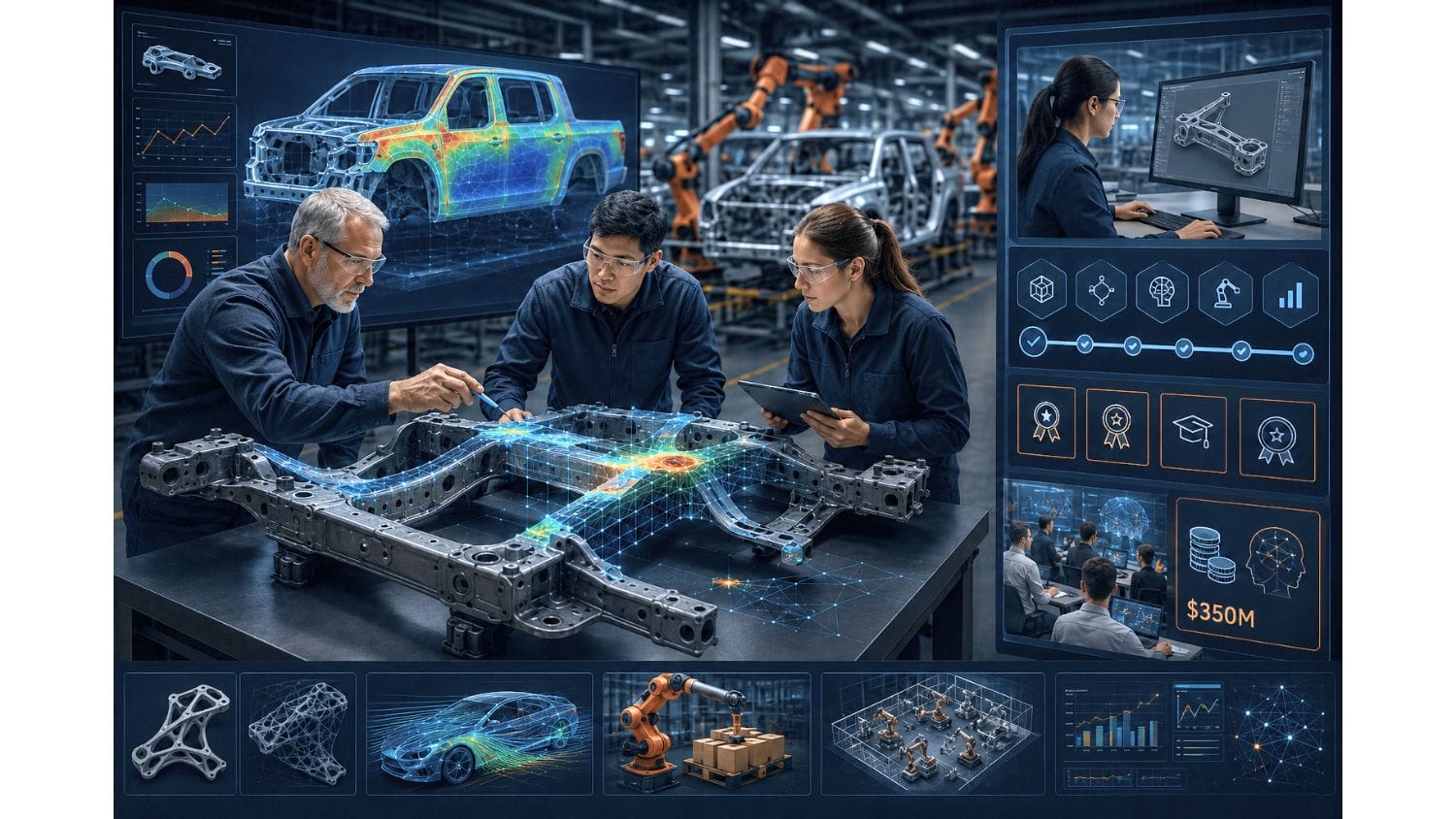
- Ford’s Quality Turnaround: Ford topped the J.D. Power 2026 Initial Quality Study among mainstream brands—its first win since 2010. Crucially, the automaker achieved this not solely through digital automation, but by bringing back, hiring, or promoting roughly 350 veteran technical specialists alongside AI-driven defect detection.
- Autodesk’s Workforce Investment: Highlighting a 147% two-year surge in AI-related roles across design and manufacturing, Autodesk committed $350 million over three years to train nearly one million people and secure over 200,000 certifications by late 2028.
- Generative Engineering Breakthroughs: Siemens introduced Simcenter PhysicsAI Generate and AI-powered CAM suggestions in NX X Manufacturing, allowing systems to produce 3D concept geometries and novel tool paths from scratch in seconds. Meanwhile, General Motors reported cutting roof-crush simulation times from up to 40 hours to under five minutes using machine learning.
- Factory Floor and Data Infrastructure: Companies like Doosan Robotics, Vention, Teradyne, and AVEVA are deploying AI to solve complex mechanical hurdles—from rapid robotic palletizing changeovers and digital twin cell design to unifying disparate plant floor data for industrial AI readiness.
2. Chronology of Events: Mid-2026 Industrial Milestones
The trajectory of industrial AI implementation accelerated sharply through mid-2026, marked by key product rollouts, strategic workforce investments, and industry reports:
- Early 2023 – Present (Ford): Ford initiates its quiet quality reset, combining predictive AI defect patterns with the rehiring of approximately 350 veteran engineers to intercept "minor" issues before they metastasize into warranty nightmares. This multi-year strategy culminates in mid-2026.
- June 2026 (Autodesk): Autodesk releases its AI Jobs Report 2026, documenting a 147% growth in specialized AI roles over two years, and officially launches its $350 million upskilling and certification initiative.
- June 2026 (Siemens & GM): Siemens debuts Simcenter PhysicsAI Generate in Simcenter Hypermesh 2026.1 and updates NX X Manufacturing with generative CAM suggestions. Concurrently, General Motors publishes operational data showcasing massive time savings in vehicle validation and virtual lab testing.
- Mid-2026 (Robotics & Plant Automation): At industry events like Automate 2026 and AVEVA World 2026, firms including Doosan Robotics, Vention, Teradyne, and AVEVA showcase next-generation automation tools, focusing on pre-build digital cell testing, adaptive palletizing, and unified plant data architectures.
3. Supporting Data and Metrics
The scale of the transformation is reflected in hard economic indicators, performance benchmarks, and operational metrics across the industrial sector:
- 147% Growth: The two-year surge in AI-related job postings across architecture, engineering, construction, product design, and manufacturing, according to Autodesk.
- 350 Specialists: The number of experienced technical engineers brought back or hired by Ford since 2023 to bridge the gap between AI pattern recognition and legacy failure-mode knowledge.
- $350 Million: Autodesk’s three-year financial commitment dedicated to training nearly one million individuals and facilitating over 200,000 industry-recognized certifications by the end of 2028.
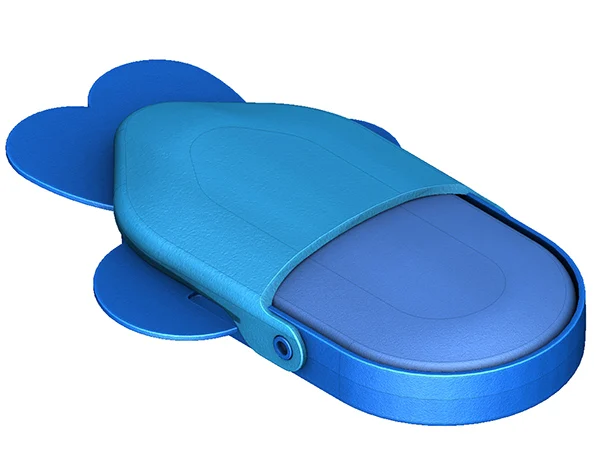
- Under 10 Seconds: The time required for Siemens’ Simcenter PhysicsAI Generate to produce a novel electronics housing concept based on target dimensional and performance parameters.
- 8 to 40 Hours down to <5 Minutes: The dramatic reduction in General Motors’ vehicle validation cycle time for roof-crush analysis enabled by machine learning and simulation.
- 11 Boxes per Minute: The processing speed of Doosan Robotics’ newly unveiled PalletizHD+ AI-powered palletizing system.
4. Official Responses and Industry Perspectives
Corporate leadership across the manufacturing and software sectors has increasingly embraced a pragmatic narrative regarding artificial intelligence. The rhetoric has shifted away from utopian displacement toward pragmatic augmentation.
Executive statements from major industrial players underscore this philosophy:
- On the Limits of Pure Automation (Ford): Ford executives acknowledged that AI and automation systems are inherently insufficient on their own. While machine learning excels at flagging surface patterns and statistical risks, veteran engineers remain essential for identifying obscure failure nodes, understanding repeat anomalies, and distinguishing benign variances from catastrophic warranty issues.
- On Bridging the Skills Gap (Autodesk): Leadership at Autodesk emphasized that the primary bottleneck in modern manufacturing is no longer software capability, but human readiness. By committing $350 million to workforce development, the company aims to ensure that the physical world’s design and manufacturing sectors are not starved of talent capable of steering advanced tools.
- On Data Hygiene (AVEVA): During AVEVA World 2026, company spokespersons stressed that industrial AI cannot function in a vacuum of fragmented information. Highlighting updates across CONNECT and PI Data Infrastructure, leadership insisted that the success of factory AI is entirely contingent on unifying plant, engineering, and operational data without forcing organizations to scrap legacy architecture.
5. Strategic Implications for the Future of Engineering
As these technologies mature, the industrial sector is confronting several profound operational and philosophical implications:
The Renaissance of Tribal Knowledge
Ford’s J.D. Power victory serves as a powerful cautionary tale against over-reliance on unguided software. Algorithms can process millions of data points, but they lack intuition regarding physical wear, environmental degradation, and the idiosyncrasies of human assembly. By integrating veteran engineers who understand where failures historically hide, manufacturers are realizing that tribal knowledge is a critical supervisory layer for artificial intelligence.
Redefining the Designer and Programmer Role
Tools like Siemens’ generative 3D concept generator and AI CAM suggestions are transforming engineers and programmers from manual creators into expert curators. When a system can generate a physics-aware housing concept or an optimal tool path in seconds, the human professional’s value shifts to rigorous cross-checking: validating clearances, understanding material assumptions, and verifying real-world machine limits.
The Infrastructure Prerequisite
Industrial AI is only as reliable as the data feeding it. As demonstrated by platform updates from AVEVA and digital cell design initiatives by Vention and Teradyne, companies must first solve fundamental data hygiene and virtual prototyping challenges before deploying machine learning at scale. Without clean metadata, standardized tags, and robust digital twins of the physical cell—fixtures, reach, and guarding—AI initiatives risk optimizing inefficiencies rather than solving them.
Ultimately, the 2026 industrial landscape paints a clear picture: artificial intelligence is an extraordinarily powerful engine for speed and exploration, but human expertise remains the steering wheel.