



As the technology world turns its eyes toward Las Vegas for the 60th anniversary of the Consumer Electronics Show (CES), the event finds itself at a historic crossroads. For six decades, CES has served as the definitive barometer for the tech industry, a sprawling pilgrimage defined by the cavernous, logo-heavy booths of the Las Vegas Convention Center (LVCC). Yet, as we approach the 2027 installment, the blueprint for a "successful" trade show appearance is being fundamentally rewritten.
The traditional model—defined by static displays and fluorescent-lit floor space—is rapidly giving way to a citywide experiential ecosystem. Brands are no longer content to compete for attention within the confines of a convention hall; they are now orchestrating restaurant takeovers, private suite immersions, and high-stakes stadium activations that turn the entire city of Las Vegas into a brand theater. As CES 2027 approaches, three major developments signal a permanent shift in how technology giants engage their audiences.
The New Frontier: The Allure of Sphere
The Las Vegas Sphere has emerged as the ultimate architectural statement for the modern keynote. No longer merely a venue for concerts, the Sphere is becoming the preferred stage for brands looking to assert dominance in the era of Artificial Intelligence.
Following in the pioneering footsteps of HP and Delta—both of which leveraged the venue’s unparalleled screen real estate to craft high-impact narratives—Lenovo is doubling down. For the second consecutive year, the company will host Lenovo Tech World @ CES 2027 at the Sphere.
Immersive Storytelling as a Competitive Advantage
Lenovo’s theme for 2027, "Hybrid AI," is more than a marketing slogan; it is an architectural challenge. By utilizing the venue’s expansive atrium and its 16K LED resolution, Lenovo aims to create a "fully immersive event" that transcends the standard PowerPoint presentation. The event is designed to showcase the company’s entire AI ecosystem, but it also functions as a platform for the next generation of entrepreneurs. By spotlighting startups and innovators, Lenovo is positioning itself not just as a hardware manufacturer, but as a central hub for the global AI network.
This shift signifies a move away from passive observation. When a brand moves its keynote to the Sphere, it is essentially moving from "showing" to "enveloping." The audience is no longer sitting in rows of chairs; they are submerged in the brand’s vision, creating a psychological stickiness that a standard booth simply cannot replicate.
The Great Departure: Why Titans are Re-Evaluating the Floor
While some companies are moving toward larger, more spectacular venues, others are exiting the traditional show floor entirely. The most significant news ahead of CES 2027 is the absence of two of its longest-standing pillars: Panasonic and Sony.
Panasonic: A Shift in Communication Strategy
Panasonic’s decision to skip the 2027 show is particularly poignant. As a continuous exhibitor since the show’s inaugural 1967 debut, the brand has been synonymous with the CES identity for 60 years. However, the company has officially cited a "shift in communication channels" as the primary driver for its withdrawal.
Industry analysts suggest that the cost-to-exposure ratio of a massive, multi-million-dollar booth has become increasingly difficult to justify in an age of targeted digital marketing and specialized, high-impact regional events. While Panasonic has not ruled out smaller, collaborative showcases via partner booths, the departure marks the end of an era for the Central Hall.
The Sony Exit: From Hardware to Uncertainty
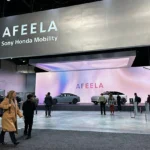
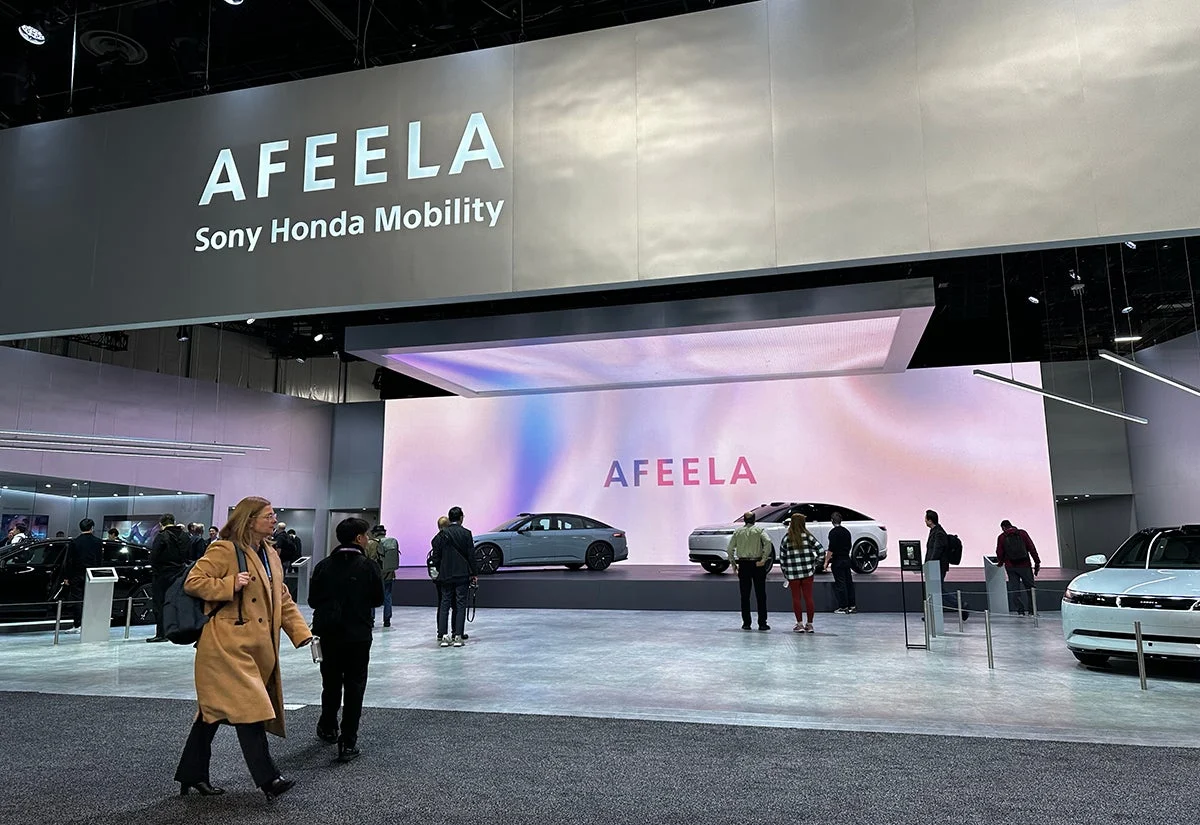
Sony’s absence is perhaps even more telling. The company, which previously commanded one of the most prestigious footprints in the LVCC, began scaling back its presence as early as 2026. At that time, Sony’s footprint was reduced to a singular prototype: the Afeela EV, a joint venture with Honda.
The subsequent dissolution of that EV project serves as a microcosm for the volatility of the tech sector. With the joint venture failing to materialize into a long-term commercial success, Sony’s retreat from the CES floor suggests a broader internal pivot. For the first time in decades, the "Central Hall" will have a massive vacancy, creating a power vacuum that industry observers are already watching with keen interest. Who will fill the space once occupied by the titans of the 20th century?
The Intersection of Culture and Code: The "Art Tech" Era
In a bold move to acknowledge the shifting nature of technology, the Consumer Technology Association (CTA) has introduced a new category for the CES Innovation Awards: Art Tech. Developed in partnership with Christie’s, the world-renowned auction house, this category recognizes that technology is no longer just about utility—it is about the human experience.
Preserving the Human Core
The CTA’s integration of Art Tech is an admission that the most powerful technologies today are those that empower creativity. The category focuses on two primary pillars:
- Creative Tools: Technologies that expand the capabilities of human expression, including generative AI engines, sophisticated algorithmic tools, and virtual reality environments that allow artists to create in non-Euclidean spaces.
- Audience Engagement: Innovations that transform how the public interacts with art, such as large-scale projection mapping, immersive spatial audio, and AR-driven installations that bring static exhibits to life.
By partnering with Christie’s, the CTA is lending institutional credibility to this movement. Christie’s will curate a panel of expert judges, ensuring that the winners are selected not just for technical prowess, but for their ability to contribute to the global art market. This is a clear signal that the future of tech is deeply intertwined with the future of culture.
Chronology of Change: From Hardware to Experience
To understand where CES is heading, one must look at the timeline of its transformation:
- 1967–2000: The Hardware Era. The show was dominated by physical product launches—VCRs, TVs, and personal computers. Success was measured by the square footage of one’s booth and the volume of press releases.
- 2000–2015: The Connectivity Era. The focus shifted to the internet, mobile devices, and the early stages of the "smart home."
- 2015–2022: The Ecosystem Era. Brands began focusing on how their devices talked to each other, leading to massive, interconnected "lifestyle" booths.
- 2023–Present: The Experiential Era. With the advent of the Sphere and the rise of AI, the physical booth has become secondary to the "event." Companies are now prioritizing moments of shared wonder over the simple display of specifications.
Supporting Data: The Cost of Visibility
The economics of the trade show industry are shifting. Historically, a "Tier 1" brand would spend upwards of $5 million to $10 million on a primary CES booth. When factoring in labor, logistics, and the opportunity cost of floor space, the ROI has become increasingly difficult to calculate.
Current market data indicates that companies are shifting approximately 30% of their "trade show budgets" into "experiential activations." These include:
- Private Suite Leasing: Renting luxury suites at properties like the Wynn or The Venetian to host high-touch, intimate meetings with VPs and decision-makers.
- Exclusive Off-Site Events: Hosting invite-only dinners or demonstrations at restaurants or pop-up venues along the Strip, bypassing the chaos of the convention floor.
- Digital Integration: Investing in high-quality, broadcast-level production for hybrid events that reach a global audience of millions, rather than the 150,000 attendees on the ground.
Official Responses and Industry Implications
The CTA has remained optimistic about the show’s evolution. In recent press statements, the organization has emphasized that CES is "a living organism that adapts to the needs of the industry." They argue that the departure of legacy giants like Sony and Panasonic is not a decline, but a "natural rotation" that makes room for a new wave of AI-native startups and innovative tech-lifestyle brands.
However, the implications for the city of Las Vegas and the trade show industry at large are profound. If the "anchor tenants" of the Convention Center continue to vacate, the city may need to rethink its infrastructure. We may see a shift where the LVCC remains the home for components and B2B hardware, while the "consumer experience" migrates entirely to the Strip’s entertainment venues.
Conclusion: The Future is Immersive
As we look toward the 60th anniversary of CES, it is clear that the "trade show" as a concept is being eclipsed by the "experience festival." The brands that will define the next decade are those that understand that technology is no longer a separate silo—it is the fabric of our culture.
Whether it is through the immersive screens of the Sphere or the delicate integration of Art Tech into our galleries, the goal for brands in 2027 is clear: move the human, not just the product. As Sony and Panasonic step back, a new, more experiential generation of innovators is stepping up, ready to prove that the next 60 years of CES will be even more transformative than the last.