
By Andy Turudic | Technology Editor, Electronic Design
A series of compounding miscalculations by Detroit’s legacy automakers—culminating in sweeping federal regulatory rollbacks—has triggered a profound crisis in American electric vehicle (EV) deployment. Far from a mere market correction, an objective analysis of the past decade reveals an industry-wide retreat disguised as pragmatism. The consequences of this pivot stretch far beyond corporate balance sheets, saddling taxpayers and consumers with a staggering multi-billion-dollar fuel and regulatory bill while ceding global technological leadership to vertically integrated international competitors.
Main Facts: The 2026 Regulatory Reversal and Its Catalysts
The defining policy inflection point arrived on September 28, 2026, when the U.S. Department of Transportation finalized a sweeping rollback of the federal Corporate Average Fuel Economy (CAFE) standards. The rule drastically slashed the projected 2031 fleetwide average target from 50.4 miles per gallon (mpg) down to 34.9 mpg.

Ostensibly championed by legacy automotive executives as a victory for "market pragmatism," the policy shift rescued domestic automakers from what financial models projected as over $30 billion in cumulative federal compliance penalties. Because General Motors (GM) and Ford Motor Company had intentionally suppressed their EV sales volumes while continuing to manufacture high-volume, low-efficiency internal combustion engine (ICE) trucks and SUVs, their sales-weighted fleet averages had plummeted.
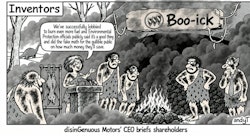
Rather than accelerating electrification to meet original benchmarks, executive suites pivoted heavily toward political lobbying. Federal disclosure records show that GM alone spent upwards of $20 million lobbying to dismantle the regulatory frameworks that penalized their strategic retreats. The resulting regulatory capture bypassed traditional, data-driven deliberative processes, creating an immediate windfall for legacy manufacturers but setting the stage for long-term industrial obsolescence.
Chronology: A Post-Mortem of Detroit’s Electrification Retreat
The modern era of Detroit’s EV strategy can be systematically broken down into distinct phases of regulatory compliance, speculative panic, capital re-vectoring, and ultimate political intervention.

Phase I: The Compliance Era and the 2035 Pledge (2016–2021)
Detroit’s initial foray into electrification began not as an organic response to consumer demand, but as a regulatory defense mechanism. In 2016, GM launched the Chevrolet Bolt EV—a classic compliance car engineered to satisfy California’s Zero-Emission Vehicle (ZEV) mandates and offset fuel economy penalties incurred by lucrative full-size pickup and SUV lines.
However, by early 2021, falling lithium-carbonate prices and accelerating manufacturing efficiencies through GM’s Ultium Cells joint venture with LG Energy Solution made cost parity seem attainable. Emboldened, GM CEO Mary Barra announced a historic commitment to an all-light-duty electric lineup by 2035. Ford Motor Company quickly followed suit under CEO Jim Farley, splitting corporate structures into "Model e" (EVs) and "Ford Blue" (ICE) with a goal of a 50% global EV sales mix by 2030.
Phase II: The Speculator Bubble and Executive Panic (2022–2023)
The operational foundation of these aggressive targets relied on stable commodity pricing, which evaporated in 2022. As global automakers rushed to secure raw minerals, Wall Street futures speculators drove lithium-carbonate prices to an astronomical peak exceeding $80,000 per metric ton.

GM attempted to secure its supply chain by investing $650 million in the Thacker Pass lithium mining project. Despite these long-term access rights, the prolonged pricing spike triggered acute panic inside Detroit boardrooms. Fearing unhedged production costs, leadership teams developed "cold feet" regarding the near-term capital viability of mass-market EV architectures.
Phase III: Capital Revectoring and Product Disconnect (Late 2023–2024)
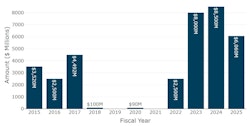
Convinced that near-term EV margins were compromised, GM executed a profound strategic pivot. To pacify institutional investors demanding immediate returns, GM authorized a massive ~$16 billion stock buyback program while redirecting $9 billion into legacy ICE truck and SUV manufacturing infrastructure (such as the Flint and Fort Wayne assembly plants).
This capital diversion required dismantling the existing EV product roadmap. Instead of scaling accessible platforms like the Bolt, GM focused on low-volume, ultra-luxury vehicles. Ford executed an identical retreat, indefinitely delaying its next-generation electric pickup platform at its Blue Oval City complex to retool for ICE and hybrid heavy trucks.
Phases IV to VI: Software Blunders, Accounting Tolls, and Compliance Crises (2025–Early 2026)
Compounding these platform strategy errors, legacy automakers alienated mainstream buyers through heavy-handed software restrictions (such as dropping smartphone projection software like Apple CarPlay and Android Auto) and miscalculated supply chain logistics, such as heavy reliance on Mexican manufacturing hubs subject to volatile import tariffs.
Slowing down the EV ramp-up shifted losses from operating expenses to catastrophic structural charges. GM absorbed $10.9 billion in cumulative asset write-downs and restructuring charges, while Ford swallowed a parallel $19.5 billion penalty for idled and abandoned EV tooling. By mid-2026, the failure to hit intermediate efficiency benchmarks brought automakers face-to-face with billions in potential federal fines, prompting an aggressive lobbying blitz to rewrite the rules.
Phase VII to X: Regulatory Capture and Global Decoupling (September 2026)
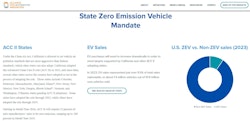
The September 2026 CAFE rollback dismantled national fuel efficiency floors and systematically undermined the California Air Resources Board (CARB) by revoking its Clean Air Act waiver. With legal compliance requirements erased, GM immediately slashed Equinox EV production and cut Chevrolet Bolt production by 75%, laying off workers at its Fairfax facility.
Meanwhile, internationally integrated manufacturers like BYD ignored short-term commodity speculation and aggressively scaled efficient, low-cost battery architectures. The consequences of Detroit’s inward retreat played out on the global stage in August 2026, when GM officially discontinued retail sales of its Chevrolet brand in China, marking a near-total wipeout from its historically largest volume market.
Supporting Data: Deconstructing the "Towing Fallacy"
To justify the retreat to ICE pickup trucks, executive management weaponized a singular narrative: the towing range penalty. Public relations campaigns routinely highlight tests showing that towing a 7,000- to 10,000-pound trailer cuts an EV truck’s driving range by 50% to 60%.
However, a quantitative engineering analysis reveals this argument to be a foundational fallacy. The severe efficiency drop-off under heavy aerodynamic and inertial loads is not an intrinsic flaw of electric propulsion; it is a universal consequence of Newtonian physics that degrades ICE powertrains just as acutely.
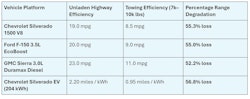
- Conventional V8 Silverado: Achieving an unladen highway range of 456 miles via a 24-gallon fuel tank, its range collapses to roughly 204 miles when towing a heavy trailer.
- Silverado EV: Exhibits a structural towing range of 160 to 195 miles under identical conditions.
The claim that internal combustion trucks possess a unique physical immunity to towing-induced range degradation is mathematically false. The true operational bottlenecks are non-technological: the 5-minute liquid refueling delta versus a 45-minute DC fast-charge cycle, and the pervasive failure of charging networks to design open, pull-through charging lanes. The towing range excuse was systematically deployed as an engineering shield to mask infrastructure planning oversights.
Official Responses and Industry Dynamics
While domestic automakers took the public lead, Toyota Motor North America conducted an equally effective, quieter lobbying campaign through the Alliance for Automotive Innovation. Targeting the National Highway Traffic Safety Administration (NHTSA), Toyota successfully depressed efficiency metrics to protect the profitability of its heavy, fossil-fuel-reliant platforms like the Tacoma, Tundra, Sequoia, and Land Cruiser.
In stark contrast, state governments and environmental agencies have pushed back aggressively. Over a dozen state attorneys general, led by figures such as New Jersey’s Matthew Davenport, filed lawsuits challenging the administration’s rollback of fuel economy standards, arguing that the rule changes violate statutory mandates and endanger public health.
Implications: The Terminal Paradox and the Macroeconomic Cost Through 2050
The financial protectionism engineered by the 2026 CAFE rollback does not erase the liabilities generated by Detroit’s strategic whiplash; it simply shifts the balance sheet from corporate ledgers onto the American public.
1. The Consumer Pump Penalty
Federal dockets concede that freezing vehicle efficiency standards for a decade will result in an additional 100 billion gallons of gasoline burned through 2050. Based on projected fuel consumption metrics, this extracts an estimated $441 billion directly from consumer wallets at the gas pump.
From an economic multiplier standpoint, this siphoning represents a zero-growth trap. Gasoline expenditures carry almost no local economic velocity multiplier, pulling capital out of local distribution and siphoning it into institutional energy reserves rather than funding R&D for advanced software, automated manufacturing, or grid modernization.

2. The Direct Treasury Deficit
When aggregating direct treasury losses, forgiven compliance penalties, localized write-downs, and inflated energy costs, the quantifiable financial displacement approaches a staggering $477.38 billion total taxpayer bill—excluding intangible costs like public healthcare burdens associated with elevated particulate and ozone smog.
3. Long-Term Industrial Obsolescence
The core engineering reality that executives sought to escape remains unchanged: battery cell cost curves continue their structural decline. As raw material dynamics stabilize, automotive EV powertrain engineering is rapidly approaching a definitive Bill of Materials (BOM) cost crossover point with ICE (projected for full-size trucks by 2028–2029 via advancements like lithium manganese-rich prismatic cells).
When this cost crossover arrives, GM and Ford may lack the scaled, automated manufacturing infrastructure required to mass-produce advanced electric drivetrains, having squandered billions on stock buybacks and legacy retooling. By relying on political protectionism to shield short-term profit margins, domestic automakers have not saved their enterprises—they have merely delayed an inevitable structural reckoning, placing the future of American manufacturing at severe risk.