





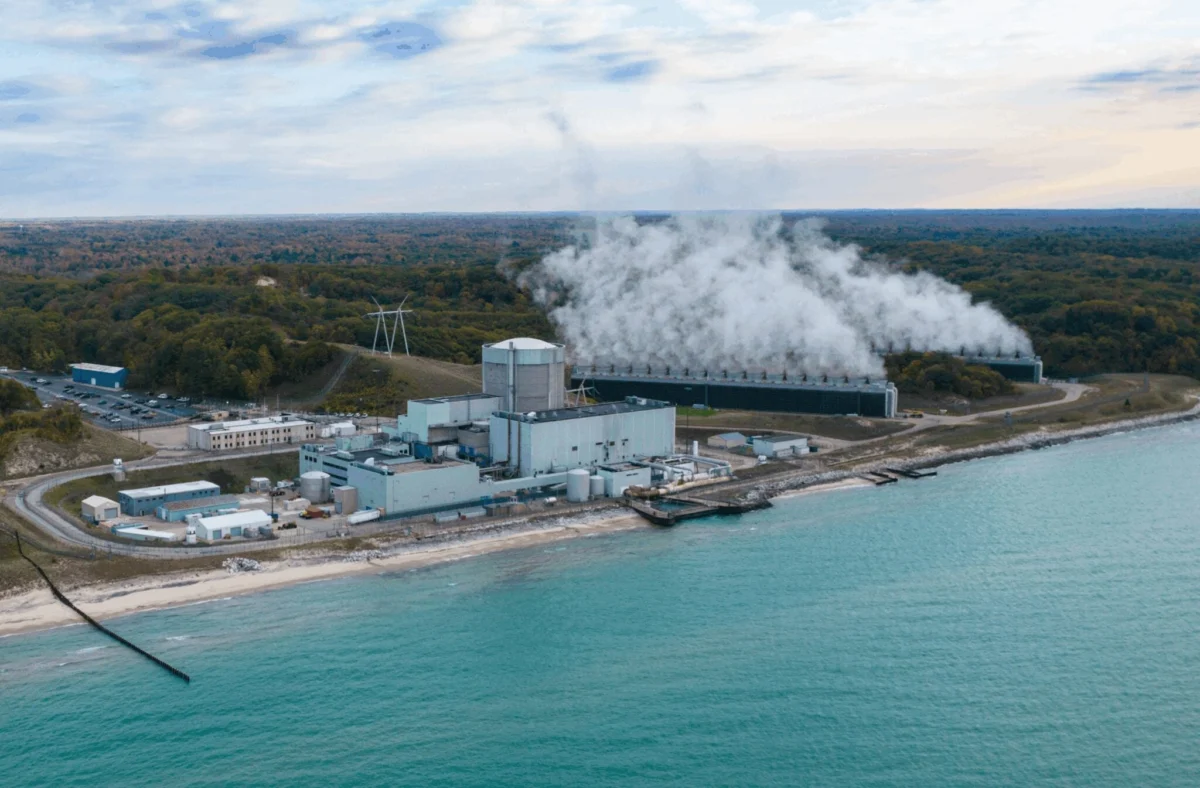
In a strategic shift that is redefining the American energy landscape, the path to decarbonizing the grid while meeting the insatiable electricity demands of the artificial intelligence boom is no longer exclusively tied to the long, arduous process of constructing new reactors. Instead, the fastest route to expanding nuclear capacity lies within the steel and concrete of the plants already operating on the grid.
In a landmark week for the U.S. energy sector, a coordinated push by tech giants Google and Meta, energy producers Constellation and Vistra, and the U.S. Department of Energy (DOE) has signaled a massive reinvestment in existing nuclear infrastructure. Through a series of multi-billion-dollar deals and federal loan guarantees, the industry is poised to add more than 1.3 gigawatts (GW) of new, carbon-free capacity—effectively creating the equivalent of a large-scale power plant without breaking ground on a new site.
The Strategy: Maximizing "Low-Hanging Megawatts"
For years, the nuclear industry faced a stagnation characterized by high capital costs and lengthy regulatory hurdles for new builds. However, the surge in data center construction—driven by the massive computational requirements of generative AI—has fundamentally altered the economic calculus. Tech companies are now aggressively seeking "firm", 24/7 carbon-free power, a requirement that solar and wind—by nature of their intermittency—cannot meet alone.
The solution favored by both policy-makers and energy providers is the "uprate." By modernizing turbines, steam generators, control systems, and cooling infrastructure, plant operators can safely squeeze more electricity out of existing reactor cores. This process is significantly faster and more cost-effective than building greenfield reactors, offering a high-impact, low-risk pathway to meeting the grid’s urgent needs.
Chronology: A Week of Nuclear Momentum
The week’s developments unfolded in rapid succession, marking a turning point in the relationship between Silicon Valley’s power consumption and the nation’s utility backbone.
The Constellation-Google Pact
On Tuesday, Constellation Energy and Google announced a comprehensive 20-year power purchase agreement (PPA) that serves as a cornerstone for the industry. The deal encompasses two distinct pillars:
- The Uprate Initiative: Constellation will invest over $4.3 billion to perform power uprates across 11 reactors at six nuclear plants located in Illinois, Pennsylvania, and New Jersey. This will generate 890 MW of brand-new, carbon-free capacity, with the first wave expected to hit the grid by 2028.
- The Existing Fleet Agreement: A 15-year PPA covering 2,700 MW of Constellation’s existing nuclear generation in the PJM Interconnection—the regional transmission organization that coordinates the movement of wholesale electricity in all or parts of 13 states and the District of Columbia.
Combined, the agreement secures 3,590 MW of power for Google, though the 890 MW of uprates represent the primary expansion of the grid’s total energy ceiling.
The Vistra and DOE Commitment
Preceding the Constellation announcement, the U.S. Department of Energy issued a conditional loan commitment of up to $4.2 billion to Vistra Corp. This financing is explicitly earmarked for uprating the company’s nuclear fleet. These upgrades are expected to add 433 MW of new capacity across three key facilities:
- Beaver Valley (Pennsylvania): A two-unit plant with 1,872 MW of capacity.
- Davis-Besse (Ohio): A single-unit plant in Oak Harbor with 908 MW of capacity.
- Perry (Ohio): A single-unit plant northeast of Cleveland with 1,268 MW of capacity.
This project is part of a larger strategy previously established by Vistra, which signed 20-year PPAs to provide over 2,600 MW of power to Meta. These agreements ensure that the incremental capacity gained from the uprates will be directly utilized to support Meta’s operations in the PJM region, with the energy coming online in phases through 2034.
Supporting Data: Capacity and Infrastructure
The scale of these investments reflects a profound change in how the U.S. views its legacy nuclear assets. Rather than retiring plants as they reach their initial design life, the current trend is to extend and expand them.
Plant Profiles and Regional Importance
The facilities targeted by these upgrades are critical nodes in the PJM grid, which is currently experiencing the most intense demand pressure in the country due to the concentration of data centers.
- Beaver Valley (Shippingport, PA): Located 30 miles from Pittsburgh, this plant is a cornerstone of the Pennsylvania power market. The uprates will solidify its role as a regional anchor.
- Davis-Besse (Oak Harbor, OH): Situated on Lake Erie, this facility provides essential baseload power to Northern Ohio.
- Perry (Perry, OH): Also on Lake Erie, this plant serves as a major employer in the region, supporting more than 600 full-time jobs. The investment here ensures the facility remains economically viable for decades to come.
The Math of the Deal
- Total New Capacity: 1.323 GW (890 MW from Constellation + 433 MW from Vistra).
- Total Investment: Over $8.5 billion combined across both major initiatives.
- Strategic Scope: The inclusion of demand-response provisions in the Google-Constellation deal highlights the sophistication of modern energy contracts. Google has agreed to curtail non-critical energy consumption during periods of extreme grid stress, providing a "cushion" for the PJM system during peak demand.
Official Responses and Strategic Rationale
The federal government’s involvement, through the DOE’s Loan Programs Office, signals that nuclear power is once again being treated as an essential pillar of national security and economic competitiveness.
"The demand for carbon-free, firm power is unprecedented," said a spokesperson for the DOE during the announcement. "By backing these uprates, we are not just adding megawatts; we are preserving the viability of the American nuclear fleet, which remains our most reliable source of emissions-free electricity."
For the tech giants, the rationale is equally clear. Both Google and Meta have committed to ambitious "24/7 carbon-free energy" targets. As their data centers consume increasing amounts of power, they require energy sources that do not fluctuate with the weather.
"We are moving beyond simply buying offsets," a Google representative noted. "By investing directly in the capacity of the grid, we are enabling the addition of clean power that benefits the entire ecosystem, not just our own operations."
Implications: A New Era for the Grid
The ripple effects of these agreements will be felt across the U.S. power market for years to come.
Avoiding the "New Build" Trap
Building a new nuclear plant from scratch is a decade-long endeavor fraught with cost overruns and regulatory uncertainty. By focusing on uprates, the industry has discovered a "sweet spot." Modernizing existing turbines and upgrading control room software allows for a 5% to 15% increase in output per reactor with a fraction of the regulatory burden. This strategy is currently the most viable answer to the "energy crunch" caused by AI and electrification.
The Role of PJM
The PJM Interconnection is now the frontline of the energy transition. As the largest power market in the U.S., it has become a magnet for data center development. These agreements prove that the grid can be upgraded to meet this demand, provided there is a partnership between private capital and federal policy support.
The Future of Nuclear Financing
The DOE’s willingness to provide $4.2 billion in loan commitments to Vistra suggests that more such partnerships are on the horizon. The DOE indicated that the current framework could be applied to other plants, such as Vistra’s Comanche Peak facility in Texas, should the need arise. This creates a scalable model: identify high-performing existing plants, secure long-term demand via tech-sector PPAs, and leverage federal credit to modernize the underlying hardware.
Conclusion: A Blueprint for Sustainability
The convergence of the AI revolution and the need for a clean energy transition has revitalized a sector that was once considered in decline. By betting on the existing nuclear fleet, companies like Google, Meta, Constellation, and Vistra are demonstrating that the most innovative solutions are often found by optimizing what we already have.
As these uprates come online starting in 2028, they will provide a critical backbone of carbon-free energy, ensuring that the next generation of technological growth does not come at the expense of environmental goals. The "nuclear uprate" model is no longer just a technical possibility—it is the cornerstone of the American grid’s future.