





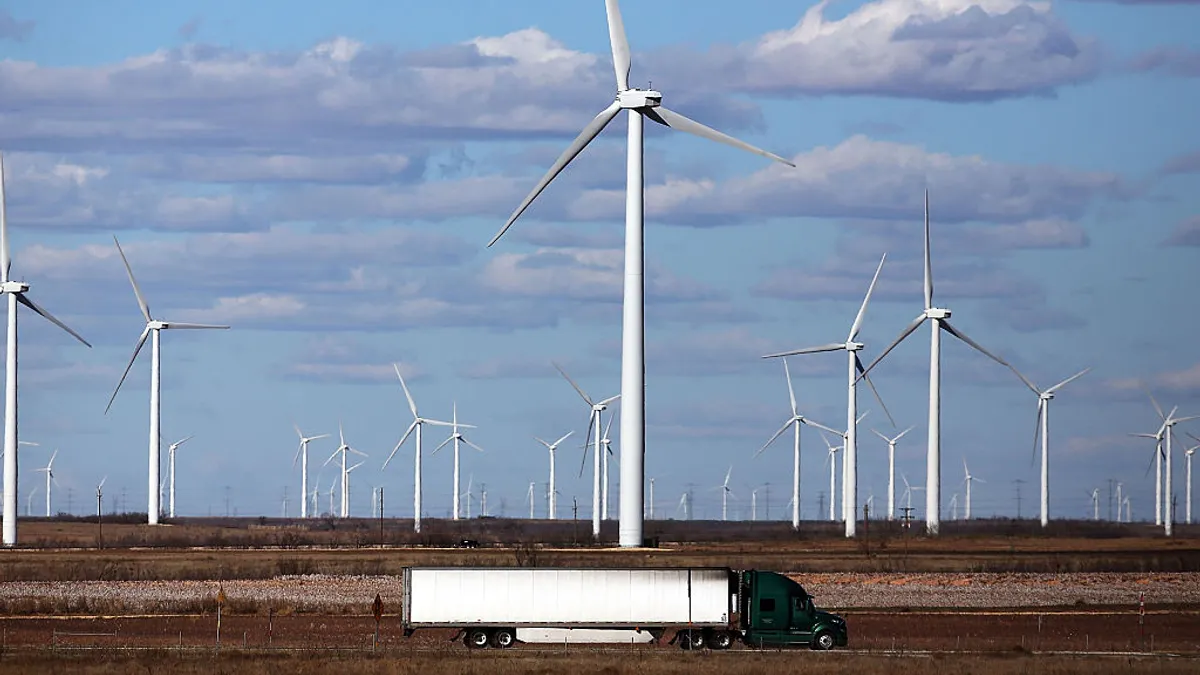
WASHINGTON — Driven by a frantic legislative deadline and a massive influx of late-stage project developments, the United States onshore wind industry is maintaining a stable trajectory. According to an extensive industry report released by energy research firm Wood Mackenzie, the U.S. wind sector remains firmly on course to add 39 gigawatts (GW) of new onshore capacity by the end of the decade.
Yet, this steady long-term outlook belies a shifting landscape. The American renewable energy market is currently navigating a complex maze of tighter federal tax credit deadlines, regulatory crackdowns on offshore installations, rising engineering costs, and shifting strategic priorities among developers rushing to secure financing and operational certainty before regulatory windows slam shut.
Main Facts
The latest Wood Mackenzie market monitor highlights several critical dynamics shaping the American renewable energy sector:
- Surging Turbine Orders: U.S. orders for wind turbines reached 2.8 GW in the second quarter, largely fueled by developers racing to commence construction ahead of stricter federal tax credit milestones.
- Massive Capacity Additions: The U.S. successfully installed approximately 5 GW of new onshore capacity in Q2 alone. This historic quarterly spike was heavily dominated by the completion and integration phases of the 3.65 GW SunZia transmission and wind project in New Mexico, currently the largest clean energy undertaking of its kind in the nation.
- The 2030 Horizon: Despite significant policy headwinds, analysts project that the onshore wind industry will achieve its benchmark target of 39 GW in new-build capacity by 2030, aided by a healthy pipeline where over half of the projects slated between 2026 and 2028 are already operational or actively under construction.
- Offshore Stagnation: In stark contrast to the onshore sector, offshore wind development has hit a severe roadblock. Wood Mackenzie notes that offshore pipelines are effectively capped at roughly 5 GW slated for delivery over the next two years, crippled by unfavorable federal policies, lease cancellations, and executive actions.
- Regulatory Pressures: Beyond federal tax and leasing shifts, the industry faces looming cost increases. New engineering guidelines from the American Society of Civil Engineers (ASCE)—expected to be published next year—will mandate stricter structural design requirements for turbines sited in tornado-prone regions.
Chronology of Events
The current state of the U.S. wind industry is the direct byproduct of rapid legislative, executive, and regulatory changes that have unfolded over the past two years:
- Early 2025: The political landscape shifts dramatically with the inauguration of President Donald Trump. In one of its early actions, the new administration issues an executive order enacting a temporary withdrawal of all areas on the Outer Continental Shelf from offshore wind leasing, alongside a comprehensive federal review of existing permitting practices.
- Late 2025: Congress passes, and President Trump signs into law, the One Big Beautiful Bill Act. The legislation fundamentally alters the clean energy landscape by accelerating the phase-out schedules and tightening deadlines for renewable energy projects to preserve their eligibility for the 45Y clean energy production tax credit (PTC) and the 48E clean energy investment tax credit (ITC).
- Mid-2026 (July 4 Deadline): A critical legislative cliff arrives. Under the One Big Beautiful Bill Act, developers face a strict July 4, 2026, deadline to "commence construction" on wind and solar projects to secure extended timelines. Projects meeting this threshold are given until December 31, 2030, to be placed into service. Projects that missed the summer deadline face a much tighter turnaround, requiring full commercial operation by December 31, 2027.
- Q2 2026 (Late October Report): Wood Mackenzie publishes its comprehensive quarterly market review on October 26, 2026. The report documents a massive Q2 rush resulting in 2.8 GW of turbine orders and 5 GW of installations, heavily anchored by the SunZia project, while detailing the chilling effect of federal policies on offshore wind development and upcoming structural engineering rules.
Supporting Data & Market Metrics
A deeper dive into the numbers reveals a nuanced picture of capital allocation, supply chain adjustments, and regional concentration within the American wind energy market:
- The Q2 Surge: The second quarter of 2026 saw developers frantically lock in supply agreements. The 2.8 GW of new turbine orders directly reflects last-minute maneuvering to satisfy the Internal Revenue Service’s "commence construction" safe harbors before the July 4 cutoff dictated by the One Big Beautiful Bill Act.
- The SunZia Factor: Out of the 5 GW installed in Q2, the massive 3.65 GW SunZia wind and transmission project in New Mexico accounted for the lion’s share. Without this singular mega-project, standard quarterly deployment would have registered closer to historical averages, underscoring how heavily national deployment figures can be swayed by individual infrastructure giants.
- Repowering Adjustments: Forecasts for existing wind farm upgrades and fleet renewals experienced a minor contraction. Repower equipment orders pulled back by 1 GW quarter-on-quarter. Analysts attribute this dip to temporary supply adjustments, though long-term decommissioning trends and tax incentives are expected to drive steady repowering activity through the end of the decade.
- Pipeline Security: Onshore wind retains strong insulation against immediate market shocks because more than 50% of the scheduled project pipeline spanning 2026 to 2028 has already cleared major developmental hurdles, sitting either in active construction or commercial operation.
- Offshore Contraction: The federal offshore pipeline remains constrained at 5 GW. This limitation is directly tied to ongoing federal buyback agreements—where the administration has struck deals with select developers to rescind previously auctioned leases—as well as ongoing litigation where the Department of Justice has asked federal courts to revoke permits for offshore farms currently under development.
Official Responses and Industry Perspectives
The convergence of shifting tax policy, executive actions, and engineering mandates has drawn diverse responses from industry analysts, market participants, and policy architects:

- Tyler Gifford, Wood Mackenzie Analyst: Emphasizing the primacy of federal regulation in shaping market behavior, Gifford noted in a press release accompanying the report: "Policy is the variable with the greatest impact on wind installations. With tax credit expirations on the horizon, developers are prioritizing projects that can be operational by 2030, so the five-year onshore wind installation outlook remains stable."
- Developer Strategy Adjustments: Major renewable energy developers have shifted away from speculative, long-term land banking toward execution-focused pipelines. Capital is increasingly funneled into projects capable of hitting the strict December 31, 2030, commercial operation deadline to guarantee maximum tax equity monetization under the remaining framework of the 45Y and 48E credits.
- Legal and Environmental Contests: The offshore wind industry and various coastal states have pushed back against federal policy shifts. Several multi-state coalitions have filed lawsuits against the administration and select developers over disputed lease buyouts and attempts to halt steel-in-the-water projects, setting up a prolonged legal battle in federal courts.
Broader Implications for the Energy Transition
The findings of the Wood Mackenzie report carry profound implications for the broader American energy landscape, touching upon grid reliability, capital markets, and regional development:
1. The Onshore Resilience vs. Offshore Vacuum
While the onshore wind sector is proving remarkably adaptable—pivoting swiftly to meet compressed tax credit deadlines and leaning on mega-projects like SunZia—the simultaneous suppression of offshore wind creates a strategic vacuum in high-demand coastal load centers. States along the Eastern Seaboard and the Pacific Rim, which rely heavily on offshore generation to meet aggressive state-level clean energy mandates, will likely be forced to look toward out-of-state onshore wind, utility-scale solar, and regional transmission imports to bridge the gap.
2. Rising CapEx and Engineering Pressures
The anticipated publication of new American Society of Civil Engineers guidelines next year introduces a new layer of capital expenditure (CapEx) risk. By requiring enhanced structural integrity and tornado-mitigation engineering for turbines in susceptible regions, project developers will face higher upfront equipment and installation costs. In an environment where power purchase agreement (PPA) prices are already feeling upward pressure due to expiring tax credits, these increased structural costs could squeeze project margins and require higher power off-take pricing for corporate and utility buyers.

3. Transmission as the Ultimate Bottleneck
The successful integration of massive installations like the SunZia project highlights the absolute necessity of high-voltage direct current (HVDC) transmission expansion. As the U.S. onshore wind industry works toward its 39 GW goal by 2030, the ability to transport electricity from wind-rich plains in the West and Midwest to high-consumption population centers will dictate whether these projects achieve full commercial viability or suffer from severe curtailment.
Ultimately, the U.S. wind sector is entering a mature, highly disciplined phase. Driven by the twin forces of legislative urgency and structural cost realities, the industry is shedding speculative bloat and concentrating its financial and engineering muscle into projects that are guaranteed to cross the finish line before the decade closes.