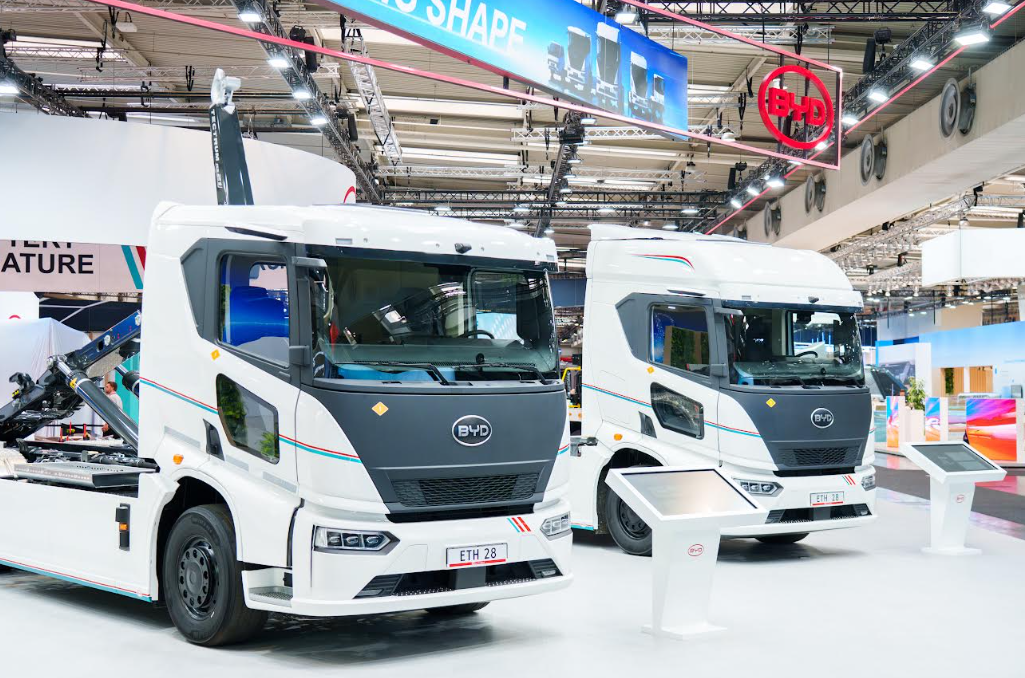
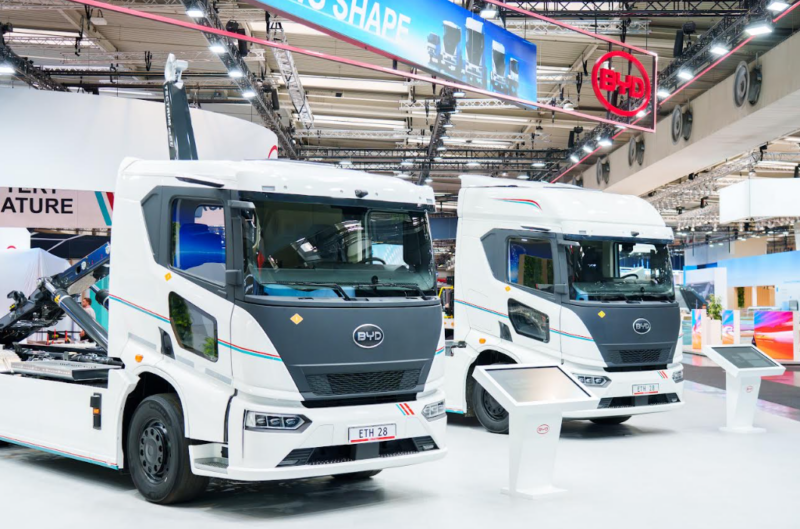
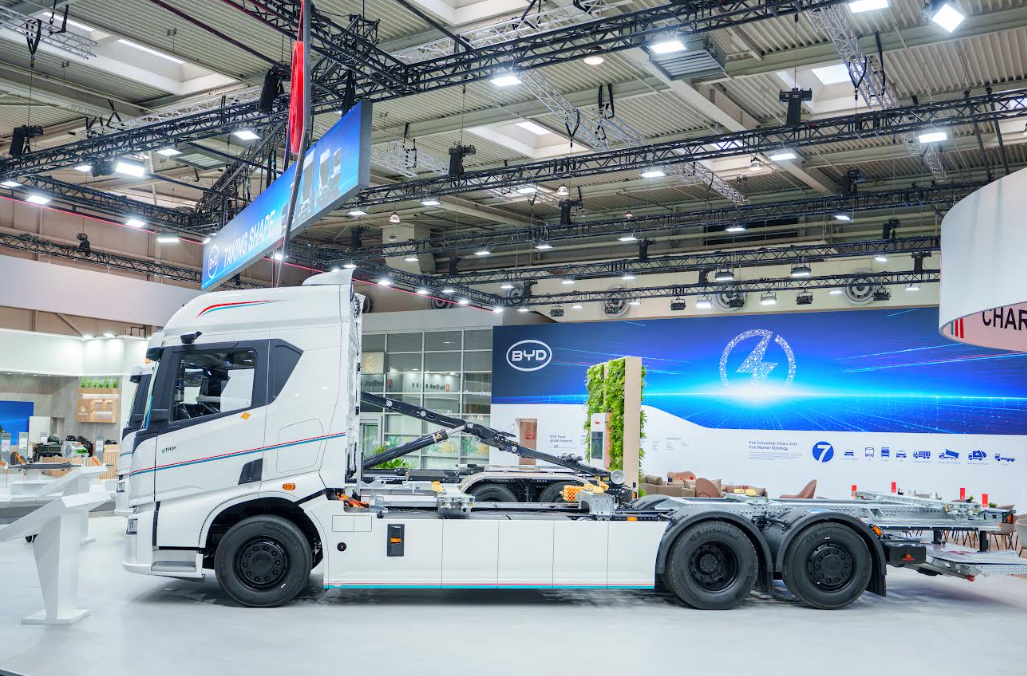
HANNOVER, Germany — In a move that is sending shockwaves through Europe’s traditional commercial vehicle sector, Chinese electric vehicle juggernaut BYD has launched an aggressive offensive into the continent’s heavy-duty freight market. Unveiled at the biennial IAA Transportation show in northern Germany, the centerpiece of BYD’s showcase is the flagship 44-metric-ton electric tractor, the ETT 44, paired with ultra-fast commercial megawatt charging architecture.
While BYD has spent years establishing a dominant global footprint in passenger electric vehicles and municipal transit buses, its latest appearance at Europe’s premier commercial vehicle showcase signals a clear intent: the company’s ambitions now extend squarely into the heartland of legacy European truck manufacturing.
Main Facts: The BYD ETT 44 and Ecosystem
The heavy-duty freight sector represents the final frontier of automotive decarbonization. Long-haul trucking demands immense power, high reliability, and rapid turnaround times—challenges that battery-electric vehicles (BEVs) have historically struggled to meet economically. BYD aims to rewrite that narrative with a vertically integrated approach.
At the core of the announcement is the BYD ETT 44, a 4×2 heavy-duty electric semi-truck engineered specifically to tackle regional and long-distance transport.
Power and Performance: The tractor delivers up to 1,000 metric horsepower, offering formidable pulling power designed to handle standard 44-metric-ton gross combination weights prevalent across European logistics corridors.
Battery & Range: The vehicle is powered by a massive 651-kilowatt-hour lithium iron phosphate (LFP) Blade Battery pack, delivering an operating range of up to 372 miles (approx. 600 kilometers) on a single charge.
Flash-Charging Architecture: To combat range anxiety and downtime, BYD introduced a proprietary commercial flash-charging system capable of drawing 1.5 megawatts of direct-current power.
Charging Speeds: The system can replenish the massive battery pack from 20% to 80% capacity in approximately 20 minutes, injecting roughly 248 miles of highway range into the truck.
Expanded Portfolio: Alongside the flagship long-haul tractor, BYD expanded its European medium- and heavy-duty lineup with two rigid models in 4×2 and 6×2 configurations—including a 26-metric-ton swap-body carrier and a vocational hooklift unit. The company’s commercial lineup now spans from 3.5-metric-ton urban delivery vans to 44-metric-ton long-haul heavy tractors.
Chronology of Expansion: From Urban Buses to Long-Haul Semi-Trucks
BYD’s entry into the European heavy-duty sector is the culmination of a deliberate, multi-decade scaling strategy.
Late 1990s to 2000s: BYD begins as a battery manufacturer before transitioning into passenger vehicle production, mastering lithium-ion and later LFP battery chemistries.
2010s: The company expands into commercial transport, successfully deploying electric buses to cities across the globe, including major European capitals. This municipal success establishes its reputation for heavy-duty commercial reliability.
Early 2020s: BYD aggressively scales its passenger EV lineup globally, overtaking legacy automakers in various markets through complete supply chain vertical integration—manufacturing its own semiconductors, software, and battery cells.
September 2026 (IAA Transportation, Hannover): BYD stages its watershed commercial vehicle debut in Europe. By introducing the ETT 44 and 1.5-megawatt charging systems on European soil, the company shifts from an urban transit provider to a direct competitor against established continental truck makers.
Supporting Data and Market Dynamics
The timing of BYD’s European trucking push coincides with immense regulatory pressure facing the continent’s legacy fleet operators.
Regulatory Pressures
Under strict European Union carbon dioxide reduction mandates, manufacturers must cut fleet-wide emissions from heavy commercial vehicles by:
45% by 2030
90% by 2040
These aggressive targets have forced heritage brands like Daimler Truck, Volvo Group, Scania, and Traton’s MAN to pour billions of euros into developing battery-electric and hydrogen-fuel-cell architectures. However, high purchase premiums and an underdeveloped public megawatt-charging network along trans-European transport corridors have slowed mass adoption among fleet operators.
Disrupting Warranty Standards
To alleviate operator hesitation regarding the longevity and residual value of heavy-duty electric trucks, BYD is upending standard industry practices:
Industry Standard: Traditional European heavy truck warranties typically span two to three years, with battery coverage extending six to eight years unless haulers purchase expensive secondary service plans.
BYD’s Offering: The company is bundling the ETT 44’s LFP battery with a 10-year or 1.2-million-kilometer warranty as standard equipment, providing unprecedented security for logistics firms operating high-mileage routes.
The Complete Energy Ecosystem
Rather than selling standalone tractors, BYD is positioning itself as an energy infrastructure partner. The company offers a "one-stop shop" that integrates:
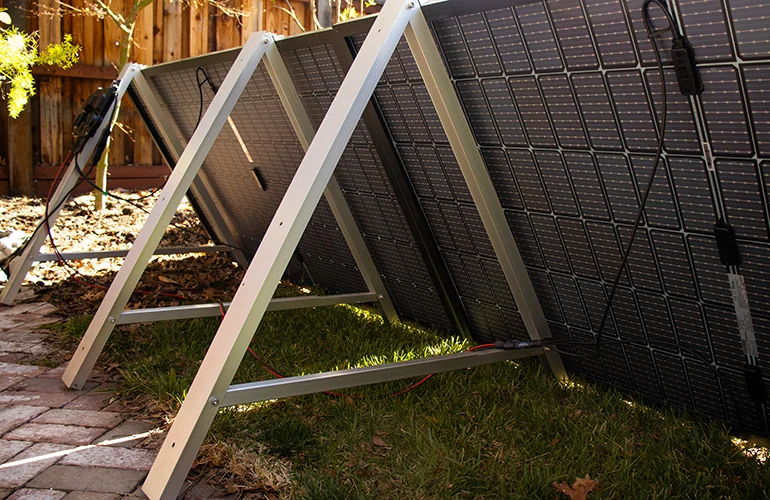
On-site solar energy generation
Stationary battery energy storage systems (BESS)
Advanced energy pricing and load management software
Proprietary 1.5MW FLASH Charging hardware
Customized fleet financing and the vehicles themselves
Official Responses and Industry Perspectives
The unveiling at the Hannover fairgrounds drew intense scrutiny, fascination, and unease from European automotive executives who have historically dominated the trade show floor.
Stella Li, Executive Vice President of BYD, framed the commercial vehicle push as a natural extension of the company’s internal engineering and manufacturing muscle:
"We have already put FLASH Charging into practice in passenger vehicles. Today, we are bringing this technology to commercial vehicles, starting with our trucks," Li told attendees during the Hannover presentation.
"With 1.5 megawatts of charging power, it can charge from 20 percent to 80 percent in about 20 minutes, delivering up to 248 miles of range. Less time charging. More time on the road."
Stressing the holistic nature of their business model, Li added:
"From batteries and solar power to energy storage, FLASH Charging and commercial vehicles, we provide a one-stop solution for sustainable commercial transport."
While legacy heavy-duty makers have introduced commendable long-haul battery models—such as the Mercedes-Benz eActros 600 and the Volvo FH Electric—industry analysts note that BYD’s complete vertical integration gives it a structural cost and manufacturing scale advantage that leaves legacy competitors scrambling to catch up.
Strategic Implications for the European Freight Industry
BYD’s arrival in Europe’s heavy-duty truck sector carries profound implications for the geopolitical and economic landscape of the continent.
1. Pressure on Legacy Giants
European truck makers are already navigating high energy costs, inflationary pressures, and complex transitions to zero-emission technology. The entry of a well-capitalized competitor offering aggressive warranties, rapid charging infrastructure, and lower production costs will force legacy brands to accelerate cost-reduction initiatives and lobby for accelerated public charging infrastructure deployment.
2. Navigating Geopolitical and Trade Complexities
Trade tensions between Brussels and Beijing regarding electric vehicle subsidies loom large over the market. While the European Commission has focused import duties primarily on passenger cars, Chinese commercial vehicle manufacturers are preemptively hedging against regulatory headwinds. By planning local assembly operations, distribution agreements, and technical partnerships directly within Europe, companies like BYD aim to insulate their supply chains from potential tariffs and trade barriers.
3. The Shift to Megawatt Corridors
The rollout of BYD’s 1.5MW charging system underscores a broader technical truth for the freight industry: overnight depot charging is insufficient for long-haul trucking. For zero-emission freight to scale across Europe, logistics hubs and highway corridors must rapidly adopt high-power megawatt charging infrastructure. BYD’s hardware ecosystem provides a blueprint that European energy providers and highway operators will be forced to emulate.
As the dust settles on the IAA Transportation show in Hannover, one reality is indisputable: the race to electrify Europe’s heavy freight corridors has entered a new, highly competitive global phase. Legacy manufacturers no longer have the luxury of pacing the transition on their own terms.