Introduction and Main Facts
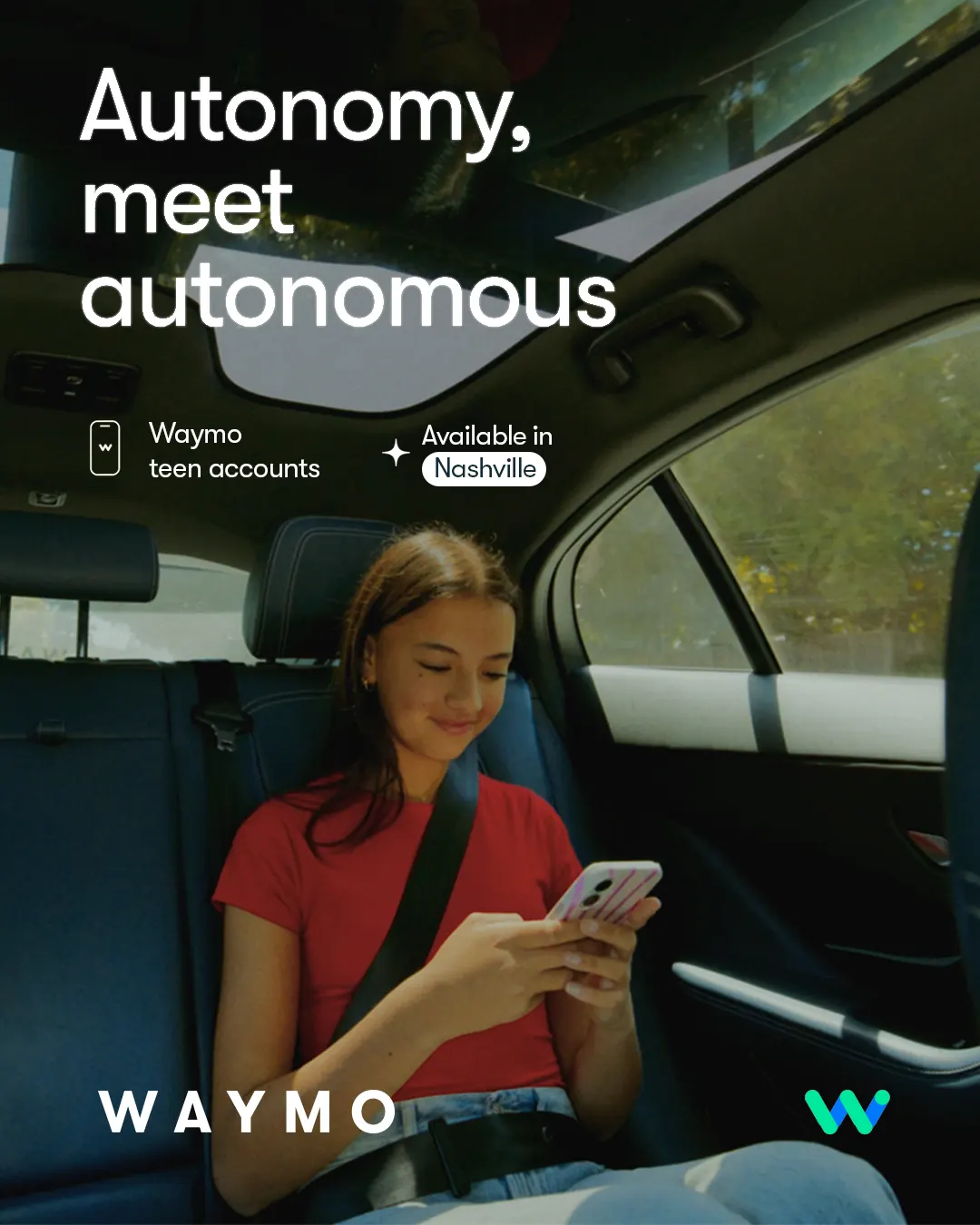
The landscape of urban transportation is undergoing a quiet revolution, and its latest frontier is opening up for teenagers. Waymo, the autonomous driving technology company, has officially announced the expansion of its "Waymo Teen Accounts" to Nashville, Tennessee. Following a successful pilot and rollout in Phoenix, Arizona, teenagers between the ages of 13 and 17 in Music City can now hail fully driverless vehicles across a sprawling 50-square-mile operating domain.
This new service allows minors to independently navigate the city for everyday needs—such as traveling to school, sports practices, after-school jobs, and extracurricular activities—provided their accounts are securely linked to a parent or legal guardian’s master account. Designed to bridge the gap between adolescent desire for autonomy and parental demands for absolute safety, the service introduces advanced monitoring features, including real-time trip status sharing, specially trained Rider Support agents, and automated ride receipts sent directly to guardians.
While autonomous vehicle (AV) technology has spent years proving itself in dense metropolitan areas for adult commuters, the inclusion of teenagers marks a psychological and logistical milestone. It shifts the perception of robotaxis from a novelty for tech enthusiasts to an essential piece of public and private infrastructure that solves real-world family scheduling challenges.
Chronology of the Launch
To understand how Waymo’s teen service reached the streets of Nashville, it is helpful to look at the timeline of development, testing, and deployment that led to this milestone:
- The Foundation of Driverless Operations: Waymo spent years systematically mapping, testing, and scaling its fully autonomous ride-hailing service (Waymo One) across major American cities, gradually earning regulatory trust and public acceptance.
- Phoenix Pilot Program (July 2025): Waymo officially launched its dedicated "Waymo Teen Accounts" framework in Phoenix, Arizona. This initial rollout served as a real-world sandbox to test account linkage, parental controls, and teen user behavior in a complex desert metropolis.
- Early Access Phase in Nashville (Late 2025/Early 2026): Prior to the public launch, Waymo rolled out an exclusive early access program to a select group of teenagers and their families in Nashville. This phase was designed to gather localized feedback, test vehicle routing through Nashville’s unique topography and traffic patterns, and measure user satisfaction.
- Official Public Launch in Nashville (Present Day): Waymo officially opened teen accounts across a 50-square-mile territory in Nashville, allowing any eligible family to sign up via the company’s portal and integrate autonomous rides into their daily routines.
Supporting Data and Research
The introduction of autonomous transit for minors is not merely a convenience play; it addresses documented stressors in family logistics and youth development. Waymo’s broader research into youth mobility sheds light on why reliable, on-demand transportation is transformative for adolescents and their guardians.
In a recent study conducted in partnership with the Boys & Girls Clubs of the Valley and the Legacy Institute, researchers examined the impact of providing reliable Waymo rides to youth participating in summer internships. The data revealed a staggering improvement in mental well-being and logistical reliability:
- Reduction in Commute Stress: Before having access to dedicated, reliable transit options, 86% of participating youth reported high levels of stress regarding their daily commutes to internships.
- Post-Access Relief: Following the integration of Waymo rides for their commutes, reported stress levels were cut in half, dropping down to 43%.
These statistics highlight a broader systemic issue: the "transportation barrier." For families without flexible schedules, multiple children, or access to reliable public transit, getting teenagers to essential developmental opportunities—like jobs, tutoring, and internships—is a major hurdle. Autonomous vehicles offer a predictable, secure alternative that operates outside the constraints of traditional bus schedules or parental work hours.

Official Responses and Personal Testimonies
The real-world impact of the Nashville launch is best illustrated through the experiences of the local families who participated in the early access program.
Asher Huffman, a Nashville teen who tested the service early, described the unique freedom the vehicles provided:
"I really enjoyed being able to hail a ride home from a concert without having to bother my parents, and I even got to show Waymo off to my friend. Getting to play my music as loud as I want, with no one else in the car, was also awesome. Kind of like I was in my own little bubble."
For Asher’s mother, Amy Huffman, the service provided an invaluable reduction in household friction and parental anxiety:
"It was a huge help to our family. Whether my son was staying late at school or going to a concert downtown, I didn’t have to worry about how he was going to get home or rearrange my own plans to pick him up. It gave him more independence and took a real burden off of us as parents."
From a corporate governance standpoint, Waymo’s leadership has emphasized that safety remains the absolute cornerstone of the teen account feature. Unlike traditional ridesharing services—where passengers are placed in the vehicle with an independent human driver whose background and behavior can vary—Waymo’s vehicles operate with consistent, programmed rule-following, zero fatigue, and constant remote oversight.
Parents maintain structural control through the app interface:

- They must authorize the account setup and maintain oversight.
- They receive live updates regarding the vehicle’s location and estimated time of arrival.
- They have direct lines to specialized Rider Support agents who monitor every journey in real time and can intervene or assist if an unexpected situation arises.
Implications for Families, Urban Mobility, and the Future
The rollout of Waymo teen accounts in Nashville carries significant implications that extend far beyond a single city or demographic.
1. Re-engineering Family Dynamics and Parental Freedom
For generations, the "parental taxi service" has been an unavoidable tax on family life, requiring working parents to break up their days, leave offices early, or abandon personal obligations to shuttle children across town. By introducing a secure, autonomous alternative for teenagers aged 13 to 17, companies like Waymo are returning valuable hours to parents while teaching adolescents how to manage their own schedules responsibly.
2. A Shift in Adolescent Independence
The psychological impact on teenagers should not be underestimated. Historically, the milestone of physical independence was tied strictly to obtaining a driver’s license at age 16. However, rising vehicle ownership costs, insurance rates, and urban congestion have delayed when many young people choose to drive. Autonomous ride-hailing provides a stepping stone of mobility, allowing teens to travel independently without the financial and safety burdens of owning and operating a motor vehicle.
3. Urban Planning and Traffic Reduction
As autonomous fleets scale in cities like Nashville, Phoenix, San Francisco, and Los Angeles, they are beginning to reshape urban transit patterns. While critics often worry about added congestion from empty vehicles repositioning, services like teen accounts could theoretically reduce "trip chaining"—where parents make dedicated, multi-stop car trips solely for child transport. If integrated efficiently, shared autonomous fleets could decrease the total number of private vehicle miles traveled per household.
4. Safety and Accountability Standards
By setting a high bar for safety features—such as live tracking, human-backed remote support, and strict account pairing—Waymo is establishing a new regulatory and consumer benchmark for youth-focused tech services. As other autonomous vehicle developers look to expand their market share, they will likely be forced to adopt or improve upon these safety protocols to win the trust of cautious parents.
Conclusion
Waymo’s expansion into Nashville is more than just a geographic milestone for a tech company; it is a practical glimpse into the future of everyday logistics. By safely integrating teenagers into the autonomous ecosystem, the company is proving that driverless technology can solve deeply human, everyday problems. For Nashville families navigating busy school calendars, extracurriculars, and work demands, the future has officially arrived—and it is sitting quietly in the driveway, ready to roll.
To learn more about setting up a teen account or to check eligibility within your specific neighborhood, visit waymo.com/teens.