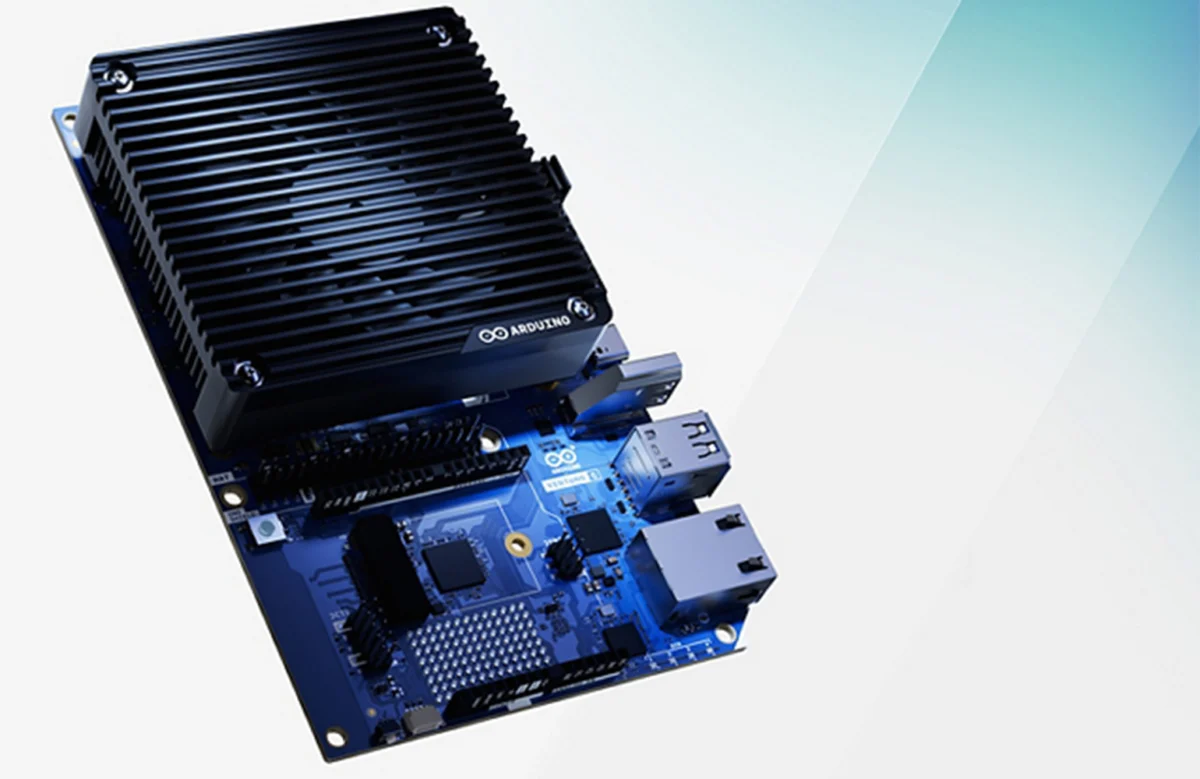
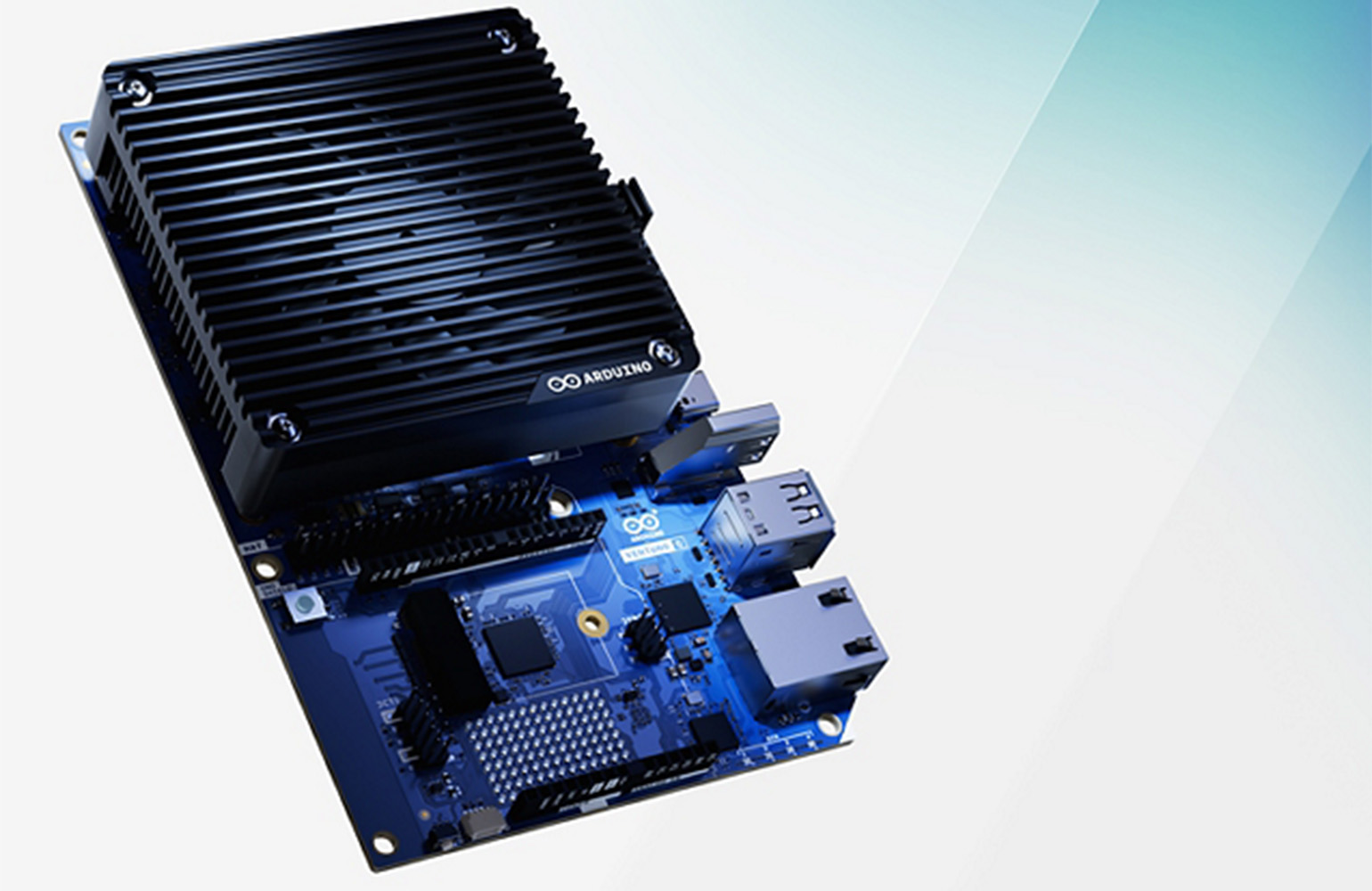
MONZA, ITALY — Arduino S.r.l., a subsidiary of Qualcomm Technologies Inc., has officially opened pre-orders for the VENTUNO Q, a groundbreaking edge artificial intelligence platform powered by the Qualcomm Dragonwing IQ8 Series. Representing Arduino’s first intentional, dedicated plunge into the robotics core market, the board combines a high-performance system-on-chip with a real-time microcontroller.
Designed to simplify the notoriously complex landscape of robotics development, the VENTUNO Q merges advanced generative AI capabilities with deterministic hardware control. By leveraging the vast resources of its parent company—which acquired Arduino last year—the Monza-based hardware pioneer aims to democratize the development of autonomous mobile robots (AMRs), industrial automation systems, and smart city infrastructure.
Main Facts
The VENTUNO Q is engineered around a sophisticated dual-brain architecture designed to tackle the traditionally fragmented hardware and software demands of modern robotics.
- The Primary AI Engine: At the heart of the board is the Qualcomm Dragonwing IQ-8275 processor, which delivers up to 40 dense TOPS (Trillions of Operations Per Second) of dedicated AI performance. It is supported by 16 GB of LPDDR5 memory, 64 GB of eMMC storage, and expandable M.2 NVMe storage slots.
- The Real-Time Controller: Paired with the Qualcomm processor is an STM32H5 real-time microcontroller running the Arduino Core on Zephyr RTOS. This secondary brain handles deterministic, low-latency control tasks such as motor actuation, CAN-FD communications, PWM, and high-speed General-Purpose Input/Output (GPIO).
- Software Ecosystem: The board ships pre-loaded with Ubuntu (distributed by Canonical) and integrates tightly with the new Arduino App Lab. This software suite allows developers to deploy pre-optimized large language models (LLMs), vision-language models (VLMs), and computer vision pipelines using minimal code.
- Commercial Scaling Path: Alongside the VENTUNO Q release, Arduino introduced the "Works with Arduino" program. This ecosystem pathway, supported early on by partners like SECO and Toradex, allows original equipment manufacturers (OEMs) to transition their prototypes directly into production-grade Systems-on-Modules (SOMs) without rewriting their software stacks.
Chronology: From Open-Source Pioneer to Enterprise Edge Powerhouse
To understand the strategic significance of the VENTUNO Q, it is necessary to examine Arduino’s trajectory over the past two decades alongside recent corporate realignments.
The Foundation (2005–2023)
For over 20 years, Arduino established itself as the undisputed king of electronics prototyping. Millions of hobbyists, educators, and professional engineers utilized its simple microcontrollers to build everything from basic educational kits to experimental robotic prototypes. While thousands of community-built robots incorporated Arduino components in some capacity, the company historically lacked a unified, powerful platform capable of acting as a single point of control for modern, AI-driven robotics architectures.
The Qualcomm Acquisition (Previous Year)
A major inflection point occurred when Qualcomm Technologies Inc. formally acquired Arduino. This merger provided the Italian company with unprecedented access to cutting-edge mobile and edge-computing silicon, advanced AI frameworks, and a vastly expanded enterprise customer base.
The Convergence of AI and Hardware (Present Day)
Buoyed by rapid advancements in generative AI, edge computing miniaturization, and shrinking processor footprints, Arduino began developing a solution to the "Ph.D. bottleneck"—the reality that building an advanced AMR historically required teams of specialists across disparate fields like computer vision, motion planning, and systems integration. The culmination of this effort is the VENTUNO Q, introduced to bridge the gap between high-level AI reasoning and physical actuation.
Supporting Data and Technical Architecture
The technical specifications of the VENTUNO Q highlight Arduino’s ambition to shift from simple microcontroller applications to heavy-duty edge computing.
| Feature / Component | Specification / Capability |
|---|---|
| Primary Processor | Qualcomm Dragonwing IQ-8275 (Up to 40 dense TOPS AI performance) |
| Real-Time MCU | STM32H5 microcontroller running Arduino Core on Zephyr RTOS |
| Memory & Storage | 16 GB LPDDR5 RAM, 64 GB eMMC, expandable M.2 NVMe storage |
| Operating System | Pre-loaded Ubuntu (Canonical) |
| Software Tooling | Arduino App Lab, VS Code, native Linux tools, Edge Impulse Studio, Qualcomm GenieX |
| I/O & Interfaces | CAN-FD, PWM, high-speed GPIO, standard Arduino accessory headers |
| Deployment Partners | SECO, Toradex (via "Works with Arduino" program) |
Overcoming the Cloud Bottleneck
A core engineering rationale behind the VENTUNO Q is the necessity of edge computing in real-world deployments. Historically, many complex AI models were tethered to the cloud, introducing latency and dependency on reliable internet connectivity.
Marcello Majonchi, chief product officer of Arduino at Qualcomm, emphasized that industrial environments—such as offshore manufacturing sites or large warehouses—frequently lack stable, high-speed internet connections. By consolidating sensing, reasoning, and actuation onto a single local board, the VENTUNO Q enables immediate, offline, real-time responses required for safe physical navigation and manipulation.
The "Lego-Like" App Lab Experience
To lower the entry barrier for developers, Arduino App Lab functions as an abstraction layer. Out of the box, it provides access to a curated library of NPU-optimized models covering speech recognition, gesture detection, and object tracking. Developers can also import custom GGUF-format models from Hugging Face or fine-tune models using Edge Impulse Studio. By utilizing Qualcomm’s open-source on-device Gen AI runtime (GenieX), complex LLMs and VLMs can be executed with just a few lines of code.
Official Responses and Industry Perspectives
Leadership at Arduino and Qualcomm have framed the VENTUNO Q not merely as a new product release, but as a paradigm shift for how hardware and AI should intersect.
"This is the first intentional step for a product that is meant to be used as a single point of control of a modern robotics platform," stated Marcello Majonchi, chief product officer of Arduino at Qualcomm, in an interview with The Robot Report.
"We have this amazing computing power. We have this ecosystem that is just waiting for something with an easier way for people to be able to translate their vision into reality. What is the gap that we need to bridge from a hardware perspective and from a software tooling and frameworks perspective so that you don’t need five different Ph.D.s to figure out how to build up an AMR?"
Majonchi emphasized that the core philosophy of the company remains rooted in accessibility:
"It’s all about accessibility in the sense of bringing down the access barrier to this technology and demystify it both on the software and on the hardware side, so that almost anybody who has an idea has a path to bringing that idea to life."
Furthermore, addressing the transition from hobbyist benches to factory floors, Majonchi noted the strategic value of the new scaling initiatives:
"Thanks to the fact that we are now part of the Qualcomm family, we have created a program that we announced together with the release of the VENTUNO Q that is trying to really support end customers that want to have the freedom and ease of prototyping, but then want a reliable path to scale into production in the most optimized way."
Broader Implications for the Robotics Industry
The launch of the VENTUNO Q coincides with a broader strategic push by Qualcomm into the robotics and open-source ecosystems. In a parallel announcement, Qualcomm confirmed its acquisition of PickNik Inc.—the primary curator and maintainer of MoveIt, the industry-standard open-source motion planning framework.
Bridging AI Models to Physical Motion
The integration of MoveIt with the Arduino VENTUNO Q and Qualcomm Dragonfly platforms signifies a unified roadmap. Historically, developers faced massive friction moving from high-level AI text or vision models to low-level robotic arm kinematics and collision-free path planning. By aligning Arduino’s developer-friendly abstraction layers with industrial-grade motion planning frameworks and powerful edge silicon, Qualcomm and Arduino are effectively constructing an end-to-end pipeline from generative AI concept to physical deployment.
Impact on OEMs and Commercial Ecosystems
For original equipment manufacturers (OEMs), the "Works with Arduino" program solves a long-standing dilemma. Prototyping platforms are rarely optimized for long-term component availability, ruggedized thermal management, or industrial certification.
By allowing developers to prototype on the VENTUNO Q and seamlessly migrate their software stack to production-grade Systems-on-Modules from vendors like SECO and Toradex, the ecosystem mitigates commercial risk. Companies can deploy the exact same silicon architecture—the Qualcomm Dragonwing IQ8 Series—from the laboratory workbench to commercial Autonomous Mobile Robots (AMRs), predictive maintenance nodes, smart city traffic systems, and advanced educational institutions.
As edge AI continues to mature, platforms like the VENTUNO Q signal a departure from fragmented, hyper-specialized development toward modular, accessible, and high-performance robotics engineering.